
The Coming Thailand-Cambodia War – A Proxy Battle Between China and the U.S.
How Southeast Asia Could Become the Next Flashpoint in the New Cold War

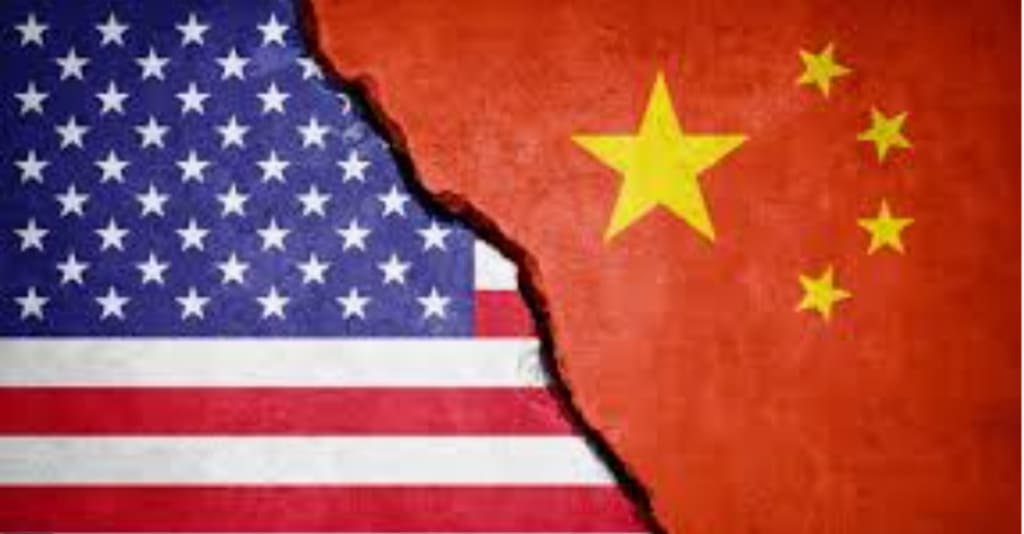
The Ticking Time Bomb in Southeast Asia
The lush jungles and ancient temples of Southeast Asia have long masked the region's underlying geopolitical tensions. By 2026, these tensions could explode into open warfare between Thailand and Cambodia - a conflict that would serve as the latest battleground in the escalating cold war between China and the United States.
While surface-level disputes might revolve around border demarcations or historical grievances, the real drivers of this potential conflict lie in the great power competition reshaping the Indo-Pacific. This wouldn't be a simple bilateral spat, but rather a complex proxy war with global implications, drawing in major powers and testing the fragile unity of ASEAN.
What makes this looming confrontation particularly dangerous is how it combines ancient rivalries with modern great power politics. The historical animosity between Thailand and Cambodia, dating back to the Angkor and Ayutthaya kingdoms, provides fertile ground for nationalist mobilization. Meanwhile, China's growing footprint in Cambodia and America's renewed interest in Thailand create the perfect conditions for external powers to exploit local tensions for their own strategic ends.
Section 1: The Historical Context - Why Thailand and Cambodia?
Ancient Rivalries, Modern Tensions
The roots of Thai-Cambodian tensions stretch back centuries, to when the Khmer Empire ruled much of mainland Southeast Asia and later when the rising Siamese kingdoms challenged its dominance. These historical memories remain potent in both countries' national consciousness, regularly stoked by politicians and media.
In modern times, the most persistent flashpoint has been the Preah Vihear temple dispute. The 11th-century Hindu temple, situated on the Thai-Cambodian border, was awarded to Cambodia by the International Court of Justice in 1962, but Thailand has never fully accepted this ruling. Periodic clashes have occurred around the temple, most notably in 2008 and 2011, resulting in dozens of deaths and temporary displacements of civilians.
The Economic Dimension
Beyond territorial disputes, economic competition adds fuel to the fire. Thailand has long been the more developed economy, but Cambodia's recent growth - fueled largely by Chinese investment - has begun to shift the balance. The two nations compete in key export markets, particularly in agriculture and textiles, creating additional friction points.
Cambodia's special economic zones along the Thai border, many Chinese-operated, have become particular sore points. Thai businesses complain of unfair competition from these zones, where Cambodian labor is cheaper and regulations more lax.
Section 2: The Great Power Chessboard
China's Cambodian Stronghold
China has transformed Cambodia into its closest Southeast Asian ally through a combination of economic investment, military cooperation, and political support. Key elements of this partnership include:
The Belt and Road Initiative (BRI): Cambodia has received over $7 billion in Chinese infrastructure investments since 2013, including new highways, ports, and special economic zones.
Military Cooperation: The upgrading of Ream Naval Base with Chinese assistance has raised alarms about a potential permanent PLA presence just kilometers from Thailand's eastern border.
Political Alignment: Cambodia has consistently supported China's positions in ASEAN forums, including on the South China Sea disputes.
America's Thai Countermove
After years of strained relations following Thailand's 2014 military coup, the U.S. has been working to rebuild ties with Bangkok:
Military Exercises: Cobra Gold, Asia's largest multinational military exercise, has expanded in scope and participation.
Arms Sales: Recent deals include advanced fighter jets and missile defense systems.
Strategic Dialogue: High-level visits have increased, with both sides emphasizing their "longstanding alliance."
ASEAN's Dilemma
The Association of Southeast Asian Nations faces its greatest test yet. A Thai-Cambodian war would:
Force member states to choose sides between two founding members
Test ASEAN's principle of non-interference
Potentially fracture the organization along pro-China/pro-U.S. lines
Section 3: The Spark - How War Could Break Out
Scenario 1: The Temple Gambit
A new round of fighting erupts around Preah Vihear after:
Cambodian troops are accused of crossing into disputed territory
Thailand conducts military exercises near the border
Nationalist protests in both capitals turn violent
Scenario 2: The Economic War Turns Hot
Thailand imposes new tariffs on Cambodian goods
Cambodia blocks Thai trucking routes through its territory
Border skirmishes escalate after an attack on a commercial convoy
Scenario 3: The Cyber Prelude
Sophisticated cyberattacks disable Thai infrastructure
Evidence points to Chinese-backed Cambodian hackers
Thailand retaliates with precision airstrikes
Section 4: The War Itself - A New Kind of Conflict
Phase 1: Border Battles (Weeks 1-4)
Intense fighting along the 800km border
Cambodia's Chinese-made drones vs. Thailand's U.S.-supplied air defenses
Both sides claim victories while civilian casualties mount
Phase 2: The Cyber and Economic War (Months 2-3)
Thailand's banking system hit by ransomware attacks
Cambodia faces food shortages as Thailand blocks shipments
Global supply chains disrupted, affecting electronics and auto industries
Phase 3: Internationalization (Months 4-6)
China conducts "humanitarian" airlifts to Cambodia
U.S. Navy holds exercises in Gulf of Thailand
ASEAN emergency summits fail to produce ceasefire
Section 5: The Global Fallout
Economic Consequences
Global rice prices spike (Thailand and Cambodia produce 15% of world supply)
Electronics manufacturers face parts shortages
Tourism collapses across Southeast Asia
Strategic Realignments
Vietnam forced to choose between ASEAN unity and China wariness
Philippines reassesses U.S. alliance versus Chinese economic ties
Myanmar conflict becomes entangled with broader regional war
The U.S.-China Showdown
Near-clashes between U.S. and Chinese naval forces
Diplomatic war at the UN Security Council
Risk of accidental escalation to direct conflict
Conclusion: Preventing the Unthinkable
While the scenario seems dire, there are pathways to prevention:
ASEAN Conflict Prevention Mechanisms: Strengthening early warning systems
U.S.-China Crisis Communications: Establishing military hotlines
Economic Interdependence: Expanding cross-border trade initiatives
The choice is clear: either Southeast Asia finds a way to manage great power competition peacefully, or it risks becoming the next theater of war in the 21st century's defining geopolitical rivalry. The clock is ticking - 2026 may be closer than we think.
Will ASEAN rise to the challenge? Or will Southeast Asia become the next Ukraine? The world is watching.
About the Creator
INAM ULLAH
Inam Ullah, BS in Computer Science and MS in Wireless Sensor Networks. Passionate about blogging, history, wars, and science. A lifelong learner with a curious mind and diverse interests.
Keep reading
More stories from INAM ULLAH and writers in Futurism and other communities.
AI Automation: The Ultimate Key to Success in the Modern World
In the 21st century, success is increasingly determined not just by intelligence, talent, or resources, but by how efficiently one can adapt and integrate Artificial Intelligence (AI) into daily life. Across industries — be it education, healthcare, warfare, business, or even agriculture — automation powered by AI is rewriting the rules of engagement. It’s not just the future; it’s the present. Those who leverage it effectively will thrive. Those who resist or misuse it risk falling behind.
By INAM ULLAH7 months ago in Futurism
Intravascular Warming Systems Market Outlook: Perioperative Care Advancements and Growth Opportunities
According to IMARC Group's latest research publication, The global intravascular warming systems market size reached USD 153.2 Million in 2024. Looking forward, IMARC Group expects the market to reach USD 194.8 Million by 2033, exhibiting a growth rate (CAGR) of 2.57% during 2025-2033.
By Michael Richard4 days ago in Futurism
Technology Migration for eCommerce Store: When It Makes Business Sense (and When It Doesn't)
Running an eCommerce store means making constant decisions about tools, platforms, and technology. Most of the time, you pick a platform, get it working, and focus on growing your business. But eventually, every store owner faces that uncomfortable moment when the technology they built their store on starts to feel like it's holding them back.
By Navghan Modhavadiya 2 days ago in Futurism
A Planetary Alignment will coincide with Mercury Retrograde
Double phenomena in the heavens Some people say in jest that the planets have aligned in their favor when life works the way they desire. Were you aware that there are seasons when things do line up in the heavens? There will be a planetary alignment AKA a planet parade, on February 28, 2026.
By Cheryl E Preston3 days ago in FYI



Comments
There are no comments for this story
Be the first to respond and start the conversation.