
Tradition Meets Technology: How Communities Are Shaping Their Digital Futures
From remote villages to Indigenous homelands, digital tools are being integrated in ways that empower cultural expression, access to services, and self-determined innovation.


From remote villages to Indigenous homelands, digital tools are being integrated in ways that empower cultural expression, access to services, and self-determined innovation.
In an age where our devices are nearly extensions of our hands, it’s easy to overlook how digital technology is also reaching some of the most geographically distant and culturally rich communities — not for entertainment, but as a means of adaptation, expression, and continuity.

Across the vast landscapes of the Arctic, the highlands of East Africa, and the deserts of Central Australia, individuals and communities are using digital tools in innovative and intentional ways. Whether it’s for accessing healthcare, preserving languages, or engaging in global commerce, these efforts reflect agency and adaptability rather than passive consumption.
Rather than asking how technology changes tradition, the deeper question may be: How can tradition shape the way technology is used?
The Quiet Integration of Technology into Heritage-Centered Communities
In many rural and Indigenous regions, digital tools are being integrated into daily life through thoughtful, community-led initiatives. These aren’t top-down interventions, but ground-up innovations that reflect local needs and values.

For instance, in parts of East Africa, livestock herders are using mobile technology to access market data and financial services directly, enabling more informed economic choices. Similarly, in Arctic regions, collaborative efforts between community members and researchers are helping document and revitalize local languages through apps and digital archives.
In Australia, artists from remote communities are using e-commerce platforms to reach wider audiences, bringing cultural artwork into global visibility while retaining control over their stories and practices.
These examples don’t signal a break from tradition — they reflect a dynamic evolution guided by the people themselves.
What Digital Tools Offer: Connection, Capacity, and Cultural Voice
Digital access in underrepresented areas is often framed as a tool for survival, but it also opens up pathways for creativity and empowerment:

Education Without Borders: In locations with limited access to formal schools, students are using mobile apps and solar-powered devices to access curriculum and interactive learning.
Telehealth Services: Remote consultation technologies are providing families with access to healthcare professionals without requiring long-distance travel.
Ethical E-Commerce: Platforms like Etsy and Shopify are enabling craftspeople to share their work globally, while also fostering pride in cultural heritage.
Each example underscores how technology can act as a bridge — not just to modern conveniences, but to broader opportunities rooted in cultural identity.
Considering the Challenges: Responsible Tech in Traditional Settings
While the benefits are notable, so too are the complexities.
Increased digital literacy brings new opportunities in previously disconnected areas.
Cultural Dilution: Exposure to global digital trends can influence younger generations, sometimes shifting focus away from local customs or languages.
Infrastructure Fragility: In many areas, connectivity is not always reliable. This can limit consistency in education, healthcare, or commerce.
Context Loss: Cultural knowledge transmitted orally or through practice may lose depth when compressed into digital formats or detached from its lived context.
These challenges highlight the importance of community leadership in digital adoption. The goal isn’t just access to technology — it’s mindful integration.
When Communities Shape Their Own Digital Pathways
Across the globe, communities are demonstrating how digital tools can reflect local priorities when they are developed or adapted in collaboration with those who will use them.
A broadband initiative within the Navajo Nation was designed not just for access, but to foster language learning and cultural storytelling through digital media.
Environmental groups in Colombia, rooted in Indigenous traditions, are using mapping software to protect territories and document biodiversity.
Young people in Australia co-created a culturally inspired emoji app, merging digital design with ancestral symbology in a way that reflects both personal identity and community legacy.

These stories show that innovation doesn't only happen in tech labs — it also grows in villages, homes, and gathering spaces where tradition and technology intersect.
Reflections from Experts: Finding Balance in the Digital Era
Thought leaders in cultural studies and digital ethics emphasize the importance of agency and respect when integrating technology into heritage-based communities.
Dr. Mary Ann Goodwin, an anthropologist, notes:
“Digital tools can amplify traditional practices when used collaboratively. The key is supporting communities in choosing how, when, and why to use them.”
Her research has shown that intergenerational storytelling through video and audio recordings can build deeper family connections and preserve intangible heritage.
Sociologist Professor Jahlil Rahman cautions:
“Technology often reflects the cultural values of its creators. When introduced into different social systems, especially those based on collective identity, the dissonance can be felt unless adaptation is locally led.”
UNESCO’s recent publications have echoed these sentiments, advocating for co-design approaches that prioritize community goals and cultural specificity.
A Shared Digital Future: Innovation Rooted in Respect
The future isn’t about choosing between digital progress and cultural continuity. It’s about co-creating a world where both can thrive.

A symbolic image: on one side, traditional illiteracy; on the other, a young man holding a digital device.
When communities lead with their own voices, and when technology is introduced with care and cooperation, we begin to see a version of progress that is not extractive, but enriching.
For readers everywhere, this is an opportunity to listen, support, and learn. Whether it’s through ethical buying choices, supporting community-based tech initiatives, or simply valuing stories told outside the mainstream, we each have a role in shaping a digital world that honors the full spectrum of human experience.
📍 Support Thoughtful Storytelling
If this story offered insight or sparked reflection, feel free to hit the heart ♥️, share a comment, or subscribe. Every bit of engagement helps elevate narratives that deserve a wider platform.
Let’s support a digital future grounded in care, connection, and cultural continuity.
About the Creator
Numan Shah
Sharing stories that celebrate life—one memory, one tradition, one lesson at a time. I write about birthdays, culture, love, healing, and what it means to be human. Here to encourage, explore, and bring people closer through storytelling.
Keep reading
More stories from Numan Shah and writers in Futurism and other communities.
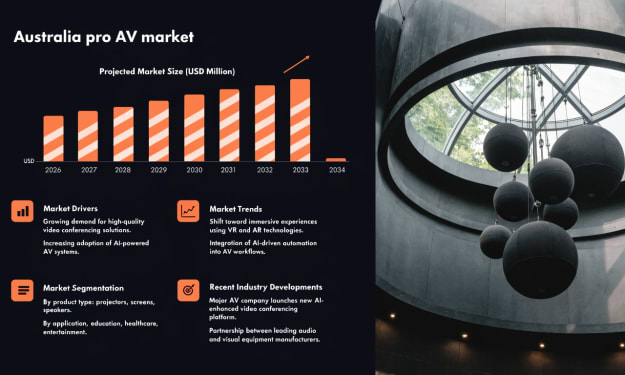
Australia Pro AV Market: Hybrid Work Demand, Digital Signage & Smart AV Technologies
According to IMARC Group, the Australia pro AV market reached a value of USD 93.9 Million in 2025 and is projected to reach USD 133.6 Million by 2034, growing at a compound annual growth rate (CAGR) of 3.88% during 2026–2034. The market is expanding as organizations increasingly adopt advanced audiovisual solutions to support communication, collaboration and digital engagement. Hybrid work environments are encouraging businesses to invest in video conferencing systems, smart displays and integrated collaboration platforms that connect remote and in-office teams. At the same time, industries such as retail, hospitality and tourism are investing in digital signage to improve customer engagement and brand communication. As companies focus on creating interactive and technology-driven environments, professional AV solutions are becoming essential tools for modern workplaces, entertainment venues and commercial spaces across Australia.
By Kevin Cooper4 days ago in Futurism
WhatsApp Business API: A Complete Guide to Business Messaging in 2026
Over the past decade, the way businesses communicate with customers has changed dramatically. Traditional channels such as email and phone support are still widely used, but instant messaging has become one of the most preferred ways for people to interact with brands. Customers increasingly expect quick responses, convenient updates, and support that feels personal rather than formal.
By Olivia Carterabout 8 hours ago in Futurism



Comments
There are no comments for this story
Be the first to respond and start the conversation.