
Top AI-Driven Digital Marketing Trends to Watch in 2025
From Agentic AI to Hyper-Personalization, These Are the Game-Changing Trends You Need To Master To Thrive in the New Digital Landscape.

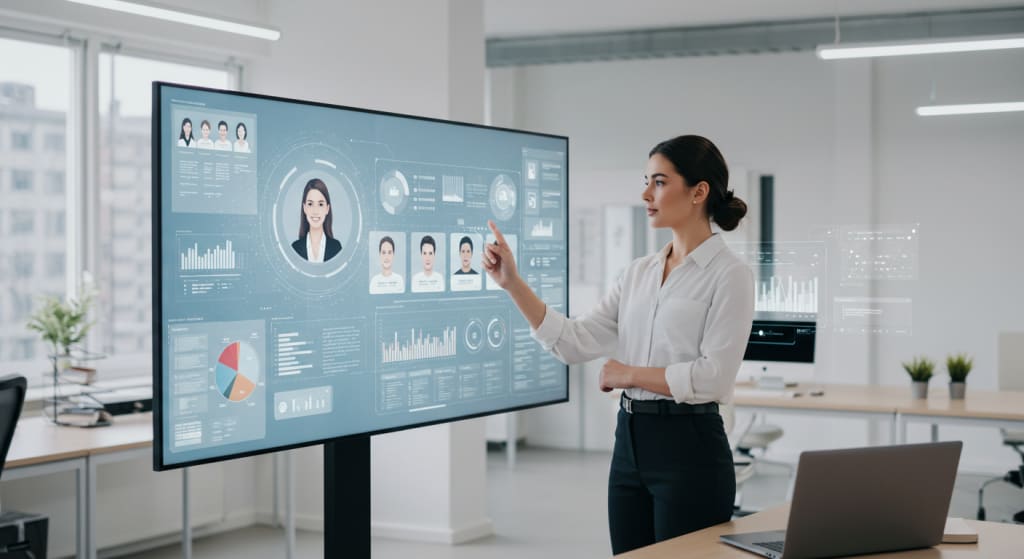
In a world where consumer attention is increasingly fragmented, what will separate successful marketers from the rest in 2025? The answer lies at the intersection of artificial intelligence and human creativity. As we move into 2025, the marketing landscape is undergoing a seismic shift. AI is no longer just a buzzword but a fundamental force reshaping how brands connect with their audiences. According to recent industry forecasts, over 85% of marketing teams will incorporate some form of AI into their strategies by 2025—yet many are still unprepared for the depth of transformation ahead.
Why does this matter? Because marketing in 2025 will require adaptation and a complete rethinking of traditional approaches. Marketers who understand and leverage these emerging technologies will gain unprecedented advantages in personalization, efficiency, and strategic insight. Those who don't risk being left behind in an increasingly competitive digital landscape.
Let's explore the key trends that will define marketing in 2025 and how forward-thinking professionals can position themselves for success.
How Will Agentic AI Transform Digital Marketing in 2025?
The evolution from basic AI tools to fully agentic AI represents one of the most significant shifts in marketing technology for 2025. Unlike previous generations of AI that required constant human oversight, agentic AI systems can operate with greater autonomy, making decisions and taking actions based on defined objectives and real-time data analysis.
For marketers, this means moving beyond the use of AI for simple tasks like content suggestions or basic analytics. In 2025, AI agents will become integral team members, capable of:
- Managing entire campaign lifecycles with minimal human intervention
- Optimizing ad spend in real-time based on performance metrics
- Identifying emerging trends and suggesting strategic pivots before competitors
- Generating and testing dozens of creative variations simultaneously
AI isn't replacing our creative teams—it's supercharging them. What once took weeks now happens in hours, allowing our human talent to focus on big-picture strategy.
The adoption of agentic AI will particularly benefit mid-sized marketing teams that previously lacked the resources to compete with larger enterprises. By streamlining routine tasks and providing deeper insights, these advanced AI systems will level the playing field, allowing smaller teams to achieve results previously requiring much larger staff and budgets.
What Role Will Generative AI Play in Content Creation and Customer Engagement?
While generative AI made its initial splash in 2022-2023, by 2025 it will have matured into a sophisticated suite of tools that transform content creation and customer engagement. The key difference? Integration, personalization, and real-time adaptation.
Generative AI in 2025 will:
- Create hyper-personalized content for individual users based on comprehensive behavioral data
- Dynamically adjust messaging based on real-time engagement metrics
- Seamlessly blend human-created brand elements with AI-generated variations at scale
- Enable truly conversational experiences across all customer touchpoints
Most importantly, generative AI will move beyond generic outputs to create content that resonates with specific audience segments. This represents a fundamental shift from "mass personalization" to genuine individualization at scale.
Marketing teams that develop expertise in prompt engineering and AI content direction will gain significant advantages. The most successful marketers won't be those who simply use AI tools, but those who know how to guide these tools to produce truly distinctive, branded experiences that maintain consistency while offering personalization.
Predictive Analytics: How Will AI Transform Decision-Making for Marketers in 2025?
By 2025, predictive analytics powered by AI will become the backbone of strategic marketing decision-making. The difference between current analytics and what's coming lies in both the breadth of data being analyzed and the actionability of the insights produced.
Modern marketing platforms integrated with advanced AI will:
- Forecast consumer behavior shifts weeks or months before they appear in traditional metrics
- Identify micro-segments with specific needs that would be impossible to detect manually
- Provide clear recommendations for resource allocation across channels and campaigns
- Predict customer lifetime value with unprecedented accuracy
This level of predictive capability will transform how marketing budgets are allocated and how success is measured. Rather than focusing exclusively on immediate conversion rates, AI-driven analytics will enable marketers to optimize for long-term value creation, sometimes suggesting counter-intuitive approaches that human analysts might miss.
"The days of guesswork in marketing are over," explains the founder of a leading digital marketing agency. "With AI-powered predictive analytics, we're making decisions based on probable futures rather than past performance alone."
Organizations that build their marketing strategies around these predictive capabilities will dramatically improve ROI while reducing waste, creating a virtuous cycle of improvement that widens the gap between leaders and followers.
Customer Experience in 2025: How Will AI Create More Personalized Interactions?
Personalization has been a marketing buzzword for years, but in 2025, AI will take it to entirely new levels. The key difference is the shift from segment-based personalization to truly individualized experiences that adapt in real-time.
In 2025, AI-driven personalization will:
- Create customer experiences that continuously evolve based on ongoing interactions
- Blend data from multiple sources to form comprehensive customer profiles
- Enable seamless personalization across physical and digital touchpoints
- Anticipate customer needs before they're explicitly expressed
This goes far beyond current approaches to segmentation. While traditional methods might divide customers into dozens of segments, AI in 2025 will effectively treat each customer as their own segment, with unique preferences, behaviors, and needs.
The most advanced marketing teams will use this capability to create what some are calling "responsive brand experiences"—environments where every aspect of the customer journey automatically adjusts to individual preferences without creating jarring inconsistencies in the overall brand experience.
Importantly, this level of personalization will need to be balanced with growing concerns about data privacy. Successful marketers in 2025 will develop transparent approaches that deliver personalized experiences while respecting customer boundaries and regulatory requirements.
Which AI Marketing Tools Will Become Essential by 2025?
The AI marketing technology stack will undergo significant evolution by 2025, with several categories of tools becoming essential rather than optional. These include:
Autonomous Campaign Managers
These AI systems will handle the entire campaign lifecycle, from initial setup to ongoing optimization and reporting. They'll make thousands of micro-adjustments daily based on performance data, freeing human marketers to focus on strategy and creative direction.
Multi-Modal Content Generation Platforms
Unlike today's text-focused generators, 2025's tools will seamlessly create cohesive content across text, images, video, and interactive media, maintaining consistent brand voice and style while adapting to different channels and formats.
Predictive Customer Journey Orchestrators
These specialized AI tools will not just map existing customer journeys but predict likely paths and proactively optimize touchpoints before issues arise, dramatically improving conversion rates and customer satisfaction.
Sentiment Analysis and Emotional Intelligence Systems
Advanced AI will move beyond basic sentiment analysis to understand emotional context and cultural nuance, helping brands connect with their audiences on deeper, more authentic levels.
The most successful marketing teams won't try to implement all of these technologies at once. Instead, they'll strategically adopt tools that address their specific business challenges while building the organizational capabilities needed to leverage AI effectively.
How Can Marketers Prepare for AI Expertise Demands in 2025?
As AI transforms digital marketing in 2025, the skills required for success will evolve dramatically. According to recent industry surveys, over 70% of marketing job postings already mention AI literacy as a desired skill—by 2025, it will be a fundamental requirement.
To stay competitive in this rapidly changing landscape, marketers should:
- Develop foundational knowledge of AI concepts and applications specific to marketing
- Gain hands-on experience with current AI tools to understand their capabilities and limitations
- Build skills in directing and collaborating with AI rather than just operating it
- Maintain strong creative and strategic thinking abilities that complement AI capabilities
The most valuable marketers in 2025 won't be AI engineers, They'll be translators who understand both technology and human needs, guiding AI systems toward meaningful business outcomes.
Organizations should begin investing in AI training now, not just for technical specialists but for their entire marketing teams. This might include formal education programs, experimental projects with current AI tools, or partnerships with AI-focused agencies that can transfer knowledge.
The Future of Marketing: What Will Digital Marketing Look Like in 2025 and Beyond?
Looking beyond the immediate future, digital marketing in 2025 and beyond will be characterized by several fundamental shifts:
The Collapse of the Digital/Physical Divide
As augmented reality matures and the Internet of Things expands, the distinction between digital and physical marketing will become increasingly meaningless. AI will be crucial in creating cohesive experiences that flow naturally between online and offline environments.
The Rise of Ambient Brand Experiences
Rather than interrupting consumers with ads, brands will create persistent, helpful presences in consumers' lives through AI-powered services, assistants, and experiences that provide value beyond the transaction.
The Evolution of Marketing Measurement
Traditional attribution models will be replaced by sophisticated AI systems that understand complex, non-linear relationships between marketing activities and business outcomes, finally solving the attribution problem that has plagued digital marketing.
The Democratization of Marketing Excellence
Advanced AI will make sophisticated marketing capabilities available to smaller organizations, leading to a more competitive landscape where strategy and creativity—rather than just budget—determine success.
Conclusion: Embracing the AI-Driven Future of Marketing in 2025
As we've explored throughout this article, marketing in 2025 will be fundamentally transformed by AI technologies across every aspect of the discipline. The key takeaways for marketers preparing for this future include:
- Agentic AI will automate routine tasks while enabling more strategic human work
- Generative AI will mature into sophisticated tools for personalized content creation at scale
- Predictive analytics will provide unprecedented insight into future customer behavior
- AI-driven personalization will create truly individualized experiences that adapt in real-time
- New categories of AI marketing tools will become essential components of the marketing stack
- Marketers will need to develop new skills that complement rather than compete with AI capabilities
2025 will be a year of both challenge and opportunity for marketing professionals. Those who embrace these changes—developing both the technical capabilities to leverage AI and the human creativity to direct it—will thrive in this new environment. Those who resist or delay adaptation risk finding themselves increasingly unable to compete in a rapidly evolving landscape.
The future of marketing is neither fully automated nor purely human-driven. It's a collaborative space where artificial intelligence and human creativity work together to create experiences that resonate, engage, and convert. By starting your AI journey today, you'll be positioned to lead rather than follow as these trends reshape our industry in 2025 and beyond.
Are you ready to transform your marketing with AI? The time to prepare is now. AI is reshaping how we connect with audiences and drive results, and the future belongs to those who can wield it thoughtfully. I’d love to hear your take—drop a comment below with your thoughts on how AI might elevate your marketing game!
About the Creator
David Heisenberg
I am the one who writes. Call me Heisenberg. I trade in secrets—AI’s edge, crypto’s chaos, the games we play, the markets we bend. No rules, no limits. You’re in my world now. Say my name.
Keep reading
More stories from David Heisenberg and writers in Futurism and other communities.
The AI Takeover: How Artificial Intelligence is Reshaping Our Life
Artificial intelligence is no longer a distant concept from science fiction movies. It's embedded in our smartphones, powering our search results, recommending our entertainment, and even driving our cars. This invisible yet indispensable technology is fundamentally transforming how we live, work, and interact with the world around us. In this article, we'll explore the profound impact of AI on our everyday existence, examining both the incredible opportunities and legitimate concerns as we navigate this AI-driven future. Whether you're a tech enthusiast or someone who's just beginning to notice the AI revolution happening around you, understanding this transformation is crucial for anyone living in 2025.
By David Heisenberg10 months ago in Futurism
About Binding Prometheus
I want to start actively advocating on behalf of my own work, and the most valuable part of my canon is, without a doubt, Binding Prometheus, the play I have been working on since 2019 and only finished in 2023 as part of my MA. The play itself is an amalgamation of a million different inspirations. On one end, it evokes the Ancient Greek myth-play, deriving its own title from the earliest extant work of Western drama we have, Aeschylus’s Prometheus Bound. On the other end, it borrows significantly from the sci-fi bulwarks from over the years, namely Mary Shelley’s Frankenstein and Karel Capek’s Rossum’s Universal Robots. The play could be an episode of Black Mirror, I fear. I don’t know. I’ve only ever seen one episode of Black Mirror.
By Steven Christopher McKnight20 days ago in Futurism
Sulphuric Acid Market: Battery Manufacturing Demand, High-Purity Grades & Energy Storage Trends
According to IMARC Group's latest research publication, globa lsulphuric acid market size reached USD 15.8 Billion in 2024. Looking forward, IMARC Group expects the market to reachUSD 18.1 Billion by 2033, exhibiting a growth rate of 1.95%
By sujeet. imarcgroup6 days ago in Futurism



Comments
There are no comments for this story
Be the first to respond and start the conversation.