
This Boston Dynamics Robot Has a New Job in Photography
Boston Dynamics' Spot Robot Transforms from Industrial Workhorse to Innovative Photographer and Emerging Artist

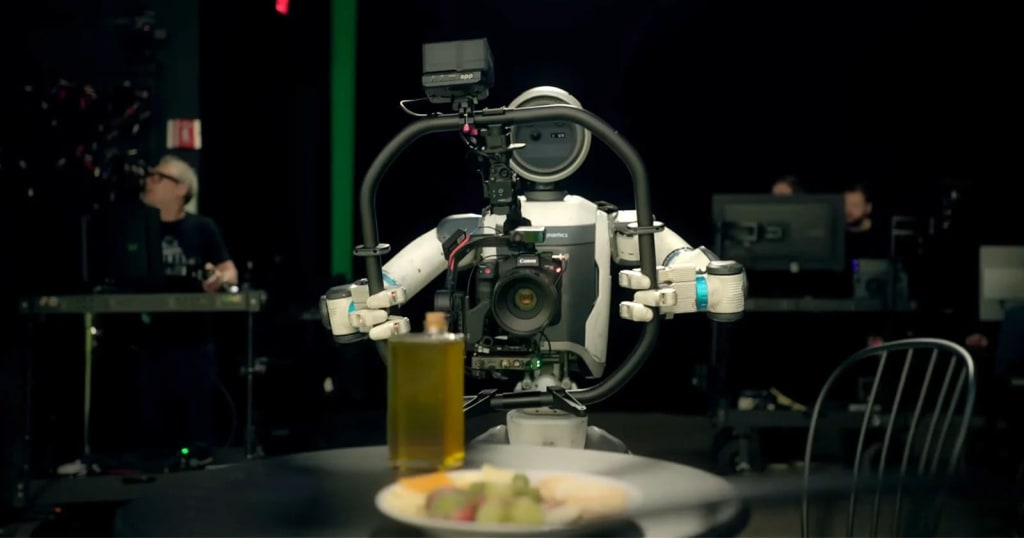
This Boston Dynamics Robot Has a New Job in Photography
Boston Dynamics known for its groundbreaking robots like the humanoid Atlas and the four legged Spot has recently introduced a creative twist to its technological marvels. While Spot was originally developed for inspection surveillance and remote operations in dangerous or hard to reach areas it is now entering the world of photography. With cutting edge upgrades and artistic collaboration Spot is showcasing a new side becoming a robot photographer and even an artist.
From Construction Sites to Camera Operator
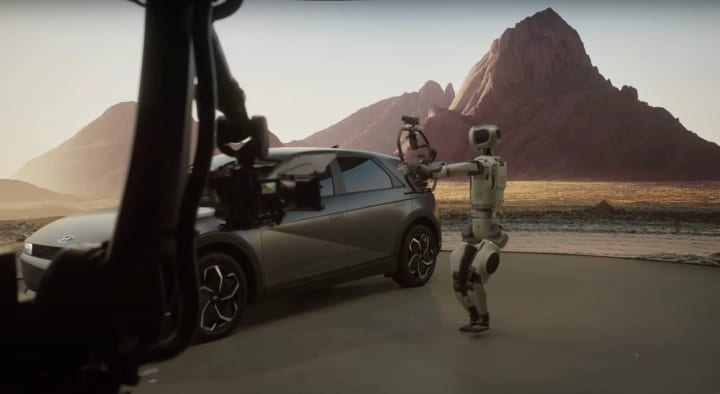
Spot’s journey into photography started with industrial needs. Construction companies often require accurate and frequent documentation of their project sites. Human photographers and drone footage can be expensive or inconsistent. Spot offers a reliable solution by using its autonomous navigation capabilities to follow a programmed path and capture consistent imagery. To enhance this role Spot has been integrated with the Insta360 camera system enabling it to take 360 degree virtual tour photos. These images are used to create immersive digital twins of construction sites and buildings. This means that engineers architects and investors can remotely walk through a project in real time no need to be physically present. The robot is also integrated with platforms like DroneDeploy allowing companies to automate image collection and sync the visuals with other site data. This not only increases efficiency but also improves safety and reduces costs. Because Spot can traverse rugged terrain climb stairs and adapt to changing environments it can access places that might be dangerous or inaccessible to humans.
Upgrades That Make Spot Ideal for Photography
Recent updates to Spot’s software and hardware make it more reliable in its new role as a robotic photographer. Some key improvements include.
Enhanced autonomy: Spot can now recognize and climb stairs more effectively and recover from slipping essential for real world fieldwork.
Better obstacle avoidance: Its sensors and AI have improved allowing for smarter navigation in unpredictable environments.
Payload customization: The robot can carry various types of cameras or scanners depending on the application ranging from thermal imaging to LIDAR and now even professional 360 degree cameras.
These upgrades were aimed at industrial efficiency but they’ve opened the door to creative applications like photography and even art.
Perhaps the most surprising evolution of Spot’s capabilities is its entry into the world of visual art. In a project led by artist Agnieszka Pilat Spot was trained to paint abstract works. The robots were given a set of brushstrokes they could choose from autonomously and then left to interpret those instructions on their own. The result Abstract paintings created by machines but full of movement texture and unique style. These robotic artworks were featured in the Boston Museum of Fine Arts in an exhibition titled Heterobota: The Language of Tomorrow. The goal wasn’t just to make beautiful art but to explore the boundary between human creativity and artificial intelligence. Interestingly the works evoked feelings similar to early human cave paintings raw instinctive and communicative. Spot’s new job as an artist has sparked conversations about whether machines can be truly creative. Are these robots just following code, or is there some element of self expression at play While we may not have a definite answer the experiment highlights the evolving role of robots in human culture.
The Future of Robotic Photography and Creativity
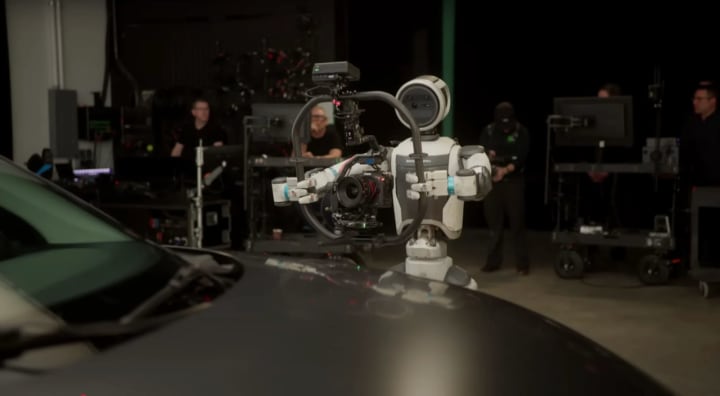
Boston Dynamics’ Spot is proof that robotics is no longer confined to heavy lifting or dangerous tasks. With the right sensors and software robots like Spot can be used in media production tourism art and even journalism. Imagine a world where robots document history capture live events or create art exhibitions entirely on their own. However this also raises ethical questions What is the future of human jobs in photography and art if robots can perform the same tasks possibly faster and more accurately? Should we set limits on what robots are allowed to do creatively. One thing is clear the line between man and machine is blurring especially in fields once considered inherently human. Boston Dynamics has shown that with thoughtful design and bold experimentation robots can do more than just assist they can inspire.
About the Creator
Adnan Rasheed
Author & Creator | Writing News , Science Fiction, and Worldwide Update| Digital Product Designer | Sharing life-changing strategies for success.
Keep reading
More stories from Adnan Rasheed and writers in Futurism and other communities.
SpaceX Rocket Debris Crashes in Europe Top Polish Space Officials Fired
SpaceX Rocket Debris Crashes in Europe Top Polish Space Officials Fired In a dramatic turn of events debris from a SpaceX Falcon 9 rocket re-entered Earth's atmosphere and crashed in western Poland in February 2025 leading to the dismissal of several top officials at the Polish Space Agency (POLSA). The incident has raised serious questions about space debris management and highlighted communication failures within Poland’s governmental system. On February 1, 2025 SpaceX launched its Falcon 9 rocket from Vandenberg Space Force Base in California as part of the Starlink 11-4 mission tasked with deploying 22 internet satellites into low Earth orbit. Normally the upper stage of the rocket would perform a controlled deorbit and burn up over the ocean. However a propellant leak prevented the maneuver causing the stage to make an uncontrolled re-entry into the Earth's atmosphere. On February 19 residents across western Poland were startled by spectacular fireballs lighting up the sky. Many reported hearing sonic booms while others captured footage of the bright streaks overhead. Shortly afterward authorities confirmed that pieces of the Falcon 9 rocket had survived re-entry and landed on Polish territory. Several significant fragments were found: one on the grounds of an electrical warehouse in Komorniki, another in the forests near Wiry and a few more scattered across rural areas near Poznań. Fortunately no injuries were reported but the discovery of rocket parts so close to populated areas immediately triggered investigations.
By Adnan Rasheed9 months ago in Futurism
About Binding Prometheus
I want to start actively advocating on behalf of my own work, and the most valuable part of my canon is, without a doubt, Binding Prometheus, the play I have been working on since 2019 and only finished in 2023 as part of my MA. The play itself is an amalgamation of a million different inspirations. On one end, it evokes the Ancient Greek myth-play, deriving its own title from the earliest extant work of Western drama we have, Aeschylus’s Prometheus Bound. On the other end, it borrows significantly from the sci-fi bulwarks from over the years, namely Mary Shelley’s Frankenstein and Karel Capek’s Rossum’s Universal Robots. The play could be an episode of Black Mirror, I fear. I don’t know. I’ve only ever seen one episode of Black Mirror.
By Steven Christopher McKnight15 days ago in Futurism
United States Edible Offal Market Size and Forecast 2025–2033
United States Edible Offal Market The United States Edible Offal Market is expected to reach US$ 17 billion by 2033, rising from US$ 11.9 billion in 2024, registering a CAGR of 4.04% from 2025 to 2033. Supported by the development of value-added products and expanding retail availability, the market is being driven by rising demand for protein-rich foods, increasing consumer awareness of the nutritional benefits of organ meats, the sustainability and zero-waste movement, and the growing popularity of ethnic and traditional cuisines across the country.
By jaiklin Fanandish6 days ago in Futurism



Comments
There are no comments for this story
Be the first to respond and start the conversation.