
SpaceX Rocket Debris Crashes in Europe Top Polish Space Officials Fired
Communication Failures and Space Debris Crisis Lead to Major Shake up in Polish Space Agency

SpaceX Rocket Debris Crashes in Europe Top Polish Space Officials Fired
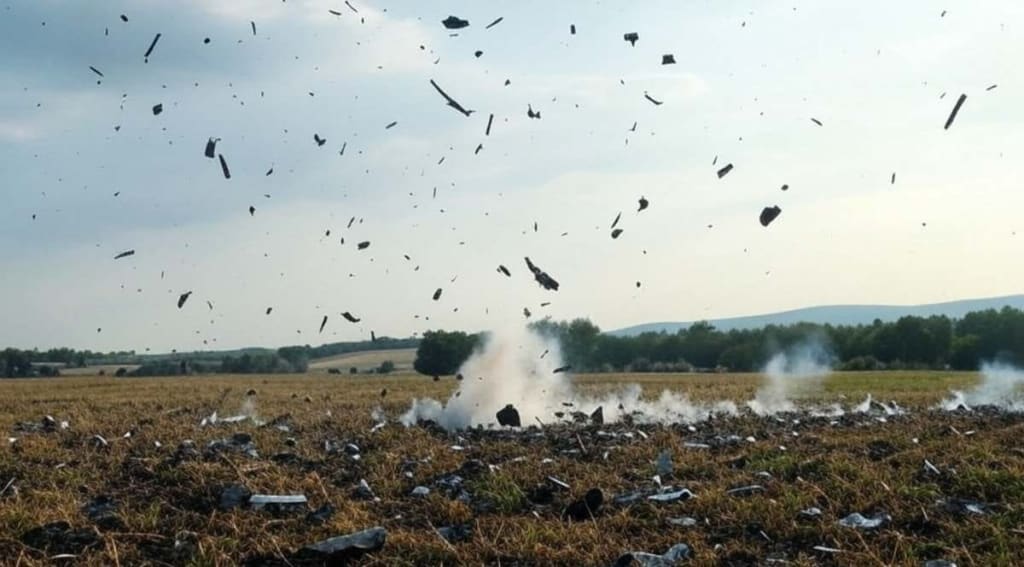
In a dramatic turn of events debris from a SpaceX Falcon 9 rocket re-entered Earth's atmosphere and crashed in western Poland in February 2025 leading to the dismissal of several top officials at the Polish Space Agency (POLSA). The incident has raised serious questions about space debris management and highlighted communication failures within Poland’s governmental system. On February 1, 2025 SpaceX launched its Falcon 9 rocket from Vandenberg Space Force Base in California as part of the Starlink 11-4 mission tasked with deploying 22 internet satellites into low Earth orbit. Normally the upper stage of the rocket would perform a controlled deorbit and burn up over the ocean. However a propellant leak prevented the maneuver causing the stage to make an uncontrolled re-entry into the Earth's atmosphere. On February 19 residents across western Poland were startled by spectacular fireballs lighting up the sky. Many reported hearing sonic booms while others captured footage of the bright streaks overhead. Shortly afterward authorities confirmed that pieces of the Falcon 9 rocket had survived re-entry and landed on Polish territory. Several significant fragments were found: one on the grounds of an electrical warehouse in Komorniki, another in the forests near Wiry and a few more scattered across rural areas near Poznań. Fortunately no injuries were reported but the discovery of rocket parts so close to populated areas immediately triggered investigations.
Communication Breakdown and Political Fallout
In the days following the crash it became clear that there were critical communication failures within the Polish Space Agency. Although POLSA officials stated that they had sent alerts warning of the potential re-entry it was later revealed that these alerts were sent to outdated email addresses. As a result key institutions including Poland’s Ministry of National Defence and local emergency services, did not receive the warnings. Worse still internal reports underestimated the risk claiming the debris would likely disintegrate completely before reaching Earth a claim later proven false. Facing public outrage and government criticism Krzysztof Paszyk Poland’s Minister of Development and Technology acted swiftly. On March 11 he dismissed POLSA President Grzegorz Wrochna and several senior managers citing gross negligence and failure to fulfill basic communication obligations. Paszyk also ordered an immediate review of POLSA's communication systems and procedures to ensure such lapses do not happen again. The safety of our citizens must come first. We cannot tolerate a situation where critical warnings are lost due to outdated contacts or poor oversight Paszyk said during a press briefing. By mid March six pieces of rocket debris had been recovered and secured by the authorities. Each site was carefully cordoned off by police with experts from POLSA and the Ministry of Defence examining the wreckage. The Polish government has pledged to compensate anyone who suffered property damage due to the crash. Officials are also considering filing a formal diplomatic complaint against SpaceX seeking reimbursement for damages and costs associated with recovery and investigation efforts. Legal teams are currently assessing whether claims can be pursued under international space law which holds launching states responsible for damage caused by their spacecraft. So far SpaceX has cooperated with Polish authorities providing data to help locate and identify the fallen debris. However the company has not yet publicly commented on potential compensation.
Broader Concerns About Space Debris
The crash in Poland is a stark reminder of the growing problem of space debris. As spaceflight becomes more routine the risk of uncontrolled re-entries is rising. Although most rocket stages and satellites burn up harmlessly in the atmosphere a small percentage survive re-entry posing risks to people property and the environment. International space law requires that nations bear liability for damages caused by their space objects. However enforcement and coordination remain challenging especially as private companies like SpaceX launch thousands of satellites yearly. The European Space Agency and other organizations have called for stricter global rules on how spacefaring entities manage their debris. Many experts suggest mandatory controlled deorbits and better real time tracking of defunct spacecraft. Meanwhile Poland’s experience serves as a lesson for all nations clear communication updated emergency protocols and close coordination with international partners are crucial to managing the new era of crowded skies. The SpaceX rocket debris crash has caused a political shake up in Poland and sparked a broader debate about safety in the age of rapid space expansion. As investigations continue and compensation is determined the world watches closely knowing that as more rockets are launched preventing similar incidents will become an ever more pressing global responsibility.
About the Creator
Adnan Rasheed
Author & Creator | Writing News , Science Fiction, and Worldwide Update| Digital Product Designer | Sharing life-changing strategies for success.
Keep reading
More stories from Adnan Rasheed and writers in Futurism and other communities.
China’s Secret Spaceplane Exposed Austrian Amateur Snaps Stunning Image as Mysterious Craft Soars Over Europe
China’s Secret Spaceplane Exposed Austrian Amateur Snaps Stunning Image as Mysterious Craft Soars Over Europe In a surprising development that has electrified the global aerospace community an Austrian amateur astronomer has captured a rare and stunning image of what is believed to be China’s highly classified spaceplane as it streaked across the night sky over Europe. The sighting has reignited debates about the secretive nature of China’s military space program and the broader implications for the future of space security.
By Adnan Rasheed10 months ago in Futurism
Why Your TikTok DMs Aren't Private (And Why the Platform Says That's a Good Thing)
Introduction: The Privacy Paradox In the current landscape of digital communication, end-to-end encryption (E2EE) has moved from a niche privacy feature to a baseline consumer expectation. Silicon Valley giants are largely in a race to lock down user data, ensuring that not even the platforms themselves can peer into private conversations. Yet, TikTok—the world’s most scrutinized social media app—is pointedly marching in the opposite direction.
By Tech Horizonsabout 2 hours ago in Futurism
Australia Digital OOH Advertising Market: Technology Adoption, Audience Targeting & Programmatic Growth
According to IMARC Group, the Australia digital out-of-home (OOH) advertising market reached USD 474.2 Million in 2025 and is projected to grow to USD 1,096.9 Million by 2034, exhibiting a compound annual growth rate (CAGR) of 9.47% during 2026–2034. The market’s expansion reflects the rapid digital transformation of outdoor advertising infrastructure across Australia. Increasing smartphone penetration, advancements in display technologies and the growing shift from traditional static billboards to data-driven digital platforms are redefining how brands connect with audiences. Government-backed smart city initiatives and the rising integration of programmatic buying are further strengthening market momentum.
By Kevin Cooper7 days ago in Futurism




Comments (1)
This could be reality soon. Thoughts of space Debris, something the average person doesn’t realize.