
The Sphinx of Balochistan: Nature's Coincidence or Forgotten Masterpiece of an Ancient Civilization?
Balochistan is a remote and politically sensitive region, where ongoing tensions and insufficient infrastructure make large-scale exploration difficult.

A Giant Sleeping in the Hills
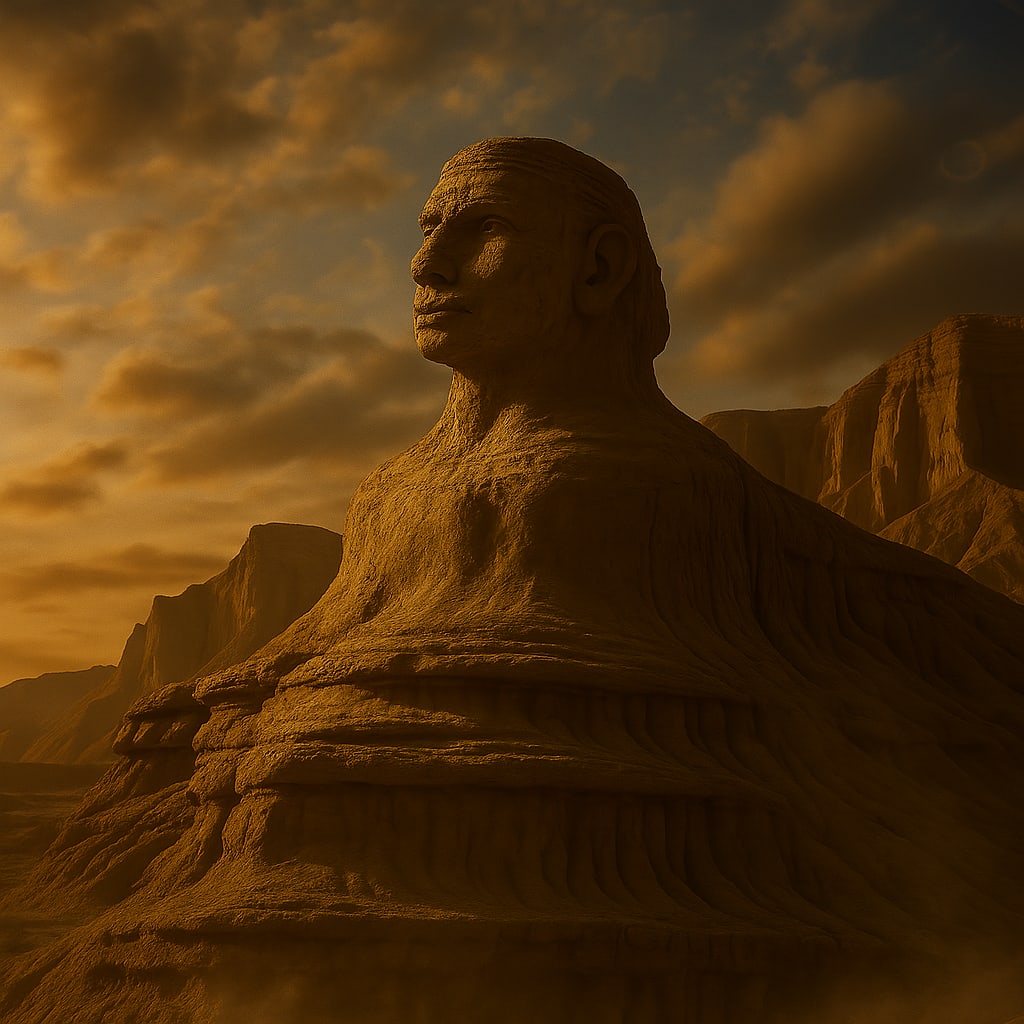
In the rugged and windswept landscape of Hingol National Park in Balochistan, Pakistan, a breathtaking and enigmatic figure emerges from the rock. Known to some as the "Balochistan Sphinx" or the "Lion of Balochistan," this natural wonder has captivated the imagination of travelers, geologists, and enthusiasts of ancient history alike. At first glance, it may seem like just another weathered cliffside. However, as one approaches, the illusion begins to fade; what we see closely resembles the Great Sphinx of Giza in Egypt.
But is it merely an accident of erosion, or could it be something more, an artifact forgotten, buried beneath centuries of silence and shifting sands?This article goes deeper into the mystery of the Balochistan Sphinx, weighing the evidence for both natural formation and ancient human intervention, and exploring the potential for uncovering a lost chapter of history that this intriguing structure might reveal.
The Discovery: When Nature Mimics Art
The Balochistan Sphinx first gained wider public attention through photographs and videos shared by hikers and tourists traveling the Makran Coastal Highway. Situated along the Arabian Sea, the formation is hard to miss. From a certain angle, it resembles a majestic seated lion or a human figure adorned with a headdress, similar in style to the Egyptian Sphinx.
Initial popular articles about the formation sparked curiosity worldwide. Was it just another case of pareidolia, the human instinct to perceive familiar patterns, like faces, in random objects? Or was there something more substantial at play?
The Case for Natural Formation
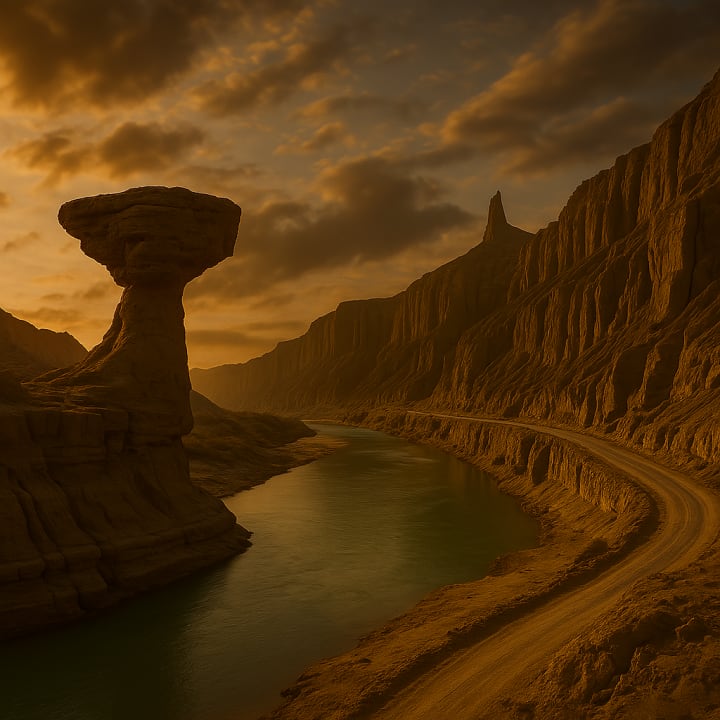
Let's start with the skeptical viewpoint. Geologists argue that Hingol National Park is characterized by similar rock formations formed over thousands of years through wind, rain, and temperature-driven erosion. The region is geologically active, where tectonic movements and coastal weathering sculpt rocks into fantastic patterns. Mushroom rocks, arches, and pillars are common in the area.
The Balochistan Sphinx is situated on the edge of a cliff composed of sedimentary rocks, which are particularly susceptible to erosion. The "face" of the Sphinx, its "paws," and the "headdress" could easily be the result of thousands of years of wind erosion, leaving behind harder segments that just happen to resemble something familiar to the human eye.
From this perspective, the Sphinx is a marvel of natural symmetry, akin to cloud formations that resemble dragons or trees, or human figures.
The Counterargument: Too Perfect to Be a Coincidence?
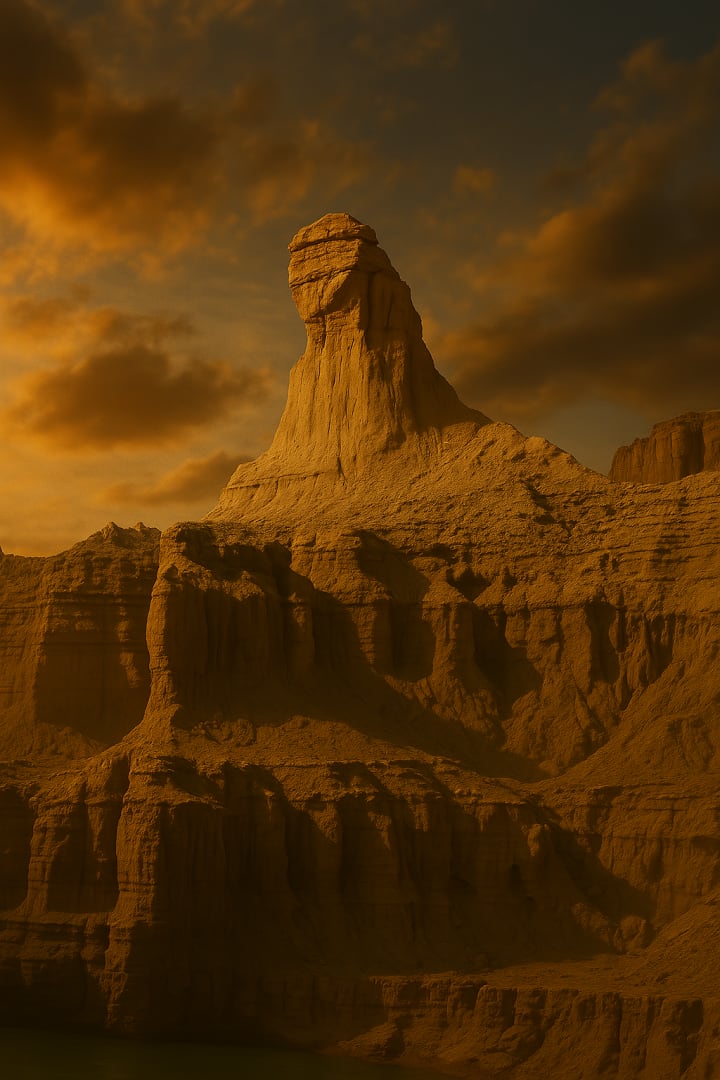
Now, let's consider the more controversial viewpoint. Many who have examined high-resolution photos of the Balochistan Sphinx argue that its symmetry and anatomical alignment are too precise to dismiss as mere coincidence. The structure appears to feature:
- A headdress or crown-like feature wrapping around the "head"
- A clearly defined jawline
- A seated posture resembling that of a lion or a sphinx
- What looks like carved stairways or platforms near the base
- Angular features that closely align with known human architectural design
Researchers, such as Dr. Bibhu Dev Misra, an Indian author and researcher, suggest that the site may contain remnants of an ancient temple complex, potentially thousands of years old, which is mostly buried beneath sediment and erosion.
Dr. Misra and others suggest that what we see is only the tip of the iceberg, the exposed upper part of a once-glorious structure now largely buried beneath the Earth. According to this theory, the harsh environment and the lack of archaeological interest have kept the area unexplored and misunderstood. Some even link the Sphinx to pre-Vedic or proto-Hindu civilizations, proposing the existence of a lost culture that predates written history.
Hingol's Surroundings: More Than One Mystery
What makes the debate even more intriguing is that the Sphinx is not alone. The surrounding region, including the Makran Coastal Highway and the Hingol River, features several unusual formations, such as structures described by some as temple-like, characterized by rectangular entrances and column-like shapes. Observers have even identified what appears to be an ancient gateway or tunnel entrance, possibly leading to subterranean areas. This suggests a larger, interconnected network of structures, raising questions about whether the region might have been a hub of ancient civilization.
Is it possible that this area once housed a sophisticated civilization now lost to time? Could tectonic shifts, floods, or deliberate destruction have erased its memory?
The lack of official excavation means we do not yet have solid answers, but the very possibility raises fascinating questions.
The Problem of Archaeological Neglect
One of the significant challenges in solving this mystery is the lack of formal archaeological investigation. Balochistan is a remote and politically sensitive region, where ongoing tensions and insufficient infrastructure make large-scale exploration difficult.
Moreover, the focus of Pakistani archaeology has long centered on the Indus Valley Civilization, particularly on sites such as Mohenjo-Daro and Harappa. Despite their potential, the coastal areas of Balochistan remain largely untouched.
If the Balochistan Sphinx were located in a more accessible or politically stable region, would it already have been excavated and studied thoroughly? Would it be recognized as one of the great mysteries of ancient human history? The discovery and potential significance of the Sphinx could catalyze increased archaeological exploration and preservation efforts in Balochistan, helping to uncover more of the region's rich history and heritage.
Why It Matters: The Bigger Picture
The Sphinx of Balochistan raises intriguing questions about whether it is simply a natural formation shaped by wind and time or a remnant of a long-lost civilization. This inquiry invites us to consider larger ideas about our history.
Could humanity's past be more intricate than what our textbooks suggest? Have we overlooked entire epochs of culture, science, and art that once thrived but were lost to time, disaster, or indifference? The discovery of the Sphinx has the potential to reshape our understanding of ancient civilizations and prompt a reevaluation of the timelines and narratives we have constructed about our history.
Mainstream history often presents a linear progression. However, discoveries like Göbekli Tepe in Turkey, a massive stone temple dating back over 11,000 years, demonstrate that ancient peoples accomplished remarkable feats much earlier than previously thought. Could the Sphinx of Balochistan be another piece of this forgotten puzzle?
What Sleeps Beneath the Stone
The Sphinx of Balochistan serves as a silent guardian over a land shrouded in mystery. Whether it was created by nature or sculpted by ancient engineers, it merits more than a fleeting glance.
At the very least, it reminds us of the vast unknown, the unexplored, and the discoveries yet to come. At its core, it may signal a forgotten era, whispering of civilizations whose names have faded and whose stories lie just beneath the surface, waiting for someone to ask the right questions.
One day, we may finally unveil the truth about the Sphinx of Balochistan. Until that time comes, it stands as a silent sentinel, urging us to dive deeper into the mysteries beneath the stone.
About the Creator
The Secret History Of The World
I have spent the last twenty years studying and learning about ancient history, religion, and mythology. I have a huge interest in this field and the paranormal. I do run a YouTube channel
Keep reading
More stories from The Secret History Of The World and writers in Futurism and other communities.
Do Spirits Have Guardians? Climbing the Infinite Ladder of Consciousness
The Spiritual Realm An age-old belief, whispered across cultures and in ancient texts, is that an invisible presence watches over every human or animal. Some call it a guardian angel, others a spirit guide, and some refer to ancestral protectors or divine watchers. These presences are said to guide our footsteps, shield us from unseen harm, and gently whisper truths into our dreams when the world becomes heavy. This belief is deeply embedded in the human spirit. Even in moments of silence or despair, we often feel that someone, or something, is there, just beyond the veil.
By The Secret History Of The WorldExclusive • 7 months ago
About Binding Prometheus
I want to start actively advocating on behalf of my own work, and the most valuable part of my canon is, without a doubt, Binding Prometheus, the play I have been working on since 2019 and only finished in 2023 as part of my MA. The play itself is an amalgamation of a million different inspirations. On one end, it evokes the Ancient Greek myth-play, deriving its own title from the earliest extant work of Western drama we have, Aeschylus’s Prometheus Bound. On the other end, it borrows significantly from the sci-fi bulwarks from over the years, namely Mary Shelley’s Frankenstein and Karel Capek’s Rossum’s Universal Robots. The play could be an episode of Black Mirror, I fear. I don’t know. I’ve only ever seen one episode of Black Mirror.
By Steven Christopher McKnight19 days ago in Futurism
Global Li-Fi Market Size & Forecast 2026–2034
Introduction: Lighting the Next Chapter of Connectivity Wireless communication has become the backbone of the modern digital world. From smartphones and laptops to industrial automation and smart cities, connectivity defines productivity, convenience, and innovation. Yet, traditional radio-frequency (RF) technologies such as Wi-Fi and cellular networks are increasingly constrained by spectrum congestion, interference, security vulnerabilities, and performance bottlenecks.
By Aaina Oberoi5 days ago in Futurism
How to Succeed at the Benson Directory®
Congratulations and welcome to the Benson Directory® employee #22391! As our newest call handler, you will have the privilege of speaking with dozens of unique and interesting people on a daily basis as well as the opportunity to earn bonuses for high performance. Contained within this handbook you will find a set of ease to follow instructions designed to help you settle in to your new role and begin paving the way to success.
By S. A. Crawford3 days ago in Fiction



Comments
There are no comments for this story
Be the first to respond and start the conversation.