
The Silent Revolution: How AI Is Reshaping the World Beyond the Screen
What happens when artificial intelligence goes invisible—but more powerful than ever?
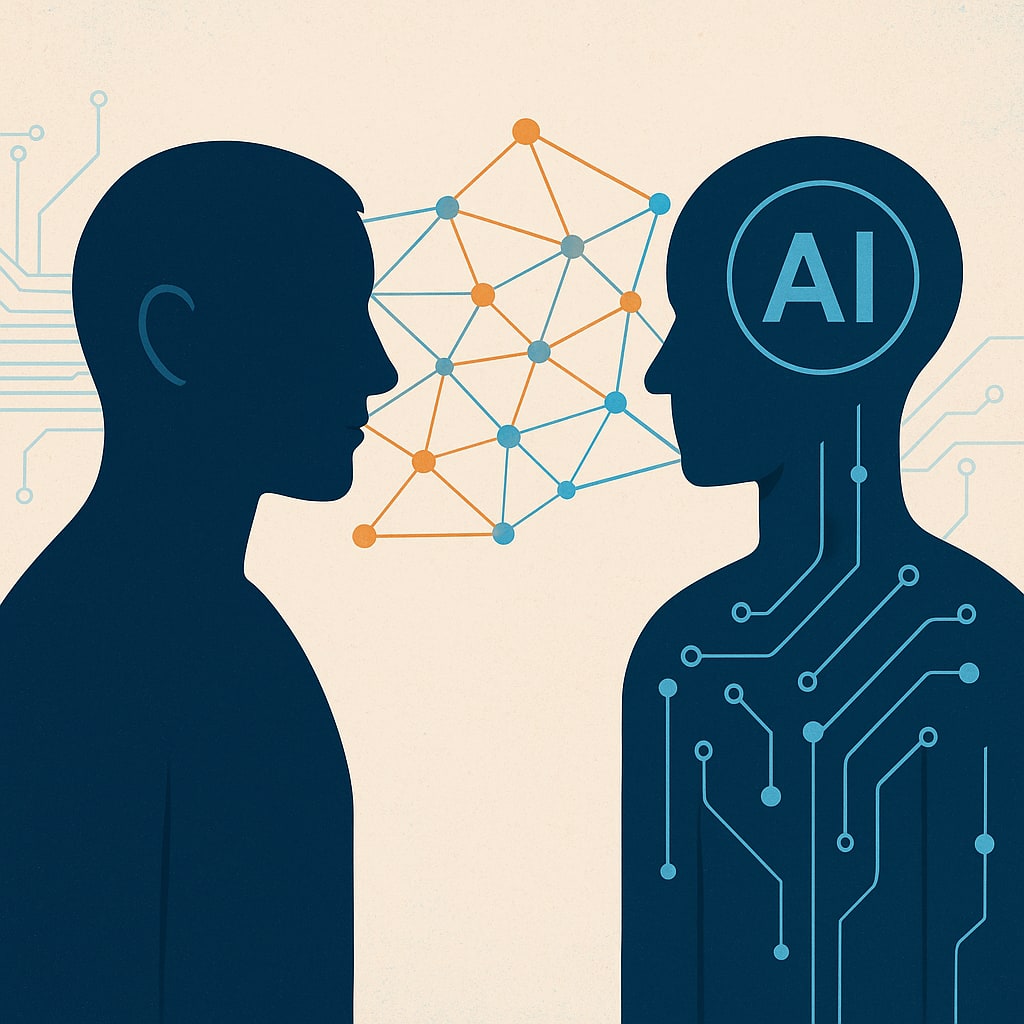
In the public imagination, artificial intelligence (AI) is often visualized as humanoid robots, supercomputers, or dystopian overlords. But in reality, the most transformative AI developments of our time are nearly invisible. They operate silently in the background of our digital lives, embedded in recommendation engines, financial algorithms, supply chains, and even healthcare diagnostics. And yet, their impact is far more sweeping than we typically acknowledge.
Beyond the Hype: AI in 2025 and Beyond
As of 2025, AI has matured from a futuristic concept to a central nervous system for modern life. It’s no longer confined to Silicon Valley think tanks or sci-fi plots. AI now determines the price of your airline ticket, decides which job applications are even read by a human recruiter, and helps doctors predict heart attacks before symptoms appear. But what’s truly revolutionary isn’t just what AI can do—it’s how it's changing what it means to be human.
We’ve entered what some researchers are calling “ambient intelligence”: a world where AI is woven into everyday environments. Smart homes adapt lighting and temperature based on your mood. Autonomous vehicles navigate traffic while learning from each other in real time. Language models (like the one you're reading now) help students learn, support writers, and offer therapy-like conversations for those feeling isolated.
This shift marks a silent revolution—not because it's secret, but because it's becoming normal.
Rethinking Intelligence
AI has also forced us to redefine intelligence itself. For centuries, intelligence was linked to human cognition—reasoning, logic, memory. Now, machines are surpassing us in areas once considered uniquely human: creativity, empathy (simulated but compelling), and even language. AI-generated art challenges our notions of authorship. AI therapists mimic emotional understanding. In some cases, AI systems can now write code better than entry-level developers.
But here lies the paradox: the more intelligent machines become, the more we question what makes us us.
Are we defined by our ability to think critically? To feel? To relate? When machines begin to encroach on those boundaries, humanity faces an identity crisis. Not one born of fear, but of reflection.
Ethical Shadows in an Intelligent World
No technology this powerful arrives without consequences. The invisible nature of AI can make it harder to scrutinize. Biased algorithms still impact loan approvals and legal decisions. Predictive policing software has been criticized for reinforcing systemic injustice. And despite growing awareness, AI transparency remains elusive.
Who holds AI accountable? When an algorithm denies someone a job or healthcare, where do they appeal? These aren’t just technical questions—they’re ethical imperatives. As AI becomes more embedded in governance, justice, and resource distribution, the line between efficiency and fairness grows thinner.
What’s more, the power asymmetry is stark. A few global tech firms hold vast troves of training data, infrastructure, and compute resources—concentrating not just wealth, but influence. The rest of the world becomes a user base, not a stakeholder.
A Call for Conscious Design
Yet it doesn’t have to be dystopian. AI isn’t inherently good or evil—it reflects the intentions and biases of its makers. If designed with inclusivity, transparency, and ethics at its core, AI can be a force for good.
Imagine education systems personalized to every learner’s pace and style. Agricultural AI models helping farmers in low-income countries optimize yields. Crisis prediction models that anticipate wildfires or disease outbreaks before they spread. These are not fantasies—they’re already in pilot stages.
What we need is a new kind of literacy—not just in how AI works, but in how it affects our lives and values. Governments must regulate, but citizens must also engage. We must stop treating AI as magic, and start treating it as infrastructure.
Conclusion: Becoming Human in an AI World
The real story of AI in 2025 isn’t about machines becoming more like humans. It’s about humans adapting to a world that increasingly includes non-human intelligence. This demands humility, vigilance, and creativity.
We must not ask, “Will AI take over?” but rather, “What kind of world are we creating with AI by our side?”
The answer will shape not just the future of technology—but the future of humanity itself.
About the Creator
kritsanaphon
"A storyteller who dives deep into news, technology, and global cultures, sharing fresh perspectives you might never have seen before. Enjoy easy-to-read, insightful content with me in every article!"
Keep reading
More stories from kritsanaphon and writers in Futurism and other communities.
AI and the Human Condition: Rethinking What It Means to Be Human in the Age of Machines
In an age where artificial intelligence writes poetry, diagnoses illnesses, and even simulates empathy, we are prompted to ask a timeless question in a new context: What does it mean to be human?
By kritsanaphon9 months ago in Futurism
iOS & Core ML: Best Practices for Deploying ML Models in iOS App Development
Let’s face it, users expect their apps to be smart. They want apps that anticipate their needs, recommend content, and feel intuitive. That’s where machine learning in iOS comes in. From photo tagging to predictive text, ML is transforming how apps interact with users.
By Emily Carter5 days ago in Futurism



Comments (1)
AI's everywhere now, changing daily life. It's redefining intelligence too.