
The Silent Healers: How Nanobots Became Humanity’s Lifeline
A Tale of Medical Miracles and Life-Saving Innovation

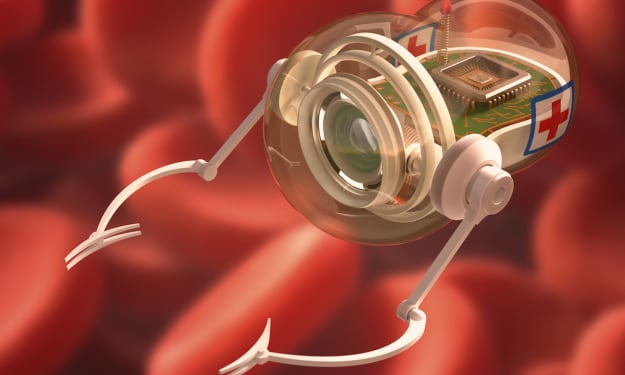
The year was 2038, and the world had finally witnessed what scientists once called impossible: medicine at the molecular level, guided by an army so small they were invisible to the naked eye—nanobots. These microscopic guardians were no larger than blood cells, yet they carried the power to heal injuries, cure diseases, and rescue people in disasters faster than any doctor or machine could.
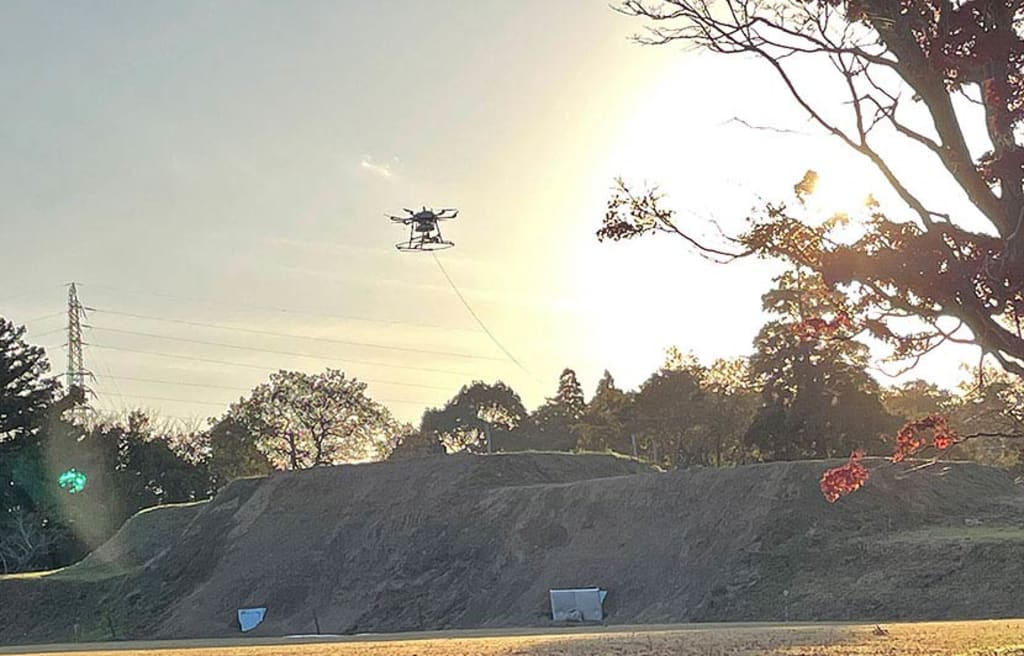
In the bustling metropolis of Neo-Tokyo, an earthquake shook the city at dawn. Buildings crumbled, roads split, and thousands were trapped beneath the debris. Panic spread quickly, but so did hope. Within minutes, rescue teams deployed NanoRescue Units—drones that released swarms of nanobots into the air and through collapsed structures.
Unlike traditional search methods, the nanobots carried tiny biosensors that detected heartbeats, breathing patterns, and even faint neural activity. They could slip through cracks smaller than a grain of sand, reaching victims no human could access. As the bots swarmed through the rubble, they sent real-time health data back to emergency command centers. Red dots appeared on the holographic rescue map, marking lives waiting to be saved.
Among the trapped was a 12-year-old girl named Hana. Pinned beneath heavy concrete, she had severe internal bleeding and fading consciousness. The nanobots located her in seconds. A specialized medical swarm entered her bloodstream through a small cut on her arm. Inside, the nanobots worked tirelessly: sealing ruptured vessels with molecular patches, delivering oxygen to deprived tissues, and sending calming neuro-signals to reduce her shock. By the time rescuers dug her out, Hana was stable—her tiny saviors had kept her alive.
Back at the city hospital, Dr. Amir Rahman monitored dozens of patients connected to the NanoCare Network. Every patient had a swarm of nanobots circulating through their system, transmitting data to the central console. The bots were not only detecting injuries but actively repairing them. A man with a crushed lung showed improvement within minutes as nanobots rebuilt damaged tissue layer by layer. Another patient, suffering from a spinal injury, had bots gently stimulating nerve regeneration—a procedure that would have been impossible just a decade earlier.
Dr. Rahman recalled how medicine used to rely on invasive surgeries and slow recovery. Now, treatment was precise, painless, and nearly instant. “We used to fight diseases with guesswork,” he said softly, watching Hana’s vitals stabilize on his monitor. “Now, we cure them before they become fatal.”
The beauty of nanotechnology was not limited to emergencies. In daily life, millions benefited from its silent vigilance. People wore NanoPatches, tiny skin implants that released monitoring bots into their bloodstream. These nanobots continuously checked for early signs of cancer, infections, or heart disease—alerting doctors before symptoms even appeared. For diabetics, nanobots regulated blood sugar automatically. For the elderly, they repaired cells to slow aging and kept memory functions sharp.
Governments also used nanotechnology for disaster preparedness. NanoRescue Kits, small enough to fit in a backpack, were distributed in earthquake-prone areas. Inside were dormant swarms ready to be activated with a single command, ensuring that even remote villages could receive advanced medical care.
But as miraculous as the technology was, it raised questions. Could nanobots be hacked? What if they malfunctioned? Could they be misused as weapons? The global community established strict protocols, making nanobot programming transparent and encrypted. Swarms were designed with self-destruct functions if tampered with, ensuring they could never be turned against humanity.
Despite the concerns, the world embraced them. Survival rates after disasters increased by 70%. Diseases that once claimed millions of lives dwindled. Children grew up in a world where a small swarm of microscopic healers stood watch, ready to save them from almost any harm.
That evening, Hana awoke in her hospital bed, smiling weakly at her mother. She didn’t know that millions of nanobots had fought tirelessly inside her veins. To her, it felt like she had simply woken from a dream. But to Dr. Rahman and the world, she was proof of a new era.
The silent healers had once again fulfilled their mission—protecting life when all hope seemed lost.
About the Creator
saqib rehman
journalist
Keep reading
More stories from saqib rehman and writers in Futurism and other communities.
The Future of Medical Rescue
In the not-so-distant future, nanotechnology emerged as a groundbreaking force, reshaping the landscape of medicine and emergency rescue. Tiny machines, invisible to the naked eye, began to take on colossal roles—acting as vigilant guardians inside the human body and as swift responders in life-threatening situations. This is the story of how nanotechnology became the unsung hero in saving countless lives.
By saqib rehman8 months ago in Education
Australia Medical Robots Market: Robotic-Assisted Surgery Expansion, AI-Enabled Clinical Precision & Telepresence Healthcare Systems
According to IMARC Group, the Australia medical robots market reached a value of USD 974.6 Million in 2025 and is projected to reach USD 4,889.5 Million by 2034, growing at a compound annual growth rate (CAGR) of 19.04% during 2026–2034. The market is expanding rapidly as healthcare providers increasingly adopt robotic technologies to enhance surgical precision, improve patient outcomes and streamline hospital operations. Medical robots are transforming clinical procedures by enabling minimally invasive surgeries, improving diagnostic accuracy and supporting rehabilitation therapies. Robotic-assisted surgical systems allow surgeons to perform complex procedures with enhanced control, flexibility and visualization, reducing recovery times for patients. Additionally, advancements in artificial intelligence (AI), augmented reality (AR) and machine learning are enabling robotic systems to deliver more precise clinical assistance and data-driven decision support. The emergence of telepresence robotics is also expanding access to specialized healthcare services in remote and rural areas of Australia.
By Kevin Cooperabout 5 hours ago in Futurism
Hottest in the Office
Dear Rafi, You’re very distracting to work around. For the first second I saw you the other day, I thought you were some type of executive. It took a moment to realize no, you were just the new guy, dressed up for the job he wants. Be still, my heart.
By Gabriel Shames6 days ago in Pride



Comments (1)
Yes agree