
The Future of Medical Rescue
How Nanotechnology Revolutionizes Healthcare and Emergency Response

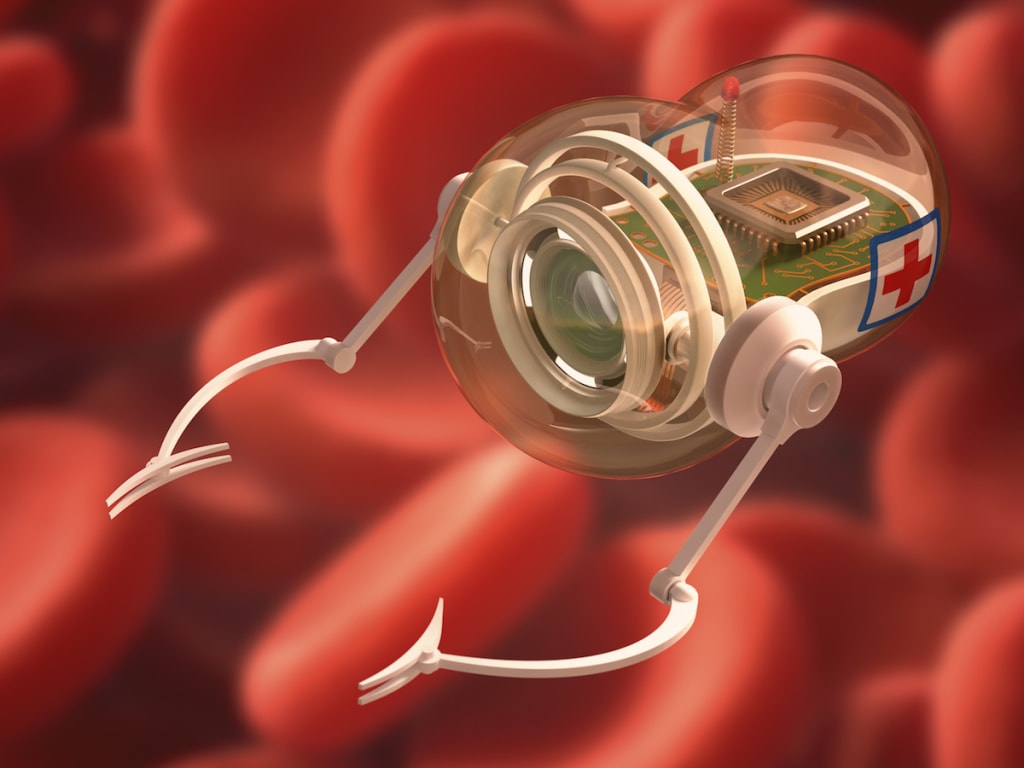
In the not-so-distant future, nanotechnology emerged as a groundbreaking force, reshaping the landscape of medicine and emergency rescue. Tiny machines, invisible to the naked eye, began to take on colossal roles—acting as vigilant guardians inside the human body and as swift responders in life-threatening situations. This is the story of how nanotechnology became the unsung hero in saving countless lives.
In a bustling city hospital, Dr. Maya Collins prepared for the day’s rounds. The emergency room was already abuzz with activity—a multi-car accident had just sent dozens of patients in critical condition. What made this day different was the arrival of the latest innovation in medical care: NanoGuardians—microscopic robots designed to diagnose, treat, and stabilize patients from within their bodies in real-time.
The NanoGuardians, developed by a visionary biotech firm, consisted of swarms of nanobots no larger than a single cell. These bots were programmed with artificial intelligence to navigate the complex environment of the human body, identify problems at a cellular level, and administer precise treatments. Unlike traditional medical tools, they operated autonomously, instantly analyzing vital signs and reacting with unmatched precision.
As paramedics rushed in a young man with a severe internal bleed, Dr. Collins deployed the NanoGuardians into his bloodstream via a tiny injection. Within seconds, the nanobots dispersed through his circulatory system, detecting the site of hemorrhage. They worked collaboratively, releasing clotting agents directly where the damage was, repairing blood vessels with molecular adhesives, and preventing further blood loss. This was not just treatment; it was a miracle in motion.
While the NanoGuardians worked inside the patient, the rescue team outside used nanotechnology for rapid assessment and extraction. Drones equipped with nanotech sensors scanned the accident site, detecting survivors buried under debris with pinpoint accuracy. The sensors could even analyze the victims' health status remotely, prioritizing those who needed immediate attention.
One of the most remarkable features of these nanotech devices was their ability to adapt and learn. Each mission added to their database, improving their performance in future emergencies. For example, after rescuing a woman trapped under rubble with fractured ribs and lung trauma, the nanobots inside her started repairing damaged tissues at a cellular level even before she was moved to the hospital. By the time surgeons took over, much of the damage was already being reversed.
Nanotechnology was not just a tool for acute emergencies—it was also transforming chronic disease management. Patients with diabetes wore nanotech patches that continuously monitored glucose levels and released insulin precisely when needed. Those with heart conditions carried implants filled with nanobots ready to repair arterial blockages before a heart attack could occur. This proactive approach reduced hospital visits and gave patients a new lease on life.
In remote and disaster-stricken areas, portable nanotech kits allowed first responders to administer emergency care without the need for bulky equipment or specialized facilities. The kits contained nanobots programmed to handle common trauma scenarios—stopping bleeding, clearing airways, and even fighting infections by targeting bacteria at the molecular level. These kits saved countless lives in situations where traditional medical help was hours or days away.
But as with any powerful technology, ethical questions and challenges arose. The medical community debated the implications of having autonomous nanobots inside human bodies. What if they malfunctioned? Could hackers control them? How much control should humans relinquish to machines? These concerns spurred rigorous safety protocols and transparent research, ensuring that the technology remained a tool for good.
Despite the hurdles, the impact of nanotechnology on healthcare was undeniable. Survival rates skyrocketed in trauma cases, chronic conditions were managed with minimal discomfort, and emergency rescue became faster and more efficient. The day when a patient’s internal injuries could be healed before they even reached surgery was no longer a fantasy—it was reality.
As Dr. Collins watched the young man’s vital signs stabilize, she smiled. The invisible army of NanoGuardians had done their job once again, quietly saving a life. Outside the hospital, rescue teams continued to deploy nanotech devices, scanning, healing, and rebuilding lives in ways never imagined before.
Nanotechnology had not only revolutionized medicine and rescue operations—it had rewritten the rules of human survival.
About the Creator
saqib rehman
journalist
Keep reading
More stories from saqib rehman and writers in Education and other communities.
Book Review: The 100: A Ranking of the Most Influential Persons in History
History is filled with towering personalities who have left an indelible mark on the world. Yet, rarely does a book attempt to measure and compare the impact of such figures across cultures, centuries, and civilizations. Michael H. Hart’s The 100: A Ranking of the Most Influential Persons in History, first published in 1978 and later revised in 1992, does exactly that. This ambitious work ranks one hundred individuals based on the scope and longevity of their influence on human history.
By saqib rehman8 months ago in Education
How Financial Advisors Make Millions Behind the Scenes
Many people trust financial advisors to guide their money decisions. Advisors help clients save, invest, and plan for retirement. They often appear helpful and knowledgeable. Yet many people do not know how advisors earn their real income. The truth is simple. Financial advisors are secretly making millions through systems that most clients never notice.
By Keith D'Agostinoa day ago in Education


Comments (1)
China is on top