

The Collector arrives in the village of Akoub one morning and spends a few hours at the small Bureau office – not more than a cabinet, really – with the village records. The recordkeeper, an old man with a silver white beard and piercing blue eyes, hates this monthly ritual but must show him the revenue books regardless. They’re performing better than expected, the saffron crop harvested well in time before the khareef season, when the monsoon comes. The birth records are still unsatisfactory: three babies born in the last three months, none of them girls.
Akoub is one of the lower-altitude villages in the mountains of Dhofar, at a head count of 200, more populous than the higher hamlets. Even though the reconstructed irrigation system provides them with enough water, the more desolate villages produce next to nothing other than the vegetable patches and fruit trees they toil over all year. Their women barely give birth, let alone to girls more than boys. The Collector is glad none of those wretched places is on his itinerary this month, where fertility has died in all senses of the word.
That night he goes for a drink in a small tavern on the village main street. The heady perfume of arak and sheesha fills the crowded, dimly-lit room. Everyone recognizes him wherever he goes, but they dare not touch him, at least not in a public place like this. He senses their hostility, an electric field that causes his back to prickle and the hairs on the nape of his neck to rise up. He pats the device in his pocket, reassured that backup is only a quick tap away.
The Collector asks for his usual drink. The bartender, young and ingratiating, slides over a glass of orange-pink liquid he’s never seen before.
“I don’t want this,” says the Collector, frowning. “Give me arrak.”
“We’ve run out. Try this. It’s something the locals make. I promise you’ll like it”
He waves the bartender away, then picks up the glass and walks to a corner table. As he passes two men speaking the common language, they glance at him, then switch to mountain dialect. The Collector’s mother had come from this area, and he understands the dialect perfectly.
“She says she wants another child,” says one of them.
“Yours or mine?” asks the other.
“I don’t know. Our wife doesn’t care, as long as it’s healthy.”
Co-husbands, the Collector notes. Farmers, from the way they were dressed: sturdy boots, homespun cloth for tunics and trousers, old beaten leather jackets popular in this part of Dhofar. The northern traders bring them every winter to the southern mountains through the black market. The Collector turns a blind eye to this kind of trade.
The farmers continue to drink in companionable silence. After a time, they rise from their table, bring their glasses over to the bartender and pay up, nod at the Collector, and wander out into the night.
The Collector, his head a little fuzzy, decides he needs fresh air too. He leaves his glass on the table and doesn’t bother paying for his drink. Nobody dares ask him for money around here. Still, the bartender approaches him as he’s shrugging on his coat at the door.
“Did you like it?”
The Collector has to concentrate to understand his question. “It was all right. What’s it made of?”
“It’s Yemeni. This is from its flower, but they say if you add its roots to beer, it’s quite an aphrodisiac.” He smiles, revealing a crooked smile with a few missing teeth. “Speaking of aphrodisiacs… I’ve heard tell of something unusual. For here, anyway.”
“What?” said the Collector. His ears are starting to ring.
“There’s a group of women living somewhere on the mountain.”
“What women?”
“No ordinary women. I hear they’ve set up a brothel.”
The Collector laughs in the bartender’s face. “Out here? In this place? Who are their clients, the goats? None of you could afford to pay for a whore.”
Again, the crooked toothless smile. “We couldn’t. But someone like you…I’m sure you’re not used to the cold nights here. Surely you’d like someone to keep you warm.”
The Collector stares coolly at the bartender. “And are you their pimp?”
“I’m only telling you what I’ve heard.”
“Best keep fairytales to yourself.”
As the Collector pushes his way through the door and steps out into the village street, a dog lets out a long, melancholy wail, echoed by other howls, coming from different directions, joining in the chorus of nighttime despair. Even the dogs here are desperate, thinks the Collector, wanting to be in his bed.
A few lamps glowing here and there to mark the path that slopes steeply downhill. Doors are shut and windows closed, blinds pulled down, giving the appearance of an entire village as one body, deeply asleep. The Collector veers down the path, aiming in the general direction of his quarters. He sees a black cloth hanging from the far corner of the tavern, flapping softly in the wind. For one second he thinks it’s a hanged woman. Then he realizes it’s just someone’s washing flapping on a clothesline.
He’s been to Akoub dozens of times over the years, but somehow tonight he takes one wrong turn, and then another, and then instead of walking downhill, he’s headed uphill, the village behind him, a starry sky above him, a rising cliff on his right and a forest on his left. Disoriented, he stands still and tries to figure out where he is.
There’s secretive inner whispering, as if coming from inside his head. Honorable sir… Then they call his name… Anas… Anas… A fog has rolled in, and he can’t see more than a few feet in front of him. The air is cottony thick against his skin, wet with humidity, damp and cold.
Slowly they materialize into view: two veiled figures, standing together off the path, against the trunk of a baobab tree. The moon has come out from behind a cloud to illuminate both the women and the tree with a glowing, pulsing light. The women – what else would they be, veiled and calling out to him with low, melodious voices? – shimmer like silver.
The two women call out to him again. “Anas… come a little closer, so we can see you…”
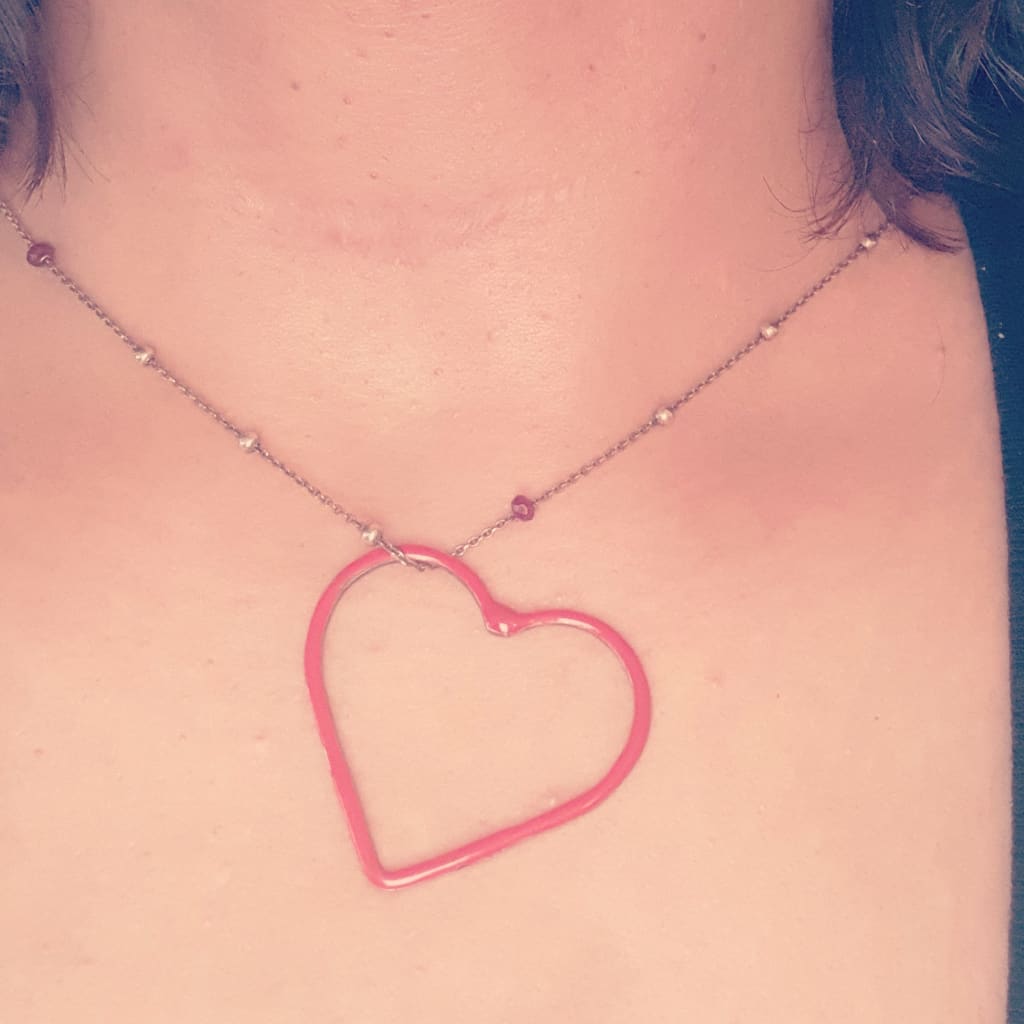
How do they know his name? He is known only as The Collector; they all are, one collective noun for the nameless state entity. Murkily, he thinks they might be lost too, and it’s his job to investigate and bring them back to their rightful protectors. They’re so close he can smell their scent, a faint perfume, a wisp of jasmine, jogging loose a memory of his mother cradling him when he was an infant. Her body, too, had smelled like flowers, as he comforted himself against her breast, the heart-shaped locket around her neck clutched tight in his tiny fist.
The women pull the veils from their heads. They’re both young, smooth-skinned, one blonde and the other dark-haired. Their eyes are large and limpid. The dark-haired woman has a jewel in her nose.
He knows at once these are the women the bartender was talking about; not like any other women he’s seen in these mountain villages, and not in the capital city either. His legs grow weak and rubbery.
“You’re lost,” said the blonde woman.
The dark-haired one says, “We have a house not far from here. Would you like to come see it?”
His throat constricts, with fear or excitement, he can’t quite tell. “Is it the brothel I heard about back in the village?”
“Come see it for yourself.” Their hands reach out for him, white and brown doves beckoning him to follow.
Rain drops begin to spatter on their faces. The women looked up at the clouds and laugh sweetly. “The khareef,” says the woman with the nosepin.
“Come on. Let us give you shelter.”
He doesn’t want to be out here alone in the monsoon rain, on mountain paths slippery and treacherous at night. He hears the hiss of rain in treetops, his footsteps crunching in the wet gravel on the path, his strained breathing, his heartbeat drumming in his ears. The air has changed pressure, becoming close and thick; petrichor, rich and loamy, rises from the earth and fills his nose. They come to a house, brightly lit windows glinting in the darkness. Its windows are like eyes and its door is a smile underneath. The raindrops falling all around them are confetti, celebrating his return home.
The women glide to the door and beckon the Collector inside. He hesitates, looking back over his shoulder, but there is nothing behind him save for a few ghostly looking trees, the shadow of low hills, and rows of bushes, pale flowers bobbing under the weight of the rain. He sticks his head cautiously through the door of the house, looking for men waiting with guns, while the women will scurry into the kitchen and disappear. But there’s just an empty hallway, stone walls freshly whitewashed, a worn carpet thrown on the floor as a welcome mat. A light on the wall gives off a warm yellow glow.
“Come, come,” calls a woman’s voice. The Collector follows the voice down the corridor to a room, a space small but inviting: a low sofa set against a far wall, on which both the women are sitting, now without their veils.
The dark-haired woman pats the sofa: the Collector joins them hesitantly. The blood is turning to sludge in his veins, thickening in his legs, weighing him down to the point of near paralysis. At the same time, he’s filled with need; the desire to be fully accepted, not to be hated for being the Collector. He wants to be loved. As if he’s said this out loud, the two women put their hands on his thighs and rest them there lightly, in a gesture of affection and compassion.
The Collector can barely breath. If they apply the slightest pressure of their fingers on his flesh, he will have them both, one after the other, or at the same time. No man would refuse this opportunity, legal or illegal, his job, consequences be damned.
The dark-haired woman puts her hands on his face, and his hands encircle her waist; he leans forward and begins to tighten his arms around her in a python’s embrace. The slightest moan escapes her lips. Their kiss is deep and lush, the taste of her mouth like honey.
He puts his hand up to her neck and touches something hard and metallic hanging from a chain. He breaks away from the kiss to see a heart-shaped necklace at her throat. Just as he’s about to ask her where she got it from, there’s a pain at the base of his neck from a blow so hard that he sees pinpoints of bright light skidding across his vision. He releases the woman from his embrace and slumps forward into her lap. A trickle of blood snakes its way down his neck.
He falls off the woman’s lap and onto the floor with a loud thump.
“Is he dead?” A young woman, standing behind the sofa with a short club in her hands, is ready to hit the man again if he moves. Others appear in the doorway, their guns aimed at the Collector prone on the ground.
“I don’t think so,” says the woman with the heart-shaped locket. “Look, he’s still breathing.”
“Well done,” says the woman with the gun. “We’ll take it from here. Grab his device,” she says to her companion. Then the two of them drag him by his arms and legs outside the house. The rest of the women come into the room and wait for the single gunshot that cracks out just as a flash of lightning brightens the windows and the khareef pours down on the mountain.
About the Creator
Bina Shah
Bina Shah is a Karachi-based author. Her latest novel, Before She Sleeps, was published by Delphinium Books in 2018. An accomplished essayist, columnist and short story writer, Bina is also a fellow of the IWP at the University of Iowa.
Keep reading
More stories from writers in Futurism and other communities.
About Binding Prometheus
I want to start actively advocating on behalf of my own work, and the most valuable part of my canon is, without a doubt, Binding Prometheus, the play I have been working on since 2019 and only finished in 2023 as part of my MA. The play itself is an amalgamation of a million different inspirations. On one end, it evokes the Ancient Greek myth-play, deriving its own title from the earliest extant work of Western drama we have, Aeschylus’s Prometheus Bound. On the other end, it borrows significantly from the sci-fi bulwarks from over the years, namely Mary Shelley’s Frankenstein and Karel Capek’s Rossum’s Universal Robots. The play could be an episode of Black Mirror, I fear. I don’t know. I’ve only ever seen one episode of Black Mirror.
By Steven Christopher McKnightabout a month ago in Futurism
DC-DC Converter Market: Modular Architectures & Custom Power Solutions
Driven by electric vehicle adoption, renewable energy integration, industrial automation, and rising demand for efficient power management across electronics, telecom, and data center infrastructure worldwide. According to IMARC Group's latest research publication, global DC-DC converter market size reached USD 12.3 Billion in 2024. Looking forward, IMARC Group expects the market to reach USD 22.0 Billion by 2033, exhibiting a growth rate (CAGR) of 6.36% during 2025-2033.
By Andrew Sullivan2 days ago in Futurism




Comments
There are no comments for this story
Be the first to respond and start the conversation.