
DC-DC Converter Market: Modular Architectures & Custom Power Solutions
How electrification trends, efficiency mandates, and system miniaturization are driving adoption across end-use industries

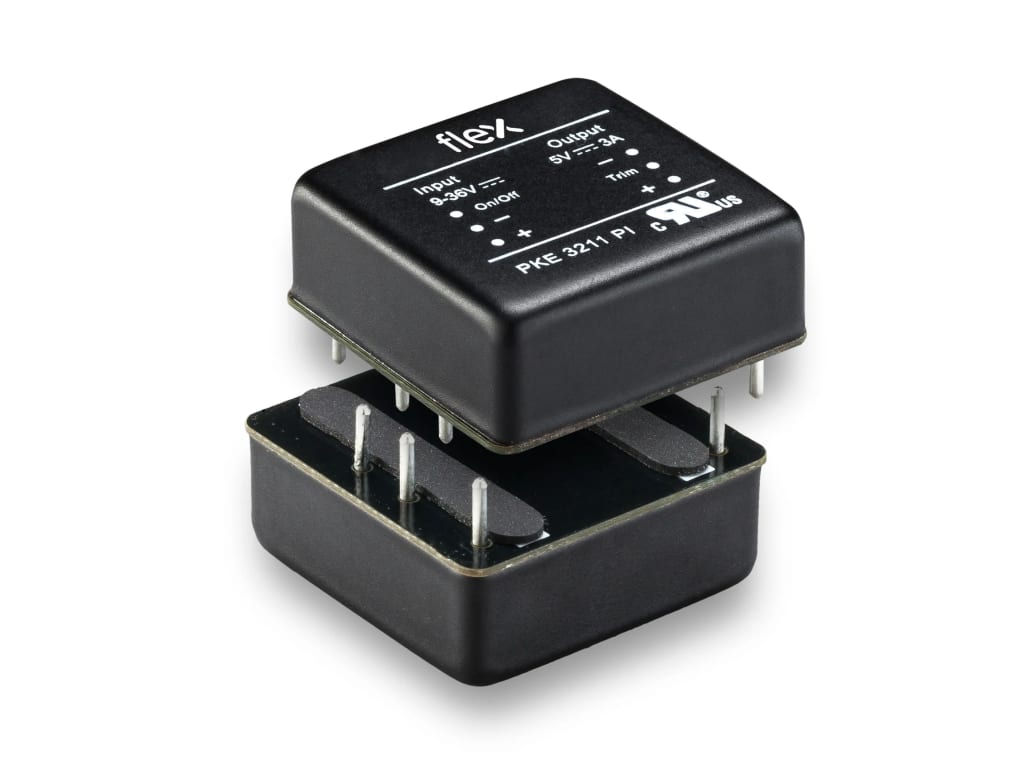
Driven by electric vehicle adoption, renewable energy integration, industrial automation, and rising demand for efficient power management across electronics, telecom, and data center infrastructure worldwide. According to IMARC Group's latest research publication, global DC-DC converter market size reached USD 12.3 Billion in 2024. Looking forward, IMARC Group expects the market to reach USD 22.0 Billion by 2033, exhibiting a growth rate (CAGR) of 6.36% during 2025-2033.
How AI is Reshaping the Future of DC-DC Converter Market
- Predictive Maintenance and Fault Detection: AI algorithms monitor converter performance in real-time, identifying early warning signs of component degradation before failures occur, enabling proactive maintenance that minimizes downtime.
- Adaptive Control and Efficiency Optimization: Machine learning systems automatically adjust control parameters based on environmental feedback like temperature and load changes, optimizing efficiency across varying operating points without manual tuning.
- Enhanced Design and Parameter Selection: AI-powered design tools use neural networks to model converter properties, accelerating optimization and achieving higher efficiency while maintaining volume and ripple constraints through reinforcement learning.
- Smart Grid Integration and Power Management: AI enables intelligent converters to communicate and coordinate with other units in microgrids, handling noise and unpredictable behavior more effectively than conventional methods for renewable energy systems.
- Rapid Commissioning and Configuration: AI reduces setup time by automatically configuring control settings based on load profiles, making deployment faster and eliminating the need for extensive manual calibration in complex applications.

Download the “DC-DC Converter Market” Executive Summary Sample
DC-DC Converter Industry Overview:
The electric vehicle revolution is transforming the DC-DC converter landscape, with manufacturers racing to meet surging demand from automotive electrification. Battery electric vehicles require sophisticated high-voltage converters to step down power from 400V-800V battery packs to 12V systems for auxiliary loads like infotainment and lighting. MAHLE secured a €200 million contract to supply DC-DC converters for a Chinese automaker's new EV line, with production starting at its Changshu plant in mid-2028, while Navitas announced automotive qualification of its GaNSafe ICs in April for EV on-board chargers and converters, offering superior power density.
DC-DC Converter Market Trends & Drivers
Electric vehicle proliferation is the dominant force reshaping the DC-DC converter market, with global EV sales driving unprecedented demand for power management solutions. The automotive DC-DC converter market reached USD 3.28 billion and is expanding rapidly as manufacturers transition from 400V to 800V architectures. Isolated DC-DC converters hold 72.3% market share due to their critical role in providing electrical isolation for passenger safety. Companies like Infineon and Navitas are advancing wide-bandgap semiconductors, with Forvia HELLA selecting Infineon's CoolSiC MOSFET 1200V for next-generation 800V charging solutions, while bidirectional topologies enable vehicle-to-grid capabilities, turning parked EVs into distributed energy assets.
Renewable energy integration is accelerating DC-DC converter adoption as solar and wind installations require efficient power conversion for grid connectivity and battery storage. Solar photovoltaic systems reached 540 GW global capacity, necessitating ultra-wide input converters that handle 100V to 1500V ranges with minimal energy losses. Researchers achieved 96% conversion efficiency with poly-input converters that integrate solar panels and fuel cells simultaneously. DC-coupled battery storage systems use these converters for clipping recapture and low-voltage harvesting, capturing energy that would otherwise be lost when PV output exceeds inverter capacity or drops below wake-up thresholds, maximizing revenue from renewable installations while ensuring grid stability.
Data center expansion and 5G infrastructure deployment are creating substantial opportunities for high-efficiency DC-DC converters as computing power demands escalate. The shift from 12V to 48V power distribution networks in AI servers and hyperscale facilities requires advanced converter modules with superior power density. Vicor Corporation launched 48V-to-12V DCM converters in March specifically for AI servers, while Murata Manufacturing expanded its 48V-input lineup in May to enhance efficiency for 5G base stations and Power over Ethernet applications. These deployments demand converters operating at higher switching frequencies with gallium nitride and silicon carbide semiconductors, reducing board space requirements while managing thermal loads in densely packed rack configurations.
Leading Companies Operating in the Global DC-DC Converter Industry:
- ABB Ltd
- Bel Fuse Inc.
- Delta Electronics Inc.
- Fujitsu Limited
- General Electric Company
- Infineon Technologies AG
- Meggitt plc
- Murata Manufacturing Co. Ltd.
- RECOM Power GmbH
- STMicroelectronics
- TDK Corporation
DC-DC Converter Market Report Segmentation:
By Mounting Style:
- Surface Mount
- Through Hole
Through hole represents the largest market segment as it provides enhanced mechanical support and reliable electrical connections for durability in various industries.
By Input Voltage:
- 5–36V
- 36–75V
- 75V and Above
5–36V accounts for the majority of the market share due to its versatility in adapting to a wide range of applications across different industries.
By Output Voltage:
- 3.3V
- 5V
- 12V
- 15V and Above
5V holds the biggest market share as it is widely used in consumer electronics and aligns with standard USB voltage specifications, making it essential for many devices.
By Application:
- Smartphone
- Servers PCs
- EV Battery
- Railway
- Others
Smartphone dominates the market segment as DC-DC converters are crucial for providing stable power supplies and enhancing performance in modern smartphones.
Regional Insights:
- North America (United States, Canada)
- Asia Pacific (China, Japan, India, South Korea, Australia, Indonesia, Others)
- Europe (Germany, France, United Kingdom, Italy, Spain, Russia, Others)
- Latin America (Brazil, Mexico, Others)
- Middle East and Africa
Asia Pacific exhibits a clear dominance by accounting for the largest DC-DC converter market share, driven by rapid growth and demand in the region.
Recent News and Developments in DC-DC Converter Market
- May 2025: MAHLE announced winning a €200 million order to provide DC-DC converters to a Chinese car manufacturer for an upcoming battery-electric vehicle line. Production will commence at MAHLE's Changshu plant in mid-2028, further establishing the company's position in the Chinese EV market.
- May 2025: Murata Manufacturing Co. expanded its 48V-input converter lineup to improve efficiency for 5G base stations and Power over Ethernet applications, addressing the growing demand for high-efficiency power conversion in telecommunications infrastructure.
- April 2025: Navitas Semiconductor announced that its high-power GaNSafe ICs received automotive qualification and are now ready for production in electric vehicles, offering superior power density and efficiency particularly for on-board chargers and high-voltage to low-voltage DC-DC converter applications.
- April 2025: ROHM introduced four new compact DC-DC step-down converter ICs for industrial and consumer applications including washing machines, refrigerators, PLCs, and inverters. The lineup features the BD9E203FP4-Z buck converter with 2A output and 350kHz switching frequency.
- March 2025: Vicor Corporation launched its latest 48V-to-12V DCM converters specifically designed for AI servers and electric vehicles, enabling smaller yet more efficient power systems aligned with the industry transition to 48V power distribution networks.
Note: If you require specific details, data, or insights that are not currently included in the scope of this report, we are happy to accommodate your request. As part of our customization service, we will gather and provide the additional information you need, tailored to your specific requirements. Please let us know your exact needs, and we will ensure the report is updated accordingly to meet your expectations.
About the Creator
Andrew Sullivan
Hello, I’m Andrew Sullivan. I have over 9+ years of experience as a market research specialist.
Keep reading
More stories from Andrew Sullivan and writers in Futurism and other communities.
Wood Vinegar Market: Circular Economy Integration & Commercial Opportunities
Rising adoption of organic farming, demand for bio-based crop inputs, stricter chemical regulations, and expanding applications in agriculture, livestock, and food preservation are collectively driving strong market momentum. According to IMARC Group's latest research publication, global wood vinegar market size reached USD 5.21 Billion in 2024. Looking forward, IMARC Group expects the market to reach USD 8.32 Billion by 2033, exhibiting a growth rate (CAGR) of 5.30% during 2025-2033.
By Andrew Sullivanabout 8 hours ago in Futurism
About Binding Prometheus
I want to start actively advocating on behalf of my own work, and the most valuable part of my canon is, without a doubt, Binding Prometheus, the play I have been working on since 2019 and only finished in 2023 as part of my MA. The play itself is an amalgamation of a million different inspirations. On one end, it evokes the Ancient Greek myth-play, deriving its own title from the earliest extant work of Western drama we have, Aeschylus’s Prometheus Bound. On the other end, it borrows significantly from the sci-fi bulwarks from over the years, namely Mary Shelley’s Frankenstein and Karel Capek’s Rossum’s Universal Robots. The play could be an episode of Black Mirror, I fear. I don’t know. I’ve only ever seen one episode of Black Mirror.
By Steven Christopher McKnight28 days ago in Futurism


Comments
There are no comments for this story
Be the first to respond and start the conversation.