
The Secret Rebel Inside Every BMW: What You Didn’t Know About the Ultimate Driving Machine
BMW is not just about luxury or speed. It’s about pushing boundaries without always shouting about it. It’s about sneaking performance into elegant packages and dropping microcars into luxury lineups when nobody expects it. It’s a brand that blends contradictions—precision with passion, history with futurism, rebellion with refinement.
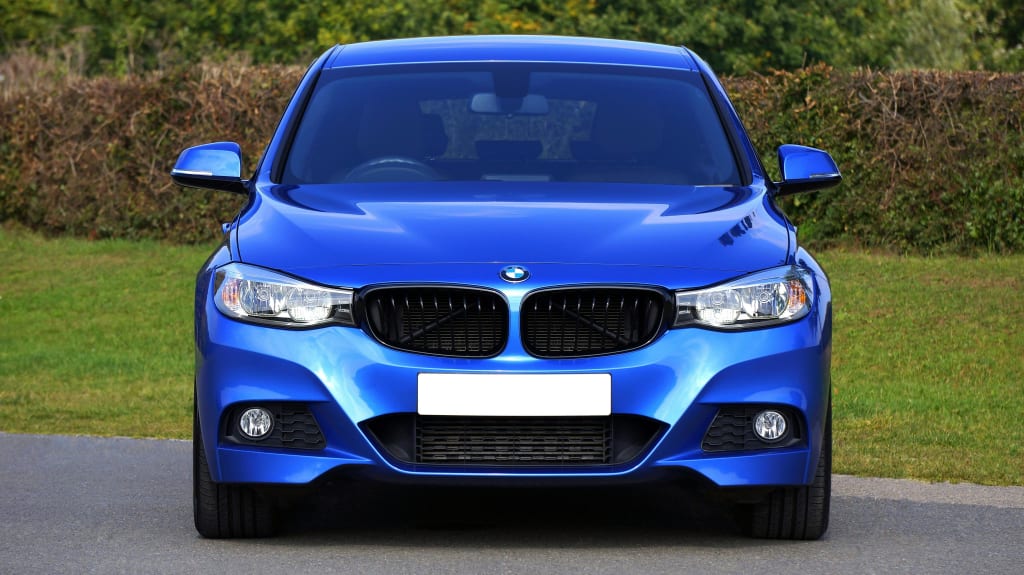
When most people think of BMW, they imagine sleek design, premium engineering, and a badge of status. It’s a brand that practically breathes confidence and class. But beneath the polished surface of "The Ultimate Driving Machine" lies a surprisingly rebellious spirit—a story of innovation, wartime secrets, defiance, and unexpected quirks that make BMW much more than just another luxury automaker.
From Warplanes to the Autobahn
BMW didn’t start by making cars. In fact, the company’s origin traces back to 1916, and it made aircraft engines during World War I. The famous blue-and-white logo? It’s not just a random design—it symbolizes a spinning airplane propeller against a blue sky, a tribute to its aviation roots. That sleek BMW badge you see on modern cars? It’s a legacy from a time when the company’s machines ruled the skies, not the roads.
Ironically, it was the Treaty of Versailles that forced BMW out of the aviation business after World War I. Suddenly grounded, the company had to pivot. That pivot eventually led them to motorcycles, and later, automobiles—but not without setbacks.
The Car That Saved BMW... Was Italian
Fast-forward to the 1950s. BMW was teetering on the edge of bankruptcy. The German economy was recovering, but people didn’t want big luxury cars—they wanted something small and efficient. In an unexpected twist, BMW’s savior came from Italy.
They licensed the design for a tiny bubble car called the Isetta—a strange, egg-shaped vehicle with a single front door that opened like a refrigerator. Weird? Absolutely. But the Isetta was a hit. It kept BMW alive when no one else was betting on them. It’s hard to believe, but the same company that now produces fire-breathing M-series monsters once relied on a 12-horsepower microcar to stay afloat.
The “M” Stands for Madness (Kind Of)
Today, BMW’s M Division is synonymous with high-performance vehicles that dominate racetracks and highways alike. But originally, "M" stood for "Motorsport"—and it wasn’t meant for public consumption.
In the 1970s, BMW started producing race-ready cars under the M label, strictly for competition. Then came the BMW M1—a road-legal supercar that blurred the line between race and street. Only 453 were made, and it wasn’t a huge commercial success. But it lit a fire.
That fire became the BMW M3, M5, and eventually the M2, M4, M8—cars that push limits and break rules. Here's something most people don’t know: when BMW was developing the E39 M5, the engineers deliberately underreported its horsepower to avoid triggering insurance red flags in some markets. The car was officially rated at 394 horsepower. Reality? Closer to 420. That’s BMW's quiet rebellion again—hiding performance in plain sight.
When BMW Went Electric… in 1972
You might think BMW jumped on the EV trend recently with the i3, i4, and the iX series. But BMW’s electric ambitions go all the way back to the 1972 Munich Olympics.
They built a prototype called the 1602e, an all-electric version of their compact sedan. It only had a range of about 37 miles and a top speed of 62 mph, but it stunned people. It was clean, silent, and unlike anything else on the road.
Of course, the world wasn’t ready. Charging infrastructure didn’t exist, and battery technology was primitive. But the 1602e proved BMW wasn’t afraid to innovate way ahead of its time—even if it meant shelving the idea for decades.
BMW’s Secret “Sound Engineers”
Love the way a BMW growls when you step on the gas? That’s not just an accident—it’s been engineered, quite literally.
BMW employs sound designers to create the ideal engine note for their vehicles. In fact, starting with the F10 M5, they even began piping artificial engine sounds into the cabin through the speakers—called "Active Sound Design."
This revelation shocked some purists. “Fake engine noise?” they cried. But here’s the twist: BMW isn’t faking anything. They’re enhancing the real sound, tuning it like a musical instrument, just to give you that addictive, adrenaline-pumping feedback. It’s artistry, not trickery.
They’ve Made Cars That Drive Without You
While Tesla tends to dominate headlines about autonomous driving, BMW has quietly been testing self-driving cars for decades. As far back as the early 2000s, BMW demonstrated a 7 Series that could lap the Nürburgring without a human behind the wheel.
In 2009, they introduced "Track Trainer," an autonomous M5 that could follow a perfect racing line. It was so good that even professional drivers used it to sharpen their skills.
BMW doesn’t just follow trends—they prototype the future in secret, test it in the shadows, and then release it only when it meets their meticulous standards.
The Quirky Side of Perfection
BMW drivers are often stereotyped as a bit... intense. But here’s something charming: BMW engineers have always had a playful side.
Take the E30 M3, for exampleWhile designing it, engineers intentionally made it difficult to drive at the limit—because they believed mastering the car should take skill and practice. It was their way of building a relationship between man and machine.
Even today, BMW often embeds “Easter eggs” into their cars—like hidden compartments, subtle design references to past models, or secret codes in the vehicle identification numbers that reveal fun facts.
Conclusion: BMW Is More Than a Brand. It’s a Statement.
BMW is not just about luxury or speed. It’s about pushing boundaries without always shouting about it. It’s about sneaking performance into elegant packages and dropping microcars into luxury lineups when nobody expects it. It’s a brand that blends contradictions—precision with passion, history with futurism, rebellion with refinement.
So next time you see a BMW roaring down the highway or silently gliding by in electric mode, remember: that car carries a legacy of warplanes, Italian microcars, motorsport madness, and engineering Easter eggs.
BMW doesn’t just build machines. It builds myths—and invites you to drive one.
About the Creator
Keep reading
More stories from Umair Khan and writers in Futurism and other communities.
“The Day Scientists Heard the Earth Hum — And What It Might Mean for Humanity
For centuries, the Earth has been whispering secrets we weren’t ready to hear. Until recently. In 1998, a group of seismologists stumbled upon a phenomenon so strange, so unexpected, it was dismissed as an error in the data. But it wasn’t. The Earth, it turns out, is humming—a deep, low-frequency vibration, persistent and global. And it’s not caused by earthquakes, volcanoes, or human activity.
By Umair Khan8 months ago in Futurism
About Binding Prometheus
I want to start actively advocating on behalf of my own work, and the most valuable part of my canon is, without a doubt, Binding Prometheus, the play I have been working on since 2019 and only finished in 2023 as part of my MA. The play itself is an amalgamation of a million different inspirations. On one end, it evokes the Ancient Greek myth-play, deriving its own title from the earliest extant work of Western drama we have, Aeschylus’s Prometheus Bound. On the other end, it borrows significantly from the sci-fi bulwarks from over the years, namely Mary Shelley’s Frankenstein and Karel Capek’s Rossum’s Universal Robots. The play could be an episode of Black Mirror, I fear. I don’t know. I’ve only ever seen one episode of Black Mirror.
By Steven Christopher McKnight19 days ago in Futurism
Why Atlanta Businesses Are Investing in Mobile App Development?
A few years ago, many Atlanta companies treated mobile apps as supporting tools. Useful, but not urgent. In 2026, that mindset has shifted. Mobile apps are no longer experiments or side projects. For many businesses across Atlanta, they have become operational assets tied directly to revenue, customer experience, and internal efficiency.
By Mary L. Rodriquez4 days ago in Futurism




Comments
There are no comments for this story
Be the first to respond and start the conversation.