
The Secret Psychology of Money
Why Most People Fail at Saving (2026 Guide)

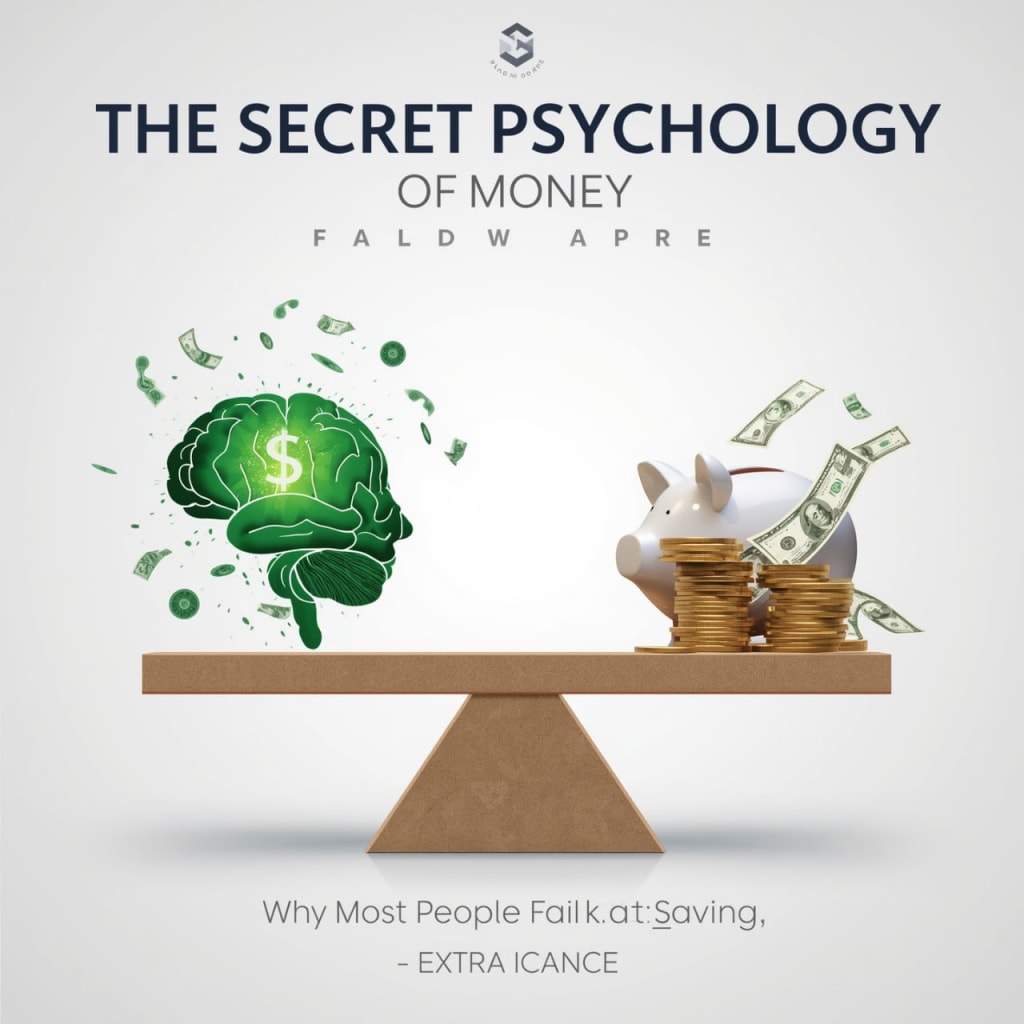
The Hidden Battle Between Mind and Money
Money is not just numbers on a bank statement—it’s deeply tied to human psychology. Think about it: most people know they should save more money, yet so many fail to do so. Why? Because saving isn’t simply about math; it’s about mindset.
The truth is, we don’t make financial decisions purely based on logic. Instead, emotions, habits, and subconscious biases guide our spending and saving. This explains why someone might splurge on a new phone instead of building an emergency fund, or why people live paycheck-to-paycheck even with a six-figure income.
In this article, we’ll uncover the secret psychology of money, explore the mental traps that prevent people from saving, and reveal practical strategies to rewire your brain for financial success in 2026 and beyond.
Understanding the Psychology of Money
Why Emotions Drive Financial Decisions More Than Logic
Money is emotional. Buying something new feels exciting. Paying off debt feels relieving. On the flip side, saving money often feels dull and invisible. Behavioral economists have proven that emotions play a larger role in financial decisions than rational thought.
That’s why even financially literate people make “bad” money choices—they aren’t driven by numbers, but by feelings.
The Role of Instant Gratification in Overspending
Instant gratification is one of the biggest enemies of saving. We live in an age of one-click shopping, next-day delivery, and instant streaming. Waiting has become painful, so people prefer small immediate rewards (like a fancy coffee) over larger future gains (like financial independence).
Psychologists call this temporal discounting—the tendency to undervalue future rewards compared to present pleasures.
Social Pressure and Lifestyle Inflation
Humans are social creatures. We compare ourselves to peers, and this impacts our finances. When friends upgrade their cars, post vacations on Instagram, or dine at expensive restaurants, it creates pressure to keep up.
This “lifestyle inflation” leads many people to spend more as their income grows, instead of saving. As a result, they remain trapped in the paycheck-to-paycheck cycle.
Common Psychological Traps That Stop People from Saving
The “I Deserve It” Mentality
After working hard, many people justify splurges with thoughts like, “I earned this, I deserve it.” While occasional treats are fine, repeated indulgences sabotage savings.
This is called moral licensing—when people allow themselves bad financial behavior after doing something good (like working overtime).
Anchoring Bias and Spending Habits
Anchoring bias happens when we use past prices as reference points for current spending. For example, if you’re used to buying $6 lattes, paying $4 feels like a “deal,” even though you could save much more by brewing coffee at home.
Anchoring leads to habitual overspending without realizing it.
Loss Aversion: Why We Fear Saving More Than Spending
Studies in behavioral psychology reveal that humans feel losses twice as strongly as equivalent gains. That’s why many people resist saving—they view it as a “loss” of spending power instead of a “gain” in future freedom.
To overcome this, reframing savings as buying security, freedom, or peace of mind is key.
The Science Behind Saving: How Our Brain Works with Money
Dopamine and the Shopping Rush
Shopping triggers dopamine, the brain’s “reward chemical.” That’s why unplanned purchases feel so good in the moment. Unfortunately, savings don’t release dopamine the same way. This makes saving feel less rewarding—unless you hack your brain to make it exciting.
Why Delayed Gratification is Hard But Powerful
The famous Stanford Marshmallow Experiment showed that children who resisted eating one marshmallow immediately in exchange for two later grew up to achieve better outcomes in health, income, and relationships.
Saving works the same way. It’s the art of resisting small temptations now for greater rewards later—like financial freedom, retirement, or debt-free living.
Behavioral Economics Insights
Behavioral economists explain that people are present-biased—we focus on today’s comfort at the expense of tomorrow’s security. Recognizing this natural bias is the first step to overcoming it.
Proven Mindset Shifts to Start Saving Successfully
Reframe Saving as “Buying Freedom”
Instead of seeing savings as restriction, think of it as buying freedom—freedom from stress, freedom from debt, and freedom to live life on your terms.
When you shift your perspective, saving no longer feels like deprivation but like empowerment.
Use Small Wins to Build Momentum
Start small. Save $50 this week, $100 next week. Small wins build confidence, and confidence builds habits. Over time, these micro-savings snowball into serious wealth.
Create “Mental Accounts” for Money
Psychologist Richard Thaler introduced the idea of “mental accounting.” People save better when money is divided into categories—like “vacation fund,” “emergency fund,” or “retirement fund.”
This makes saving more tangible and emotionally rewarding.
Practical Psychological Hacks for Better Money Habits
Automate Savings Before You Spend
The easiest way to save is to never see the money in the first place. Set up an automatic transfer to savings the moment your paycheck arrives. What’s out of sight is out of mind.
Gamify Your Finances (Turn Saving into a Challenge)
Turn saving into a game. Examples:
No-Spend Challenge: Don’t spend on non-essentials for 7 days.
Round-Up Apps: Automatically round purchases and save the difference.
Matching Rule: Save $1 for every $5 you spend on entertainment.
Gamification makes saving fun and rewarding.
Visualize Future Rewards to Stay Motivated
Create a vision board with pictures of your financial goals—like your dream home, vacation, or debt-free lifestyle. Visualization taps into emotional motivation, making saving feel more exciting.
Case Studies: How People Broke Their Bad Money Habits
The Story of a Chronic Spender Turned Saver
Emily, a 29-year-old marketing professional, used to spend every bonus on clothes and gadgets. After realizing she had no savings despite a six-figure salary, she reframed saving as “buying peace of mind.” Within 18 months, she built a $15,000 emergency fund and started investing.
How Couples Can Overcome Money Conflicts
Jake and Maria constantly argued about money until they created separate “fun money” accounts—each got $200 monthly to spend however they wanted, guilt-free. This reduced fights and helped them save jointly for a house down payment.
From Debt to Discipline
A teacher drowning in credit card debt joined a gamified savings group where members competed to save the most each month. The competitive spirit transformed his habits, and within three years, he was debt-free with a growing savings account.
Conclusion: Mastering Your Mind to Master Your Money
At its core, the biggest obstacle to saving isn’t your income, expenses, or financial literacy—it’s your psychology.
Most people fail at saving because they give in to emotions, biases, and habits that favor instant gratification over long-term stability. But once you understand how your brain works with money, you can outsmart it.
By reframing saving as freedom, celebrating small wins, automating your habits, and staying motivated with visualization, you can build wealth without constant struggle.
Remember: money management isn’t just about math—it’s about mindset. Master your mind, and you’ll master your money.
About the Creator
Muhammad Sabeel
I write not for silence, but for the echo—where mystery lingers, hearts awaken, and every story dares to leave a mark
Keep reading
More stories from Muhammad Sabeel and writers in Futurism and other communities.
Why This Weekend May Be The Best Time To See The Perseid Meteor Shower
Every August, the night sky treats us to one of nature’s most mesmerizing spectacles — the Perseid meteor shower. Known for its dazzling display of “shooting stars,” the Perseids are a highlight for both seasoned astronomers and casual skywatchers. While the meteor shower’s official peak happened earlier this week, bright moonlight robbed many people of the show’s full beauty. Fortunately, this weekend could offer a second chance — and perhaps an even more magical viewing experience.
By Muhammad Sabeel5 months ago in Futurism
About Binding Prometheus
I want to start actively advocating on behalf of my own work, and the most valuable part of my canon is, without a doubt, Binding Prometheus, the play I have been working on since 2019 and only finished in 2023 as part of my MA. The play itself is an amalgamation of a million different inspirations. On one end, it evokes the Ancient Greek myth-play, deriving its own title from the earliest extant work of Western drama we have, Aeschylus’s Prometheus Bound. On the other end, it borrows significantly from the sci-fi bulwarks from over the years, namely Mary Shelley’s Frankenstein and Karel Capek’s Rossum’s Universal Robots. The play could be an episode of Black Mirror, I fear. I don’t know. I’ve only ever seen one episode of Black Mirror.
By Steven Christopher McKnight17 days ago in Futurism
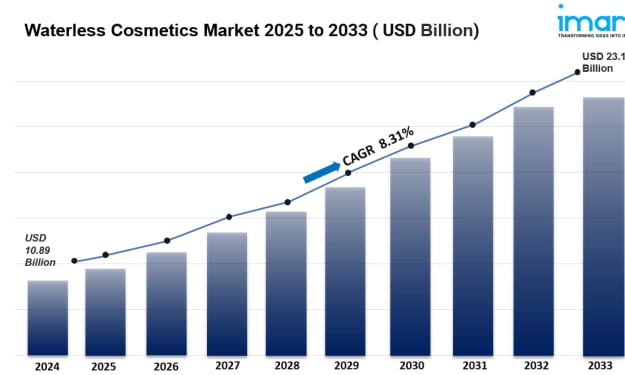
Waterless Cosmetics Market Set to Soar to USD 23.17 Billion Driven by Digital Shift and Diverse Content
Waterless Cosmetics Market – Overview The waterless cosmetics market refers to beauty and personal care products formulated without water as a primary ingredient. Instead of water, these products use alternatives like botanical extracts, oils, powders, and butters to deliver concentrated active ingredients that offer potent performance and sustainability benefits. Compared to traditional liquid formulations, waterless cosmetics reduce reliance on freshwater, minimize preservative needs, and often use more eco-friendly packaging.
By James Smith6 days ago in Futurism



Comments
There are no comments for this story
Be the first to respond and start the conversation.