
The Secret Economy of Facebook Marketplace Flipping
How I Turned Free Couches, Forgotten Lamps, and a Rusty Bike into Thousands of Dollars—One Pickup at a Time

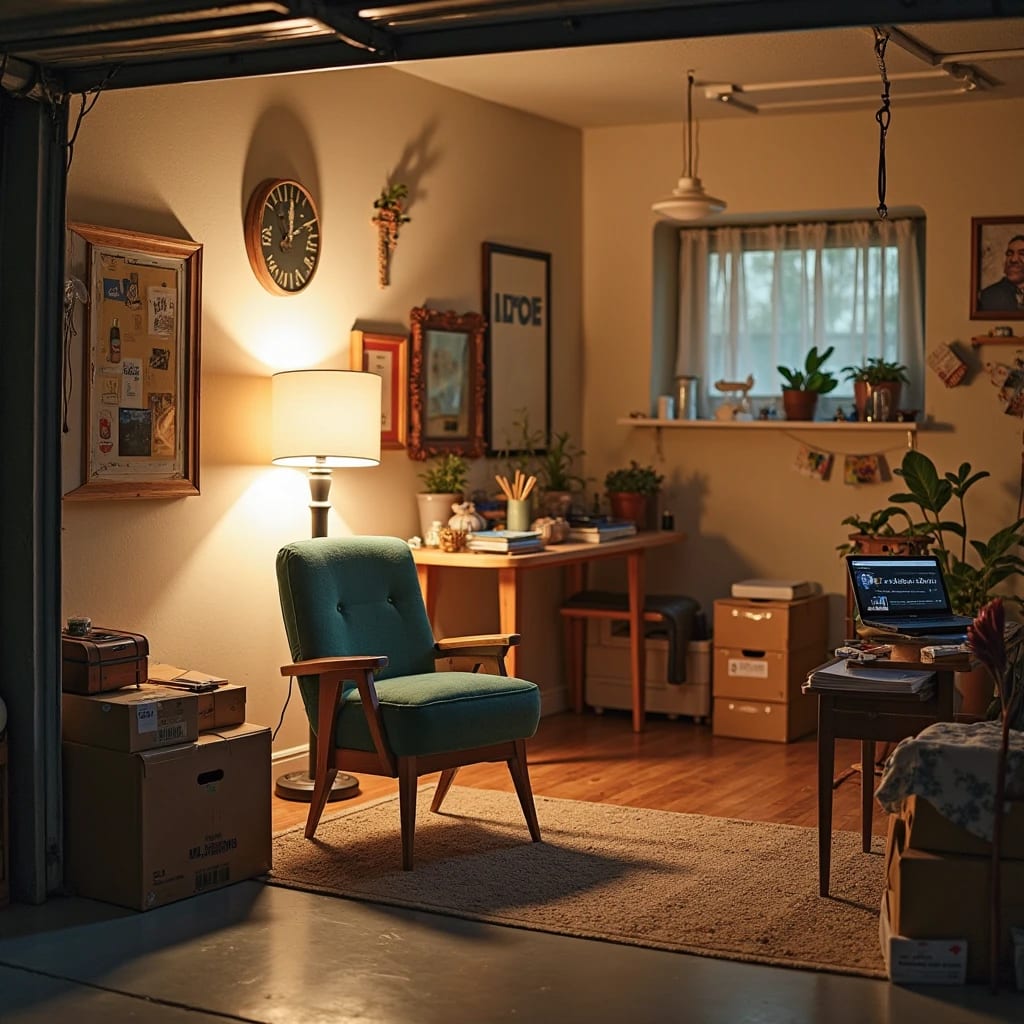
It all started with a broken lamp.
Not a metaphorical “light bulb moment” kind of lamp—an actual, dusty, brass floor lamp I found in the back of my friend Sarah’s garage during a weekend cleanout. “Take anything you want,” she said, clearly eager to declutter. Most of the stuff was headed to the curb or Goodwill. I hesitated for a moment, then shrugged and hauled the lamp into my car.
That night, I wiped it down, replaced the bulb, and listed it on Facebook Marketplace for $15.
It sold in under 30 minutes.
The buyer didn’t haggle. Didn’t ask questions. Just drove to my apartment, handed me a crumpled bill, and left with a smile. I stared at the cash in my hand, stunned. That dusty old lamp—worthless to Sarah—had just turned into dinner money.
And just like that, I was hooked.
In simple terms, flipping is the art of buying low (or free), cleaning up, and reselling for a profit. Facebook Marketplace became my hunting ground—and later, my storefront. What started as an experiment turned into a low-risk, high-reward side hustle that eventually helped me pay off my credit card debt and build a rainy-day fund.
It didn’t take long to see the potential. The platform is flooded daily with:
Furniture from people moving last minute
Decor that no longer “sparks joy”
Bikes, tools, and electronics gathering dust
Baby gear after the last child is out of diapers
Inherited clutter from downsizing or estate cleanouts
Most people just want this stuff gone. That’s where flippers like me come in.
Before you imagine me digging through dumpsters or hoarding junk, let me clarify: flipping isn't about collecting—it’s about curating. I learned early on to follow a few key principles to make this side hustle worth the time.
1. Start with Free
My first 20 sales were from free listings or "curb alert" posts. This minimized risk and helped me understand what sells without spending money. Search for “FREE,” “must go,” or “moving today” in your area—goldmines await.
2. Clean Is King
A microfiber cloth and a bottle of Goo Gone will take you far. That $20 wooden coffee table? Add 15 minutes of cleaning, and suddenly it’s worth $60. Presentation is everything.
3. Photography = Profit
Never underestimate lighting. I use my phone camera in natural daylight with a clean background—no clutter, no distractions. I take 4–6 angles, including close-ups of details and imperfections. Buyers love honesty.
4. Titles That Sell
Instead of “Chair,” write:
“Mid-Century Modern Accent Chair – Clean, Comfy & Stylish!”
Keywords = visibility.
5. Know the Market
I research similar items before posting. If most listings are $50, I price mine at $45 to sell faster. If I sense a bidding war (rare item, vintage, etc.), I start high and remain firm.
Over the past two years, I’ve flipped over 450 items. Here are some of my favorite (and most profitable) stories:
The $0 Couch That Made Me $200
A young couple listed a three-seater IKEA couch as “free—must pick up by tonight.” I grabbed it, vacuumed the crumbs, removed a wine stain with fabric cleaner, and posted it for $225. Sold in three hours.
The Forgotten Toolbox
An older gentleman was cleaning out his garage and gave me a toolbox full of rusted wrenches, screwdrivers, and bits. I organized the tools into bundles by type, cleaned them, and sold them individually. Total profit: $95.
The Rusty Bike Resurrection
A neighbor left a bicycle at the curb. Tires flat, frame scratched, chain rusted. I spent $30 replacing parts and repainting the frame. It sold for $180 within a week.
The Antique Mirror Find
I snagged a vintage mirror at a yard sale for $10. It had a chipped corner and was dusty beyond belief. I cleaned the glass, added gold leaf to the edges, and listed it as “Restored Antique Victorian Mirror.” Sold for $125 to a boutique owner staging her store.
Flipping isn’t just about spotting good finds—it’s also about systems. Here’s how I keep things smooth:
1. Create a Dedicated Pickup Zone
I turned my front porch into a safe, contactless pickup area with a sign, payment instructions (Venmo, CashApp, cash drop), and a camera for security. It saves time and adds trust.
2. Automate Responses
Save template messages like:
“Hi! Yes, this is still available.”
“Pickup is at [your address]. I’m home after 5PM or can do porch pickup anytime.”
It reduces burnout from repeating yourself constantly.
3. Bundle Small Items
Selling one mug might not be worth your time. But 5 mugs as a “Boho Kitchenware Bundle”? That’s more appealing. I often group decor, books, or baby items this way.
4. Track Everything
I use a simple Google Sheet with columns for:
Date Acquired | Cost | Item | Date Sold | Sale Price | Notes
This keeps profit visible and tax season simple.
There are misconceptions, of course. Let’s debunk a few.
Myth #1: It’s Not Worth the Time.
Truth: You decide your time-value. If you flip 3 items a week and make $100–150 in profit, that’s an extra $500 a month. That’s rent. Groceries. Debt payments. Travel money. All from things people threw away.
Myth #2: It’s Just for Broke College Kids.
Nope. My flipping community includes stay-at-home parents, teachers, retirees, even a local artist who funds her studio by reselling vintage frames.
Myth #3: You Need a Truck.
I’ve flipped everything from chairs to end tables in a Honda Civic. Be strategic. If it doesn’t fit, pass or rent a truck after confirming a sale.
VII. The Emotional Side of Flipping
Here’s the part people don’t talk about: the stories you collect.
The single mom picking up a free dresser I refurbished so her kids would have drawers.
The elderly man who cried because the mirror I restored looked just like one his wife had when they first got married.
The artist who bought an old easel I found for $10 and later messaged me that her paintings now hang in a café.
Flipping isn’t just commerce—it’s community. It’s a quiet form of recycling, kindness, and creativity. You’re not just selling stuff. You’re giving things a second life—and sometimes, offering people a little joy along the way.
Ready to dive in? Here's a step-by-step:
Open Facebook Marketplace
Search “Free” in your area and set a 10–20 mile radius.
Look Around Your Own Home
What haven’t you touched in 6+ months? If it’s clean, functional, and has a little charm, it’s sellable.
Clean It Up, Snap Good Photos, Write a Catchy Title
Be honest about flaws, but highlight the benefits. Use adjectives!
Post. Be Responsive. Stay Safe.
Porch pickups are your friend. Never invite strangers inside. Meet in public if needed.
Reinvest Your Profit
Use your earnings to buy underpriced treasures, upgrade your tools, or fund personal goals.
Today, my Facebook Marketplace flipping brings in $1,500–$2,000/month—and I work less than 10 hours a week on it. It's not passive, but it's flexible. It allowed me to reduce my full-time job hours. It paid for last year’s holiday gifts. And it gave me confidence in my ability to create income from scratch.
I’ve also started teaching others how to flip. Not in a get-rich-quick way—but as a practical, low-barrier hustle that anyone with a phone, some patience, and a willingness to learn can try.
Because once you see potential in a broken lamp,
you start seeing it everywhere—
in items, in spaces, in yourself.
There’s Gold in the Ordinary
Flipping on Facebook Marketplace taught me that one person’s trash really is another person’s treasure—but more than that, it taught me to look deeper.
That wobbly chair? A weekend project.
That ugly art piece? A perfect canvas for reinvention.
That side hustle? A way out of living paycheck to paycheck.
So next time you pass by something on the curb or scroll past a “FREE” listing—pause. Look again. You might be staring at your next $100.
And in this secret economy, the only thing you need to get started is the willingness to believe that value is everywhere… if you’re willing to find it.
About the Creator
Muhammad Sabeel
I write not for silence, but for the echo—where mystery lingers, hearts awaken, and every story dares to leave a mark
Keep reading
More stories from Muhammad Sabeel and writers in Futurism and other communities.
FBI Warning—Do Not Install This App On Your PC Or Smartphone
It always starts the same way—with a message you weren’t expecting. You’re going about your day when a text pings your phone or a popup flashes on your laptop. It warns you that your bank account is under attack or your device has been compromised. Then it tells you exactly what to do next: call tech support. Click the link. Install the app. Hurry—your money’s in danger.
By Muhammad Sabeel6 months ago in Futurism
About Binding Prometheus
I want to start actively advocating on behalf of my own work, and the most valuable part of my canon is, without a doubt, Binding Prometheus, the play I have been working on since 2019 and only finished in 2023 as part of my MA. The play itself is an amalgamation of a million different inspirations. On one end, it evokes the Ancient Greek myth-play, deriving its own title from the earliest extant work of Western drama we have, Aeschylus’s Prometheus Bound. On the other end, it borrows significantly from the sci-fi bulwarks from over the years, namely Mary Shelley’s Frankenstein and Karel Capek’s Rossum’s Universal Robots. The play could be an episode of Black Mirror, I fear. I don’t know. I’ve only ever seen one episode of Black Mirror.
By Steven Christopher McKnight18 days ago in Futurism
Luxury Goods Market: Millennials, Gen Z Influence & Future Demand Patterns
According to IMARC Group's latest research publication, global luxury goods market size reached USD 296.9 Billion in 2025. Looking forward, IMARC Group expects the market to reach USD 407.2 Billion by 2034, exhibiting a growth rate (CAGR) of 3.57% during 2026-2034.
By Andrew Sullivan7 days ago in Futurism



Comments
There are no comments for this story
Be the first to respond and start the conversation.