
The Search for Extraterrestrial Life
Our Options, Simplified


The search for extraterrestrial life is one of humanity's most profound scientific endeavors. What would it mean to discover that we are not alone in the universe? For centuries, people have gazed upon the stars and wondered if somewhere out there, another form of life is doing the same. The implications of such a discovery are staggering—not only would it redefine our understanding of biology, but it would challenge the very fabric of our philosophy, culture, and place in the cosmos. Are we a cosmic anomaly, or are the building blocks of life so universal that life itself is inevitable wherever conditions are right? The answers to these questions could transform how we see ourselves and our fragile blue planet. Beyond the philosophical allure, this quest pushes the boundaries of human ingenuity, driving innovation in technology and collaboration across scientific disciplines. The search for extraterrestrial life is not just about finding new neighbors in the vastness of space; it is about understanding the possibilities and limits of life itself. Could the discovery of alien microbes on Mars or the whisper of a signal from a distant star provide the next great leap in our shared human story? The search continues, but the potential revelations are limitless.
Mars
Mars has captivated humanity's imagination for generations, often painted as a world ripe with the potential for life. Once home to flowing rivers and vast lakes, the Red Planet now holds its secrets beneath the surface. NASA’s Perseverance rover is currently exploring Jezero Crater, a site believed to have hosted a lake billions of years ago, collecting samples that may contain signs of ancient microbial life. Mars’ thin atmosphere, primarily composed of carbon dioxide, makes the surface harsh for life as we know it, but subsurface environments—where liquid water might still exist—offer a glimmer of hope. Could microbial life have once thrived here, or might it even persist in these hidden reservoirs today?
Europa
Beneath Europa’s icy surface lies a vast ocean, kept liquid by the gravitational forces of Jupiter tugging at the moon's core, generating heat. This subsurface ocean is estimated to contain more water than all of Earth’s oceans combined, and where there’s water, there’s the potential for life. Scientists are particularly intrigued by the possibility of hydrothermal vents on Europa’s ocean floor, mirroring those on Earth where life thrives in complete darkness. NASA’s upcoming Europa Clipper mission aims to study this icy moon in detail, analyzing its surface and probing for clues that its hidden ocean might harbor microbial—or even more complex—life.
Enceladus
Saturn’s moon Enceladus has become a prime target in the search for life, thanks to the geysers of water vapor and ice particles that erupt from its surface. These plumes, which Cassini spacecraft flew through and analyzed, contain organic molecules—the building blocks of life. Like Europa, Enceladus is thought to have a subsurface ocean, heated by tidal forces. The discovery of hydrogen in the plumes suggests the presence of hydrothermal activity, a potential energy source for life. This tiny moon, with its dazzling icy shell and mysterious underground ocean, presents a tantalizing case for exploration.
Titan
Saturn’s largest moon, Titan, is a world unlike any other in our solar system. With its dense atmosphere and surface lakes of liquid methane and ethane, Titan is a frigid alien world. Yet, its organic-rich environment sparks curiosity about the possibility of life. Could exotic forms of life exist in these methane lakes, thriving on chemical processes entirely different from those on Earth? Titan also has a subsurface ocean of water, adding another layer of intrigue. NASA’s Dragonfly mission, set to launch in the mid-2020s, will explore Titan’s chemistry and search for signs of life, offering an unprecedented look at this enigmatic moon.
Exoplanets in the Habitable Zone
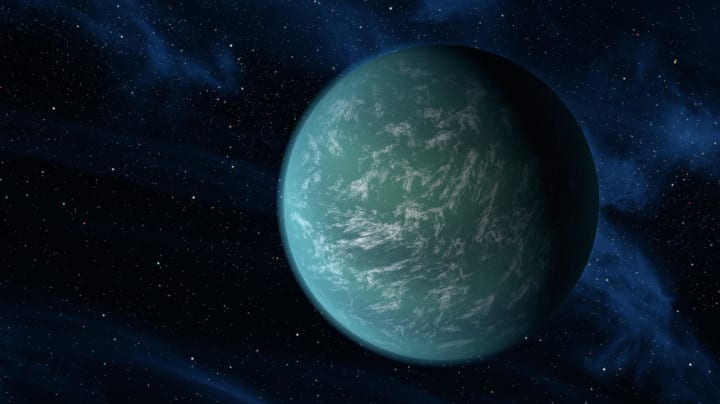
Beyond our solar system lies a staggering array of exoplanets—worlds orbiting stars far from the Sun. Among them, a handful reside in the "Goldilocks zone," where conditions might be just right for liquid water to exist. Planets like Kepler-452b and Proxima Centauri b are particularly exciting because they share characteristics with Earth, such as rocky surfaces and potential atmospheres. Advanced telescopes like the James Webb Space Telescope are now analyzing the atmospheres of these distant worlds for biosignatures—chemical fingerprints that might indicate life. Could one of these faraway planets be home to an entirely new ecosystem, or even an intelligent civilization waiting to be discovered?
Each of these locations represents a piece of the puzzle in the quest to answer one of humanity’s oldest questions: Are we alone? From the icy moons of our solar system to planets light-years away, the search for extraterrestrial life drives us to explore the unknown and expand the horizons of what we believe is possible.
Spectroscopy
Spectroscopy is one of the most powerful tools in the search for extraterrestrial life, allowing scientists to study the composition of distant worlds without ever setting foot on them. By analyzing the light that passes through or reflects off a planet's atmosphere, researchers can identify specific molecules such as water vapor, oxygen, methane, and carbon dioxide. These molecules, particularly when found together, could serve as biosignatures—indicators of biological activity. For instance, the presence of oxygen alongside methane could suggest ongoing biological processes, as these gases would typically destroy each other in a chemical reaction without a continuous replenishment by living organisms. Advances in telescopes like the James Webb Space Telescope have enhanced our ability to perform detailed spectroscopic studies, targeting exoplanets in the habitable zones of their stars. Through spectroscopy, we are not just looking for planets; we are searching for planets that "breathe."
Radio Telescopes
The search for intelligent extraterrestrial life hinges on radio telescopes, which scan the skies for signals that might originate from advanced civilizations. Programs like the Search for Extraterrestrial Intelligence (SETI) focus on identifying narrow-band radio transmissions, which are unlikely to occur naturally and might indicate deliberate communication. These telescopes, such as the Allen Telescope Array, sweep across millions of stars, hoping to capture a beacon from another world. In recent years, technological improvements have allowed scientists to analyze vast amounts of data more efficiently, increasing the likelihood of detecting faint, distant signals. However, one of the greatest challenges lies in distinguishing potential signals from human-made interference. Could the next mysterious signal—like the famous "Wow! Signal" detected in 1977—be a greeting from another civilization, or will it be another puzzle we cannot yet decode?
Planetary Rovers and Probes
While telescopes offer a distant view, rovers and probes provide the ability to study alien worlds up close, revolutionizing our understanding of planets and moons in our solar system. Mars rovers like Perseverance are equipped with advanced instruments to drill into rocks, analyze soil, and even collect samples that will eventually be returned to Earth. Similarly, future missions like Europa Clipper and Dragonfly are designed to probe environments that could harbor life. Europa Clipper will analyze the icy surface and subsurface ocean of Jupiter’s moon Europa, while Dragonfly will fly across the organic-rich dunes of Titan, searching for prebiotic chemistry or even signs of life. These missions serve as robotic pioneers, bringing us closer to answering fundamental questions about habitability and life beyond Earth.
Space Telescopes
Space telescopes like the Hubble Space Telescope and its successor, the James Webb Space Telescope (JWST), have transformed the search for life by peering deeper into the universe than ever before. The JWST, for instance, can detect minute changes in starlight as planets pass in front of their stars, providing detailed information about their atmospheres. Future missions, such as LUVOIR (Large Ultraviolet Optical Infrared Surveyor), promise even greater capabilities, with the potential to image Earth-like exoplanets directly and analyze their surfaces for potential signs of habitability. These telescopes not only enhance our ability to study distant worlds but also push the boundaries of our technological capabilities, laying the groundwork for future breakthroughs.
Artificial Intelligence and Machine Learning
The search for extraterrestrial life generates an overwhelming amount of data, from spectral readings of exoplanet atmospheres to radio signals picked up by telescopes. Artificial intelligence (AI) and machine learning (ML) are becoming indispensable tools for sifting through this data to identify patterns that might otherwise go unnoticed. For example, AI algorithms are used to search for anomalies in radio signal data, while ML techniques help classify planets based on their potential habitability. These technologies not only accelerate the pace of discovery but also increase the accuracy of detecting promising candidates in the vast sea of space.
Challenges and Synergy
Each of these methods comes with its limitations, but together they form a complementary system. Spectroscopy can identify chemical compositions, radio telescopes can hunt for intelligent signals, and rovers can confirm habitability up close. By integrating these approaches, scientists are creating a multifaceted strategy to search for life, ensuring no stone—or planet—is left unturned. As technology advances, the synergy between these tools will likely unlock new ways to explore the cosmos, bringing us closer than ever to answering the ultimate question: Are we alone?

Phosphine on Venus
In 2020, scientists announced the detection of phosphine gas in the atmosphere of Venus, sparking excitement and debate within the scientific community. On Earth, phosphine is primarily associated with biological processes, often produced by microbes in oxygen-free environments. Venus, with its scorching surface temperatures of around 475°C (900°F) and an atmosphere thick with sulfuric acid, has long been considered inhospitable to life. However, the detection of phosphine raises the intriguing possibility of microbial life in the cooler, more temperate layers of Venus' upper atmosphere. While alternative explanations, such as unknown chemical or geological processes, are still being explored, the discovery highlights the need for further investigation. Upcoming missions like NASA’s VERITAS and the European Space Agency’s EnVision aim to study Venus’ atmosphere and geology in greater detail, potentially shedding light on this tantalizing mystery.
Water Vapor on Exoplanets
Water is essential to life as we know it, and its presence on exoplanets is a major focus of astrobiological research. Recent observations using telescopes like Hubble and the James Webb Space Telescope (JWST) have confirmed the existence of water vapor in the atmospheres of several distant worlds. For example, the exoplanet K2-18b, located 124 light-years away, was found to have water vapor and potentially habitable temperatures. While K2-18b is much larger than Earth and may have a thick hydrogen-rich atmosphere, its characteristics suggest that liquid water could exist beneath the clouds, raising the possibility of a life-sustaining environment. These findings demonstrate that water—a key ingredient for life—is not confined to our solar system but may be widespread across the galaxy.
Organic Compounds in Space
The discovery of organic compounds, the molecular precursors to life, in space has transformed our understanding of life’s potential universality. Amino acids, the building blocks of proteins, have been detected in meteorites, including the famous Murchison meteorite that fell in Australia in 1969. Similarly, complex organic molecules have been identified in comets, such as those studied by the Rosetta mission’s Philae lander on Comet 67P/Churyumov–Gerasimenko. Even interstellar clouds, vast regions of gas and dust between stars, harbor organic molecules like formaldehyde and methanol. These discoveries suggest that the ingredients for life are not unique to Earth but are widespread throughout the universe, potentially seeding life on planets and moons under the right conditions.
Mysterious Signals
Over the years, scientists have detected a handful of enigmatic radio signals that hint at the possibility of intelligent extraterrestrial life. The most famous of these is the "Wow! Signal," a strong, narrowband radio signal detected in 1977 by the Big Ear radio telescope in Ohio. Lasting only 72 seconds, the signal came from a region near the constellation Sagittarius and has yet to be explained. More recently, scientists have detected Fast Radio Bursts (FRBs), short but intense bursts of radio waves originating from distant galaxies. While most FRBs are believed to have natural origins, such as magnetars (highly magnetized neutron stars), their precise mechanisms remain unclear, leaving room for speculation. Efforts like the Breakthrough Listen Initiative aim to systematically search for these technosignatures, using advanced algorithms to sift through the noise of the cosmos in hopes of finding an unmistakable sign of intelligence.
Methane on Mars
Methane is a molecule that has fascinated astrobiologists, as it can be produced by both geological and biological processes. On Mars, seasonal fluctuations of methane have been detected by the Curiosity rover and orbiting spacecraft, sparking speculation about its source. On Earth, a significant portion of atmospheric methane is produced by microbial life. Could Mars harbor subsurface microbes generating this gas? Alternatively, the methane could result from geological processes such as serpentinization, where water interacts with certain types of rock. NASA's Perseverance rover and the European Space Agency's ExoMars mission aim to investigate these mysteries further, potentially identifying whether Mars' methane has a biological origin.
Interstellar Visitors
The discovery of interstellar objects passing through our solar system has added a new dimension to the search for extraterrestrial life. In 2017, the object ‘Oumuamua—a cigar-shaped body with unusual characteristics—was detected hurtling through our solar system from another star system. Its strange shape, high velocity, and lack of a clear cometary tail sparked speculation about its origin, with some even suggesting it might be an alien probe. Two years later, another interstellar visitor, 2I/Borisov, was identified, this time resembling a more typical comet. These discoveries highlight the possibility that interstellar objects could carry organic materials or even microbial life between star systems, offering a mechanism for panspermia—the idea that life can spread from one planet to another via celestial bodies.
Martian Meteorites
Meteorites originating from Mars have landed on Earth, providing a unique opportunity to study Martian material without needing a space mission. Some of these meteorites, like the famous Allan Hills 84001, contain structures that resemble fossilized microbes, though the interpretation remains controversial. Even if these structures are not biological, the presence of organic molecules in these meteorites supports the idea that Mars had conditions suitable for life in the past. Studying Martian meteorites allows scientists to test theories about the planet’s history and its potential to support life, bridging the gap between laboratory research and planetary exploration.
Technological Challenges
The search for extraterrestrial life presents extraordinary technological challenges, requiring advancements that push the boundaries of human ingenuity. Building instruments capable of detecting faint biosignatures from distant exoplanets demands precision engineering at an unprecedented scale. For example, space telescopes like the James Webb Space Telescope must operate in extreme conditions, maintaining cryogenic temperatures to detect the faint infrared light of distant planets. Similarly, future missions like the LUVOIR and HabEx concepts aim to directly image Earth-like planets, requiring coronagraphs or starshades to block the overwhelming glare of their host stars. These innovations are not just technological feats; they are essential tools in uncovering whether life exists beyond our world. However, the financial and logistical challenges of developing such cutting-edge technologies often delay progress, requiring international collaboration and immense resources.
Communication Across Vast Distances
One of the greatest obstacles in the search for intelligent extraterrestrial life is the vast distances that separate Earth from potential civilizations. Radio waves, the primary medium for interstellar communication, travel at the speed of light, yet even they take years—or centuries—to traverse the distances between stars. For instance, a signal sent to Proxima Centauri, the closest star system to Earth at 4.24 light-years away, would take over eight years for a round trip. If an alien civilization exists further afield, such as on an exoplanet orbiting Kepler-452b (1,400 light-years away), communication times become entirely impractical by human standards. These delays highlight the need for autonomous systems that can independently detect and interpret signals, as waiting for human intervention may not be feasible. This cosmic delay is a stark reminder of the vastness of the universe and the unique challenges it imposes on our search.
Detecting False Positive
The search for life often grapples with the challenge of distinguishing genuine biosignatures from false positives. Many chemical markers associated with life, such as methane or oxygen, can also be produced through abiotic processes. For example, volcanic activity or chemical reactions involving ultraviolet radiation can generate oxygen without any biological input. Similarly, methane might result from geological processes like serpentinization rather than microbial life. To address these ambiguities, scientists employ multi-faceted approaches, using a combination of spectroscopy, atmospheric modeling, and laboratory simulations to confirm the origins of detected molecules. Despite these efforts, the risk of misinterpreting data remains high, underscoring the importance of rigorous analysis and cautious optimism in the search for extraterrestrial life.
Interdisciplinary Collaboration
The quest to find extraterrestrial life is inherently interdisciplinary, requiring collaboration between astronomers, biologists, chemists, engineers, and even philosophers. For instance, astrobiologists study the origins of life on Earth to identify potential biosignatures on other worlds, while chemists analyze how organic molecules might form in extraterrestrial environments. Engineers design and build the sophisticated instruments necessary for exploration, while philosophers and ethicists consider the societal implications of discovering alien life. This diverse collaboration ensures that no stone is left unturned in the search, but coordinating efforts across such varied disciplines poses logistical and ideological challenges. Differing priorities, funding limitations, and communication gaps can slow progress, making unified global efforts essential for success.
Contamination Concerns
The issue of contamination—both forward and backward—presents a significant hurdle in the search for life. Forward contamination occurs when Earth-based microbes are inadvertently introduced to other celestial bodies, potentially compromising the environments we seek to study. For example, NASA and other space agencies adhere to strict planetary protection protocols to prevent contaminating Mars or Europa with terrestrial life. Conversely, backward contamination involves the risk of bringing alien microbes back to Earth during sample-return missions, posing potential biosecurity threats. The Apollo missions to the Moon prompted the establishment of quarantine procedures, a practice that continues today for missions like NASA’s Mars Sample Return. Balancing the need for exploration with these safety concerns is a critical challenge that must be carefully managed to ensure the integrity of the search.
The Fermi Paradox
Despite the immense efforts to find extraterrestrial life, we are confronted with the Fermi Paradox: If intelligent alien civilizations exist, why haven’t we found any evidence of them? This paradox highlights the possibility that there are obstacles—technological, biological, or sociological—that prevent civilizations from communicating or enduring long enough to make contact. Solutions to the paradox range from the idea that intelligent life is extremely rare to the possibility that we are simply not looking in the right way or at the right time. The lack of evidence fuels debates about whether we are truly alone or if the universe is filled with life that remains hidden from us. Understanding the paradox and developing strategies to address it is a philosophical and scientific challenge at the heart of the search.
Balancing Expectations with Evidence
The search for extraterrestrial life captures public imagination like few other scientific endeavors. However, managing expectations is crucial, as the line between science fiction and scientific reality often blurs. Discoveries such as water on Mars or phosphine on Venus spark sensational headlines but require careful interpretation to avoid premature conclusions. Scientists must balance the excitement of groundbreaking findings with the rigor of evidence-based claims, ensuring that public interest is sustained without fostering unrealistic expectations. This balance is essential for maintaining trust and support for ongoing research, as the search for extraterrestrial life is a long-term endeavor with no guaranteed outcomes.
Conclusion
The search for extraterrestrial life represents one of humanity's most profound and ambitious pursuits, intertwining cutting-edge technology, multidisciplinary collaboration, and philosophical inquiry. From key locations like Mars, Europa, and exoplanets such as Proxima b, to groundbreaking discoveries such as phosphine on Venus and interstellar visitors like ‘Oumuamua, each step brings us closer to understanding our place in the universe. However, this journey is fraught with challenges—from deciphering ambiguous biosignatures to overcoming the immense distances that separate us from potential life forms. Advances in technology, such as the James Webb Space Telescope and upcoming missions to the icy moons of our solar system, provide the tools to peer deeper into the cosmos and explore worlds once beyond our reach.
Yet, the road ahead demands patience and caution. Managing public perception, preventing contamination, and addressing philosophical questions like the Fermi Paradox highlight the complexity of this quest. The search for life beyond Earth is not just about scientific discovery; it is about redefining our understanding of existence itself.
Whether life is found in the subsurface oceans of Europa, the temperate skies of Venus, or the atmospheres of distant exoplanets, the implications will be profound. Such a discovery would not only confirm that life is not unique to Earth but also challenge us to consider what it means to be part of a cosmic community. Conversely, if the search reveals that we are alone, it underscores the rarity and preciousness of life on our planet, compelling us to cherish and protect our fragile world.
In the end, the search for extraterrestrial life is as much about understanding ourselves as it is about exploring the cosmos. It is a testament to humanity’s insatiable curiosity and a reminder that even in the vastness of space, our desire to connect and understand endures. Through this endeavor, we continue to reach for the stars, driven by the hope that one day, we might hear an echo of life beyond Earth.
About the Creator
Christen
Think logically. I know you can do it!
Reader insights
Outstanding
Excellent work. Looking forward to reading more!
Top insights
Easy to read and follow
Well-structured & engaging content
Expert insights and opinions
Arguments were carefully researched and presented
Eye opening
Niche topic & fresh perspectives
5G Enterprise Market to hit USD 152.7 Billion By 2035
5G Enterprise Market Overview The Global 5G Enterprise Market is projected to reach approximately USD 152.7 Billion by 2035, rising from USD 7.3 Billion in 2025, reflecting a strong CAGR of 35.5% during the forecast period from 2026 to 2035.
By Roberto Crum5 days ago in Futurism
Saudi Arabia Power Rental Market: Infrastructure Projects, Temporary Power Demand & Growth Outlook
According to IMARC Group's latest research publication, Saudi Arabia power rental market size was valued at USD 213.5 Million in 2025. The market is projected to reach USD 351.6 Million by 2034, exhibiting a growth rate (CAGR) of 5.70% during 2026-2034.
By Shubham Sharma 4 days ago in Futurism
My First Time Skiing and I Got Lost, Alone, in the French Alps
Looking back, I can trace some of my life’s biggest adventures to a simple action from my sister. She’d introduced me to Tommy (a very long time ago), a colleague of hers, who had overshared his penchant for Italian-looking women, and I ticked that box.
By Chantal Christie Weiss3 days ago in Humans



Comments (1)
Nice exploration through an article.