
"The Role of Chatbots in HR: Automating Employee Support and Inquiries"
Automate your HR Functions with uKnowva HRMS
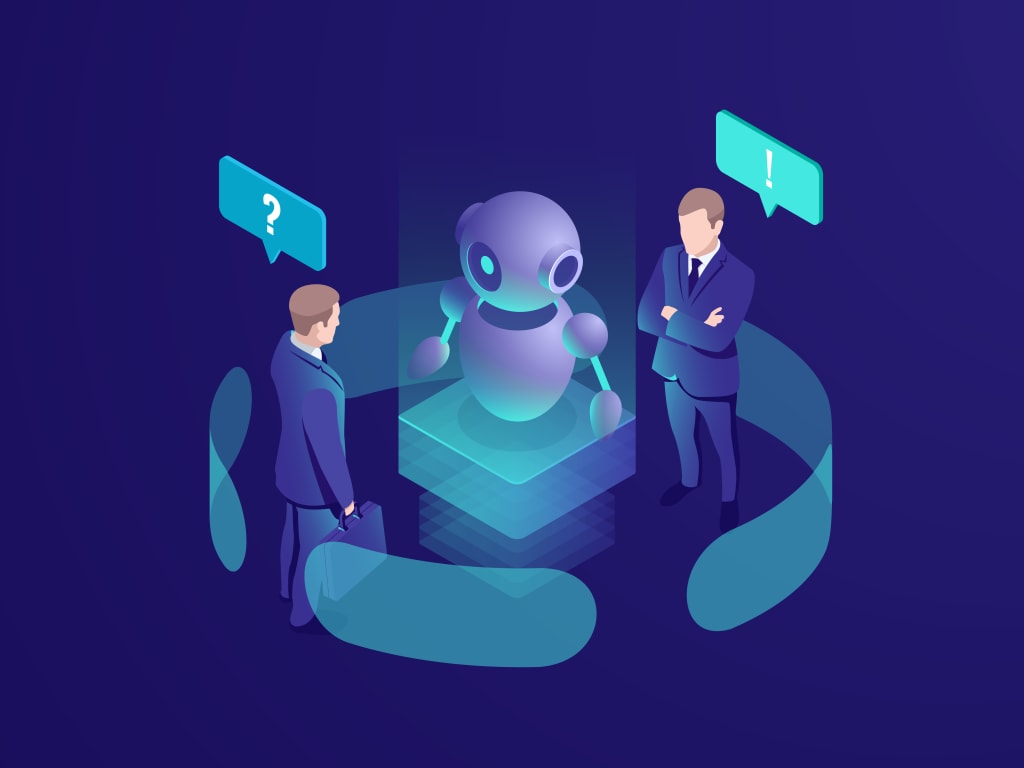
The use of chatbots in Human Resources (HR) has been transformative, especially with the rise of digital workplaces. As organizations expand, HR teams face increasing demands to manage employee queries, onboarding, and compliance while ensuring a positive experience. Chatbots have emerged as a solution to meet these demands by automating routine tasks, improving efficiency, and providing continuous support to employees. This article explores the expanded role of chatbots in automating employee support and inquiries, and how they’re reshaping the future of HR.
1. 24/7 Employee Support: Immediate Access to Information
One of the most significant advantages of chatbots in HR is their ability to provide employees with 24/7 support. Employees no longer need to wait for HR office hours to resolve issues or get answers to their questions. A chatbot can address inquiries related to leave policies, payroll, performance, and benefits instantly, ensuring that employees have access to essential information when they need it.
By doing so, chatbots increase overall employee satisfaction. Timely and accurate responses reduce frustration, especially for urgent issues that previously would have taken days to resolve. For HR teams, this reduces the burden of handling repetitive queries and enables them to focus on more strategic work.
2. Simplifying the Onboarding Process
The onboarding process is one of the most critical times for new employees. Chatbots play an essential role in simplifying this process by serving as a virtual guide. From the moment an employee accepts an offer, chatbots can introduce them to the company's policies, provide key onboarding documents, and even schedule orientations or training sessions.
During the onboarding process, chatbots can:
Provide a checklist of tasks to complete.
Answer questions about workplace expectations or procedures.
Assist with filling out necessary forms, such as tax or insurance documentation.
Help employees understand their benefits packages.
Automating this aspect of HR ensures that new hires get a smooth and organized start, reducing the chances of human error or missed steps. It also saves HR teams from having to manually manage each part of the onboarding process.
3. Handling Repetitive and Time-Consuming Inquiries
HR teams are often inundated with the same questions, such as:
"How much leave do I have?"
"When is the next payroll?"
"What is the procedure for applying for maternity leave?"
These repetitive inquiries can consume valuable time. Chatbots integrated with HR systems like uKnowva HRMS can retrieve answers instantly based on the employee’s data. Employees can simply ask the chatbot, and the system will provide an accurate response without HR staff needing to get involved.
This feature is especially useful for larger organizations with thousands of employees, where HR teams could easily be overwhelmed by routine queries. By automating the process, organizations ensure consistent and accurate responses while freeing up HR personnel for more complex, human-centered tasks.
4. Boosting Employee Engagement and Well-being
Employee engagement is a crucial factor in productivity and retention. Chatbots can play a vital role by fostering continuous communication with employees. For example, chatbots can:
Send reminders about important dates (e.g., performance reviews, compliance deadlines, training schedules).
Promote wellness initiatives, encouraging employees to participate in fitness challenges or mindfulness activities.
Share regular updates on company news, policies, and employee resources.
Chatbots can also be programmed to check in with employees periodically to gauge their job satisfaction, ask for feedback, or even identify signs of burnout. This kind of proactive engagement shows employees that the company values their well-being and is committed to maintaining an open channel of communication.
5. Collecting Feedback and Conducting Surveys
Gathering employee feedback is essential for organizational growth and employee satisfaction. Chatbots can automate this process by conducting quick surveys, asking for feedback after major HR interactions (like onboarding), or even gauging employee sentiment over time.
Because chatbots can be integrated with HR systems like uKnowva HRMS, they can collect and analyze data to provide real-time insights. This data can reveal patterns in employee satisfaction, potential HR issues, or areas where organizational improvement is needed. Additionally, chatbots can gather feedback more efficiently than traditional survey methods, and employees may be more likely to participate in quick, conversational-style feedback requests.
6. Personalized HR Services: A Tailored Experience
While chatbots are automated, they can still offer a personalized experience by drawing on data stored in HR systems. For instance, a chatbot can provide specific answers based on an employee’s role, department, or seniority. It can also tailor its responses based on individual employee preferences, such as communication style or language preferences.
For example, an employee from the finance department might have different HR needs than someone from the engineering team. A chatbot could provide the most relevant company policies and guidelines that apply to their specific situation, ensuring that every interaction is meaningful and informative.
7. Improving HR Accessibility and Efficiency
HR chatbots can serve as the single access point for all employee inquiries. Instead of navigating through multiple systems or platforms, employees can simply interact with the chatbot, which is linked to various HR software and tools. For example, using a system like uKnowva HRMS, chatbots can retrieve attendance records, performance reviews, leave balances, and more.
This ease of access greatly improves the efficiency of HR processes. Employees don’t have to submit formal requests and wait for responses, and HR teams can focus their time on more value-driven work. Chatbots streamline these processes, ensuring that HR services are more accessible and user-friendly.
8. Reducing Operational Costs
Automation through chatbots can significantly reduce the costs associated with HR operations. By handling a large volume of repetitive and low-priority tasks, chatbots reduce the need for additional HR staff. This allows organizations to scale their HR services without proportionally increasing HR team sizes.
Furthermore, chatbots improve productivity by reducing the time employees spend searching for information. Employees can get answers quickly, allowing them to return to their core tasks faster, which in turn boosts overall productivity and cost-efficiency for the company.
Conclusion
Chatbots have revolutionized HR by automating routine employee support and inquiries, making HR processes more efficient, responsive, and scalable. From simplifying onboarding to improving employee engagement and collecting valuable feedback, chatbots are essential tools in the modern HR landscape.
By integrating with systems like uKnowva HRMS, they provide a seamless experience that boosts productivity and enhances employee satisfaction. In the future, as chatbot technology continues to evolve, we can expect even more sophisticated automation that will further transform HR operations and employee interactions.
About the Creator
Keep reading
More stories from Aditi Sharma and writers in Futurism and other communities.
"The Evolving Role of CHROs: Driving Business Transformation and Culture"
In today’s rapidly changing business landscape, the role of the Chief Human Resources Officer (CHRO) has evolved significantly. No longer confined to traditional HR functions like recruiting, payroll, and employee relations, CHROs now play a central role in shaping overall business strategy, driving organizational change, and fostering a strong corporate culture. The modern CHRO is an essential business leader who ensures that the human capital of the organization aligns with its strategic goals, helps navigate through digital transformation, and strengthens the organization’s adaptability in a fast-changing world.
By Aditi Sharmaabout a year ago in Futurism
About Binding Prometheus
I want to start actively advocating on behalf of my own work, and the most valuable part of my canon is, without a doubt, Binding Prometheus, the play I have been working on since 2019 and only finished in 2023 as part of my MA. The play itself is an amalgamation of a million different inspirations. On one end, it evokes the Ancient Greek myth-play, deriving its own title from the earliest extant work of Western drama we have, Aeschylus’s Prometheus Bound. On the other end, it borrows significantly from the sci-fi bulwarks from over the years, namely Mary Shelley’s Frankenstein and Karel Capek’s Rossum’s Universal Robots. The play could be an episode of Black Mirror, I fear. I don’t know. I’ve only ever seen one episode of Black Mirror.
By Steven Christopher McKnight20 days ago in Futurism
Saudi Arabia Cold Chain Logistics Market: Real-Time Temperature Control, Traceability & Expansion
According to IMARC Group's latest research publication, Saudi Arabia cold chain logistics market size reached USD 3,045.9 Million in 2025. The market is projected to reach USD 8,279.3 Million by 2034, exhibiting a growth rate (CAGR) of 11.75% during 2026-2034.
By Jeffrey Wilsonabout 16 hours ago in Futurism




Comments
There are no comments for this story
Be the first to respond and start the conversation.