
"The Evolving Role of CHROs: Driving Business Transformation and Culture"
transform your business with uKnowva HRMS

In today’s rapidly changing business landscape, the role of the Chief Human Resources Officer (CHRO) has evolved significantly. No longer confined to traditional HR functions like recruiting, payroll, and employee relations, CHROs now play a central role in shaping overall business strategy, driving organizational change, and fostering a strong corporate culture. The modern CHRO is an essential business leader who ensures that the human capital of the organization aligns with its strategic goals, helps navigate through digital transformation, and strengthens the organization’s adaptability in a fast-changing world.
This article delves deeper into how the role of CHROs has evolved, exploring their impact on business transformation, the changing nature of workplace culture, and the broader responsibilities they now hold in the modern corporate environment.
1. CHROs: From Administrative to Strategic Leaders
Traditionally, HR was seen as a back-office function focused on compliance, employee benefits, and dispute resolution. However, the role of the CHRO has undergone a dramatic shift over the past decade. Today, CHROs are deeply involved in business strategy and decision-making processes. They work closely with the CEO, CFO, and other C-suite leaders to ensure that the workforce is equipped to meet the company’s goals, both in terms of skills and culture.
CHROs now have a seat at the executive table, participating in discussions about mergers and acquisitions, growth strategies, and even digital transformations. Their insights into the workforce enable them to predict trends, manage talent risks, and identify opportunities to improve productivity and efficiency. In essence, they have transitioned from administrative managers to key strategic leaders, contributing significantly to overall business success.
2. Aligning HR Strategies with Business Objectives
One of the most critical roles of modern CHROs is to align HR initiatives with broader business objectives. Whether a company is expanding into new markets, launching new products, or undergoing restructuring, it is the CHRO’s responsibility to ensure that the workforce is aligned with these changes. This involves strategic workforce planning, talent acquisition, leadership development, and employee engagement.
For instance, in periods of rapid growth, CHROs work to attract top talent that can help the company scale effectively. Conversely, in times of economic downturns or organizational restructuring, they manage the delicate task of reducing headcount while maintaining morale and productivity. By ensuring that talent strategies are closely tied to business goals, CHROs help organizations remain competitive and agile in a constantly evolving marketplace.
3. Shaping and Reinforcing Organizational Culture
Culture is a key component of any organization’s success, and the CHRO is often the primary steward of organizational culture. A strong culture can enhance employee engagement, boost morale, and improve retention, all of which are essential for long-term success. CHROs are responsible for fostering a culture that aligns with the company’s values and strategic goals, while also ensuring that employees feel valued and empowered.
CHROs play a vital role in shaping culture by designing and implementing initiatives that promote inclusivity, diversity, and collaboration. They create programs that encourage open communication and feedback, provide opportunities for professional growth, and recognize employees for their contributions. CHROs are also instrumental in embedding company values into everyday practices, ensuring that leadership sets the right tone and that these values are reflected in every level of the organization.
Additionally, with the rise of remote work and hybrid work models, CHROs face new challenges in maintaining a cohesive and connected workplace culture. They are responsible for finding innovative ways to engage employees, foster collaboration, and ensure that the organizational culture remains strong, even in a distributed workforce.
4. CHROs as Change Agents
The ability to manage and lead change is now a crucial part of the CHRO’s role. Whether it’s adapting to new technologies, responding to market disruptions, or implementing organizational transformations, CHROs are often at the center of driving these changes.
In today’s business world, change is constant. Digital transformation, technological advancements, and shifting market conditions all require organizations to be more agile and adaptable. CHROs are responsible for ensuring that the workforce is prepared for these changes by facilitating reskilling and upskilling initiatives, managing transitions, and fostering a culture of continuous learning.
Moreover, CHROs play a key role in leading change management efforts during mergers and acquisitions, business restructuring, and other significant organizational changes. They ensure that employees are informed, engaged, and supported throughout these transitions, minimizing disruption and helping the organization emerge stronger.
5. Leveraging Data and Technology in HR
With the rise of HR technologies and data analytics, CHROs now have access to powerful tools that can drive smarter decision-making. Today’s CHROs use data analytics to track employee performance, monitor engagement levels, and predict workforce trends. This data-driven approach allows them to make more informed decisions regarding talent acquisition, retention, and development.
In addition, automation and AI are transforming the HR function. Administrative tasks like payroll, benefits management, and recruitment processes can now be automated, allowing CHROs to focus on more strategic initiatives. For example, AI-powered recruitment tools can streamline the hiring process, while predictive analytics can help CHROs identify potential turnover risks and take proactive measures to retain top talent.
By leveraging technology and data analytics, CHROs can improve the efficiency of HR processes, enhance employee experiences, and drive better business outcomes.
6. Fostering Innovation and Agility in the Workforce
In today’s fast-paced business environment, innovation and agility are essential for survival. CHROs are tasked with fostering a culture that encourages innovation, creativity, and adaptability. This means creating an environment where employees are empowered to take risks, experiment with new ideas, and learn from failures.
To foster innovation, CHROs design and implement programs that promote cross-functional collaboration, encourage knowledge sharing, and provide opportunities for employees to develop new skills. They also work to ensure that the organization’s leadership is committed to fostering a culture of innovation and that this commitment is reflected in the company’s policies, processes, and practices.
Moreover, in an era where the workforce is increasingly dynamic, CHROs must ensure that the organization is agile enough to adapt to changing circumstances. This requires a focus on continuous learning and development, flexible work arrangements, and the ability to pivot quickly in response to new opportunities or challenges.
7. The CHRO’s Role in Employee Experience and Wellbeing
Employee experience and wellbeing have become top priorities for CHROs as they recognize the direct impact these factors have on productivity, retention, and overall business success. CHROs are responsible for creating an environment where employees feel valued, supported, and motivated to perform their best.
This includes designing employee-centric policies that prioritize work-life balance, mental health support, and career development opportunities. CHROs are also focused on creating an inclusive workplace where diverse perspectives are embraced, and all employees feel a sense of belonging.
By investing in employee experience and wellbeing, CHROs help build a workforce that is more engaged, productive, and loyal, ultimately contributing to the organization’s long-term success.
Conclusion: The Modern CHRO as a Catalyst for Business Transformation
The role of the CHRO has evolved into one of the most strategic and impactful positions within an organization. Modern CHROs are not just managing HR functions; they are driving business transformation, shaping organizational culture, and fostering innovation. By aligning talent strategies with business goals, leading change, and leveraging technology, CHROs play a critical role in ensuring that their organizations remain competitive, agile, and successful in a rapidly changing world.
As businesses continue to face complex challenges, the CHRO’s ability to lead, innovate, and drive cultural and organizational change will be essential for long-term growth and success.
About the Creator
Keep reading
More stories from Aditi Sharma and writers in Futurism and other communities.
"Why Competitive Compensation Isn’t Enough: Holistic Talent Retention Tactics"
While competitive compensation is a critical element in attracting and retaining talent, it is not a standalone solution. Modern employees seek more than just a paycheck; they desire a work environment that offers growth opportunities, work-life balance, and a positive culture. With rising competition for top talent, companies must adopt a holistic approach to retention that goes beyond salary. Here’s a detailed exploration of why competitive compensation alone isn't sufficient and the holistic tactics companies can implement to retain their most valuable employees.
By Aditi Sharmaabout a year ago in Futurism
About Binding Prometheus
I want to start actively advocating on behalf of my own work, and the most valuable part of my canon is, without a doubt, Binding Prometheus, the play I have been working on since 2019 and only finished in 2023 as part of my MA. The play itself is an amalgamation of a million different inspirations. On one end, it evokes the Ancient Greek myth-play, deriving its own title from the earliest extant work of Western drama we have, Aeschylus’s Prometheus Bound. On the other end, it borrows significantly from the sci-fi bulwarks from over the years, namely Mary Shelley’s Frankenstein and Karel Capek’s Rossum’s Universal Robots. The play could be an episode of Black Mirror, I fear. I don’t know. I’ve only ever seen one episode of Black Mirror.
By Steven Christopher McKnight20 days ago in Futurism
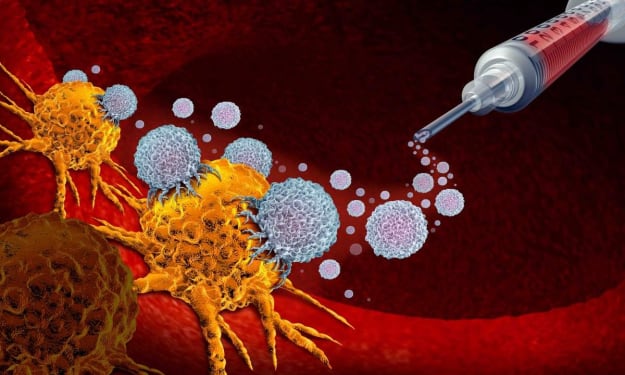
Saudi Arabia Cancer Immunotherapy Market Advancing Treatment Adoption and Healthcare Innovation
According to IMARC Group's latest research publication, Saudi Arabia cancer immunotherapy market size reached USD 1,303.4 Million in 2025. The market is projected to reach USD 2,611.6 Million by 2034, exhibiting a growth rate (CAGR) of 8.03% during 2026-2034.
By Suhaira Yusuf5 days ago in Futurism



Comments
There are no comments for this story
Be the first to respond and start the conversation.