
Saudi Arabia Cold Chain Logistics Market: Real-Time Temperature Control, Traceability & Expansion
How real-time temperature monitoring, IoT-enabled tracking, and resilient logistics infrastructure are enhancing product integrity, reducing losses, and improving efficiency across the Saudi Arabia cold chain logistics market.

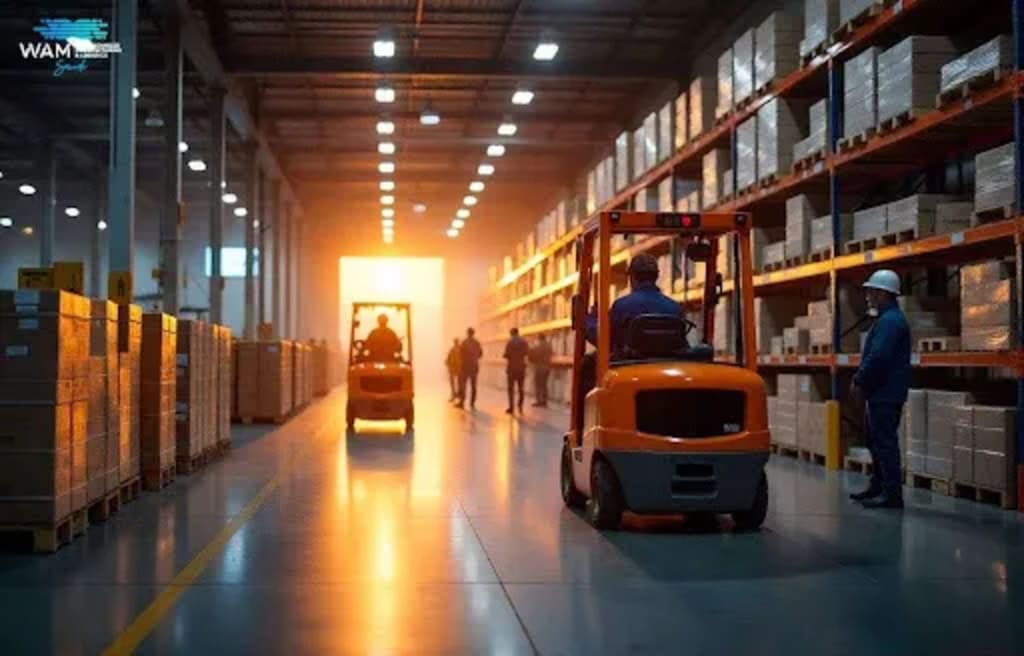
According to IMARC Group's latest research publication, Saudi Arabia cold chain logistics market size reached USD 3,045.9 Million in 2025. The market is projected to reach USD 8,279.3 Million by 2034, exhibiting a growth rate (CAGR) of 11.75% during 2026-2034.
How AI is Reshaping the Future of Saudi Arabia Cold Chain Logistics Market
- Real-Time Temperature Monitoring: IoT sensors and AI-powered systems continuously track temperature, humidity, and location data across warehouses and transport vehicles, reducing product spoilage by up to 40% while ensuring pharmaceutical and food safety compliance.
- Predictive Equipment Maintenance: Machine learning algorithms detect equipment failures before they occur, minimizing costly downtime in refrigeration systems—critical when energy costs consume 25-35% of operational expenses and HVAC alone uses 65% of facility electricity in peak summer months.
- Route Optimization and Delivery: AI platforms analyze traffic patterns, weather conditions, and delivery schedules to optimize refrigerated truck routes, cutting fuel consumption by 20% while ensuring temperature-sensitive goods arrive fresh across Saudi Arabia's vast geography.
- Demand Forecasting and Planning: Advanced analytics predict consumption spikes during Ramadan and holidays weeks in advance, helping dairy and food distributors optimize warehouse inventory, reduce waste, and minimize costly emergency shipments that disrupt cold chain integrity.
Get a Complimentary Sample Report with Comprehensive Market Data
How Vision 2030 is Revolutionizing Saudi Arabia Cold Chain Logistics Industry
Vision 2030 has elevated cold chain logistics from a niche service to critical national infrastructure supporting the Kingdom's economic transformation. The government earmarked USD 133 billion for transportation infrastructure, including 59 logistics centers spanning 100 million square meters to be completed by 2030, with 21 already under construction and integration with the Fasah customs portal reducing import dwell times that historically jeopardized cargo integrity. These GDP-certified hubs give small and mid-sized shippers access to world-class refrigerated facilities without massive capital investments, democratizing cold chain capabilities. Mega-projects are creating unprecedented demand: NEOM's Oxagon port with its $1 billion development contract is becoming a next-generation logistics hub powered by renewable energy, while The Red Sea Project and its 50 hotels with 8,000 rooms require sophisticated food distribution networks. The Saudi Landbridge railway connecting Jeddah to Dammam via Riyadh—spanning 1,300 kilometers—will slash cargo transit times between coasts, while air cargo volumes are projected to hit 4.5 million tons annually, requiring expanded cold chain airport infrastructure. With logistics set to contribute over 10% to GDP and Saudi Arabia climbing 17 spots in the World Bank's Logistics Performance Index, cold chain is no longer supporting the economy—it's enabling it.
Saudi Arabia Cold Chain Logistics Market Trends & Drivers:
E-commerce growth is fundamentally reshaping consumer expectations and forcing rapid evolution in cold chain capabilities across the Kingdom. Online users are projected to reach 33.6 million—a 42% increase in just five years—while online sales surged nearly 60% across categories, with smartphones reaching 97% penetration and Saudi Arabia ranking 10th globally for internet speed. This digital-first population now demands same-day delivery of fresh groceries, temperature-controlled pharmaceuticals, and frozen foods ordered from platforms like Noon, Amazon Saudi Arabia, and local retailers expanding online. Companies are investing heavily in last-mile infrastructure: refrigerated delivery vans equipped with GPS tracking, thermal packaging that maintains temperature for hours, and micro-fulfillment centers strategically located in urban areas to reduce delivery times. The challenge is maintaining cold chain integrity from warehouse to doorstep across temperatures exceeding 45°C in summer, requiring sophisticated IoT monitoring and rapid response systems. Express delivery services in Riyadh, Jeddah, and Dammam have accelerated innovation in portable refrigeration technology and route optimization algorithms that minimize time outside climate-controlled environments. This trend is creating competitive differentiation—providers offering real-time temperature tracking, guaranteed freshness, and seamless returns for spoiled goods capture market share. As e-commerce continues its trajectory, cold chain logistics becomes the invisible infrastructure enabling digital transformation in food retail and healthcare delivery.
Healthcare expansion and pharmaceutical localization are driving unprecedented demand for sophisticated, compliant cold chain infrastructure across Saudi Arabia. The government allocated $50.4 billion to healthcare and social development—representing 16.96% of the national budget—with priorities including healthcare privatization, expanded pharmaceutical manufacturing, and improved access to remote regions. The National Unified Procurement Company and Saudi Food and Drug Authority are tightening standards, requiring GDP-compliant warehouses, specialized reefer trucks with dual-zone temperature capabilities, and advanced monitoring systems that provide continuous documentation for audits. Biologics, vaccines requiring ultra-low temperatures, and temperature-sensitive insulin create distinct cold chain requirements ranging from 2-8°C to -70°C, demanding specialized equipment and backup power systems to prevent costly losses. The COVID-19 pandemic demonstrated vulnerabilities: vaccine distribution to 34 million people required rapid scaling of ultra-cold storage and last-mile delivery to rural areas with limited infrastructure. Now, clinical trials, biosimilar production, and chronic disease medication distribution sustain long-term demand. DHL leveraged its EUR 2 billion global health-logistics fund to scale ultra-low temperature hubs near Jeddah and Riyadh, while its ASMO venture with Aramco introduces blockchain-enabled procurement for temperature-sensitive chemicals in the energy sector. Local players like NAQEL Express integrate IoT sensors and AI-driven maintenance, allowing real-time intervention before temperature breaches occur, making technology the primary competitive differentiator in winning pharmaceutical contracts.
Infrastructure investment, regulatory evolution, and sustainability imperatives are creating a comprehensive ecosystem supporting cold chain market expansion. Vision 2030's USD 427 billion transportation investment between 2023-2034 includes an 8,000-kilometer east-west railway network, King Salman International Airport with six runways, and over 6,400 kilometers of upgraded roads connecting production centers to ports. King Abdullah Port and Jeddah Islamic Port—now among the top 10 most efficient ports globally—are adding climate-controlled warehousing and multimodal connectivity integrating sea, land, and air transport. Major developments include Maersk's 225,000 square meter logistics park launched in August 2024 with integrated last-mile delivery services, MEDLOG's 300 million Riyal cold storage facility partnership with Port Development Company covering 60,000 square meters, and GFH-GWC's plans for 200,000 square meters of Grade-A cold chain facilities across Riyadh, Jeddah, and Dammam. Pilot sites deploying IoT and machine learning report 20% cuts in cooling energy and 31% cost reductions without compromising temperature setpoints—critical when energy represents 35% of operational expenses. The Saudi Energy Efficiency Center's SEER framework guides HVAC upgrades toward high-efficiency units that reduce lifecycle costs despite higher upfront capital. Sustainability is becoming table stakes: solar-powered cooling units, natural refrigerants replacing high-GWP gases, and electric last-mile fleets increasingly influence bidding outcomes as companies tout lower carbon footprints aligned with Net Zero goals, transforming cold chain from a cost center into a strategic capability.
Saudi Arabia Cold Chain Logistics Market Industry Segmentation:
The report has segmented the market into the following categories:
Type Insights:
- Refrigerated Warehouses
- Refrigerated Transportation
- Railways
- Airways
- Roadways
- Waterways
Application Insights:
- Fruits and Vegetables
- Bakery and Confectionery
- Dairy and Frozen Desserts
- Meat, Fish, and Seafood
- Drugs and Pharmaceuticals
- Others
Regional Insights:
- Northern and Central Region
- Western Region
- Eastern Region
- Southern Region
Competitive Landscape:
The competitive landscape of the industry has also been examined along with the profiles of the key players.
Recent News and Developments in Saudi Arabia Cold Chain Logistics Market
- January 2026: AI and machine learning paired with IoT sensors achieve 20% reductions in cooling energy use and 31% drops in operational costs at pilot cold storage facilities across Saudi Arabia. This tackles high energy expenses, which make up 35% of ongoing costs, improving profitability for logistics providers handling perishables.
- October 2025: Maersk introduces AI-driven tools to manage dairy demand spikes during Ramadan in Saudi Arabia, using predictive analytics to optimize stock levels and cut waste by avoiding last-minute shipments, ensuring steady supply of fresh products nationwide.
- May 2025: New cold chain hubs in Riyadh and Jeddah expand capacity by 200,000 square meters, featuring automation and eco-friendly tech that now control 60% of the country's refrigerated warehousing, streamlining food and pharma distribution efficiently.
- October 2025: The pharma cold chain sector grows rapidly with SFDA support for local drug manufacturing, implementing blockchain for end-to-end tracking that prevents spoilage and ensures compliance in temperature-sensitive vaccine and biologic transport.
- July 2025: Automated warehouses proliferate in the GCC, including Saudi sites, leveraging AI, IoT monitoring, and low-global-warming-potential CO2 refrigerants to maintain precise temperatures despite extreme heat, driving operational reliability and sustainability.
Note: If you require specific details, data, or insights that are not currently included in the scope of this report, we are happy to accommodate your request. As part of our customization service, we will gather and provide the additional information you need, tailored to your specific requirements. Please let us know your exact needs, and we will ensure the report is updated accordingly to meet your expectations.
About the Creator
Jeffrey Wilson
Hello, I’m Jeffrey Wilson, a market research specialist with over 9 years of experience in uncovering consumer insights and driving data-backed strategies.
Keep reading
More stories from Jeffrey Wilson and writers in Futurism and other communities.
Saudi Arabia E-Health Market: E-Health Solutions, Smart Healthcare Platforms, Analytics & System Transformation
According to IMARC Group's latest research publication, Saudi Arabia e-health market size reached USD 1.5 Billion in 2025. The market is projected to reach USD 5.5 Billion by 2034, exhibiting a growth rate (CAGR) of 15.32% during 2026-2034.
By Jeffrey Wilsonabout 17 hours ago in Futurism
About Binding Prometheus
I want to start actively advocating on behalf of my own work, and the most valuable part of my canon is, without a doubt, Binding Prometheus, the play I have been working on since 2019 and only finished in 2023 as part of my MA. The play itself is an amalgamation of a million different inspirations. On one end, it evokes the Ancient Greek myth-play, deriving its own title from the earliest extant work of Western drama we have, Aeschylus’s Prometheus Bound. On the other end, it borrows significantly from the sci-fi bulwarks from over the years, namely Mary Shelley’s Frankenstein and Karel Capek’s Rossum’s Universal Robots. The play could be an episode of Black Mirror, I fear. I don’t know. I’ve only ever seen one episode of Black Mirror.
By Steven Christopher McKnight20 days ago in Futurism
Asia Pacific Artificial Intelligence Market Size and Forecast 2025–2033
Introduction: Asia Pacific Becomes the Global AI Growth Engine The Asia Pacific region is rapidly transforming into the global epicenter of artificial intelligence (AI) innovation and adoption. Once viewed mainly as a manufacturing and outsourcing hub, the region is now shaping the future of advanced technologies, with AI at the center of its digital revolution.
By Sushant. Renub Researchabout 7 hours ago in Futurism


Comments
There are no comments for this story
Be the first to respond and start the conversation.