
The Role of Artificial Intelligence in Healthcare: Current Applications and Future Prospects
Artificial Intelligence (AI) has emerged as a transformative technology with immense potential in various industries
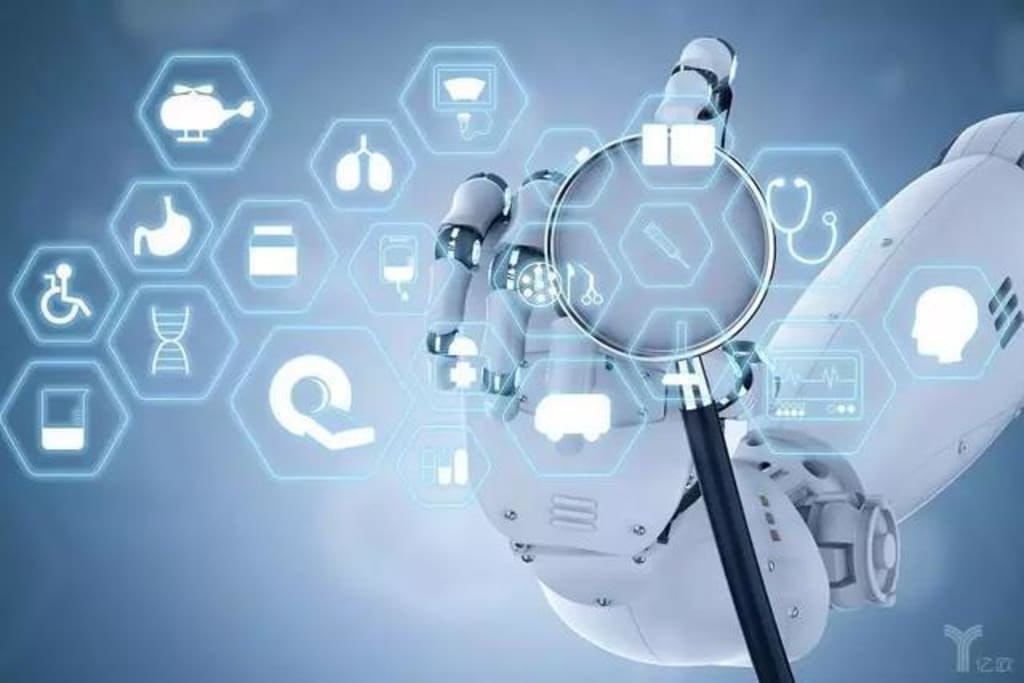
The Role of Artificial Intelligence in Healthcare: Current Applications and Future Prospects
Introduction:
Artificial Intelligence (AI) has emerged as a transformative technology with immense potential in various industries, and healthcare is no exception. With its ability to process vast amounts of data, recognize patterns, and make predictions, AI is revolutionizing the healthcare sector. This article explores the current applications of AI in healthcare and provides insights into its future prospects.
Current Applications of AI in Healthcare:
Medical Imaging:
AI has shown remarkable capabilities in analyzing medical images such as X-rays, MRIs, and CT scans. Machine learning algorithms can accurately detect and classify abnormalities, assisting radiologists in diagnosing conditions like cancer, cardiovascular diseases, and brain disorders. AI-powered image analysis reduces interpretation time, enhances accuracy, and improves patient outcomes.
Precision Medicine:
AI enables personalized treatment plans by analyzing individual patient data, including genetic information, lifestyle factors, and medical history. Machine learning algorithms can identify patterns and predict disease progression, helping clinicians tailor therapies and medications for better efficacy. Precision medicine holds the promise of more targeted and effective treatments, improving patient outcomes and reducing healthcare costs.
Virtual Assistants:
AI-powered virtual assistants and chatbots are being employed to streamline patient interactions and improve access to healthcare services. These virtual assistants can triage symptoms, provide basic medical information, schedule appointments, and offer personalized health recommendations. By automating routine tasks, virtual assistants free up healthcare professionals' time, leading to improved efficiency and patient satisfaction.
Drug Discovery and Development:
AI algorithms are accelerating the drug discovery process by analyzing vast amounts of biomedical data. Machine learning models can predict the efficacy of potential drug candidates, identify drug targets, and optimize drug design. AI-driven drug discovery has the potential to reduce costs and time associated with traditional methods, leading to the development of novel therapies for various diseases.
Future Prospects of AI in Healthcare:
Predictive Analytics:
AI can leverage patient data, electronic health records, and other health-related information to predict disease outbreaks, identify high-risk populations, and optimize resource allocation. Predictive analytics can enable proactive interventions, early detection of diseases, and more efficient healthcare delivery, ultimately improving population health outcomes.
Robotics and Automation:
AI-powered robots have the potential to automate repetitive tasks, assist in surgeries, and provide personalized care to patients. Robotic surgical systems equipped with AI algorithms can enhance surgical precision, minimize invasiveness, and reduce recovery time. Furthermore, robots can support elderly care, monitor patients remotely, and perform mundane tasks, alleviating the burden on healthcare providers.
Ethical Considerations:
As AI becomes more pervasive in healthcare, ethical considerations regarding data privacy, algorithm bias, and human-AI collaboration gain significance. Striking the right balance between innovation and ethical practices is crucial to ensure AI's responsible and equitable implementation in healthcare.
Enhanced Decision Support:
AI can serve as a valuable decision support tool for healthcare professionals by providing evidence-based recommendations and treatment guidelines. By analyzing vast amounts of medical literature and patient data, AI systems can assist in diagnosis, treatment selection, and patient management. Enhanced decision support has the potential to improve clinical outcomes and reduce medical errors.
Conclusion:
Artificial Intelligence holds tremendous potential to transform healthcare by improving diagnostics, enabling personalized medicine, enhancing patient care, and optimizing resource allocation. The current applications of AI in healthcare, such as medical imaging, precision medicine, virtual assistants, and drug discovery, are already making a significant impact. Looking ahead, the future prospects of AI in healthcare, including predictive analytics, robotics, ethical considerations, and enhanced decision support, promise further advancements and improved patient outcomes. It is imperative for healthcare organizations, policymakers, and researchers to collaborate and ensure the responsible and ethical implementation of AI in healthcare to harness its full potential.
About the Creator
Keep reading
More stories from writers in Futurism and other communities.
About Binding Prometheus
I want to start actively advocating on behalf of my own work, and the most valuable part of my canon is, without a doubt, Binding Prometheus, the play I have been working on since 2019 and only finished in 2023 as part of my MA. The play itself is an amalgamation of a million different inspirations. On one end, it evokes the Ancient Greek myth-play, deriving its own title from the earliest extant work of Western drama we have, Aeschylus’s Prometheus Bound. On the other end, it borrows significantly from the sci-fi bulwarks from over the years, namely Mary Shelley’s Frankenstein and Karel Capek’s Rossum’s Universal Robots. The play could be an episode of Black Mirror, I fear. I don’t know. I’ve only ever seen one episode of Black Mirror.
By Steven Christopher McKnight29 days ago in Futurism


Comments
There are no comments for this story
Be the first to respond and start the conversation.