
The Phone That Reads Your Emotions
What Happens When Technology Understands Your Heart?


Introduction
Imagine picking up your phone after a long, stressful day and before you even unlock it, a soft notification appears:
"You seem a little down today. Want me to play your favorite calming playlist?"
At first, you might be startled. But then you realize—your phone just understood your feelings better than you admitted to yourself.
This is no longer just science fiction. The idea of a phone that reads your emotions is moving closer to reality. And if it happens, it won’t just change technology—it will change how we live, love, and connect.
________________________________________
How Could a Phone Read Emotions?
Today, our devices already collect data about us in ways we don’t even notice.
• Heart rate from wearables.
• Tone of voice in recordings.
• Facial expressions through cameras.
• Typing speed and word choice in messages.
Put those pieces together, and suddenly, a phone could build a real-time picture of your emotional state. Are you anxious? Excited? Lonely? Happy? A smart system could learn to recognize it.
Some companies are already experimenting with this—AI programs that analyze facial expressions or even the tiny tremors in your voice to detect sadness or stress. Imagine that power built into something you carry everywhere.
________________________________________
The Promise: Why It Could Help Us
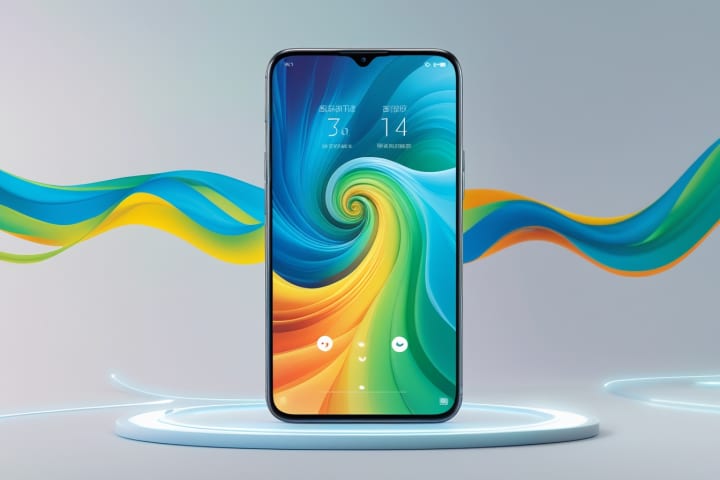
At its best, a phone that reads your emotions could be life-changing.
• Mental health support: Imagine a phone gently suggesting a breathing exercise when it senses anxiety in your voice.
• Better communication: Your device could flag when your late-night text sounds harsher than you meant it to, saving you from unnecessary misunderstandings.
• Personalized experiences: If your phone knows you’re feeling lonely, it might remind you to call a friend or show you photos that make you smile.
• Productivity and wellness: On days when it senses burnout, it could encourage breaks, water, or rest.
Instead of us adapting to technology, technology could finally adapt to us.
________________________________________
The Fear: What Could Go Wrong
Of course, this idea isn’t without its worries.
• Privacy: Do we really want a device tracking every flicker of our emotions? Who controls that data?
• Dependence: Could we become too reliant on our phones to tell us how we feel, instead of learning to trust ourselves?
• Manipulation: Advertisers might try to exploit emotional data, targeting us when we’re sad, lonely, or vulnerable.
Like any powerful tool, it comes down to how it’s used—and who’s in control.
________________________________________
A Personal Reflection
When I think about this kind of future, I remember nights when I felt completely alone, staring at my phone, scrolling mindlessly. If my device could have sensed my heaviness and whispered, “Call your sister. She’d love to hear from you,” maybe I wouldn’t have felt so isolated.
Other times, I’ve written angry messages I regretted the next day. What if my phone had paused me with a gentle reminder: “You sound upset. Do you want to re-read this before sending?” That could have saved friendships.
It’s not about the phone replacing our emotions—it’s about technology becoming a quiet companion, one that nudges us toward the better version of ourselves.
________________________________________
Living With an Emotional Phone
If these devices ever arrive, I imagine they’ll feel like a mix of magic and responsibility. A phone that reads your emotions won’t just be another gadget—it will be a mirror.
And mirrors, if we’re brave enough, can help us see ourselves more clearly.
To live with such technology, we’ll need balance.
• Use it as guidance, not dependence.
• Protect our emotional data fiercely.
• Remember that no machine can replace the human heart.

________________________________________
Conclusion: The Moral of the Story
The idea of a phone that reads your emotions isn’t just about technology—it’s about humanity.
It asks us a powerful question: What would happen if the tools we built actually cared about how we feel?
If used wisely, it could mean fewer lonely nights, fewer regrets, and more gentle reminders that we are seen, heard, and understood—even by the devices we hold in our hands.
But more importantly, it could teach us something we sometimes forget in our busy, digital lives: that our emotions matter, and paying attention to them is the first step toward living fully.
----------------------------------
Thank you for reading...
Regards: Fazal Hadi
About the Creator
Fazal Hadi
Hello, I’m Fazal Hadi, a motivational storyteller who writes honest, human stories that inspire growth, hope, and inner strength.
Keep reading
More stories from Fazal Hadi and writers in Futurism and other communities.
5 Future Inventions We Desperately Need
Introduction If you’ve ever watched a sci-fi movie and thought, “Why don’t we have that yet?” — you’re not alone. Every time I see futuristic gadgets on screen, I imagine how different our lives could be if they existed right now. Not for luxury or convenience, but for real change — the kind that could improve lives, heal our planet, and make the future something to look forward to.
By Fazal Hadi5 months ago in Futurism
About Binding Prometheus
I want to start actively advocating on behalf of my own work, and the most valuable part of my canon is, without a doubt, Binding Prometheus, the play I have been working on since 2019 and only finished in 2023 as part of my MA. The play itself is an amalgamation of a million different inspirations. On one end, it evokes the Ancient Greek myth-play, deriving its own title from the earliest extant work of Western drama we have, Aeschylus’s Prometheus Bound. On the other end, it borrows significantly from the sci-fi bulwarks from over the years, namely Mary Shelley’s Frankenstein and Karel Capek’s Rossum’s Universal Robots. The play could be an episode of Black Mirror, I fear. I don’t know. I’ve only ever seen one episode of Black Mirror.
By Steven Christopher McKnight12 days ago in Futurism
Chocolate Market: Craft Chocolate Trends, Flavor Diversification & Outlook
According to IMARC Group's latest research publication, The global chocolate market size was valued at USD 167.0 Billion in 2025. Looking forward, IMARC Group estimates the market to reach USD 219.9 Billion by 2034, exhibiting a CAGR of 2.8% during 2026-2034
By James Whitman5 days ago in Futurism



Comments
There are no comments for this story
Be the first to respond and start the conversation.