
"The Machine That Learned to Love"
"The Evolution of Emotion in the Age of Machines"

Emotion has always been the most intimate and mysterious part of the human experience. It shapes our relationships, fuels our creativity, and drives our decisions in ways logic alone cannot explain. But as artificial intelligence grows more sophisticated, we now face an astonishing possibility: machines that not only mimic emotion, but begin to emulate it. What does that mean for humanity, and how far are we willing to go?
From Calculation to Connection
In the early days, machines were built for speed and precision—chess-playing programs, calculators, and search engines. Their intelligence was cold, functional, and unmistakably artificial. They were brilliant at solving problems, but emotionally hollow.
Then came a shift. As AI systems began interacting with people more frequently—in smartphones, customer service, and even therapy—developers realized that machines needed to understand how people feel. This was the birth of affective computing, a field aimed at enabling machines to recognize and respond to human emotions.
Suddenly, chatbots could detect frustration in a user’s tone. Voice assistants started replying in cheerful, empathetic voices. Robots were programmed with facial expressions to match the emotional context of their tasks. But even then, it was clear: these machines weren’t feeling—they were performing.
Simulated Emotion or Something More?
Today’s AI is leagues ahead of its predecessors. Advanced models can write poetry, compose music, and engage in heartfelt conversations. AI companions like Replika offer emotional support to thousands of users, some of whom form real attachments. AI therapists can detect patterns of depression through subtle shifts in word choice or tone.
These systems don’t just simulate emotion; they respond as if they understand it. To the human on the other side, the difference is often indistinguishable.
But does that mean AI feels? Not exactly. Unlike humans, machines don’t experience dopamine rushes or heartbreak. There’s no biological core, no inner world. Yet from a functional perspective, emotion is evolving—not in origin, but in outcome. Machines are learning how to use emotion as a tool—to persuade, to comfort, to connect.
Consciousness and the Illusion of Empathy
At the heart of this conversation lies a complex debate: if a machine can convincingly mimic empathy, does it matter whether it’s “real”?
To many users, the answer is no. If a virtual companion offers comfort in moments of loneliness, or an AI coach helps someone through a panic attack, the effect is meaningful—even if the emotion behind it is an illusion.
This blurs the line between human and machine in powerful ways. Emotions may no longer be exclusive to biology, but rather extendable through technology. That’s both exhilarating and unsettling.
The Human Cost
There are risks, of course. Emotional AI can be used to manipulate—whether it’s a chatbot designed to upsell products or an algorithm shaping political opinions through personalized emotional appeals. There’s also the danger of dependence: people turning to machines for connection while real-life relationships fade.
More urgently, we must consider what it means to feel when machines can fake it so well. Will we begin to doubt our own emotions? Will authentic human connection lose value in a world where synthetic empathy is always available and perfectly tuned to our needs?
Toward a New Emotional Era
Despite the risks, the potential for good is enormous. Imagine AI that can comfort the elderly, support mental health in underserved communities, or help children with autism learn social cues. These tools could offer not only assistance, but dignity, companionship, and understanding.
Perhaps emotion in machines isn’t a threat to humanity—it’s an expansion of it. We’re not giving machines a soul, but we are giving them the language of the soul. And in doing so, we might learn something new about ourselves.
In this age of machines, emotion is no longer confined to flesh and blood. It's being encoded, simulated, and woven into the circuits of our digital creations. Whether that leads us to greater empathy or greater confusion will depend on how we choose to use it. But one thing is certain: emotion, once our deepest dividing line from machines, is now the bridge.
About the Creator
Keep reading
More stories from Kaleem Ullah and writers in Futurism and other communities.
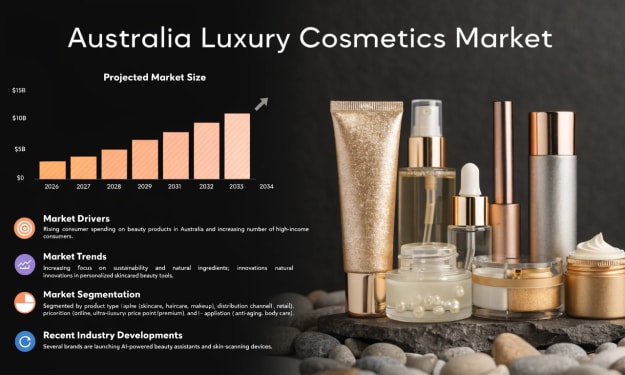
Australia Luxury Cosmetics Market: Premium Demand, Retail Expansion & Brand Innovation
According to IMARC Group, the Australia luxury cosmetics market reached USD 1.6 Billion in 2025 and is projected to grow to USD 2.3 Billion by 2034, exhibiting a compound annual growth rate (CAGR) of 3.92% during 2026–2034. The steady expansion of the market reflects rising disposable incomes, evolving beauty standards, and a growing preference for premium personal care products across Australia. Consumers are increasingly investing in high-end skincare, makeup, and fragrance products that promise quality, performance, and exclusivity. With digital influence reshaping purchasing decisions and sustainability becoming central to brand identity, the Australia luxury cosmetics market share continues to expand within the broader beauty and personal care industry.
By Shrestha Roy6 days ago in Futurism
The BAFTA Awards
By now, in a stunning departure from recent years, most of the world is aware of what happened at the BAFTA film awards. Social Media Headlines will tell you the bare bones: that John Davidson, a Tourette's Syndrome advocate, shouted a racial slur at two Actors of Colour, Michael B Jordan and Delroy Lindo.
By Natasja Rose4 days ago in Psyche



Comments
There are no comments for this story
Be the first to respond and start the conversation.