
The Looming AI Winter: Hype, Overinvestment, and What Comes Next
Is the AI Boom Sustainable—or Are We Headed for a Hard Freeze?
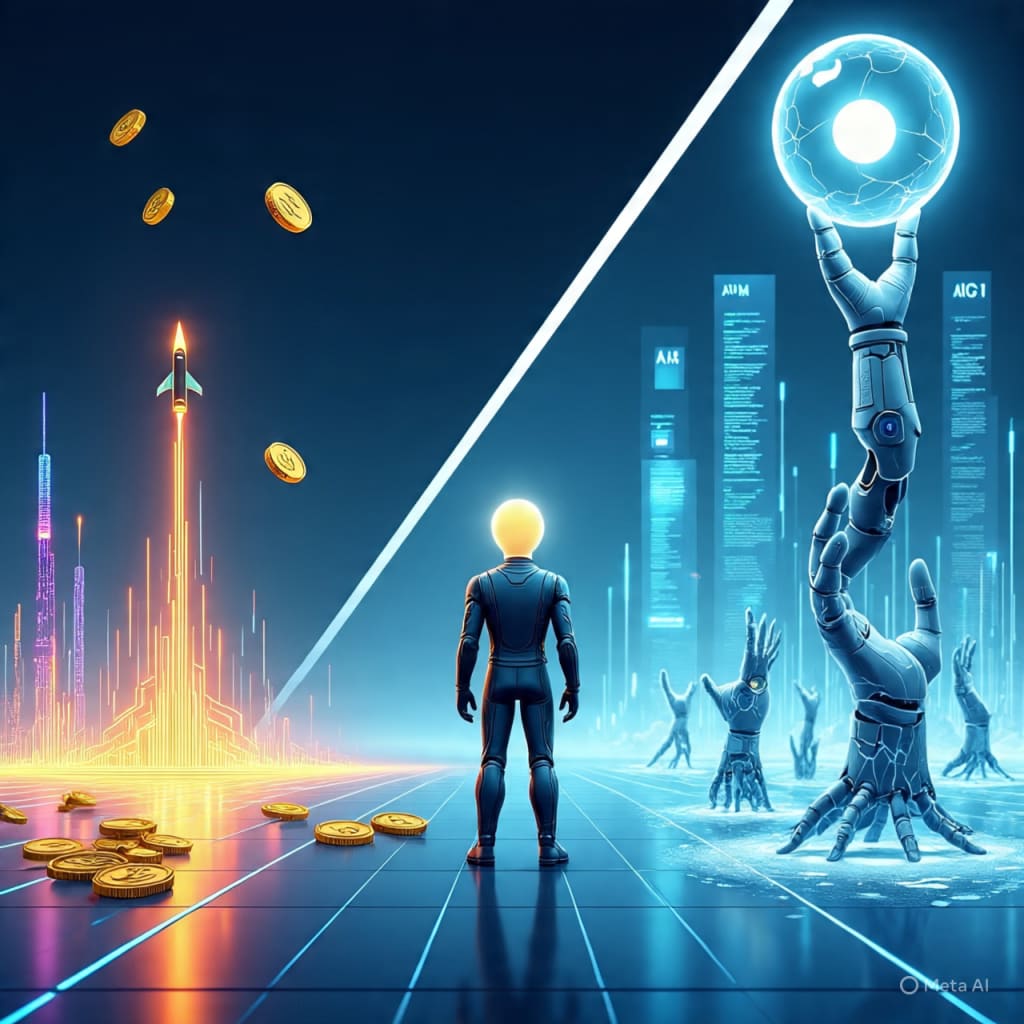
Artificial intelligence has taken center stage in today’s tech-driven economy. From ChatGPT to autonomous vehicles, AI is transforming industries, fueling startups, and pushing stock markets to record highs. Giants like Nvidia, Microsoft, and OpenAI have become the poster children of what many call the "AI gold rush."
But behind the excitement, a critical question lingers: *Is this boom built to last—or are we setting the stage for another "AI winter"?*
---
## A Look Back: What Was the AI Winter?
An "AI winter" refers to periods when interest and funding in artificial intelligence plummeted, usually after grand promises failed to materialize.
- **First AI Winter (1970s):** Early researchers envisioned machines with human-like reasoning, but limited computing power and underwhelming results led governments to slash funding.
- **Second AI Winter (1980s–90s):** Expert systems were hailed as revolutionary, but they turned out to be expensive, inflexible, and difficult to scale. When the hype faded, investments dried up.
Each collapse followed a cycle of overpromising and overinvestment—a pattern some fear is repeating today.
---
## Warning Signs in Today’s AI Boom
### 1. **Sky-High Valuations**
Startups with little more than a prototype are landing billion-dollar valuations. Venture capital is flooding AI at levels not seen since the dot-com bubble.
### 2. **The Limits of "Bigger Is Better"**
Many cutting-edge AI models rely on scaling up data and computing power. But experts warn that simply adding more parameters may soon hit diminishing returns.
### 3. **Runaway Costs**
Training top-tier AI models can cost hundreds of millions, consuming massive energy and requiring specialized hardware. This creates a high barrier to entry, leaving only tech giants in the game.
### 4. **Overblown Expectations**
AI is often marketed as a cure-all—replacing doctors, solving climate change, even achieving human-like reasoning. While progress is real, many applications remain experimental and error-prone.
Taken together, these factors suggest the AI market may be overheating.
---
## Could Another AI Winter Happen?
The risk isn’t that AI will "fail"—it’s that hype could outpace reality. If investors pour billions into unproven ideas and consumers grow frustrated with underdelivered promises, enthusiasm could evaporate quickly.
Consider self-driving cars: a decade ago, companies promised fully autonomous vehicles by the early 2020s. Today, progress is real—but human drivers still dominate the roads. Similarly, AI chatbots are impressive but still prone to "hallucinating" false information. If AI can’t translate hype into real-world reliability, funding could freeze, innovation could slow, and startups could collapse.
---
## Why This Time Might Be Different
Not everyone believes a full-blown winter is coming. Some argue today’s AI boom is built on a stronger foundation:
- **Real-World Adoption:** Unlike past cycles, businesses are actively using AI for marketing, coding, customer service, and healthcare.
- **Massive Infrastructure Investments:** Cloud providers, chipmakers, and governments are pouring billions into AI-ready infrastructure.
- **Embedded in Daily Life:** Even if cutting-edge models plateau, AI is already woven into everyday tools—from email assistants to fraud detection.
In this view, we might see a *cooling* of hype rather than a deep freeze—a shift from speculative frenzy to steady, practical growth.
---
## Key Lessons for the AI Era
Whether or not a winter arrives, the current boom offers crucial insights:
### 1. **Ignore the Hype**
Not every AI startup will be the next OpenAI. Investors must separate real innovation from marketing buzz.
### 2. **Solve Real Problems**
The most successful AI companies focus on tangible benefits—cutting costs, improving efficiency, or enhancing user experiences—not chasing sci-fi fantasies.
### 3. **Smart Regulation**
Governments must balance protecting against misuse (like deepfakes and bias) without stifling innovation.
### 4. **The Next Breakthrough May Not Be "Bigger AI"**
Future advances could come from entirely new approaches—like neuromorphic chips, causal reasoning, or hybrid AI systems—rather than just scaling up existing models.
---
## The Future: Winter, Slowdown, or Evolution?
AI stands at a crossroads. While excitement is driving incredible progress, unchecked hype could lead to a sharp backlash.
The most likely outcome? Not a catastrophic freeze, but a *market correction*—where unsustainable startups fail, investment becomes more cautious, and only the most practical AI applications thrive.
For consumers, this could be a good thing: fewer exaggerated claims and a clearer sense of what AI can actually do. For the tech industry, it might be the reset needed to turn AI from a speculative bubble into a stable, trusted field.
---
## Final Thoughts
The fear of an AI winter isn’t just about technology—it’s about human nature. We’ve seen this cycle before: excitement, overpromising, disappointment, and renewal. Today’s AI boom carries similar risks, but also unprecedented potential.
If we focus on real-world value over hype, long-term progress over short-term gains, and transparency over exaggeration, this era won’t end in another deep freeze. Instead, it could mark the moment AI truly matured.
About the Creator
Keep reading
More stories from GadgetGround and writers in Futurism and other communities.
“The Death of Physical Cash: Why Gen Z Might Never Carry a Wallet Again”
Not long ago, pulling out cash was second nature. Now? It’s borderline awkward. Walk into a coffee shop today, and you’ll likely see signs that say: “No cash accepted.” PayPal, Apple Pay, Venmo, Zelle, Google Wallet, crypto wallets, QR codes—physical money is vanishing before our eyes.
By GadgetGround8 months ago in Futurism
About Binding Prometheus
I want to start actively advocating on behalf of my own work, and the most valuable part of my canon is, without a doubt, Binding Prometheus, the play I have been working on since 2019 and only finished in 2023 as part of my MA. The play itself is an amalgamation of a million different inspirations. On one end, it evokes the Ancient Greek myth-play, deriving its own title from the earliest extant work of Western drama we have, Aeschylus’s Prometheus Bound. On the other end, it borrows significantly from the sci-fi bulwarks from over the years, namely Mary Shelley’s Frankenstein and Karel Capek’s Rossum’s Universal Robots. The play could be an episode of Black Mirror, I fear. I don’t know. I’ve only ever seen one episode of Black Mirror.
By Steven Christopher McKnight18 days ago in Futurism
Japan Smart Doorbell Market Size and Forecast 2025–2033
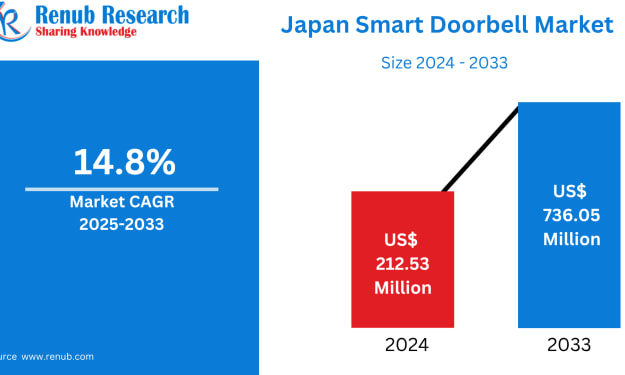
Market Snapshot The Japan Smart Doorbell Market is expected to reach US$ 736.05 million by 2033, up from US$ 212.53 million in 2024, expanding at a robust CAGR of 14.8% from 2025 to 2033. Rapid urbanization, increasing adoption of smart home technologies, and rising demand for home security systems are driving market growth. Advancements in AI, video analytics, and wireless connectivity are further strengthening consumer demand for smart doorbell systems.
By Marthan Sir3 days ago in Futurism



Comments
There are no comments for this story
Be the first to respond and start the conversation.