
The impact of artificial intelligence on education
"From grading to teaching: The role of AI in modern education"

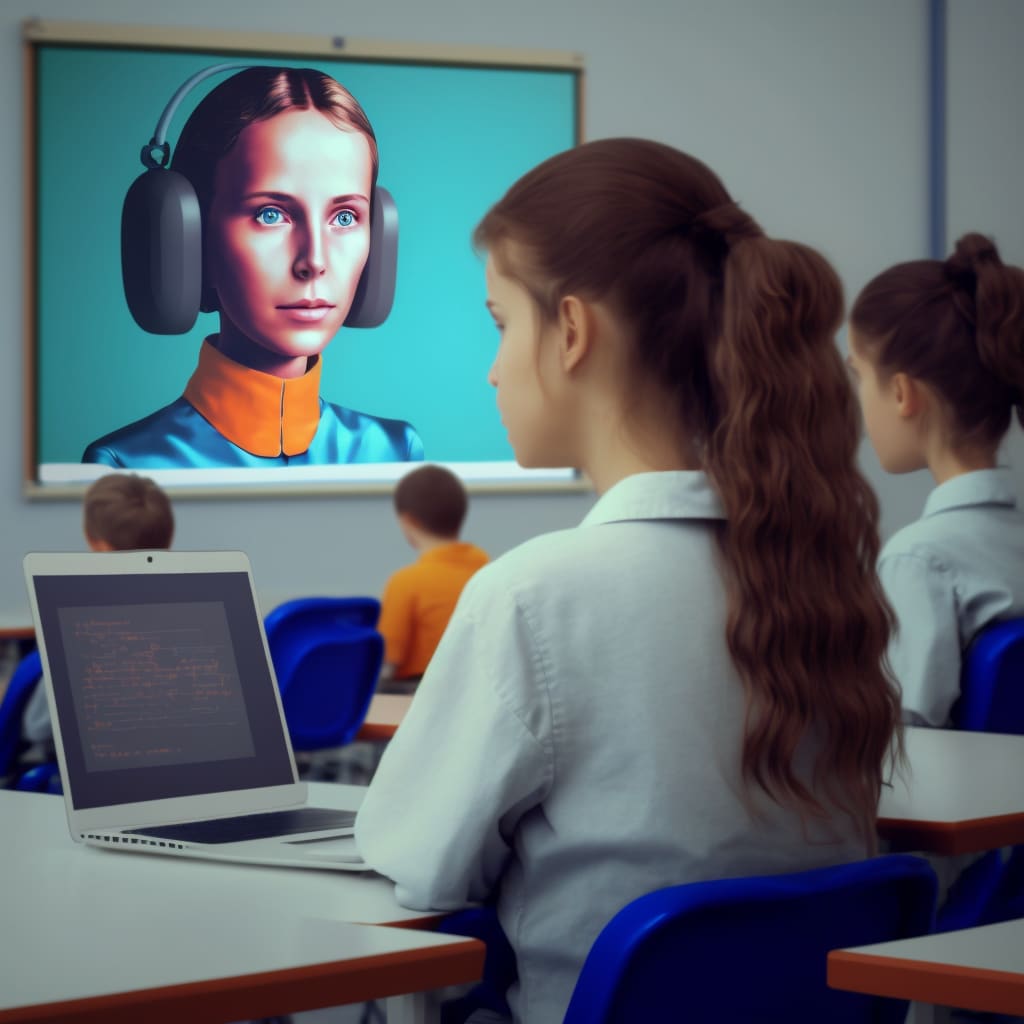
Artificial intelligence (AI) has already made its mark in various industries, and education is no exception. From personalized learning to automated grading, the ways in which AI is shaping education are numerous and varied. In this blog, we'll explore the impact of AI on the future of education and how it is revolutionizing the classroom.
Unique way of learning:
One of the most significant ways in which AI is transforming education is through personalized learning. With the help of machine learning algorithms, educational software can now tailor lessons and assignments to the unique needs and abilities of each student. This is especially useful for students who may struggle in a traditional classroom setting, as it allows them to progress at their own pace.
Another way in which AI is being used in education is through the use of virtual assistants or tutors. These AI-powered tools can provide one-on-one support for students, answering questions and providing additional guidance as needed. This not only helps students to better understand the material, but it also frees up teachers to focus on other aspects of their job.
How the AI assistants and tutors will create revolution in education?
AI assistants and tutors have the potential to revolutionize education by providing personalized, one-on-one support to students. These AI-powered tools can help students to better understand and retain material, as they can provide explanations and guidance in real-time. They can also help students to develop critical thinking and problem-solving skills by posing questions and challenges.
In addition to these benefits, AI assistants and tutors have the potential to increase access to education. By providing students with support outside of the traditional classroom setting, they can help to bridge the gap between students who may not have access to the same resources.
Another potential advantage of AI assistants and tutors is their ability to free up teachers to focus on other aspects of their job. With the help of these tools, teachers can spend less time grading assignments and answering basic questions, and more time on activities like lesson planning and one-on-one tutoring with students who need extra support.
Overall, AI assistants and tutors have the potential to greatly enhance the educational experience by providing personalized support to students and freeing up teachers to focus on other tasks. However, it's important to ensure that these tools are used ethically and fairly, and that they are not relied upon too heavily as a replacement for traditional teaching methods
How these AI tutors are used to provide better assesments for students?
AI tutors can be used to provide better assessments for students in a number of ways. One way is through the use of adaptive learning, where the difficulty of the assessment adjusts to the student's individual ability level. This allows for a more personalized and accurate assessment of the student's knowledge and skills.
Another way in which AI tutors can be used for assessment is through the use of natural language processing. This technology allows the AI tutor to understand and analyze written responses, allowing for the grading of essays and other written assignments. By using AI to grade these types of assignments, teachers and educators can save time and effort, while also providing more accurate and objective grading.
AI tutors can also be used to provide ongoing assessments of a student's progress. By tracking a student's interactions with the AI tutor, teachers can get a better understanding of the student's strengths and weaknesses and can adjust their teaching accordingly.
Overall, the use of AI tutors in assessment has the potential to greatly improve the accuracy and efficiency of the assessment process. By providing personalized and ongoing assessments, teachers can get a better understanding of each student's abilities and can tailor their teaching to meet the needs of each student.
Grading process:
AI is also making its way into the grading process. With the help of natural language processing, AI-powered software can now grade, written assignments with a high degree of accuracy. While this may sound like a daunting prospect for students, it's important to note that AI grading is still in its early stages and is being used as a supplement to traditional grading methods, rather than a replacement.
How these AI will adapt according to students?
AI tutors and assistants can adapt to the needs and abilities of students through the use of machine learning algorithms. These algorithms allow the AI to analyze data on the student's interactions with the tutor or assistant and to adjust accordingly. For example, if a student is struggling with a particular concept, the AI might provide additional explanations or examples to help them understand. On the other hand, if a student is excelling in a particular subject, the AI might provide more challenging material to keep them engaged.
In this way, AI tutors and assistants can provide a personalized learning experience for each student, adapting to their unique needs and abilities. This can be especially beneficial for students who may struggle in a traditional classroom setting, as it allows them to progress at their own pace.
It's important to note that while AI can adapt to the needs of students to a certain extent, it is still limited by the data and programming that it has been given. It is not a replacement for human teachers, but rather a tool that can support and enhance the educational experience.
How these AI tutors will update themselves according to the education system?
AI tutors and assistants can update themselves according to the education system in a number of ways. One way is through the use of machine learning algorithms, which allow the AI to continuously learn and improve over time. As the AI tutor or assistant interacts with students and is exposed to new information, it can learn and adapt to better meet the needs of the education system.
Another way in which AI tutors can update themselves is through regular updates and maintenance by the developers. These updates can include new features and capabilities, as well as updates to the AI's knowledge base to ensure that it stays up-to-date with the latest developments in the education system.

It's important to note that while AI tutors and assistants have the potential to greatly enhance the education system, they are still limited by the data and programming that they have been given. It is important to ensure that the AI is being used ethically and fairly, and that it is not relied upon too heavily as a replacement for traditional teaching methods.
CONCLUSION:
Of course, the use of AI in education is not without its controversy. Some worry that the increasing reliance on technology will ultimately lead to a decline in critical thinking and problem-solving skills. Others are concerned about the potential for bias in AI-powered software. It's important to consider these concerns and to ensure that the use of AI in education is approached with caution and care.
Overall, the impact of AI on education is still a developing area. While it has the potential to revolutionize the way we learn and teach, it's essential to approach it with a critical eye and to ensure that it is used ethically and fairly. As the use of AI in education continues to evolve, it will be interesting to see how it shapes the future of education.
About the Creator
Rasith Novfal.S
As a skilled and versatile content writer, I had a passion for creating engaging and informative pieces that educate and entertain readers, I converted the knowledge which I got through various research into text.
Keep reading
More stories from writers in Futurism and other communities.
About Binding Prometheus
I want to start actively advocating on behalf of my own work, and the most valuable part of my canon is, without a doubt, Binding Prometheus, the play I have been working on since 2019 and only finished in 2023 as part of my MA. The play itself is an amalgamation of a million different inspirations. On one end, it evokes the Ancient Greek myth-play, deriving its own title from the earliest extant work of Western drama we have, Aeschylus’s Prometheus Bound. On the other end, it borrows significantly from the sci-fi bulwarks from over the years, namely Mary Shelley’s Frankenstein and Karel Capek’s Rossum’s Universal Robots. The play could be an episode of Black Mirror, I fear. I don’t know. I’ve only ever seen one episode of Black Mirror.
By Steven Christopher McKnight21 days ago in Futurism
Material Testing Market: Standards Compliance, Structural Integrity & Industry Expansion
According to IMARC Group's latest research publication, The global material testing market size reached USD 6.8 Billion in 2024. Looking forward, IMARC Group expects the market to reach USD 9.2 Billion by 2033, exhibiting a growth rate (CAGR) of 3.33% during 2025-2033.
By James Whitman7 days ago in Futurism




Comments (1)
Wow Awesome content, more futuristic.