
Material Testing Market: Standards Compliance, Structural Integrity & Industry Expansion
The market is benefiting from stricter enforcement of international quality and safety standards. Increased focus on structural integrity and performance testing is supporting broader industry expansion.

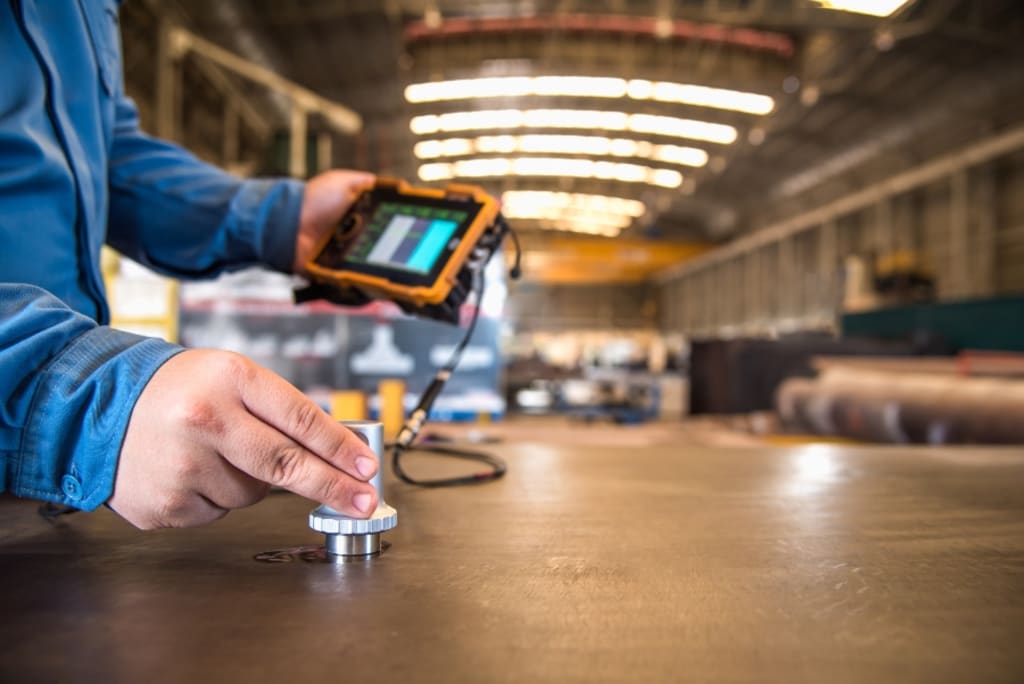
According to IMARC Group's latest research publication, The global material testing market size reached USD 6.8 Billion in 2024. Looking forward, IMARC Group expects the market to reach USD 9.2 Billion by 2033, exhibiting a growth rate (CAGR) of 3.33% during 2025-2033.
How AI is Reshaping the Future of Material Testing Market
• Machine learning algorithms analyze live data from sensors to identify defective parts in materials and variations. This concerns Predictive Quality Control and Defect Detection. This reduces manual inspection time in manufacturing plants by up to 40% with over 95% accuracy.
• Automated Test Planning and Optimization: AI systems use data from past tests for suggestions of optimal test parameters. This reduces trial and error during the characterisation of materials across applications by 30% in total.
• Computer Vision Scanning for Surface Inspection: Deep learning models and high-resolution images aid in identification of microscopic cracks, physical surface defects and anomalies the human eye cannot detect. Surface inspection is 50% faster than customary techniques in the aerospace and automotive industries.
• Smart Maintenance and Equipment Monitoring: AI-driven predictive analytics proactively find patterns in testing equipment that indicate impending performance degradation and identify potential equipment failures up to two weeks in advance, preventing 25% of unplanned downtime of lab networks.
• Data Integration and Workflow Automation: Data from technical reports and standards documents is ingested with natural language processing tools. Automated workflows manage test scheduling, sample tracking and regulatory compliance reporting, reducing administrative efforts by 35%.

Material Testing Industry Overview:
Global infrastructure investment is driving unprecedented demand for material testing across construction, aerospace, and manufacturing sectors. The United States allocated over $350 billion through the Bipartisan Infrastructure Law in October 2023, with $174.7 billion dedicated to highways, bridges, and major projects requiring extensive material verification. Asia Pacific leads global testing equipment adoption, with China adding 5,220 machines and India's government allocating 3.3% of GDP to infrastructure in FY 2024. Non-destructive testing technologies now represent the largest equipment segment as industries prioritize safety without compromising material integrity. Automation is transforming testing workflows—64% of new equipment shipped includes built-in data acquisition systems with 100 kHz sampling rates, while cloud connectivity adoption jumped from 18% to 42% between 2021 and 2024, enabling remote diagnostics across 230 global service centers.
Material Testing Market Trends & Drivers
- Explosive infrastructure development worldwide is reshaping material testing demand as governments pour unprecedented resources into roads, bridges, transit systems, and urban development. The Asian Development Bank projects $1.7 trillion in annual infrastructure investment will be needed across Asia by 2030 to sustain economic growth and address climate risks. Construction material testing equipment specifically reached $2.73 billion and is expanding at 6.4% as quality compliance becomes non-negotiable. Government agencies are growing their testing capabilities at 7.8% annually, driven by stricter regulatory standards and safety protocols. Compression testing machines dominate with 37.4% market share as concrete remains fundamental to construction projects. The push for resilient infrastructure capable of withstanding extreme weather—with global temperatures rising 0.06°C per decade since 1850—has intensified focus on material durability.
- Technological advancement is revolutionizing how materials are tested and validated across industries. Shimadzu Corporation launched an automatic universal testing system in China in October 2023, completely automating strength testing through collaboration with robotics startup Shishi Automation Technology, targeting automobile and steel manufacturers. ZwickRoell introduced touchscreen Rockwell hardness testers in June 2023, simplifying test setup and results handling with intuitive interfaces that reduce operator training requirements. Digital integration accelerated dramatically—new equipment with built-in data acquisition rose from basic connectivity to 64% adoption in just three years. AI-driven diagnostics now reduce testing times by up to 20% through predictive algorithms that optimize material behavior analysis.
- Regulatory compliance and industry-specific demands are creating sustained equipment needs across multiple sectors. The automotive industry's shift toward electric vehicles—growing at 22.1% annually to reach $4,918.7 billion by 2032—requires rigorous testing of new battery materials, composites, and lightweight alloys. Autonomous vehicle development adds another layer of materials verification as safety-critical components demand unprecedented reliability testing. Aerospace and defense sectors maintain stringent material standards, with non-destructive testing methods like computed tomography scanning becoming essential for composite inspection in aircraft structures. The renewable energy sector shows 14% increased demand for specialized material testing as wind turbine blades, solar panel components, and energy storage systems require validation.
Leading Companies Operating in the Global Material Testing Industry:
• ADMET, Inc.
• AMETEK, Inc.
• Applied Test Systems
• Bureau Veritas
• DNV
• Hegewald & Peschke
• Illinois Tool Works Inc.
• Mitutoyo America Corporation
• MTS Systems
• Shimadzu Corporation
• Smithers
• Tinius Olsen
• Wirsam Scientific
• Zwick Roell
Material Testing Market Report Segmentation:
By Type:
• Universal Testing Machines
• Servohydraulic Testing Machines
• Hardness Testing Machines
• Impact Testing Machines
• Non-Destructive Testing Machines
Non-destructive testing machines represent the largest segment, as these systems enable comprehensive material inspection without causing damage, making them essential for critical safety applications in aerospace, energy, and infrastructure.
By Material:
• Metals and Alloys
• Plastics
• Rubber and Elastomers
• Ceramics and Composites
• Others
Metals and alloys dominate the market, driven by their widespread use across automotive, construction, aerospace, and manufacturing industries requiring rigorous strength, durability, and reliability verification.
By End Use Industry:
• Automotive
• Construction
• Education
• Aerospace and Defense
• Oil and Gas
• Energy and Power
• Others
Construction leads end-use applications due to mandatory material testing requirements ensuring safety, structural integrity, and regulatory compliance for concrete, steel, asphalt, and other building materials.
Regional Insights:
• North America (United States, Canada)
• Asia Pacific (China, Japan, India, South Korea, Australia, Indonesia, Others)
• Europe (Germany, France, United Kingdom, Italy, Spain, Russia, Others)
• Latin America (Brazil, Mexico, Others)
• Middle East and Africa
Asia Pacific dominates with 55.1% market share, propelled by rapid industrialization, massive infrastructure projects, expanding automotive and aerospace manufacturing, and China's 7.4% growth rate alongside India's 7.8% expansion.
Recent News and Developments in Material Testing Market
• In October 2023, Shimadzu Corporation in China launched its automatic universal testing system for the measurement of metal materials. The automatic strength testing for metal materials is the result of cooperation with Shishi (Shanghai) Automation Technology and is aimed at quality control production processes in automobile manufacturers and car parts and iron and steel manufacturers.
• June 2023: ZwickRoell launched the touchscreen-operated ZHR4150 and ZHR8150 Rockwell hardness testers. They are capable of classic Rockwell and combined Rockwell/Superficial Rockwell hardness testing.
• September 2023: Shimadzu released AGX-V™ tabletop hydraulic testing frames (50 to 100 kN) along with a 25% smaller footprint and 120-second automated changeover between grips.
• January 2024: ZwickRoell has launched its RoellXpert™ dual-channel fatigue testers with loads up to 200 kN and up to 35 Hz cyclic rates. The RoellXpert™ systems are for full fatigue testing of automotive components and aerospace materials and components and long-term durability testing of structures.
• June 2024: TA Instruments launched the NanoTensile™ micro-mechanical tester, which has a 0.02 mN load resolution and a 5 nm displacement resolution and can characterize the properties of nanoscale materials and thin films for semiconductor, electronics and advanced materials applications.
Note: If you require specific details, data, or insights that are not currently included in the scope of this report, we are happy to accommodate your request. As part of our customization service, we will gather and provide the additional information you need, tailored to your specific requirements. Please let us know your exact needs, and we will ensure the report is updated accordingly to meet your expectations.
About the Creator
James Whitman
With years of experience in analyzing global industries, I specialize in delivering actionable market insights that help businesses stay ahead in an ever-changing landscape.
Keep reading
More stories from James Whitman and writers in Futurism and other communities.
Home Shopping Market: Convenience-Led Retail & Growth Outlook
According to IMARC Group's latest research publication, The global home shopping market size was valued at USD 4,598.70 Billion in 2024. Looking forward, IMARC Group estimates the market to reach USD 12,791.25 Billion by 2033, exhibiting a CAGR of 11.44% during 2025-2033.
By James Whitman2 months ago in Futurism
A Chinese Official’s Use of ChatGPT Accidentally Exposed a Global Intimidation Operation
A Chinese official’s use of ChatGPT accidentally revealed a global intimidation operation By 1418603 CNN Expansion D.C. 2023 - May 24-26, 2023 - Washington, D.C., Sean Lyngaas
By Behind the Tech6 days ago in Futurism
Australia Paints & Coatings Market: Construction Demand, Product Innovation & Sustainability Trends
According to IMARC Group, the Australia paints and coatings market reached USD 5.2 Billion in 2024 and is projected to grow to USD 7.8 Billion by 2033, exhibiting a steady compound annual growth rate (CAGR) of 4.1% during 2025–2033. This consistent expansion reflects robust demand across residential, commercial and industrial sectors in Australia. Paints and coatings play a crucial role beyond aesthetics—they provide protection against corrosion, weathering and chemical exposure while enhancing durability and surface performance. As infrastructure investments accelerate and sustainability expectations rise, the industry is undergoing a transformation driven by innovation, regulatory compliance and green chemistry advancements.
By Kevin Cooper7 days ago in Futurism




Comments
There are no comments for this story
Be the first to respond and start the conversation.