
The Hidden Legacy of Giants and the Smithsonian Part Two: The Vanishing Bones
By the mid-20th century, alternative researchers began to argue that what was happening was not just scientific conservatism, but deliberate suppression.


The Vanishing Bones
The story of giants in North America did not end with the early newspaper clippings and scattered reports of colossal skeletons. If anything, those accounts were only the beginning of a more profound mystery that would grow more unsettling as the decades unfolded. Where the first wave of discoveries gave the public images of titanic skeletons unearthed from burial mounds and ancient chambers, the following years revealed something stranger still: the systematic disappearance of evidence. Eyewitnesses told their stories, crates were packed and shipped, and then, silence. The bones were gone, as though swallowed by history itself.
This silence did not emerge in a vacuum. American archaeology was beginning to formalize in the late 19th and early 20th centuries, and institutions such as the Smithsonian took command over what would be considered “acceptable” history. Into this new framework, the giants did not fit. They were too large, contradictory, and destabilizing to the neat story of human evolution that scholars were eager to cement. And so, while local diggers, farmers, and town newspapers marveled at skeletons measuring eight to twelve feet in length, official science responded not with investigation but with erasure.
The Disappearance of Evidence
The trail of the giants does not end with their discovery; it becomes most mysterious in what happened afterward. In dozens of accounts, the pattern is strangely consistent: bones were unearthed, communities marveled at their size, local newspapers printed excited headlines, and then the remains were quietly removed by representatives of larger institutions, most often linked to the Smithsonian. From that point forward, the artifacts vanished without a trace.
One such case comes from the early 1890s in Wisconsin, where farmers excavating a mound uncovered skeletons between eight and ten feet tall. The bones were carefully packed into crates, reportedly under the supervision of Smithsonian field agents, and sent away for “further study.” Local residents expected these discoveries to be displayed, confirming their elders' stories about the “ancient tall ones.” Yet when inquiries were later made to the Smithsonian, no shipment record could be found. In the official correspondence, it was as if the event had never occurred.
Similar stories echo across the Midwest. In Ohio, accounts describe a burial chamber containing several enormous skeletons arranged in ceremonial positions. Witnesses recalled jawbones so large they could fit over a normal man’s head like a mask, and rib cages broader than a barrel. Again, the remains were said to have been collected by official agents and transported east. Again, nothing ever emerged. Decades later, researchers scouring Smithsonian catalogs could find no mention of the bones.
Even in cases where bones were initially placed on public display, the trail ends abruptly. Reports from the early 20th century describe oversized skulls exhibited in small-town museums, only to be “loaned” to larger institutions for proper curation. None were ever returned. Curators quietly admitted, years afterward, that they were instructed not to ask further questions. Some recalled crates labeled “Do Not Open, Property of Smithsonian,” sitting in basements before being shipped to undisclosed storage.
By the mid-1900s, stories began to emerge of outright destruction. A few whistleblowers suggested that oversized skeletons were deemed “freak anomalies” and reduced to fragments for disposal. One former employee, writing in private correspondence, confessed that bones which “contradicted established theory” were deliberately broken and discarded to prevent controversy. Whether these accounts were isolated exaggerations or part of a broader pattern, the effect was the same: the trail of evidence was severed. For those who believe suppression was deliberate, the motive is clear. In a time when Darwinian evolution was taking hold as the central narrative of human history, the existence of an ancient race of giants, beings who did not fit into the gradual progression of mankind, was too disruptive. Publishing such evidence could have upended the carefully constructed framework of archaeology and human origins. For skeptics, the counterargument is that poor preservation, misidentification, or lack of scientific rigor explains the disappearances. But the sheer repetition of these stories, and the institutional silence that followed, continues to raise more questions than it answers.
What remains today are fragments: yellowed clippings, faded photographs, and the words of eyewitnesses long dead. Each account could be dismissed as folklore or exaggeration, but they form a haunting pattern. Time and again, evidence was uncovered, documented, transported, and then lost in the labyrinth of official archives. The disappearance of the bones is not just an absence of physical remains; it is the shadow of a truth that someone, somewhere, may not want the world to see.
Legends in Stone and Story
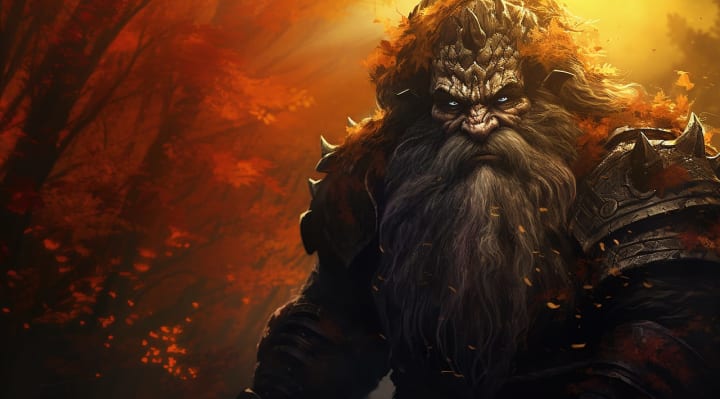
Even as the bones disappeared into vaults and silence, the memory of giants endured in another form: the stories, monuments, and symbols left behind by ancient peoples. Across North America, from the Mississippi Valley to the deserts of the Southwest, indigenous traditions preserve vivid accounts of enormous beings who once roamed the land. These tales, far from being isolated or fanciful, often align with the regions where reports of giant skeletons emerged, creating a tapestry of memory too consistent to ignore.
Among the Paiute of Nevada, one of the most striking legends tells of the Si-Te-Cah, a race of towering red-haired giants who preyed upon smaller tribes and were eventually driven into Lovelock Cave, where they met their fiery end. Early 20th-century excavations of that same cave produced strange artifacts, oversized sandals, woven mats, and even skeletal remains that appeared larger than average. While mainstream accounts attributed these finds to ordinary ancient inhabitants, the persistence of the Paiute legend, combined with the size of the objects, fueled speculation that this was more than myth.
The Cherokee speak of the Moon-Eyed People, pale-skinned beings who were said to be taller and stronger than ordinary men, but sensitive to sunlight. According to tradition, they were driven westward before the arrival of European settlers. The description, unusual in its detail, stands out as one of the few indigenous accounts that speaks not only of great stature but also of distinct physical traits, as if remembering a separate branch of humanity.
Further west, the Hopi and Zuni preserve oral traditions of the “Old Ones,” powerful beings who helped shape the land and instructed the people in sacred knowledge. Their stature is described in physical height and commanding presence, as well as figures who towered above tribes and left behind wisdom encoded in ritual and symbol. The stories portray them with reverence and caution, suggesting that their influence was beneficial and overwhelming. Archaeology, too, leaves traces that echo these traditions. The great mound complexes of the Mississippi Valley, such as Cahokia in Illinois and the Serpent Mound in Ohio, speak to an engineering prowess and monumental scale that continues to puzzle scholars. Some researchers suggest that the oral traditions of giants are metaphorical, meant to honor powerful ancestors. But others argue that these massive earthworks, requiring thousands of workers and precise astronomical alignments, may point to a forgotten era when beings of immense ability, physical or otherwise, walked the earth alongside humans.
Similar legends ripple outward beyond North America. The ancient peoples of South America spoke of viracocha, tall, bearded figures who brought knowledge and order after a great flood. The Norse myths tell of Jötunn, giants who battled with the gods but intermingled with humanity. The Hebrew Bible speaks of the Nephilim, “mighty men of renown,” whose great size and strength became a byword for corruption before the flood. When examined side by side, these stories suggest that the memory of giants was not a local peculiarity but a nearly universal motif, a recurring echo in the human story.
Whether myth, metaphor, or memory of a real person, the legends serve as cultural monuments as enduring as stone. They preserve the impression of a world once shared with beings who stood apart from ordinary men and whose presence shaped early societies' physical and spiritual landscapes. Combined with the archaeological mysteries, the unexplained megaliths, the sudden leaps in ancient engineering, and the vanishing bones, they suggest a picture far larger than the one sanctioned by official history.
The stones and stories speak, even when the bones are silent. Together, they may be the last unbroken testimony of a chapter in human history that institutions have tried, but failed, to erase.
The Shaping of a Narrative
By the early 20th century, a curious paradox had emerged. On one hand, there was no shortage of reports, eyewitness accounts, and folklore describing the presence of giants across North America. On the other hand, the official voice of science and archaeology was increasingly firm in its denial that such beings had ever existed. The more stories of giant skeletons circulated in small-town newspapers, the louder the silence grew from established institutions. What should have been a moment of discovery became the crafting of a carefully controlled narrative.
At the heart of this shift was the Smithsonian Institution. Founded in 1846 and charged with advancing knowledge, the Smithsonian became the ultimate gatekeeper of American archaeology. As discoveries poured in from the vast earthworks of the Midwest, questions about the identity of the mound builders stirred public imagination. Early speculation included lost tribes of Israel, ancient Europeans, or races of great stature who predated Native Americans. But as archaeology professionalized, the need for a cohesive, “rational” history grew stronger. The giants, whose bones and stories pointed toward a past far stranger than scholars wanted to, had no place in the new academic order.
Instead, the mounds were attributed exclusively to known indigenous cultures, and any evidence that hinted at an alternative was quietly set aside. To acknowledge giants would have been to admit that North American human history was longer and more complex than conventional models allowed. Worse, it might have suggested that humans were not the only dominant species to shape the continent. Such implications were intolerable for a field trying to align itself with Darwin’s theory of evolution and the progress of modern science.
This act of shaping the narrative did not happen overnight. It was a gradual process, built through omission, reclassification, and selective reporting. Skeletons described as gigantic in local accounts were later labeled “tall anomalies.” Oversized artifacts were dismissed as misidentified, ceremonial, or even hoaxes. The language of scientific journals softened, downplaying what ordinary people had seen with their own eyes. In time, the narrative hardened into certainty: giants were nothing more than myth.
Yet the persistence of local stories, combined with the vanishing bones, kept the question alive. Farmers who had watched oversized skulls lifted from their land could not reconcile their memories with the official denials. Amateur historians who had catalogued unusual finds bristled at the suggestion that they had fabricated their work. The dissonance between lived experience and the academic record created an undercurrent of distrust that only deepened as the decades passed.
By the mid-20th century, alternative researchers began to argue that what was happening was not just scientific conservatism, but deliberate suppression. The giants, they claimed, threatened to unravel archaeology and the story of human origins. If beings of extraordinary size and strength once walked the earth, then humanity’s role as the central historical figure was questioned. And if those beings left behind technologies, monuments, or knowledge, then perhaps the roots of civilization were not as human as we believed.
This possibility is what makes the narrative so contested. Was the disappearance of evidence a matter of poor preservation and lost records, or was it the intentional construction of a safer history? Was it incompetence, or was it policy? Whether guilty of active suppression or not, the Smithsonian became the symbol of this debate. To critics, it represented the fortress of officialdom, guarding a version of history that excluded anything anomalous. To believers, it was the vault where truth was locked away.
What is undeniable is that the shaping of history has real consequences. Entire generations grew up believing that the mounds of the Midwest were the work of small tribal groups, their monumental achievements explained away as the product of slow and simple labor. If they existed, the giants were erased from museum shelves and public consciousness. And yet, another narrative continues to breathe in the whispers of folklore, in the unearthed clippings of forgotten newspapers, and in the stories passed down through families.
The struggle between these two versions of history, one official, one suppressed, forms the heart of the mystery. It is not only a question of bones and artifacts, but of control over the story of humanity itself. To shape the narrative is to shape identity, to determine what people believe about their past and, by extension, their future. And in that struggle, the giants remain the silent witnesses, figures half-buried, half-remembered, waiting for the day when their story can no longer be contained.
Toward a New Awakening
The disappearance of bones and the silence of institutions might have succeeded in burying the giant question for a century. Still, the story is no longer confined to dusty archives and forgotten vaults. In the digital age, fragments once scattered and inaccessible are pieced together into a larger mosaic. Old newspapers, long dismissed as local curiosities, are now scanned, archived, and searchable, allowing researchers to trace a web of accounts stretching across states and decades. Photographs once yellowed with age resurface online, showing oversized skulls displayed in county fairs and small museums before being “collected” and removed. The narrative that was once dismissed as folklore is now gaining new life.
What makes this moment different is the recovery of lost records and the collective effort of independent researchers, amateur historians, and curious citizens. No longer reliant on the permission of a single institution, people are building their own archives, cross-referencing old maps, reexamining mound sites, and connecting oral traditions with archaeology. The result is a quiet but powerful counter-narrative that challenges the official story. Each rediscovered clipping or overlooked photograph becomes a small act of resistance against historical amnesia.
Beyond the archives, the legends themselves are being reconsidered. Where earlier scholars dismissed indigenous traditions as allegory or myth, more voices now recognize that oral histories often preserve echoes of real events. The accounts of red-haired giants, pale Moon-Eyed People, or towering Old Ones are no longer brushed aside as fantasy. Still, they are increasingly understood as cultural memory, stories refined through generations, carrying kernels of truth. The possibility that these accounts are not inventions but testimony is forcing a reassessment of what history is willing to accept.
And yet, the more profound mystery remains unresolved. If the giants truly walked the earth, where did they come from, and what became of them? Were they simply another branch of humanity, now extinct, or something altogether different, beings whose existence would rewrite the story of our species? The silence of officialdom ensures that these questions remain open, but the persistence of memory, myth, and scattered evidence ensures they cannot be forgotten.
We are left standing at a threshold. On one side lies the carefully shaped narrative of modern archaeology, polished and orderly, where giants exist only in metaphor. On the other side lies a far stranger possibility: that the world’s oldest stories are not inventions but recollections of encounters with a race of beings whose bones still lie hidden beneath the soil, and perhaps within vaults we are not meant to see.
As the boundaries of history shift in the face of renewed curiosity, the giants may yet return, not as flesh and blood, but as undeniable presences in the human story. The awakening will not come from institutions, but from the persistence of those who refuse to let the past remain buried. And in that awakening, we may find that the legends in stone and story were never myths, but warnings, reminders, and fragments of a truth waiting to rise again.
If you enjoyed this post and found it meaningful, please like, comment, and share it with others who are also in search of the truth. To support further research and ongoing insights, consider becoming a paid subscriber. Every contribution helps sustain this journey and keep it vibrant.
About the Creator
The Secret History Of The World
I have spent the last twenty years studying and learning about ancient history, religion, and mythology. I have a huge interest in this field and the paranormal. I do run a YouTube channel
Keep reading
More stories from The Secret History Of The World and writers in Futurism and other communities.
Exposing the Truth: Volume 6 The Battle for Reality and Humanity's Choice
The Final Veil: The Battle for Reality and Humanity's Choice The concept of a "veil" is as old as human history. Ancient mystics described it as the boundary between the seen and unseen, a membrane separating the world of flesh from the world of spirit. Shamans spoke of piercing the veil through altered states, Gnostic texts called it the illusion of the demiurge, and modern thinkers now describe it as the matrix, a program of control that manipulates perception itself.
By The Secret History Of The WorldExclusive • 5 months ago
About Binding Prometheus
I want to start actively advocating on behalf of my own work, and the most valuable part of my canon is, without a doubt, Binding Prometheus, the play I have been working on since 2019 and only finished in 2023 as part of my MA. The play itself is an amalgamation of a million different inspirations. On one end, it evokes the Ancient Greek myth-play, deriving its own title from the earliest extant work of Western drama we have, Aeschylus’s Prometheus Bound. On the other end, it borrows significantly from the sci-fi bulwarks from over the years, namely Mary Shelley’s Frankenstein and Karel Capek’s Rossum’s Universal Robots. The play could be an episode of Black Mirror, I fear. I don’t know. I’ve only ever seen one episode of Black Mirror.
By Steven Christopher McKnight19 days ago in Futurism
Saudi Arabia Furniture Fittings Market: Residential Expansion, Design Innovation & Market Growth
According to IMARC Group's latest research publication, Saudi Arabia furniture fittings market size reached USD 122.10 Million in 2024. The market is projected to reach USD 294.08 Million by 2033, exhibiting a growth rate of 10.26% during 2025-2033.
By Abhay Rajputabout 23 hours ago in Futurism



Comments
There are no comments for this story
Be the first to respond and start the conversation.