
The Future Is Now: 7 Scientific Predictions That Will Change Our World by 2030
Exploring Revolutionary Breakthroughs That Will Redefine Science, Technology, and Human Life
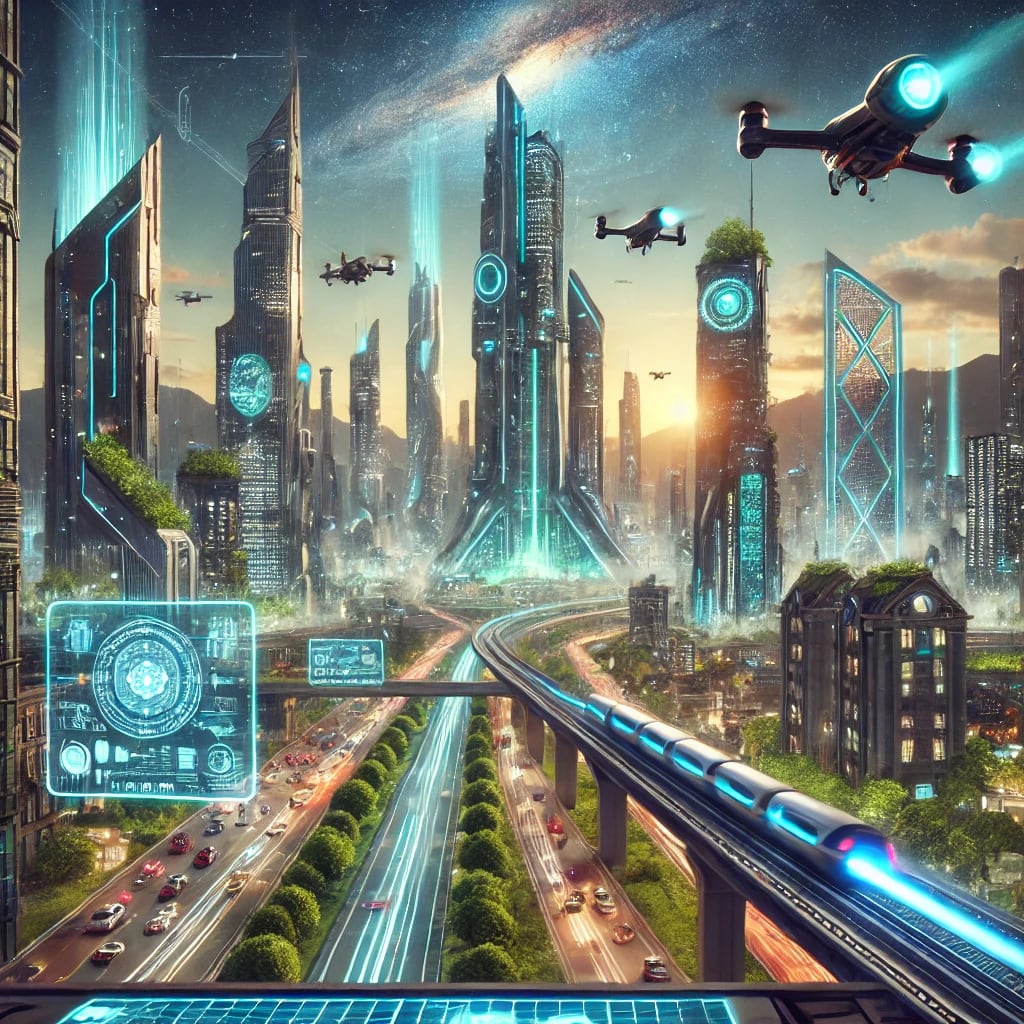
The Future Is Now: 7 Scientific Predictions That Will Change Our World by 2030
Introduction
The world is advancing at an unprecedented pace, with breakthrough technologies and scientific discoveries reshaping our daily lives. By 2030, innovations that once seemed like science fiction may become reality. From artificial intelligence surpassing human intelligence to space colonization on Mars, the next decade promises revolutionary changes that could redefine humanity.
This article explores seven mind-blowing predictions backed by scientific research, covering everything from quantum computing and AI-driven societies to genetic engineering and human longevity. These advancements will not only transform industries but also reshape the way we live, work, and interact with the world.
Are you ready for a glimpse into the future?
1. Artificial Intelligence Will Surpass Human Intelligence
By 2030, we may witness the dawn of artificial general intelligence (AGI), an era where machines think, learn, and adapt like humans—or even surpass us. AI is no longer limited to voice assistants like Siri and Alexa; it is evolving into something far more sophisticated.
The Rise of AI-Driven Societies
Imagine a world where self-driving cars, AI-powered doctors, and fully automated smart cities are the norm. AI could revolutionize everything from education and healthcare to government decision-making. Experts predict that:
AI systems will make critical business and policy decisions based purely on data.
AI-driven robotic surgeons will perform complex surgeries with near-zero errors.
AI-generated art, music, and literature will blur the line between human and machine creativity.
While some fear that superintelligent AI might take control, others believe it will be humanity’s greatest achievement, enhancing productivity and solving global challenges.
2. Humans Will Begin Colonizing Mars
The dream of space colonization is closer than ever, with companies like SpaceX and NASA preparing for the first crewed Mars mission by the end of the decade. If successful, the first human settlement on Mars could become a reality, marking a new era of interplanetary civilization.
What Life on Mars Might Look Like
Scientists predict that the first Martian colonies will rely on AI-powered habitats, producing food and oxygen in enclosed environments.
Space mining will unlock valuable resources, such as rare metals and water ice, making deep-space travel more sustainable.
Terraforming experiments could eventually make Mars habitable by thickening its atmosphere.
If successful, humanity’s survival will no longer be tied to Earth, opening the door to colonizing other exoplanets in the habitable zone.
3. Quantum Computing Will Change the World
The race for quantum supremacy is heating up, with companies like Google, IBM, and Microsoft developing quantum computers that can solve complex problems in seconds—problems that would take traditional computers thousands of years.
The Impact of Quantum Computing
Revolutionizing cryptography, making current security systems obsolete.
Accelerating drug discovery, allowing scientists to develop life-saving medicines in record time.
Optimizing global logistics, from traffic systems to supply chain management, making everything more efficient.
By 2030, quantum computing could outperform classical computers in almost every field, leading to unprecedented technological breakthroughs.
4. The Human Lifespan Will Extend Beyond 120 Years
Thanks to advances in biotechnology, gene therapy, and nanomedicine, aging could soon be treated like a disease rather than an inevitable process. Scientists are working on anti-aging treatments that could extend human life expectancy well beyond 120 years.
The Future of Human Longevity
CRISPR gene-editing technology is already being used to repair DNA damage and fight genetic diseases.
Regenerative medicine could allow humans to grow new organs, eliminating the need for transplants.
AI-driven medical diagnostics will enable personalized treatments, detecting diseases before symptoms appear.
By 2030, life-extension therapies might not only add years to our lives but also improve the quality of aging, allowing people to stay healthier and more active well into old age.
5. The First Human-AI Hybrid Will Be Born
The boundary between humans and machines is disappearing with the rise of brain-computer interfaces (BCIs). Companies like Neuralink are developing direct brain-to-computer connections, enabling humans to control technology with their thoughts.
How BCIs Will Transform Humanity
Instant knowledge upload – Imagine downloading skills like a new language or a martial art directly into your brain.
Mind-controlled devices – Paralysis patients will regain mobility through AI-assisted cybernetic limbs.
Merging human intelligence with AI – Allowing people to process and analyze information at superhuman speeds.
By 2030, the first human-AI hybrid may walk among us, blurring the lines between biological and artificial intelligence.
6. The First Fully Automated Smart Cities Will Emerge
With the rise of AI-driven urban planning, we are entering an era where entire cities will function autonomously. These smart cities will be powered by 5G, IoT (Internet of Things), and renewable energy.
What Smart Cities Will Look Like
Self-repairing roads and buildings with AI-controlled maintenance systems.
100% renewable energy, with AI optimizing power consumption for maximum efficiency.
Hyperloop transportation, allowing people to travel at 700 mph with zero emissions.
By 2030, human-free cities may exist, operated entirely by AI, robotics, and automation.
7. Climate Engineering Will Save the Planet
With climate change accelerating, scientists are turning to geoengineering solutions to stabilize Earth’s climate. These futuristic projects aim to cool the planet, reverse global warming, and protect ecosystems.
Game-Changing Climate Solutions
Artificial cloud seeding to reflect sunlight and lower global temperatures.
Carbon capture technology that removes CO₂ from the air and converts it into clean fuel.
Bioengineered crops that absorb more carbon while producing more food.
By 2030, we may witness the rise of global-scale climate engineering projects, ensuring a sustainable future for generations to come.
Conclusion: The Future Starts Now
The next decade will bring unimaginable technological advancements, from AI-driven societies and space colonization to quantum computing and human longevity breakthroughs. Whether these innovations lead to a utopian future or unforeseen challenges, one thing is certain: we are on the brink of a new era of human evolution.
🚀 What do you think? Which scientific breakthrough excites you the most? Let’s discuss in the comments!
About the Creator
The Memory Thief: Why You Can No Longer Trust Your Own Digital History
We have always believed that "a picture is worth a thousand words." In the digital age, we upgraded that belief: a photo was proof. It was the anchor of our identity, the evidence of our travels, and the curator of our most cherished family memories.
By Alex Sterling about 11 hours ago in Futurism
Online Trading Platform Market Trends: Mobile Trading Adoption, AI-Driven Analytics & Industry Forecast to 2034
Rising internet penetration, the widespread adoption of smartphones, and the integration of advanced technologies like AI and blockchain are driving the demand for online trading platforms. These systems provide retail and institutional investors with real-time market access, automated tools, and a wide range of asset classes, including equities, cryptocurrencies, and derivatives. According to IMARC Group’s latest data, the global online trading platform market size was valued at USD 11.4 Billion in 2025. Looking forward, IMARC Group estimates the market to reach USD 17.9 Billion by 2034, exhibiting a CAGR of 4.96% from 2026-2034.
By Andrew Sullivan6 days ago in Futurism


Comments
There are no comments for this story
Be the first to respond and start the conversation.