
The Future is Here: How VR and AR are Shaping a Whole New Metaverse!
See How Virtual and Augmented Reality are Completely Changing the Metaverse – It Will Leave You in Awe!
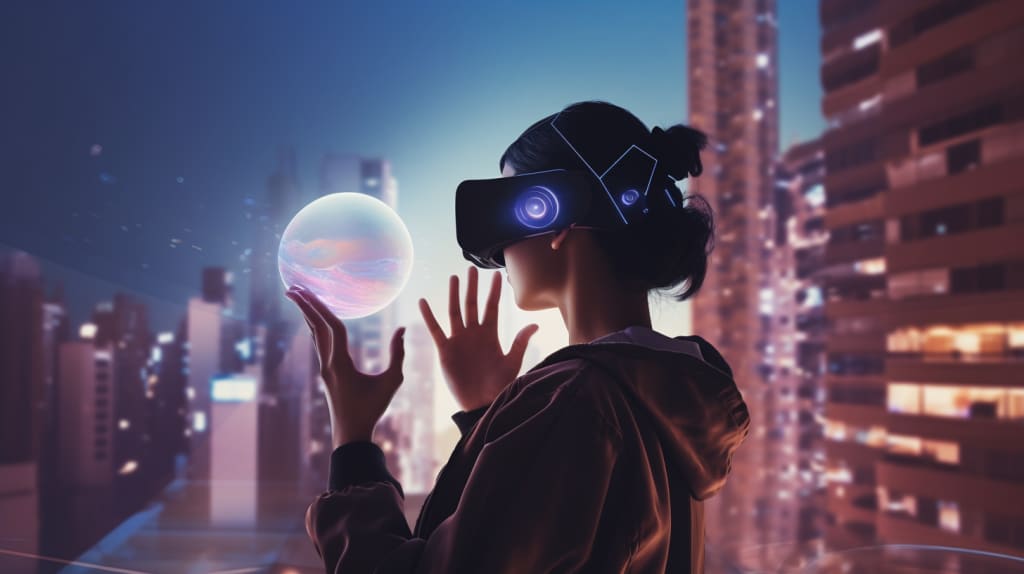
The advancement of technology to shape and redefine our daily lives, from the way we communicate to the way we interact with the world around us. Virtual and Augmented Reality (VR/AR) technologies have emerged as game-changers in the tech industry, offering immersive and interactive experiences that push the boundaries of what we thought was possible.
In this blog post, we will explore how these technologies are transforming the concept of the metaverse, a virtual space where users can interact with a computer-generated environment and other users, and its implications for various industries.
The Metaverse: A Brief Introduction
Before diving into the transformative potential of VR/AR technologies, let's first understand what the metaverse is. Derived from the words "meta" (meaning beyond) and "universe," the term metaverse was coined by Neal Stephenson in his science fiction novel "Snow Crash."
In its essence, the metaverse refers to a collective virtual shared space that encompasses all virtual reality worlds and augmented reality experiences. It is a cyberspace where individuals can create, explore, and interact with each other, blurring the lines between the physical and digital realms.
Enhanced Social Interactions
One of the most profound ways VR/AR technologies are transforming the metaverse is by enhancing social interactions. Unlike traditional communication platforms that rely on text-based or audiovisual communication, VR/AR allows users to embody avatars that represent their digital personas.
This immersive experience fosters a sense of presence and closeness, making interactions with others in the metaverse feel more personal and real.
In addition to avatar-based interactions, VR/AR technologies enable spatial audio, which enhances the feeling of being in a shared physical space. This means that users can have conversations with others, hear their voices coming from different directions, and even gauge their distance based on the sound.
These advancements create a more realistic and immersive social experience, making the metaverse an attractive space for socializing, collaborating, and even conducting business.
Redefining Entertainment and Gaming
The entertainment and gaming industry has been at the forefront of adopting VR/AR technologies and exploiting the vast potential of the metaverse. Virtual reality gaming, in particular, has revolutionized the way we experience video games.
Instead of simply controlling a character on a screen, VR allows players to step into the game world, physically interact with objects, and even engage in multiplayer experiences with other players.
Moreover, the metaverse offers endless possibilities for content creators and artists. Virtual concerts, museums, and theaters are becoming increasingly popular, allowing individuals from all over the world to experience live performances and exhibitions without the constraints of physical location.
This fusion of technology and entertainment blurs the boundaries between reality and the virtual world, opening up new avenues for creativity and innovation.
Education and Training in the Metaverse
The metaverse has the potential to revolutionize education and training by providing immersive and interactive learning experiences. Imagine a history class where students can walk through ancient ruins, witness historical events in real-time, and even interact with historical figures.
With VR/AR technologies, this becomes a reality, allowing students to learn through experiential and hands-on activities.
In addition to traditional academic subjects, VR/AR can also be used for vocational training. For example, medical students can practice surgeries in a virtual operating room, pilots can simulate flying in various weather conditions, and engineers can design and test prototypes in a virtual environment.
These immersive training experiences not only enhance learning outcomes but also save costs and reduce risks associated with real-world training.
Navigating Real Estate and Architecture
Virtual and augmented reality technologies are disrupting the real estate and architecture industries by providing innovative ways to showcase properties and design structures.
Virtual property tours allow potential buyers to explore homes and buildings without physically being present, saving time and eliminating geographical limitations.
Architects and designers can use VR/AR to visualize their designs at scale, giving clients a more accurate representation of how the final product will look and feel.
Furthermore, VR/AR technologies enable stakeholders to collaborate and make real-time changes to designs, streamlining the design process and avoiding costly mistakes.
The metaverse acts as a digital sandbox where ideas can be tested, refined, and experienced before investing significant resources into physical construction.
The Impact on Healthcare and Wellness
Beyond entertainment and education, VR/AR technologies are making a significant impact on healthcare and wellness. Virtual reality has been used as a therapeutic tool to treat various conditions, such as phobias, anxiety disorders, and chronic pain.
Patients can be immersed in virtual environments that simulate their fears or provide relaxation, helping them overcome psychological and physical challenges.
Additionally, VR/AR technologies enable telemedicine, allowing doctors to remotely diagnose and treat patients. By leveraging the metaverse, healthcare professionals can conduct virtual consultations, perform surgeries in collaboration with other experts, and monitor patients' vital signs in real-time.
This not only improves access to healthcare services but also reduces costs and increases efficiency.
The Future of Work: Metaverse as a Workspace
As technology advances and remote work becomes the new norm, the concept of the metaverse as a workspace is gaining traction. Virtual offices and collaboration spaces offer employees the opportunity to work together, regardless of their physical location.
Meetings can be conducted in virtual meeting rooms, presentations can be delivered on virtual stages, and teams can brainstorm ideas in shared virtual spaces.
In this virtual work environment, employees can customize their surroundings, eliminate distractions, and focus on the task at hand. The metaverse also offers new possibilities for remote training and onboarding, as new hires can be virtually introduced to their colleagues, walk through office spaces, and familiarize themselves with company policies and procedures.
Conclusion
The metaverse, with its immersive and interactive experiences, is being transformed by virtual and augmented reality technologies. From enhancing social interactions to revolutionizing entertainment, education, real estate, healthcare, and even the way we work, VR/AR is reshaping the digital landscape.
As these technologies continue to advance, we can expect new and exciting possibilities to emerge, creating a future where the boundaries between the physical world and the metaverse blur, ushering in a new era of human interaction and innovation.
In conclusion, the metaverse holds immense potential for various industries and aspects of our lives. It is an exciting space where virtual and augmented reality technologies converge, offering endless opportunities for creativity, collaboration, and exploration.
Whether you're a tech enthusiast, a VR/AR developer, a student, a researcher, or an educator, the metaverse offers a world of possibilities waiting to be discovered. So, put on your VR headset and dive into the metaverse – the next frontier of human experience awaits!
About the Creator
About Binding Prometheus
I want to start actively advocating on behalf of my own work, and the most valuable part of my canon is, without a doubt, Binding Prometheus, the play I have been working on since 2019 and only finished in 2023 as part of my MA. The play itself is an amalgamation of a million different inspirations. On one end, it evokes the Ancient Greek myth-play, deriving its own title from the earliest extant work of Western drama we have, Aeschylus’s Prometheus Bound. On the other end, it borrows significantly from the sci-fi bulwarks from over the years, namely Mary Shelley’s Frankenstein and Karel Capek’s Rossum’s Universal Robots. The play could be an episode of Black Mirror, I fear. I don’t know. I’ve only ever seen one episode of Black Mirror.
By Steven Christopher McKnight16 days ago in Futurism
Application Specific Standard Product (ASSP) Market Size and Forecast 2025–2033
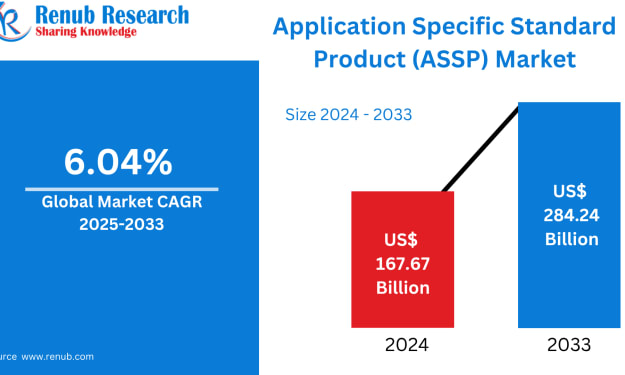
Introduction: A Market Built for Precision The global semiconductor industry is undergoing a profound transformation as demand shifts from general-purpose processing toward specialized, application-focused solutions. At the heart of this shift lies the Application Specific Standard Product (ASSP)—a category of integrated circuits that blends the efficiency of custom chips with the scalability of standard semiconductor products. Designed to perform specific functions across multiple applications, ASSPs offer a powerful balance of performance, cost-effectiveness, and time-to-market.
By Renub Research5 days ago in Futurism



Comments
There are no comments for this story
Be the first to respond and start the conversation.