
The Farmers' Almanac Winter Forecast: An In-Depth Analysis
Unlocking Nature's Secrets: What the Farmers' Almanac Predicts for This Winter

Introduction
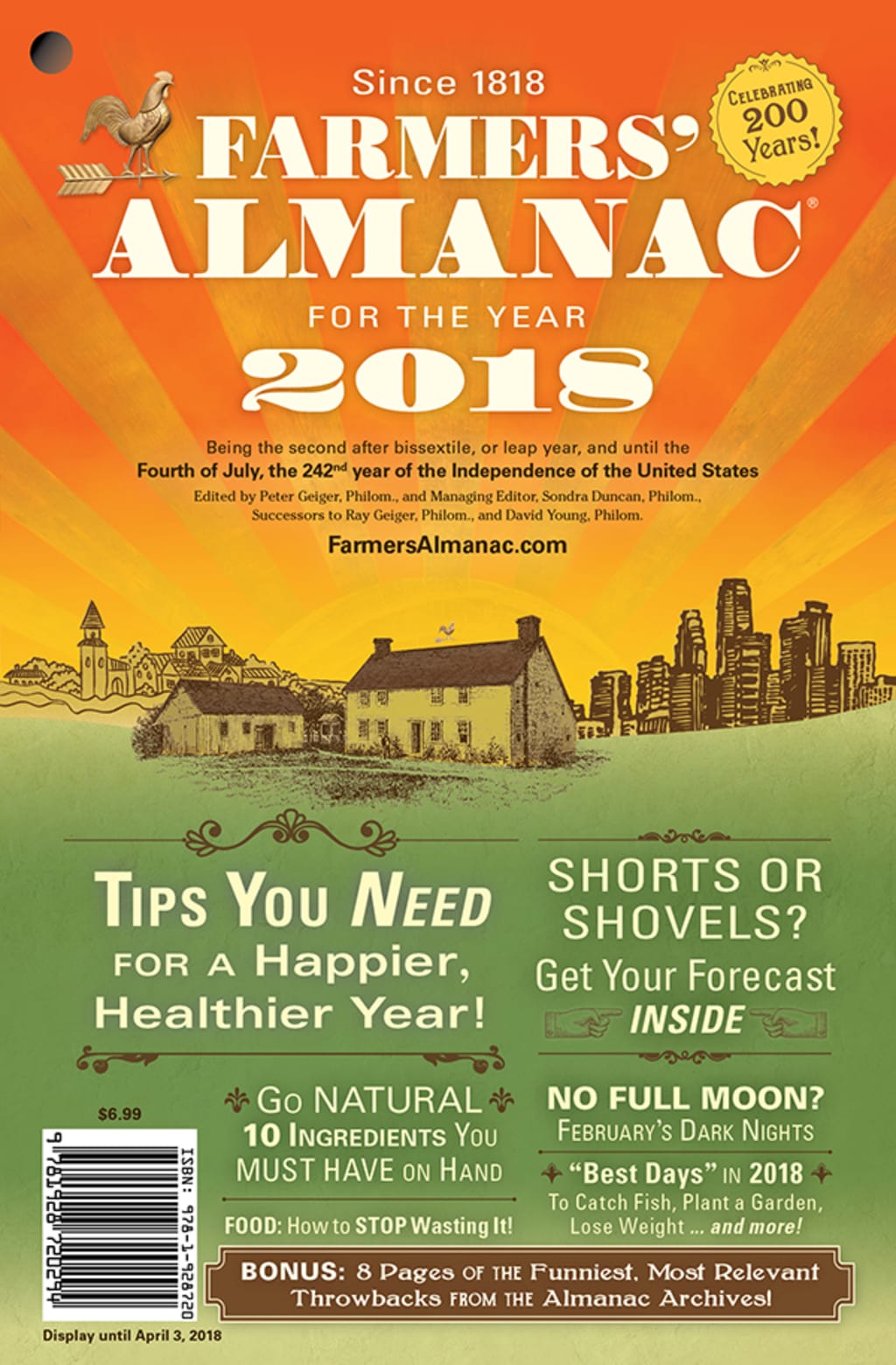
The Farmers' Almanac has been a trusted source of long-range weather predictions for over two centuries. Since its inception in 1818, it has gained a reputation for providing weather forecasts that many farmers, outdoor enthusiasts, and general readers rely upon to plan their activities. As winter approaches each year, anticipation builds around the Almanac's predictions for the cold months ahead. This article delves into the history, methodology, accuracy, and impact of the Farmers' Almanac winter forecast, providing a comprehensive understanding of this intriguing weather prediction tradition.
History of the Farmers' Almanac
The Farmers' Almanac was founded by David Young in 1818 in New Hampshire. Originally intended as a practical guide for farmers, it included weather predictions, planting charts, astronomical data, and household tips. Over the years, it expanded its scope and readership, becoming a staple publication in North America.
The Almanac's weather predictions are made several months in advance, often covering the upcoming winter season. Its forecasts are based on a combination of historical weather data, astronomical calculations, and proprietary algorithms. Despite advances in meteorology, the Almanac has maintained its traditional approach, emphasizing long-range predictions.
Methodology Behind the Winter Forecast
The exact methods used by the Farmers' Almanac are proprietary, but it is known that they incorporate several key elements:
1. Solar Cycles and Lunar Phases: The Almanac considers the influence of solar activity and lunar cycles on weather patterns.
2. Historical Data Analysis: Past weather patterns are analyzed to identify recurring trends and cycles.
3. Astronomical Events: The positions of planets and other celestial phenomena are factored into the predictions.
4. Climate Patterns: Larger climate phenomena such as El Niño and La Niña are considered.
5. Experience and Tradition: Long-standing regional weather patterns and folklore also play a role.
The Almanac's predictions are presented in a seasonal format, highlighting expected temperature ranges, snowfall, and storm activity.
The 2023-2024 Winter Forecast
For the winter of 2023-2024, the Farmers' Almanac predicted a winter characterized by:
- Cold temperatures across much of the northern United States and parts of Canada.
- Above-normal snowfall in the Midwest and Northeast regions.
- A potentially active storm season with several significant snowstorms.
The forecast suggested that the cold would be influenced by a strong polar vortex, which tends to bring frigid air southward. The prediction also indicated that the southern states might experience milder conditions, with less snow and more rain.
Accuracy and Criticism
The accuracy of the Farmers' Almanac has been a subject of debate. Some studies and anecdotal reports suggest that its predictions are correct approximately 50-60% of the time, which is comparable to or slightly better than chance for long-range forecasts.
Critics argue that the Almanac's methods lack scientific rigor and rely heavily on folklore and pattern recognition. However, supporters contend that its predictions are remarkably accurate given the long lead times and the inherent unpredictability of weather.
In recent years, the Almanac has correctly predicted major winter storms and cold spells, boosting its credibility among fans. Nonetheless, it is important to view its forecasts as general trends rather than precise predictions.
Impact on Public and Culture
The Farmers' Almanac winter forecast influences public perception and planning. Many readers use it to prepare for winter weather, stockpile supplies, and plan outdoor activities. It also features in media reports and weather discussions.
Culturally, the Almanac has become a symbol of traditional weather wisdom. Its forecasts are often shared on social media, and its predictions are sometimes humorously scrutinized.
Conclusion
The Farmers' Almanac winter forecast remains a fascinating blend of tradition, science, and folklore. While it may not always provide pinpoint accuracy, it offers valuable insights into potential weather patterns and helps communities prepare for the season ahead. As climate variability increases, the Almanac's role as a long-range predictor continues to be both celebrated and scrutinized, reflecting the enduring human desire to understand and anticipate the weather.
Whether you view it as a reliable guide or a charming tradition, the Farmers' Almanac's winter forecast is an integral part of North American weather lore, shaping expectations and preparations for the cold months to come.
About the Creator
Trend Vantage
Covering the latest trends across business, tech, and culture. From finance to futuristic innovations, delivering insights that keep you ahead of the curve. Stay tuned for what’s next!
Keep reading
More stories from Trend Vantage and writers in Futurism and other communities.
Cristiano Ronaldo: The Phenomenon of Modern Football
Introduction Cristiano Ronaldo dos Santos Aveiro, born on February 5, 1985, in Funchal, Madeira, Portugal, is widely regarded as one of the greatest footballers of all time. His journey from a young boy on a small island to a global sports icon is a testament to his dedication, talent, and relentless pursuit of excellence. Over the years, Ronaldo has not only amassed numerous records and awards but has also become a symbol of hard work, discipline, and professionalism in the world of sports.
By Trend Vantage5 months ago in Futurism
About Binding Prometheus
I want to start actively advocating on behalf of my own work, and the most valuable part of my canon is, without a doubt, Binding Prometheus, the play I have been working on since 2019 and only finished in 2023 as part of my MA. The play itself is an amalgamation of a million different inspirations. On one end, it evokes the Ancient Greek myth-play, deriving its own title from the earliest extant work of Western drama we have, Aeschylus’s Prometheus Bound. On the other end, it borrows significantly from the sci-fi bulwarks from over the years, namely Mary Shelley’s Frankenstein and Karel Capek’s Rossum’s Universal Robots. The play could be an episode of Black Mirror, I fear. I don’t know. I’ve only ever seen one episode of Black Mirror.
By Steven Christopher McKnight13 days ago in Futurism
Saudi Arabia Steel Market: Vision 2030 Projects, Industrial Scale-Up & Supply Chain Shifts
According to IMARC Group's latest research publication, the Saudi Arabia steel market size was valued at USD 8.7 Billion in 2024. The market is projected to reach USD 11.8 Billion by 2033, exhibiting a growth rate (CAGR) of 3.40% during 2025-2033.
By Jeffrey Wilson7 days ago in Futurism



Comments
There are no comments for this story
Be the first to respond and start the conversation.