
The Eye’s Hidden Mistery
How AI Sees What Humans Can’t
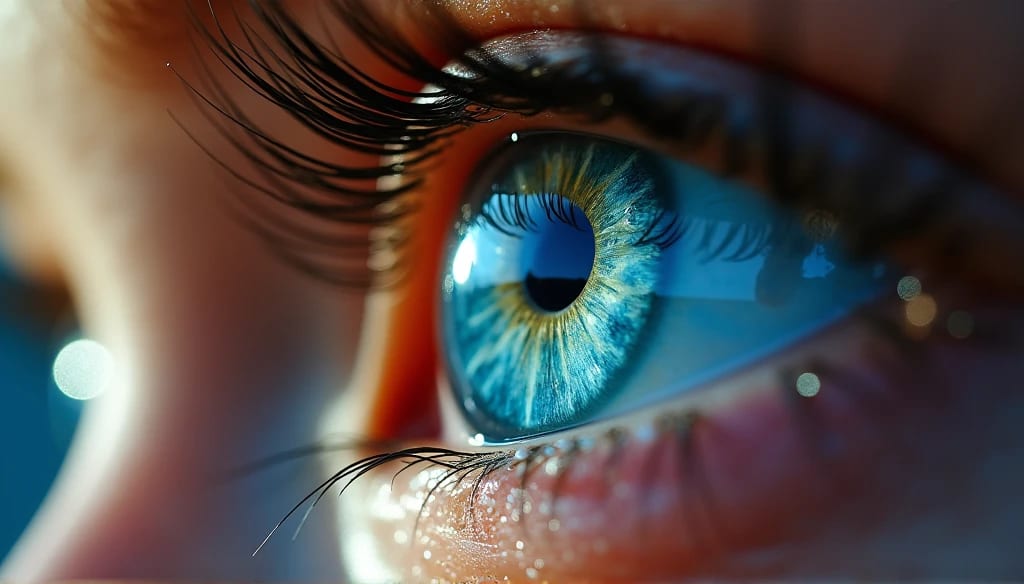
A recent study, performed by University Malaysia Computer Science & Engineering and Al-Azhar University researchers, captured curiosity—and a scientific paradox—by confirming that artificial intelligence (AI) can accurately identify an individual’s gender via retinal photos. The astonishing fact? Even experts can’t say for definite why AI succeeds, with no discerned variation in male and female structures in human retinas.
Learning for AI to "Recognize" Gender
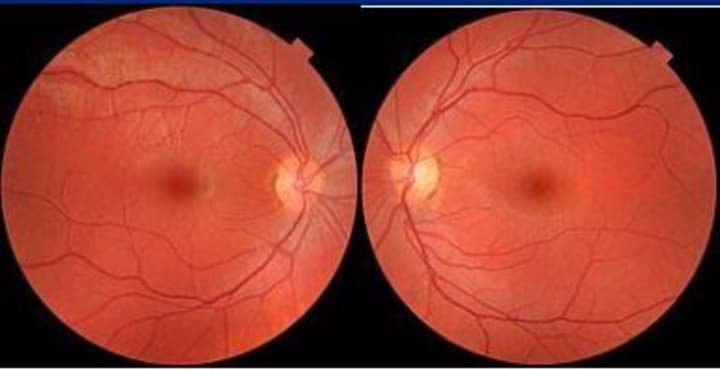
The research group trained a deep neural model, a variation of an AI model Xception, to scan 20,000 fundus retinal photos (the inner eye, including blood vessels and the retina). After processing, AI reached a record 96.83% accuracy in predicting gender, with near-perfect values for both recall and precision. Performance even beat out current studies, which had already confirmed AI’s surprising capabilities for such a purpose.
But here’s the issue: clinicians can’t differentiate between male and female retinas with the naked eye consistently. Under ordinary examination, male and female retinas have indistinguishable anatomy, for instance, disc, blood, and macula. That raises a daunting question: What faint cues is the AI discerning that trained eyes can’t?
Why This Matters
While predicting gender via an eye scan may sound a tad unorthodox, its implications go deep. If AI can detect hidden trends in medical scans, it can revolutionize disease diagnosis, or even detect markers for disease. For example, retinal scans can already detect glaucoma, Alzheimer’s disease, and even diabetes. If AI can detect gender-related characteristics, then it can detect early symptoms of disease that manifest differently in males and females.
The study also reveals a broader problem with AI in medical practice: explainability. Doctors rely on having an awareness of why a diagnosis is being made, but deep algorithms work in a "black box" and cannot reverse-engineer to reveal specific retinal features that an AI model is using. Attempts at follow-up analysis, such as looking at what parts of the retina it was looking at, showed general regions such as blood vessels or the disc, but no definite information could be extracted.
The Curious Case of the "Invisible" Differences
The retina’s apparent homogeneity between males and females makes its success even less understandable for AI. Previous studies have proposed hypotheses—such as blood vessel angles and pigments—but such variation is too minor and variable for humans to detect. Nevertheless, AI can perceive a combination of faint, complex patterns that conventional analysis cannot detect.
This mystery teaches an important lesson: AI sees the world in a new way. As humans cannot see ultraviolet radiation and textures at a micro level, deep learning algorithms can reveal concealed structures in information invisible to humans. For medical practice, AI can unveil new diagnostics tools, but only when medical professionals become capable of reading its output.
Looking Ahead
The researchers maintain that their model is a proof of principle, not a medical device. But it opens doors to exciting avenues of inquiry. Future studies could explore whether such hidden structures in the retina have a relation to hormonal variation, genetic variation, or susceptibility to disease. Most significantly, the work highlights the imperative for "explainable AI" in medicine—systems that not only make predictions but can defend them in language intelligible to clinicians.
In the long run, therefore, this study is a reminder of all that we have yet to learn about the shape of humanity—and how AI can allow us to see it in a new and unfamiliar form. The retina, long regarded as a reflection of homogeneity, could have secrets hidden in its codes that machines alone can decode.
So, here’s a question: If AI can see what humans can’t, then what else could it expose in the human body—and even in the universe?
Reference:
International Journal of Academic Health and Medical Research (IJAHMR)
Taha, A. M., Zarandah, Q. M. M., Abu-Nasser, B. S., AlKayyali, Z. K. D., & Abu-Naser, S. S. (Year). Prediction of gender using Retinal Fundus with deep learning. [Journal Name], DOI.
This article simplifies complex studies for general use. For technical details, refer to the full article here.
About the Creator
Francisco Navarro
A passionate reader with a deep love for science and technology. I am captivated by the intricate mechanisms of the natural world and the endless possibilities that technological advancements offer.
Keep reading
More stories from Francisco Navarro and writers in Futurism and other communities.
About Binding Prometheus
I want to start actively advocating on behalf of my own work, and the most valuable part of my canon is, without a doubt, Binding Prometheus, the play I have been working on since 2019 and only finished in 2023 as part of my MA. The play itself is an amalgamation of a million different inspirations. On one end, it evokes the Ancient Greek myth-play, deriving its own title from the earliest extant work of Western drama we have, Aeschylus’s Prometheus Bound. On the other end, it borrows significantly from the sci-fi bulwarks from over the years, namely Mary Shelley’s Frankenstein and Karel Capek’s Rossum’s Universal Robots. The play could be an episode of Black Mirror, I fear. I don’t know. I’ve only ever seen one episode of Black Mirror.
By Steven Christopher McKnight16 days ago in Futurism
Application Specific Standard Product (ASSP) Market Size and Forecast 2025–2033
Introduction: A Market Built for Precision The global semiconductor industry is undergoing a profound transformation as demand shifts from general-purpose processing toward specialized, application-focused solutions. At the heart of this shift lies the Application Specific Standard Product (ASSP)—a category of integrated circuits that blends the efficiency of custom chips with the scalability of standard semiconductor products. Designed to perform specific functions across multiple applications, ASSPs offer a powerful balance of performance, cost-effectiveness, and time-to-market.
By Renub Research5 days ago in Futurism


Comments
There are no comments for this story
Be the first to respond and start the conversation.