
AI applied to Neurology
Revolutionizing Diagnosis, Treatment, and Research in Neurology
Table of Contents
Overview of AI in Neurology
Applications of Artificial Intelligence in Neurology
Regulations Addressing AI in Neurology
AI Tools Improving Patient Outcomes
Integration of AI Tools in Neurology Practice
Impact on Workflow
Efficiency and Accuracy in Diagnosing Neurological Conditions
Ensuring Transparency in AI Technologies
Transparency in AI Decision-Making Processes
Policies for AI Transparency in Healthcare
Definition of Intelligence in Neuroscience
Definition of Intelligence by Neuroscientists
Overview of AI in Neurology
The combination of neurology with artificial intelligence (AI) has created opportunities for game-changing developments in both disciplines. The relationship between the study of the nervous system and the machine intelligence of AI has led to groundbreaking applications, despite their seeming differences. This article covers the astonishing ways AI is being used in neurology and how it is transforming diagnosis, care, and research. The intersection of neurology and AI holds enormous potential for altering the medical field, from improving diagnostic precision for neurological disorders to advancing personalized treatment plans and expediting neuroscience research.
A prompt and correct diagnosis is crucial in the field of neurology. The ability of AI, particularly deep learning algorithms, to understand complex brain imagery has been astounding. These algorithms are exceptionally good at spotting minute anomalies, which helps in the quick and accurate diagnosis of diseases like Alzheimer's, Parkinson's, and stroke. AI-enabled quick processing and thorough analysis of complicated imaging data hold enormous promise for stroke diagnosis. The capacity of AI to quickly identify sites of ischemia or bleeding allows for fast interventions, potentially improving the efficacy of treatment and patient outcomes. Additionally, the ability of AI to evaluate longitudinal MRI data is invaluable for monitoring the progression of diseases like multiple sclerosis.
Applications of Artificial Intelligence in Neurology
Artificial intelligence (AI) is revolutionizing the healthcare landscape, with neurology being no exception to this growing trend. AI encompasses the field of computer science focused on simulating intelligent human behavior and computational processes within the brain, including subfields such as machine learning and deep learning. These AI technologies are capable of learning patterns from large datasets, enabling them to recognize these patterns in new data, thereby supporting various clinical decisions in neurology.
AI's utility in neurology extends to both research and clinical practice. In the realm of neuro-oncology, for example, AI-based algorithms are being employed to enhance diagnostic accuracy and therapeutic interventions. Additionally, AI helps in the interpretation of complex neurological data, assisting healthcare professionals in making more informed decisions. The general-purpose nature of AI means it can be applied broadly across different neurological disorders, making it a versatile tool in the hands of neurologists. This broad applicability outpaces niche approaches, proving AI's significant role in advancing neurological healthcare.
Regulations Addressing AI in Neurology
Current regulations surrounding the use of artificial intelligence (AI) in the field of neurology are evolving to ensure both the safety and effectiveness of these technologies. The U.S. Food and Drug Administration (FDA) has taken significant steps by issuing draft guidance to provide recommendations on the use of AI to support regulatory decisions about a drug or biological product's safety, effectiveness, or quality. This draft guidance marks the first time the agency has addressed the use of AI specifically for the development of drug and biological products. As AI continues to play an increasingly prominent role in neurology, these evolving regulations are crucial for fostering innovation while safeguarding public health.
AI Tools Improving Patient Outcomes
AI tools have shown significant potential in improving patient outcomes in neurology. One of the primary challenges in the field is the current shortage of neurologists, which stands at 11% and is expected to rise to 19% by 2025. AI can address this shortage by enhancing the efficiency and accuracy of neurological diagnoses and treatments.
In neuro-oncology, AI has been instrumental in reducing misdiagnoses, which can have severe consequences for patients. Brain tumors, which are frequently misdiagnosed due to symptom misinterpretation and inaccurate medical report analysis, are now being more accurately identified with the help of AI tools. These tools leverage machine learning algorithms to analyze medical imaging and patient data, leading to more precise and timely diagnoses. Moreover, AI's capability to analyze vast amounts of data and recognize patterns plays a crucial role in the management of complex neurological disorders. By predicting outcomes and identifying potential complications early, AI enhances patient care and facilitates the development of individualized treatment plans. This personalized approach not only improves the efficacy of treatments but also minimizes the risks associated with neurological interventions.
Integration of AI Tools in Neurology Practice
Impact on Workflow
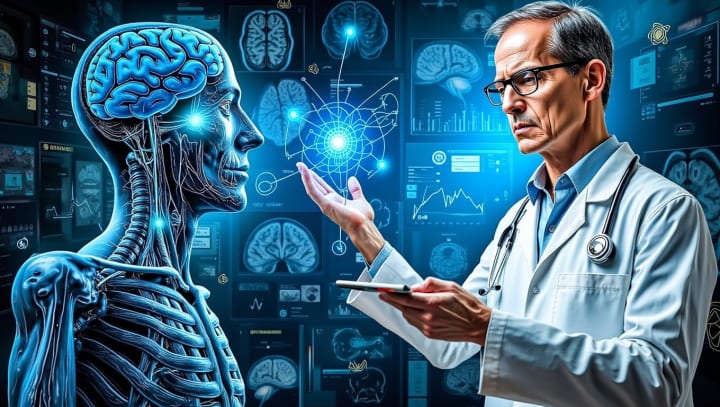
The integration of AI tools in neurology practices has significantly transformed the workflow within the field. One of the primary advantages of AI, particularly through the use of machine learning (ML), is its ability to discover and utilize hidden patterns and insights that are not readily apparent to users employing traditional data tools. This capability is especially beneficial when high-quality, generalizable training data is available, and there are specific problems to solve.
Neurologists have observed notable improvements in the efficiency and accuracy of diagnosing neurological conditions due to the incorporation of AI technologies. AI tools enable more precise and rapid analysis of complex datasets, leading to quicker diagnostic conclusions and potentially more effective treatment plans. Additionally, these tools help in reducing the workload on healthcare professionals by automating routine tasks and facilitating data-driven decision-making. Consequently, the overall workflow in neurology practices has become more streamlined, allowing for better allocation of time and resources toward patient care and research.
Efficiency and Accuracy in Diagnosing Neurological Conditions
The integration of artificial intelligence (AI) into neurology practices marks a significant paradigm shift, transforming the landscape of healthcare delivery. Through its role in clinical decision support, AI empowers neurologists to navigate the complexities of diagnosing and treating neurological disorders with unprecedented precision and efficiency. Utilizing AI technologies allows clinicians to seamlessly enhance traditional diagnostic methods, thereby improving their capacity to identify conditions such as stroke from imaging scans, discern subtle indicators of diseases such as papilledema and diabetic retinopathy, and forecast outcomes such as coma prognosis via EEG interpretation.
AI refers to the use of computer systems or machines to simulate human intelligence processes such as learning, reasoning, problem-solving, and decision-making. These AI systems often rely on algorithms, data analysis, and machine learning to identify patterns and perform tasks that traditionally require human input. In neurology, this means that AI can analyze vast amounts of data, recognize intricate patterns, and predict outcomes that might be missed by human observation alone.
The integration of AI into neurology not only enhances diagnostic accuracy but also increases the efficiency of the diagnostic process. By reducing diagnostic uncertainty, AI enables neurologists to tailor personalized treatment strategies, ultimately leading to superior patient outcomes and enhanced quality of care. This revolution in diagnostics is a testament to the profound impact AI can have when applied thoughtfully within medical fields.
Ensuring Transparency in AI Technologies

Transparency in AI Decision-Making Processes
Transparency in AI decision-making processes is critical in the field of neurology to ensure both medical professionals and patients can trust and understand the recommendations provided by these systems. Artificial intelligence (AI) involves the use of computer systems or machines to mimic human cognitive functions, including learning, reasoning, problem-solving, and decision-making. These systems leverage algorithms, data analysis, and machine learning to identify patterns and execute tasks that would typically require human intervention. Key AI technologies encompass natural language processing, computer vision, robotics, neural networks, and machine learning.
To enhance transparency, it is essential that healthcare systems and policymakers prioritize the development and implementation of explainable AI models. These models should be designed in a way that allows the rationale behind AI-generated decisions to be easily interpretable by neurologists and comprehensible to patients. This entails creating frameworks and guidelines that emphasize the need for clear documentation of AI algorithms and the data used to train them. Additionally, involving diverse interdisciplinary teams in the development process can help in identifying potential biases and ethical considerations, thereby contributing to more robust and transparent AI systems in neurology.
Policies for AI Transparency in Healthcare
The use of augmented intelligence (AI) in healthcare is rapidly evolving, with many health systems striving to leverage this technology to enhance patient outcomes and alleviate physician burdens. However, ensuring that these advancements do not compromise the quality of care remains a significant concern. To address these challenges, various policies and principles have been developed to promote transparency and ethical use of AI in healthcare.
A notable effort in this regard comes from the American Medical Association (AMA), which has released new principles for the development, deployment, and use of AI. These principles aim to foster a consistent governance structure for healthcare technology advancements, emphasizing the importance of ethical, equitable, responsible, and transparent AI applications. The AMA's initiatives reflect the broader industry's acknowledgment of the critical need for clear and consistent policies to ensure that AI technologies are beneficial and trustworthy. Moreover, the complexities of the legal landscape surrounding healthcare AI further underscore the need for transparent policies. AI systems with different intended uses, audiences, and environments must navigate various requirements at state, federal, and international levels. As the regulatory framework continues to evolve, it is crucial for policymakers to focus on developing guidelines that make AI decision-making processes understandable to both medical professionals and patients.
Health equity and ethical considerations also play a pivotal role in the deployment of AI in healthcare. Promoting health equity and addressing potential biases in AI applications are essential to ensure that all patient populations benefit from technological advancements. Ethical considerations must be at the forefront of AI implementation to mitigate risks and maximize opportunities for improving public health outcomes.
Neurologists' Perspectives on AI and Its Incorporation into Medicine
Neurologists have varied views on incorporating AI into medicine, especially neurology. On one hand, AI technologies like machine learning, natural language processing, and computer vision hold great promise. They can aid in diagnosing strokes, interpreting EEG scans, detecting seizures, predicting Alzheimer's, and classifying neurodegenerative diseases. This could improve diagnostic accuracy and efficiency, which is crucial given the increasing demands and workforce shortages in neurology.
On the flip side, some neurologists are concerned that AI might increase the burden on healthcare providers and worsen existing care inequities. The key is to prepare clinicians to use AI as a complementary tool, not a replacement for human expertise. Additionally, AI's success heavily depends on the quality and generalizability of its training data. Therefore, it's important for neurologists and researchers to focus on solving specific problems with high-quality data. So, while neurologists are cautiously optimistic about AI's potential, they also recognize the need to tackle challenges related to data quality, provider burden, and equity.
Neuroscientists' Definition of Intelligence and Its Implications for Artificial Intelligence
Neuroscientists often define intelligence as a multifaceted mental quality that includes learning from experience, adapting to new environments, understanding abstract concepts, and applying knowledge effectively. This behavioral approach emphasizes optimizing interactions with the world to achieve specific goals, which varies across species. Neurologically, intelligence is linked to brain structure and activity, explored through advanced imaging techniques like MRI and fMRI. These insights highlight the complexity of replicating human-like learning and behavior in AI. While current AI mimics some aspects of human intelligence, achieving true autonomy, as suggested by researchers like Daeyeol Lee, involves creating machines that can replicate themselves physically. Understanding these differences informs AI development and ethical considerations, providing a clearer framework for advancing AI responsibly.
Understanding the Human Brain and Its Relation to AI
Despite the impressive strides in neuroscience, we're still just scratching the surface when it comes to understanding the human brain. For example, this year alone, researchers have uncovered a new part of the brain that helps clear away waste and manage cerebrospinal fluid flow. Plus, we've got detailed maps of human and primate brains that are shedding light on brain function and possible treatments for mental disorders. These discoveries highlight the brain's complexity and mystery. Scientists have even created the largest-ever map of the human brain, showing the structure and function of over 3,000 types of brain cells. This is huge for understanding conditions like Alzheimer's and depression.
Yet, there's still a massive gap between our brain knowledge and the fast-paced development of AI. While AI models like ChatGPT are advancing rapidly, there's ongoing debate about whether our brains can keep up. Brain-machine interfaces, which could transform neuroengineering and neurohealth, still face major challenges. So, while we've made progress, many brain mysteries remain unsolved. This research is crucial for bridging the gap between our biological understanding and AI advancements, showing both the promise and the limits of what we know.
Advances in Neurotechnology and AI

These advancements in neurotechnology and AI are game-changers for neurology. AI's prowess in analyzing massive datasets to detect patterns and predict outcomes is revolutionizing how we understand and treat complex neurological disorders. This leap in technology ensures more accurate diagnoses and treatments, benefiting patient care immensely. Neurotechnology, blending neuroscience with tech, is also making waves with innovations like neurofeedback, fMRI, BCIs, TMS, and neuroprosthetics. These tools allow real-time brain activity monitoring and offer non-invasive ways to manage conditions like ADHD, anxiety, and depression. The synergy between AI and neurotechnology is opening up new frontiers in brain research and treatment. For instance, neurofeedback uses AI to tailor brain training, helping individuals self-regulate their brain functions. Moreover, AI's predictive models can spot potential neurological issues early, enhancing patient outcomes. With over $19 billion invested and 200+ companies globally, the NeuroTech industry is booming, especially in the U.S. This growth signals a bright future for neurological healthcare, offering better diagnostic tools, personalized treatments, and deeper insights into brain function.
AI's Role in Early Diagnosis and Treatment of Neurological Disorders
AI is showing great potential in revolutionizing the early diagnosis and treatment of neurological disorders like Alzheimer's and Parkinson's diseases. For Parkinson's, AI can identify early biomarkers that aren't dependent on motor symptoms, which often appear years after disease onset. For instance, a recent MIT study uses AI to detect Parkinson's from breathing patterns, offering a non-invasive, early diagnostic tool. This means earlier interventions and better disease management, greatly improving patients' quality of life.
Similarly, AI is being used to advance early diagnosis of Alzheimer's. Early and accurate diagnosis is crucial for managing Alzheimer's and choosing therapies that can delay its progression. While there are challenges in making these AI models clinically useful and generalizable across different datasets and MRI protocols, ongoing improvements are promising for early detection and personalized treatment plans. So, AI could significantly change how we diagnose and treat Alzheimer's and Parkinson's, potentially transforming patient care.
Neural Networks and AI Algorithms in Understanding Brain Functions

Neural networks and AI algorithms are game-changers in understanding the brain's complexity. By mimicking brain architecture, they help us analyze massive neurological data and recognize patterns, aiding in precise diagnosis and treatment of neurological disorders. These AI models shed light on brain groups, or cognitive clusters, that show how different brain regions work together for complex processes. Artificial neural networks (ANNs) have also given us deeper insights into memory and learning by emulating the brain's processes. This fusion of AI and neuroscience not only enhances our grasp of brain function but also paves the way for innovative mental health treatments. While it's important to note that these models have their limitations, their role in transforming medical research and patient care is undeniable.
Simulating Human Decision-Making with AI
AI systems can definitely help simulate parts of human decision-making, but there are important differences to note. AI excels at handling huge amounts of data and performing logical tasks quickly and accurately. However, it doesn't have the physiological and emotional responses, like the "fight or flight" reaction, and it can't mimic how humans adapt to new situations through experience. For example, "System 0" can support human decision-making by adding to our natural intuition and analytical skills. Yet, it's crucial for humans to keep their critical thinking sharp to avoid over-reliance on AI. AI can offer insights by analyzing complex data, but it can't truly empathize or creatively think in the way humans do.
In neuroscience, AI can open doors to understanding the brain better by helping researchers study neural processes and cognitive functions in new ways. This could lead to significant advancements in the field. So, while AI can enhance and simulate certain decision-making processes, it doesn't fully replicate human cognition. It's essential to use AI ethically and thoughtfully to ensure it supports rather than replaces human decision-making.
Ethical Considerations of AI in Brain-Computer Interfaces (BCIs)
Using AI in brain-computer interfaces (BCIs) for restoring motor or sensory functions indeed brings up some major ethical concerns. For starters, privacy is a big one since BCIs capture extremely sensitive data about a person's brain activity, potentially even their thoughts. It's crucial that this data is securely stored and used responsibly to prevent privacy violations.
Autonomy is another issue. BCIs could influence a person's decisions or actions, which raises questions about free will. We need to ensure that users maintain control over their own thoughts and movements, and that any AI involvement is transparent and consensual. There's also the matter of inequality. Not everyone might have access to these advanced technologies, which could widen existing social and economic gaps. If only some people can afford or access BCIs, it could lead to a society where certain individuals have significant cognitive or physical advantages over others.
Lastly, we have to think about the broader societal impact, including how AI in BCIs might alter our understanding of human identity and behavior. These developments urge us to carefully consider fundamental questions about consciousness and what it means to be human. So, it's clear we need a balanced approach, guided by strong ethical frameworks and inclusive policies, as we advance with AI in BCIs.
AI-Driven Analysis of Brain Imaging Data
AI is revolutionizing neurology, especially in analyzing brain imaging data, which can significantly enhance the precision and personalization of treatments. For example, AI-driven tools like Pixyl.Neuro improve the detection rates of neurological disorders by up to 28% through rapid analysis of MRI images. This helps with early diagnosis and monitoring. Additionally, tools like icobrain aria, FDA-cleared for detecting and grading amyloid-related imaging abnormalities in Alzheimer's therapies, enhance assessment accuracy and treatment safety.
Beyond diagnostics, AI can create highly personalized treatment plans, tailored to each patient's unique neurological profile. This is essential, given the complex nature of neurological disorders, now a leading cause of ill-health worldwide. In short, AI is making neurological care more precise, personalized, and safe.
References
Artificial intelligence in neurology: promising research and ... - Quantib
Advancements of Artificial Intelligence in Neurology ... - iCliniq
Artificial intelligence in neurology: promising research and ... - Quantib
Artificial intelligence (AI) for neurologists: do ... - Practical Neurology
Advancements of Artificial Intelligence in Neurology ... - iCliniq
FDA Proposes Framework to Advance Credibility of AI Models Used for ...
Top 4 AI Use Cases in Neurology in 2025 - AIMultiple
AI in Neurology: 9 Chapters on Key Trends and Innovations to Watch
Advancements of Artificial Intelligence in Neurology: Transforming ...
System Integration: How AI Is Weaving Itself into Neurology
AI in Neurology: Revolutionizing Diagnostic Precision and Patient Care
AI in Neurology: 9 Chapters on Key Trends and Innovations to Watch
Advancements of Artificial Intelligence in Neurology ... - iCliniq
Artificial Intelligence in Practice | AAN - American Academy of Neurology
System Integration: How AI Is Weaving Itself into Neurology
These health systems are using AI to make meaningful change
Health Equity and Ethical Considerations in Using Artificial ...
Health Care Artificial Intelligence: Law, Regulation, and Policy ...
AMA issues new principles for AI development, deployment & use
About the Creator
Francisco Navarro
A passionate reader with a deep love for science and technology. I am captivated by the intricate mechanisms of the natural world and the endless possibilities that technological advancements offer.
Keep reading
More stories from Francisco Navarro and writers in Futurism and other communities.
If Anyone Builds It, Everyone Dies
5 Disturbing Truths From the Book Claiming AI Will End Humanity Last year in Alameda, California, city officials halted a scientific experiment designed to combat global warming. The plan was to spray microscopic salt particles into the clouds to make them brighter and reflect more sunlight. Fearing unintended consequences for the regional ecosystem, they shut it down.
By Francisco Navarro6 months ago in Futurism
Australia Energy Storage Market: Renewable Integration, Battery Deployment & Grid Stability
According to IMARC Group, the Australia energy storage market reached 4.72 GW in 2025 and is projected to expand significantly to 19.81 GW by 2034, exhibiting a compound annual growth rate (CAGR) of 17.28% during 2026–2034. The rapid growth of the sector reflects the country’s accelerating transition toward renewable energy and the increasing need for reliable electricity systems across Australia. As solar and wind power generation expands, energy storage technologies such as battery energy storage systems (BESS) are becoming essential for maintaining grid reliability and balancing electricity supply and demand. Government policies supporting clean energy adoption, declining battery costs, and investments in grid modernization are significantly strengthening Australia energy storage market share while enabling the integration of renewable power into the national electricity network.
By Shrestha Roy7 days ago in Futurism
The Last Fortress
The Final Frontier of Privacy For centuries, the human mind has been the only place where true freedom existed. No matter how oppressive a regime was, or how invasive a technology became, your thoughts were yours alone. They were the "Last Fortress"—a sanctuary of private dreams, silent rebellions, and unspoken loves.
By Alex Sterling 3 days ago in Futurism
Silken Chains
Silhouettes of the female form were given flesh and bone. Silken skin glistened under the spotlight. Dry ice rose around our Icons as they danced atop their podiums in the Square. Heralded for their beauty, their movements were slight, powerful, and sensual.
By Paul Stewart5 days ago in Fiction




Comments
There are no comments for this story
Be the first to respond and start the conversation.