

Chapter 1. Fire and brimstone.
I’m an armchair historian, not trained or educated in history. I mean, I learnt history in school, and I read, but Now it’s only for fun. So going through my fathers storage locker on day I found my great, great grandfathers notes and letters was a revelation. I never knew anything what he lived through, or what happened at that time, and how it affected the family. Well, so anyway, no boring reference points, no side notes, just me telling it like I read it. It’s amazing.
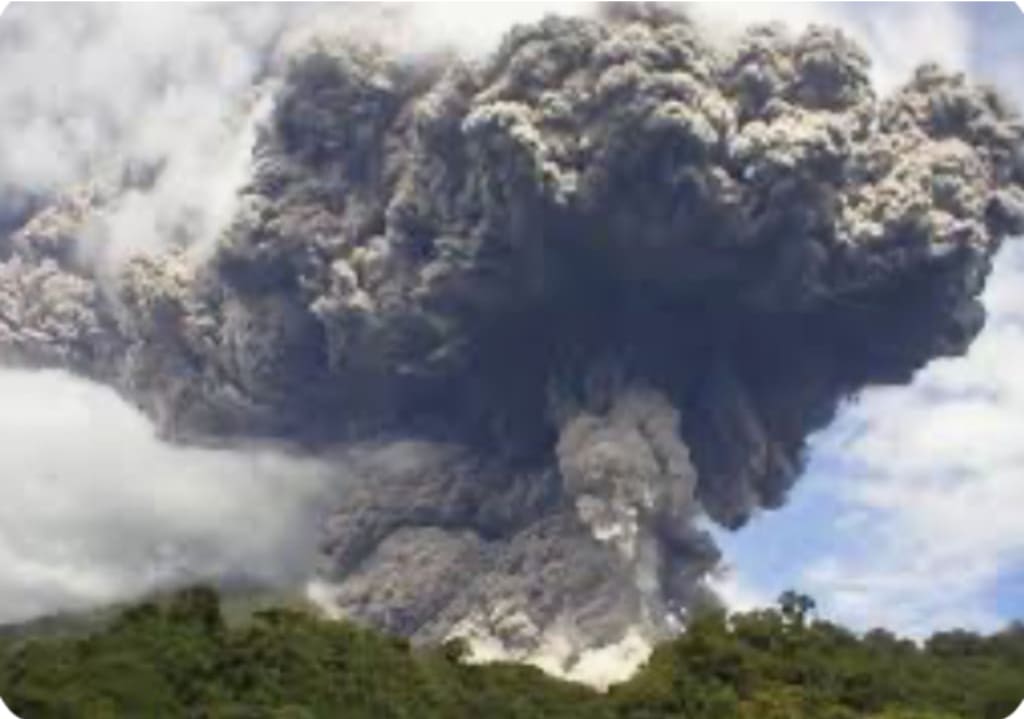
‘It all started with an alert on his ham radio in his home office at midnight while he was researching something on the internet. There was a massive release of protoplasmic gas from Yellowstone volcano, super heated, quiet, racing outward at extremely fast speeds, thousands of miles an hour in all directions from the volcano, killing everything in its path, Wyoming, Montana, Idaho, eastern Nevada, southern Canada, eastern California. Forests were exploding into wildfire infernos, people, livestock, wildlife were incinerated instantly.they didn’t stand a chance. If the heat didn’t kill them, the poisous gases did. My great, great grandfather jumped into action, gathered their go to bags along with his guns and threw them into the truck, woke his wife, my great, great grandmother, and told her to evacuate the property NOW. He released all the live stock, gathered all the bags of seeds in the greenhouse, as well some bags of potting soil, and they were off. As they drove on the empty highway, he told her what was happening. They lived in the foothills of the Sierra Nevada mountains, above Marysville and the Central Valley, which probably saved them, as the hot, poisonous gases swept over the peaks of the mountains and gave them an escape window. His plan was to get to his old base, Vanderberg Air Force base by Pismo beach, Southern California, which also hosted one of six space force ports around the country. Where he knew the base commander.He didn’t know if they would let him in, but he was going to try. His old base commander told him if “the shit hit the fan” he was to come to the side entrance of the base and mention his name. He would get in. As they drove, he listened to the radio, and after hours of driving, small reports of the volcano were coming out. He knew what was happening, he was a volcanist and knew all the research about super volcano’s around the world especially Yellowstone, being so close to him. He knew that when one erupted, it could be the end of life on Earth as we know it. He also knew that there were plans to colonize the moon and Mars, and that Vanderberg space port hosted Space X and Blue Origin Rocket launches on a regular basis. He was aiming to get on one of those launches.
By the time sunrise came they were almost there, and most of the world did not know what had occurred. The gas emissions had stopped, but now huge plumes of ash and lava were being ejected. The lava flows were pouring out from the crater in liquid rivers, but it was the huge thick plume of hot ash that was the climate killer. The plume was more than 10 miles high, and the winds blowing east had already covered the entire Eastern United States, and Canada. Reports were coming in that it was falling in the U.K. Soon it would encircle the entire planet, and a nuclear winter would set in. Crop failures would occur, famine would haunt the plant, and most people, if not all, would starve to death. Calls for people to seek shelter underground were given, with addresses and locations given, but my great great grandfather knew it was not going to save anyone. The planet was doomed.
Chapter 2. Evacuation.
They arrived at the front entrance of Vanderberg Air Base, and it was chaos, which my great great grandfather expected. The news had gotten out, and people were desperate to get to the launch pads and the rockets that were ready to launch. He drove past the gate manned by marines on sentry duty screening all the people, and made his way to the secluded side entrance, where he was stopped by a space force guardian, and an old old comrade he had served with when he was stationed there. He mentioned the base commander’s name, and he was let in and escorted to his office. Once in front of him, he discussed what he could bring to the mission the commander was tasked with, and he and my great great grandmother were put on the huge Falcon rocket which was being boarded right then. An emergency launch. The packets of seeds, soil and fertilizer were loaded with him. He was tasked with being a farmer At the final destination. He didn’t know yet where they were headed, but assumed it was the moon. The base commander had briefed him the the entire leadership, the president, vice president, the cabinet, had already evacuated to the moon where they would form a government to run the Luna colony. In fact, 5 rockets had launched already from Cape Canaveral, and several private rockets had left from space ports all over the country. There were none left. This Falcon rocket was the last one left. The base commander informed him that the Indian government had evacuated to mars, to their colony, along with as many citizens qualified to start a colony, farmers, engineers, computer engineers, doctors. So had the European space agency launched 8 rockets with all the leadership of every member countries. Russia had evacuated its leadership, also to their colony on the moon, and China had evacuated its leadership to its 3 space stations orbiting the earth. A report came in that Brazil had just launched their sole rocket, no further details given. Then my great great grandfathers rocket took off, and he never came back.
A bombshell note stated that my great great grandmother was one month pregnant at the time of the launch. I knew from the genealogy papers included in the box I was going through that it was my great grandfather, possibly the last person conceived on earth
Chapter 3. Resettlement.
During the 7 month trip to their final destination, my great great grandfather dwelt on their hurried departure and the goodbyes to the brave heroes, marines, space force guardians and his old base commander, brave heroes every single one of them, dead men walking, and they knew it. He was numb for days. That was when he found out my great great grandmother was one month pregnant with ,as it turned out, my great grandfather, possibly the last person conceived on Earth. It was also when he found out where they were headed- Mars. He shook himself out of his stoupor, and became excited about what was ahead, They were going to be pioneers, building a new civilization from the ashes of an old one. He couldn’t wait to get started.
on the other hand, my great great grandmother, Victoria, was not so excited. Her pregnancy was hard, and she was sick almost every day. While she spent every day in her cramped bunk, miserable and unhappy, my great great grandfather, George, was running around, speaking to everyone, finding out what their specialty was, and how he could help them. He found out that the infrastructure of the colony was very basic and primitive, that robots were there already with a very small contingent of Space Force Guadians building more structures using CGI ( computer generated imagery) a new AI technology to design buildings, and then build them with existing materials on the surface of Mars, in a very quick time frame.so that by the time the settlers arrived, there would be enough housing and warehouse space to proceed with a larger colony than they had anticipated. George found out the the buildings were all connected, and oxygen generators were installed, as were solor panels and wind turbines to generate electricity for the colony. Most of the colonists lives would be lived inside.
eventually, the trip came to an end, and they found themselves orbiting Mars. Everyone crowded around the portal windows for a glimpse of their new home. And then the slow but steady shuttle disembarkment to the surface began, until eventually everyone was down, and in the main village building, being assigned housing. The journey was over. Victoria was very large at 8 months pregnant, and put to bed immediately, with a doctor in attendance. A real bed, comfortable.
George went to work immediately, building planting boxes in the low ceiling building assigned to him as the village farm. In the corner he started a compost box, and all the food waste, generated by the colony was mixed in with some of his soil he brought and Martial soil, and turned and watered until it was rich and ready to the used. He started germination beds to start the seeds he brought, carrots, potatoes, tomatoes, lettuce, squash, peas and beans. And with high end grow lights that NASA provided, they flourished. Finally, the colony had fresh vegetables to eat. It was a day of celebration.
‘During this time my great grandfather was born, the first person born on Mars. Victoria and George named him Antony, a family name on George’s side. He was a celebrity in the colony, everyone fawned over him, and as the old saying, “ it takes a village to raise a child”, was known, they did it all his childhood. One lady in particular, Anne, nursed him, fed him, because Victoria never recovered from the pregnancy and eventually passed away, the first death in the colony.
‘George and Anne spent all their free time together raising Anthony, and although they never declared their love and got married, reading between the lines of his memoirs, they had a life long affair. The colony accepted it.
‘At this point George documented the census of the American colony on Mars - 80 souls. It was a small colony, but they didn’t want too many babies, not just yet, until they were established. The Indian colony hadn’t been contacted yet, so they didn’t know how many people were there, or how they were doing. Something would have to be done about that, soon.
contact was being made with the Luna colony, by email. It was slow, from the base on the ground to the orbiting Falcon rocket, and the onward to the moon, where it was received. The lunar colony was thriving. The American colony was 200, the European colony was 100, the Israeli colony was 60, and the Russian colony was 75. Small, but interconnected, and thriving
Chapter 4. Home is where the heart is.
George was getting old and frail, and his notes documented his decline. The authorities were aware of this, and not only passed all his duties as agriculture specialist onto his son, Anthony ( known by everyone as Tony), but also named the town Georgetown in his honor as recognition of all he had done to bring agriculture to Mars, and his hard work and devotion to the settlement. They wanted to do this before he passed So he would see the recognition of his life work. He passed away in his sleep with Tony by his side.
‘It was a sad moment for the colony, and a memorial was held for him Which everyone attended. After it was over, Tony organized a overland trip to the Indian colony, in an effort to keep busy, and made contact with officials at the gate. He was welcomed and given a tour of the complex, which was pretty much the same as theAmerican town Georgetown, only a little bigger. Their water was secure, as was their electricity and food supply, and the settlers were in good cheer. Tony secured some new seeds that they didn’t have, mostly herbs and spices, and gave them some vegetableseeds they didn’t have. It was a successful trade mission. Contact emails were exchanged, and Tony returned home.
on the way home, he went a different way, following a comment someone at the Indian village made about a small settlement he did not know about.
It was the Brazilian colony, very small, about 4 buildings in bad condition, and 40 people living in their space suits, in miserable condition. Their food source was running out, and their water was bad. Tony made contact with Georgetown command base, and got permission to evacuate the village and resettle the settlers into emergency housing being built right now. Some of the settlers were ambulatory and needed medical attention immediately. If they stayed there, they would die. His trade mission turned into a rescue mission.
The rovers were crammed full, and when they arrived at Georgetown they were met by the entire medical team who took possession of the refugees. The American colony grew by 40 members.
Tony next set his sights on a trade mission to the lunar colony. It had been years, decades, since they had left Earth and the moon, and the Mars colony needed to grow and expand. In fact, Tony had never left Mars, and was burning to go. All the permissions were granted, the specialists were assigned, ariculture, engineering, medical, altogether a team of 6 members. And then they were off, on an adventure of a lifetime. The endlessly orbiting Falcon rocket that brought them here was refueled, provisioned for the 14 month round trip.
7 months later the team arrived, and placed in orbit around the moon, while the 6 members were shuttled down to the surface. For the first time they saw Earth, blue and white and so beautiful. They didn’t see green or brown, It was still in an ice age.
Once the team members were settled into their quarters, they began to work. Tony focused on the farming operations scattered around the village, the veggie garden, very large. The cereal farm, grain grown for the herd of miniature sheep with long shaggy wool, the fish farm next door with pools of water sustaining carp, bass, cod and salmon. The same technician ran both operations. Her name was Jamie, moon born, but her parents were from California, and as she said, Northern California, the best part. Now, Tony wasn’t a prolific writer, and the notes I read up til this point were dry and factual. But all of a sudden the pages were full with descriptions of Jamie, her golden blond hair, cut short, but as he told me, if it wasn’t for the living conditions on the moon would be long, thick and flowing to her waist. He was falling in love. 54, and never kissed a girl before. She was 40, and wanted to be kissed, and by Tony, who she found out his parents came from the same area as her parents. The universe brought them together.
no intimate details were written down, thank goodness, but they spent many hours learning animal husbandry, and even fish farming. It was too much for Tony to take in the short period of time, so when it was time for departure, Jamie requested to go with them, to install the programs so that the programs would be successful. After all, she was only the second in charge of the agricultural department on the moon, and it was running smoothly. and she would come back. She appealed to her boss, and to the president directly, and she must have been persuasive, because the mission was approved. They shuttled up to the rocket, and set course for Mars, and home.
Chapter 5. Life continues.
Jamie and Tony were assigned separate quarters, cramped bunk beds, but they met up everyday to look after the sheep embryos as well as the pig and cow embryos. They also verified that the fish eggs were surviving the journey. Their mission was a success. Tony made no mention of the other members, but it can be assumed that the entire mission was a success. Two new members besides Jamie were include in the return journey, high ranking members of the Lunar government, the vice president and the treasury secretary, who was also the economic advisor for the president. Apparently there had been some horse trading behind the scene.
‘Tony knew nothing of why they were along, he and Jamie weren’t interested in politics, or money, besides being totally involved in each other, which everyone could see, they were totally immersed in animal husbandry and farming. They were oblivious to everything else. One month into the 7 month journey home Jamie sprung the news on Tony that she was pregnant. Tony was over the moon with joy and excitement, and it didn’t take long for the news to spread. They organized a marriage ceremony with the rocket captain officiating, and the vice president as the witness. The Mars colony was growing by 2 people. Pages of Tony’s notes were used to discuss the future baby’s name, and that was when I learnt my grandfather was named Arthur, a family name in Jamie’s family.
Finally the journey came to an end, and the members and guests were shuttled down to the surface and an official state ceremonial welcome. The vice president assumed the role of leader of the government, and started to form the government along the lines of the Lunar government. It was a lot simpler, whereas the Lunar government was much more complicated with Russian, multiple Europeans, American and Israeli politicians included. But over the decades since the evacuation from Earth it had worked itself out, with elections, and there was one country formed by the colonists, and one agenda. So bringinging it to Mars just made sense.
The treasury secretary went to work formulating a plan to create a currency instead of using the barter system which Martian colonists had been using, and now with trade between the Indian colony it was time, as well as trade with the Lunar colony going forward.
Arthur was born among colony wide celebrations, and along with that celebration, two notices were broadcast that two more pregnancies were announced between two Brazilian settlers and two American men. It was more urgent than ever that the sheep and cows were raised so the colony would have meat and milk for a growing population. The grass and cereal farm was laid and with high intensity grow lamps burning all the time it wasn’t long before the colony had its grainery bins filled. The fish farm was built and the fish were spawned and hatched and the ponds stocked. Things were happening. Exciting times.
‘The vice president stayed, except he was now the president. He appointed his small cabinet to run the government, and the treasury secretary left for the moon. Things settled down. Communications improved as well, obviously the internet gurus worked something out, SpaceX corporation with offices on the moon and Mars launched a series of low energy solar powered rockets/satellites that cruised in an oval orbit around the moon, flew to Mars, orbited around Mars then back to the moon in an endless flight loaded with very powerful internet transmitters and boosters, so the internet connectivity was lighting fast and strong. The government, the military, and the civilian population were well served. Mars had joined the 25th century.
Chapter 6. The watchers.
Although every settler served in the military as part of their service, the largest part was in the space force, either as an astronaut, technician or some kind of mechanical training and work, maintaining the equipment. Arthur grew up learning to be a mecanic on the rovers that crawled all over the surface of Mars, so he got to explore Mars, and knew how to work on the complicated machinery in the field with robots and in the shop on base. He loved his job.
another emerging industry was asteroid mining. Space X, always innovative and cutting edge, developed robot controlled rockets that could be controlled from base by a human, could go out and track asteroids, analyze the mineral content, then capture them and return the asteroid to the surface for extraction into raw material for construction. One such asteroid was a new substance that was refined into transparent metal, called glass metal, so that now the buildings could have entire walls made like windows, and the farms were constructed with glass roofs. Now the residents didn’t feel like they were living underground all the time.
Art, as he became to be know, retired from the space force and started his own business, a 4 wheel drive rover business for civilians, buying retired rovers and repairing them where enthusiasts could race and compete for fun on trails and climb over rocks and steep gullies. His was the first business of its kind, eventually it gained popularity and became the main outdoor sport on Mars.He met his wife on one such rover run, and they were married on the trail, with all the rover enthusiasts as witnesses. I think my father was conceived on a run. He was named Derrick. Funnily enough, Art never wrote his wife’s name in his notes, so I never knew my grandmother’s name. She was was older when they met, just young enough to have a child, but the childbirth was too much for her, and she passed away soon after. I never got to know her.
A long period of time passed before the narrative continued, and it was picked up by my my father, Derrick. He didn’t amount to much, or at least didn’t talk about his accomplishments except to mention he was stationed on the moon serveilling Earth through powerful telescopes, to look for life on the surface and gather air and soil samples for analysis. So my younger years where I was raised on the moon, my life on Mars was over As I never went back. Like every kid on the moon, I studies astrophysics in school, and when I was old enough I joined the military for my obligtory national service, in this case the Space Force. I learnt to fly rockets, and use, maintain, and read surveillance satalite data and immagry and because of what my father did for a living, I was immersed in that field, and became an expert in that field. I was destined to be stuck in front of a computer console and never went out in the field. With that prospect in mind, I was good husband material and I met a fellow Space force technician and married early to Lisa, also young, and quickly had a son Rob.I guess now is a good time to introduce myself, I’m Guy, the only son of Rob and Lisa, a tech nerd who knew all about Earth but would never get there. That would be for the younger generation of pioneers to come. At least I would pave the way. My mission at work was to explore the conditions on Earth and look for signs of emerging life, whether it be vegetation or biological, new life or surviving complex life such as animals or human. Everyday for the next two decades me and my team pored over the data and imagery our satalites we deployed to find evidence of such life. Along the equator we documented the spreading growth of vegetation mostly in the region of the the old Amazon River and the Congo River in Africa, and we did find animal life in the form of birds, deer,feral pigs and monkeys. They survived! The glaciers were retreating, the atmosphere was improving ,the ozone layer had repaired itself , it looked like the Earth was able to sustain human life again. So the saga continues.
Chapter 7. The return.
The Earth had been under surveillance for 20 years, analyzed, photographed, scrutimixed, examined, until the Lunar government decided it was ready for a manned mission to land on the surface and start a settlement as the initial task of repopulating the planet. The mission was authorized, the team was selected, the rockets were refueled and provisioned, and the return date was set. The whole moon colony was excited, and everyone was glued to their comuter screens as the rockets landed, and humans walked on the surface of the home plant for the first time since they fled several hundred years ago. The mission team had pinpointed the verdant valleys of Southern Africa, in what was once KeaZuluNatal, South Africa, as the best place on Earth to restart humanity. It was beautiful, and warm, the air tasted fantastic, and it was so liberating to walk around unsuited for the hostile environment of space. Everyone back home on the moon and Mars hung on every word the team reported. They couldn’t wait to be repatriated. Well, maybe not everyone. Surprisingly quite a few people did not want to abandon their life on Mars or the moon. They had only known life there, had adapted to life in space and that was their life. It was not broken, why fix it?
Space X was the biggest civilian employer both on Mars and the moon, building, repairing and maintaining rockets and satellites along with asteroid mining and exploration. There were several other civilian rocket companies that between them employed most of the citizens there. They saw no reason to abandon their houses, their warehouses, their business infrastructure. They saw Earth as just another planetary body they could incorporate into their business plan. The future was in space.
So the slow methodical shuttle of residents from Georgetown, Mars to the new colony on Earth started. Biuldings were built, using CGI technology and robots to do the hard work. And fields were plowed in preparation of the first planting. With that in mind the first settlers were farmers and engineers to run the machinery and robots. Seeds and plants were taken from the Martian farms, and replanted in germination beds in greenhouses. Even though the temperature was mild, nighttime and winter was still cold.
The Indian colony was approached and offered to be evacuated, and everyone accepted the offer, especially when they found out where on Earth they were being resettled to. Southern Africa before the eruption had the second largest population of Indians after India. Their historical leader Mahatma Gandhi had lived there. They were going home.
Eventually everyone who wanted to resettle was gone, and Georgetown was reduced to about half its size, but it was still a viable colony, self run, self sustaining, and filled the people who wanted to live there and were tied to the stars.
‘The focus next shifted to the moon. The colony was never going to be abandoned, it was too valuable as an outpost of the military, and as a strategic forward base for future space exploration into the future. Humanity was a space faring people. Space X and several smaller corporations had already explored planetary bodies in the solar system like the moons of Jupiter and small mining colonies had been started with regular travel between the moons and the Lunar home base occurring. The Earth colony was just one more less hostile environment to settle, with historical and ancient roots. If noting else, it would be a fabulous tourist location to go to on the workers yearly vacation schedule. By planning correctly, there was money to be made
About the Creator
Guy lynn
born and raised in Southern Rhodesia, a British colony in Southern CentralAfrica.I lived in South Africa during the 1970’s, on the south coast,Natal .Emigrated to the U.S.A. In 1980, specifically The San Francisco Bay Area, California.
About Binding Prometheus
I want to start actively advocating on behalf of my own work, and the most valuable part of my canon is, without a doubt, Binding Prometheus, the play I have been working on since 2019 and only finished in 2023 as part of my MA. The play itself is an amalgamation of a million different inspirations. On one end, it evokes the Ancient Greek myth-play, deriving its own title from the earliest extant work of Western drama we have, Aeschylus’s Prometheus Bound. On the other end, it borrows significantly from the sci-fi bulwarks from over the years, namely Mary Shelley’s Frankenstein and Karel Capek’s Rossum’s Universal Robots. The play could be an episode of Black Mirror, I fear. I don’t know. I’ve only ever seen one episode of Black Mirror.
By Steven Christopher McKnight27 days ago in Futurism



Comments
There are no comments for this story
Be the first to respond and start the conversation.