
The Book of Enoch Revisited: What the Watchers Warned Us About Part One
The Book of Enoch is not just a record of what was; it is a warning of what could be. As we stand on the brink of discoveries and dangers that even Samyaza could not have foreseen, we would do well to heed its ancient voice.
The Hidden Manuscript
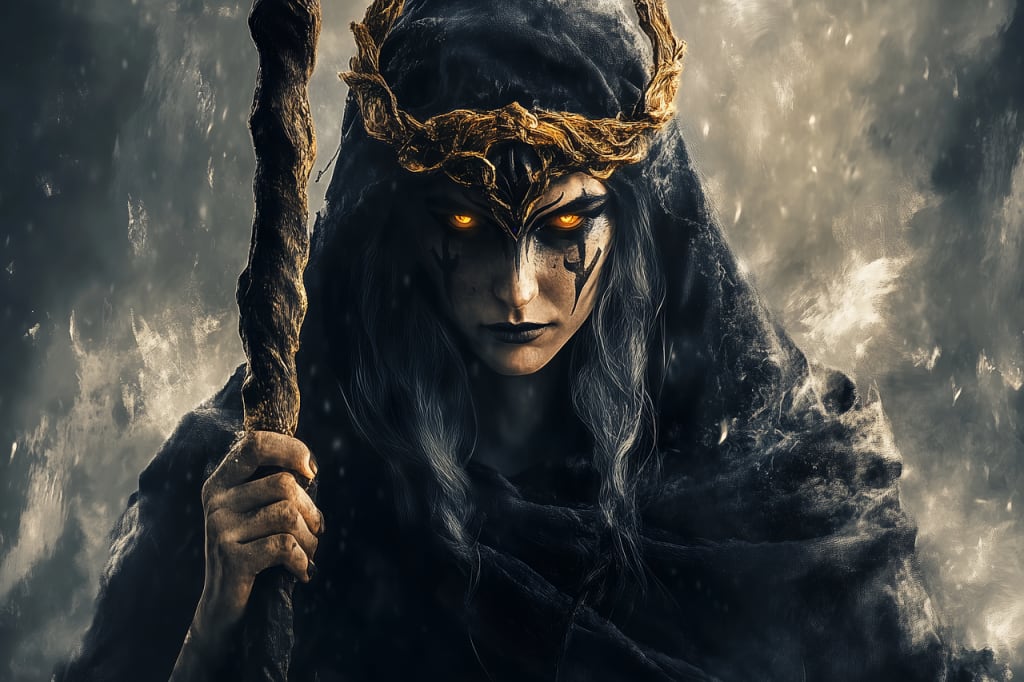
For centuries, the Book of Enoch has remained a tantalizing mystic, lingering on the edges of biblical history, whispered about but ultimately rejected by those who determined what belonged in the canon. To many, it was considered too strange, too dangerous, and too revealing to be included alongside the scriptures. However, this ancient manuscript, discovered in Ethiopia in the eighteenth century and translated in the nineteenth, claims to recount a story that predates Moses, David, and the prophets, a story from a time when heavenly messengers descended to Earth and forever altered humanity. The mystery of its origins and the secrets it holds continue to captivate scholars and enthusiasts alike.
Remarkably, this text survived at all. After being rejected by early church councils, the Book of Enoch was nearly erased from our history. Yet in the highlands of Ethiopia, where the Ethiopian Orthodox Church preserved many early Christian traditions, the manuscript was kept, read, and regarded as sacred scripture. When European explorers brought it back in the modern era, scholars were astonished. They found a fully formed mythos that not only predated but also seemed to underpin many of the more mysterious passages in the Bible, such as explaining who the 'sons of God' were in Genesis 6 and why the Earth had become so corrupt before the flood. The discovery also shed light on the connections between the Book of Enoch and other ancient texts, such as the Sumerian tablets and Greek myths, suggesting a shared cultural and historical narrative.
The text resonates with the tone of a lost warning. It describes celestial realms of light and fire, visions of heaven that parallel later apocalyptic texts, and a terrifying prophecy of judgment upon the fallen Watchers and the violent generations that followed. Enoch's journey to the heavenly throne, his witnessing of the punishment of rebellious angels, and his account of the Earth groaning under the weight of their corruption feel less like legend. More like a hidden history, a truth spoken in metaphor because it is too dangerous to tell outright.
What is most striking is how the memory of Enoch's tale appears elsewhere, as though the world has tried to forget yet cannot. Ancient Sumerian tablets speak of the Anunnaki descending from the sky to teach and rule over humans, their reigns ending in floods and fire. The Greeks told of Prometheus stealing fire from the gods and giving it to humanity, which brought both progress and punishment. Even Native American legends recount stories of sky beings who came to Earth to teach, only to leave in anger when humans misused the gifts they were given.
This is a pattern we keep seeing written in stone and myth all over the world: beings from beyond, knowledge offered and misused, and a world cleansed of its hubris through catastrophe. Thus, the Book of Enoch stands not only as a relic of Ethiopian faith or Jewish mysticism, but also as one piece of a much larger puzzle-a reminder that our beginnings were stranger and more perilous than we imagine. Its narrative echoes in myths and legends from diverse cultures, connecting us to a shared human history.
When read today, in the light of our age and invention, the book feels less like an ancient myth and more like a mirror, a reflection of what happens when mortals reach for what they are not meant to grasp. As we continue this exploration, the manuscript's hidden voice calls out more urgently than ever: Remember what happened in the past, so that you do not repeat it. It serves as a stark warning, urging us to tread carefully in our pursuit of knowledge and power and to be mindful of the potential consequences of our actions.
Samyaza and the Rebellion of the Watchers
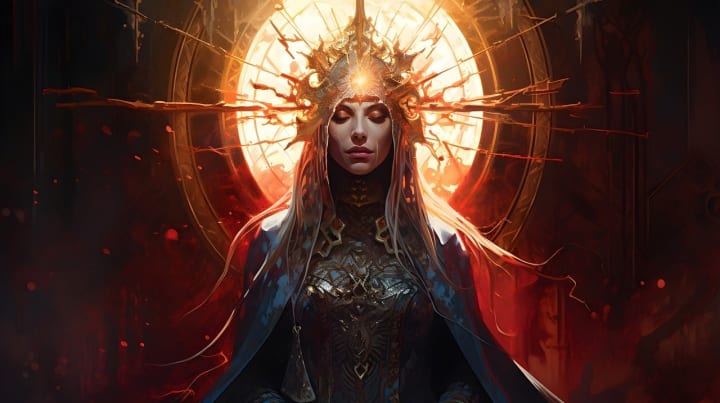
Among the Watchers who descended upon Mount Hermon, one name stands out: Samyaza. In the ancient tongue, his name signifies a fallen star, representing the brilliance of a leader who shone too brightly before descending into darkness. The Book of Enoch portrays him as the instigator, the one who could not control his desires and first imagined that the laws of heaven could be broken, convincing other angels to join him in his downfall.
The story begins with temptation. From their high position, the Watchers, angelic beings sent to observe, looked down on the Earth and saw the daughters of men. They observed them dancing in the sun, laughing in the fields. This would awaken feelings in them that had no place in heaven! The text describes Samyaza standing before the two hundred, his words like fire, as he confesses his desires and dares the others to do what had never been done before.
He feared that if he acted alone, the others would turn against him, leaving him to bear the guilt by himself. To prevent this, he made them swear an oath, binding them together on the slopes of Mount Hermon, a pact that they would all descend and take wives among humans, regardless of the consequences. And so they did.
What followed was not merely an act of lust; it was an unholy mingling of heaven and Earth. They taught humans how to forge weapons, draw blood from the soil, and one another. They revealed the secrets of roots and herbs, enabling humans to enchant and bewitch, to peer into the future, and bend wills to their desires. They taught women how to paint their faces, darken their eyes, adorn their hair with gold and jewels, and seduce others with knowledge meant for the stars.
In surviving accounts, Samyaza is often depicted as a towering figure, radiant even in his fall, with eyes like molten bronze, a being both beautiful and terrifying. He fathered children who became giants known as the Nephilim, beings of immense strength, violence, and insatiable appetite, consuming everything in their path. These offspring devoured the Earth, animals, and even people, until the world cried out under the weight of their violence.
Other traditions suggest that Samyaza also taught humans to conjure spirits and read the movements of the heavens, laying the groundwork for sorcery and astrology. Some texts describe him standing at the threshold between heaven and Earth, neither thoroughly condemned nor free, observing as humanity spirals down the path he helped set in motion. Even today, it is commonly said in occult traditions that Samyaza's name holds power, that he still speaks in dreams to those willing to listen.
The story of Samyaza is not a tale of seduction and rebellion; it is, in fact, a profound tragedy, the cautionary tale of a leader who sought more, who could not bear the distance between himself and humanity, and who unleashed chaos in his attempt to bridge that gap. He symbolizes ambition unanchored from wisdom, a spark that ignites not light but wildfire. His story invites us to reflect on the consequences of unchecked ambition and the importance of wisdom in our pursuits.
When we read his story now, we can almost feel the weight of his gaze, the way he might look upon our world, filled with Nephilim-like creations, weapons beyond comprehension, and knowledge reaching into realms once thought divine. His tale forces us to question: Are we swearing oaths we cannot keep, pursuing desires that may lead to our destruction?
The Watchers' Warning and Our Modern World
When Enoch wrote down his visions, they may have seemed like strange dreams from a distant past or a far-off future. However, many readers today feel a chilling sense of recognition when they read about the Watchers' gifts to humanity and the chaos they caused.
Consider the parallels. The Watchers taught metallurgy, the shaping of iron and bronze into swords and spears. Today, we wield nuclear weapons capable of devastating entire cities. They revealed the secrets of cosmetics and adornment, feeding vanity and lust. In our time, whole industries revolve around manipulating appearance and desire. They also imparted their knowledge of astrology, which evolved into the sciences of prediction and control. Nowadays, algorithms predict human behavior, and powerful technologies promise to manipulate genes, alter minds, and even create artificial life.
We inhabit an age where the boundaries between human and divine, as well as nature and machine, are being blurred. We experiment with powers that were once reserved for gods. We splice DNA, create synthetic embryos, teach machines to think, and dream of colonizing other planets. The lessons of the Watchers seem not only forgotten but actively repeated, with no archangel in sight to intervene.
In some traditions, Samyaza remains suspended in the sky, caught between heaven and Earth, paying the price for his rebellion while watching humanity spiral into its forms of hubris. His story serves as a reminder that knowledge is never neutral; every advancement carries a price.
In part one of this series, we traced the origin of the Watchers' tale and examined Samyaza's role in humanity's fall from innocence. In the upcoming sections, we will delve deeper into the mysteries of the Nephilim, those hybrid beings who once walked the Earth, and explore whether the Book of Enoch hints at an even more extraordinary destiny for our species, one in which the past and future converge in ways we have only begun to imagine.
The Book of Enoch is not just a record of what was; it is a warning of what could be. As we stand on the brink of discoveries and dangers that even Samyaza could not have foreseen, we would do well to heed its ancient voice. In the biblical tradition, the story of the Watchers is hinted at in the cryptic verses of Genesis. It states, "The sons of God saw that the daughters of men were beautiful, and they took wives for themselves, whomever they chose." This resulted in the birth of giants, referred to as "the mighty men of old, men of renown." This passage has puzzled readers for millennia. It seems too strange to be merely metaphorical, yet too threatening to the established religious order to be fully explored in most churches.
Here, we see a recurring pattern: the crossing of boundaries, a union of the divine and the mortal, leading to offspring that bring ruin. The world becomes so corrupt and violent that it necessitates the cleansing flood of Noah.
The Sumerians also spoke of beings who descended from the heavens to teach humanity, known as the Anunnaki, "those who came from the heavens to earth." They bestowed kingship, taught humans to cultivate the land, and shared the arts of civilization. However, as in Enoch's accounts, this divine intervention comes at a price. The human race becomes enslaved to the ambitions of these godlike beings, caught in struggles that are not their own. The Sumerian king lists recount antediluvian kings who ruled for thousands of years, their reigns growing increasingly corrupt and violent over time until a great flood swept the Earth clean. Once again, we see the same warning: what begins as a gift ends as a curse when wisdom is misused.
Now, in our age, this warning is more relevant than ever. In laboratories around the world, we split atoms, decode genomes, and invent machines that can outthink us. We create life in test tubes and dream of uploading minds into clouds of data. We have taught ourselves to fly and to reach beyond the sky, much like the Watchers did when they descended. And just as in Enoch's story, we witness vanity and violence rising alongside our knowledge. We can destroy cities in minutes, manipulate entire populations with a few lines of code, and alter the very fabric of nature itself.
Some even state that the Watchers never truly left, and their influence persists in hidden places, steering humanity toward another fall. The idea of ancient, advanced beings meddling in human affairs is no longer confined to myth; it appears in modern conspiracy theories, UFO encounters, and even in official, declassified documents that hint at contact with "non-human intelligences." Could it be that what the ancients called Watchers or Anunnaki, we now refer to as "aliens," their warnings left unheeded as we continue down the same perilous path?
These parallels, the biblical Nephilim, the Sumerian Anunnaki, and the strange developments of our modern technologies, form a triangle of caution pointing to one truth: whenever humanity reaches too far, too fast, the consequences are catastrophic.
In part two, we will follow this thread into the realm of the Nephilim, those hybrid beings who represented the consequences of forbidden unions, and explore whether the flood honestly erased their presence, or if, as some believe, their legacy still walks among us. The Watchers' warning may not have been just for their time, but also for ours.
About the Creator
The Secret History Of The World
I have spent the last twenty years studying and learning about ancient history, religion, and mythology. I have a huge interest in this field and the paranormal. I do run a YouTube channel
Keep reading
More stories from The Secret History Of The World and writers in Futurism and other communities.
Do Spirits Have Guardians? Climbing the Infinite Ladder of Consciousness
The Spiritual Realm An age-old belief, whispered across cultures and in ancient texts, is that an invisible presence watches over every human or animal. Some call it a guardian angel, others a spirit guide, and some refer to ancestral protectors or divine watchers. These presences are said to guide our footsteps, shield us from unseen harm, and gently whisper truths into our dreams when the world becomes heavy. This belief is deeply embedded in the human spirit. Even in moments of silence or despair, we often feel that someone, or something, is there, just beyond the veil.
By The Secret History Of The WorldExclusive • 7 months ago
About Binding Prometheus
I want to start actively advocating on behalf of my own work, and the most valuable part of my canon is, without a doubt, Binding Prometheus, the play I have been working on since 2019 and only finished in 2023 as part of my MA. The play itself is an amalgamation of a million different inspirations. On one end, it evokes the Ancient Greek myth-play, deriving its own title from the earliest extant work of Western drama we have, Aeschylus’s Prometheus Bound. On the other end, it borrows significantly from the sci-fi bulwarks from over the years, namely Mary Shelley’s Frankenstein and Karel Capek’s Rossum’s Universal Robots. The play could be an episode of Black Mirror, I fear. I don’t know. I’ve only ever seen one episode of Black Mirror.
By Steven Christopher McKnight19 days ago in Futurism
UAE Mental Health Market: Rising Awareness, Service Expansion & Growth Outlook
According to IMARC Group's latest research publication, UAE Mental Health Market size reached USD 13.10 Billion in 2024. Looking forward, IMARC Group expects the market to reach USD 28.26 Billion by 2033, exhibiting a growth rate (CAGR) of 8.92% during 2025-2033.
By Abhay Rajput7 days ago in Futurism
Center Stage with Paul Stewart
*** I'm keen to republish the interviews I did for my series with Vocal creators. It's been a few years and I thought it might be nice to revisit these wonderful conversations. I'll be releasing them one at a time for a few weeks/months.
By Heather Hubler4 days ago in Interview



Comments
There are no comments for this story
Be the first to respond and start the conversation.