space
Space: The Final Frontier. Exploring space developments and theorizing about how humans fit into the universe.
Moving 'Beyond Earth'. Top Story - July 2017.
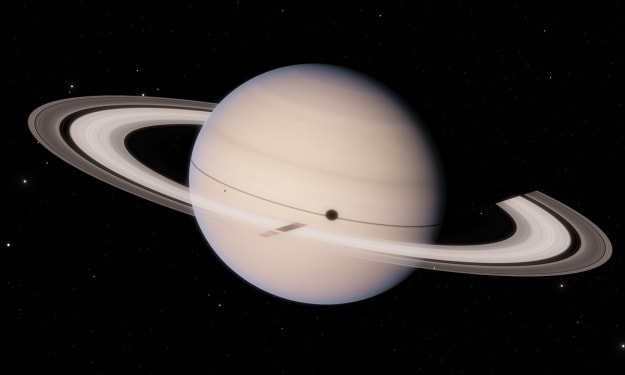
For decades at least, the dream of a human colony moving our species beyond this planet has been a dream shared by both science fiction and science fact. It's an idea that has yet again come into vogue. Yet the question remains: how would we even set about the task and where do we go? While the popular answer seems to be the Moon or Mars, writer Charles Wohlforth and planetary Amanda Hendrix's Beyond Earth: Our Path To A New Home In The Planets seeks to answer both and propose an altogether different destination: Saturn's moon Titan.
By Matthew Kresal8 years ago in Futurism
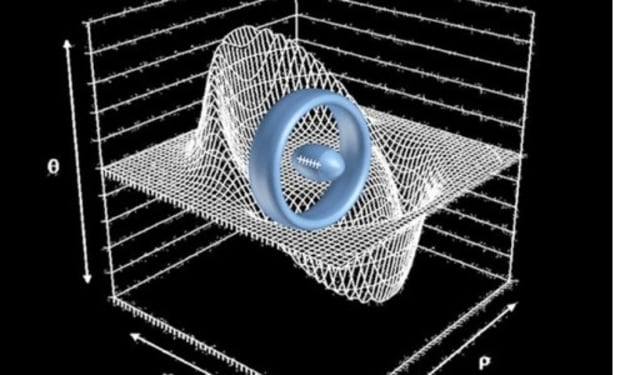
The White Hole—The Black Hole's Opposite
Humanity has always desired to learn more about its surroundings and tried to satisfy its curiosity. Particularly in the modern and ever-evolving age of ingenuity, human beings are constantly striving to unlock the secrets of the cosmos. But for the most part, our probing the unknown only unlocks more questions. We discover something, yet we know next to nothing about its origin or function. It's like a teaser trailer to a movie, except we never know the date when it will be released to theaters when all our questions will be answered.
By John Tuttle9 years ago in Futurism
NASA: Jupiter's Great Red Spot Up Close
NASA's Juno mission has begun to release the very latest images from its JunoCam, taken July 10, 2017 during its close flyby near Jupiter's famous Great Red Spot. It was Juno's sixth flyby near the gas giant in our Solar System.
By Anya Wassenberg9 years ago in Futurism
Son Of Titan
Pitch black, to the point he wasn't sure if he had opened his eyes. He couldn't even see his hand right in front of his face. Slowly he could start making out the tiny lights on the control panels, the buttons and switches, the screens coming alive with static once more. His breathing had remained steady throughout the entire ordeal, and yet he let go a sigh of relief, knowing now that they had survived, and that the equipment seemed to be working properly. He turned to his right, and almost hidden in the darkness of the small compartment, he could see the silhouette of his commander. Oz. Oscar. Sergeant Garza. He was sitting snuggly, arms folded, tucking a compact shotgun closely to his chest. There was no easy way of knowing whether he was awake or not, as he was still wearing his helmet, covering his whole face. Three screens at the front of the compartment suddenly lit up, blinding him for an instant. The feed on the screens was hazy at first and quickly cleared up.
By Joshua Gonzalez9 years ago in Futurism
Nuclear Propulsion
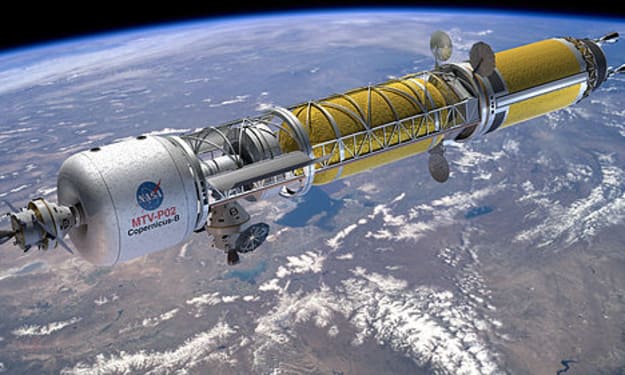
“Now I am become Death, destroyer of worlds.” Robert Oppenheimer spoke these words in July of 1945 when asked about his feelings after the Trinity test, the first successful detonation of a nuclear weapon. Oppenheimer’s prophecy rang true on August 6th and August 9th of that same year, after the dropping of those same weapons on Hiroshima and Nagasaki.
By Anthony Pullano9 years ago in Futurism
The Warp Drive: A Crash Course In Relativity. Top Story - July 2017.
The estimates from the Hubble Telescope suggest that there are upwards of 100 billion galaxies in the universe. Each with millions upon millions of stars (the Milky Way is a smaller galaxy with around 100 billion stars), each with at least some prospective habitable planets.
By Anthony Pullano9 years ago in Futurism
Carl Sagan's 'Billions & Billions'
More than two decades after his untimely passing, Carl Sagan's life and work continue to resonate. The famous documentary series Cosmos, which helped to make him the best-known scientist of his time, was revised and updated just a couple of years ago, introducing him to a new generation that might not even have been born when he passed away. Yet in reading Billions & Billions, a posthumously published collection of his essays from 1997 which I encountered earlier this year, I found myself struck by just how much this particular set of his work remains surprisingly relevant today.
By Matthew Kresal9 years ago in Futurism
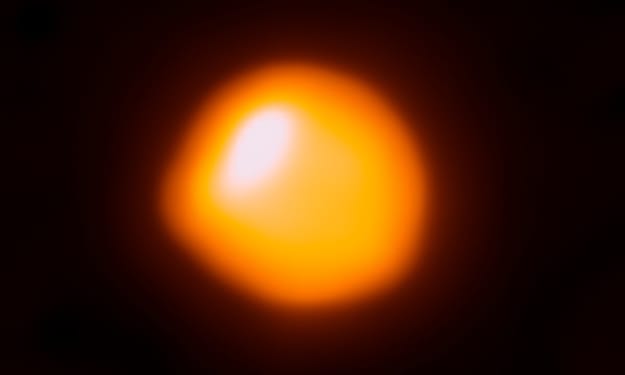
Astronomers Take New Highest-Resolution Image of Giant Star Betelgeuse
Betelgeuse is one of the largest stars known in our galaxy, a red supergiant, and now astronomers have taken the highest-resolution image ever so far. They used the Atacama Large Millimeter/submillimeter Array (ALMA) in Chile for their observations, and not only was it the first time that ALMA had observed this star, but it succeeded in producing the highest-resolution of Betelgeuse currently available.
By Paul Scott Anderson9 years ago in Futurism