science
Topics and developments in science and medicine, presented by Futurism.
Virtual Reality World: A Journey through Past, Present, and Future
Welcome to the realm of Virtual Reality (VR), a transformative technology that has taken the world by storm. In this comprehensive exploration, we'll embark on a captivating journey through the evolution of VR, the current trends, the hardware that makes it all possible, and the immersive experiences it offers. We'll also delve into how VR has made its mark in top-tier countries like the USA and Canada and discuss the boundless future prospects of this revolutionary technology.
By Technet.blog2 years ago in Futurism
The Rise of Graphene
The Emergence of Graphene Beginning Graphene, a single layer of carbon atoms arranged in a honeycomb pattern, has captivated scientists and technologists alike due to its extraordinary characteristics. The progression of graphene from theoretical investigation to experimental identification and potential uses is an intriguing narrative of scientific progress.
By Graphene Supply Company2 years ago in Futurism
Amazing 2,700-Year-Old Winged Deity from Assyria Discovered in Iraq
Archaeologists have re-excavated a magnificent lamassu at the ancient city of Khursbad, Iraq, in a historic discovery. The enormous sculpture, which represents an Assyrian guardian deity, is typically shown with a body that resembles a lion or bull, wings that resemble birds, and a head that is like a human.
By Francis Dami2 years ago in Futurism
Meet the Boy Who Built a Nuclear Reactor in His Garden
In 1994, during the summer, there was a 17-year-old boy in Detroit who was really interested in science. He had a small device that made beeping sounds. This was a time when not many people had smartphones, so it was unusual to see someone so engrossed in a little gadget. What was that device, and why was he so fascinated by it? Well, it was actually a geiger counter, a tool to measure radiation. The beeps meant that something he built in his mom's potting shed was working, and that something was a homemade nuclear reactor.
By Varisha Ahmed2 years ago in Futurism
Is the universe dying?
If the Earth is destroyed by global warming, this could be the end of human civilization. Maybe we can migrate to Mars before that happens and then colonize other planets. But what if a time comes when there is nowhere left for humanity to escape? No other worlds, stars, or black holes.
By Gonçalo Pizarro2 years ago in Futurism
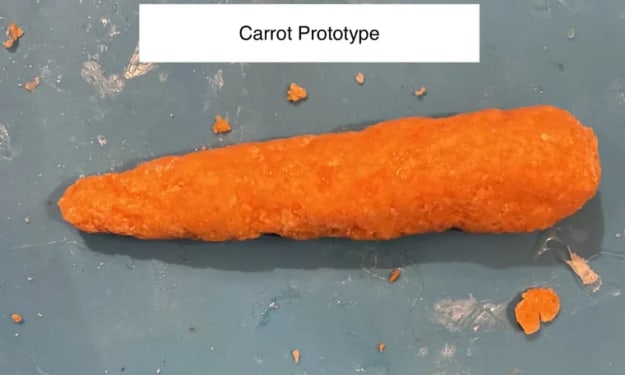
A new kind of 3D-printed carrot, in the words of its Qatar-based inventors. Content Warning.
Qatari students aim to make ‘food accessible to people all over the world’ with their newly invented 3D printer. Innovation in the heart of Qatar has birthed a groundbreaking solution to the widespread issue of food insecurity. Two visionary students, Mohammad Annan, aged 20, and Lujain Al Mansoori, aged 21, both pursuing information systems at Doha's Carnegie Mellon University, have achieved an extraordinary feat - the creation of a 3D printer capable of mass-producing vegetables, offering a potential remedy to the global food crisis.
By nizam uddin2 years ago in Futurism
Alien Language: If we met extraterrestrials, could we talk to them?
The notion of encountering life from beyond our planet has captivated human imagination for ages. But in the event we come face to face with aliens, the question arises: could we engage in meaningful communication with beings from a world completely foreign to our own? This article embarks on an exploration of the intricacies, hurdles, and possibilities associated with conversing with extraterrestrial civilizations, infused with a distinctly human touch.
By nizam uddin2 years ago in Futurism
Unveiling The Billionaire Conspiracy Shaping The Future of AI Policy
In the age of artificial intelligence (AI), the world is on the cusp of revolutionary change. Yet, beneath the surface of progress and innovation lies a web of influence, power, and intrigue that is silently shaping the future of AI policy. In this article, we will delve into the clandestine network of billionaire-backed advisors and organizations that are exerting their control over AI policy, throwing the doors open to a world rarely seen by the public eye.
By Next Koding2 years ago in Futurism
The Vital Place of Telecommunication in human life
In the not-so-distant past, communication was a far more cumbersome affair. People relied on handwritten letters that could take weeks to reach their intended recipients, or they were limited to face-to-face conversations, which often meant physical proximity. But the advent of telecommunication has woven a web of connections that stretches across the globe, altering the very fabric of human existence.
By Ahmet Gürler İŞİM2 years ago in Futurism
The Technological Renaissance of the 21st Century
1. Artificial Intelligence (AI): The realm of AI is no longer confined to the realm of science fiction, as it is gradually becoming an integral component of our everyday lives. Industries ranging from healthcare to finance are being transformed by machine learning, deep learning, and neural networks. Personal assistants like Siri and Alexa operate on AI algorithms, enhancing convenience, while autonomous vehicles offer the promise of safer and more efficient transportation. The potential applications of AI are limitless, and it is expected to play a significant role in shaping the future.
By John Ryan Carandang2 years ago in Futurism
The Rise of the Machines
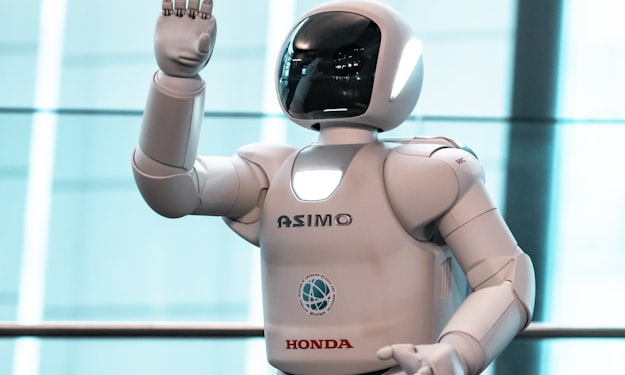
In a world where technology evolves at an unprecedented pace, the prospect of robots invading the realm of human employment has transitioned from science fiction to a stark reality. The relentless march of automation and artificial intelligence has given rise to a burgeoning revolution, replacing humans in various industries and challenging our very definition of work. This thrilling narrative unveils the incredible journey of these mechanical marvels, and the implications they carry for the future of humanity.
By Amani Kassim2 years ago in Futurism
Exploring the Possibilities of Time Travel 🕰️ 🧳
The idea of traveling to the past or future has long captured our imaginations in science fiction, but could it ever become reality? While time travel remains firmly in the realm of theory today, the laws of physics may permit it under certain conditions. Let’s explore what modern science tells us about the possibility and challenges of manipulating time. Our modern understanding of time began with Einstein’s theory of relativity. It showed that time is relative and can flow at different rates depending on an object’s motion or proximity to massive objects like stars. But perhaps the most profound insight is that time is merely one dimension of spacetime, along with three dimensions of space. This opened up mind-bending ideas about the nonlinear nature of time. If time can bend and warp alongside space, it suggests the possibility of shortcuts or ‘wormholes’ that could connect different points in spacetime. In theory, wormholes act like tunnels cutting across the fabric of the universe. Traveling through one could transport someone vast distances, or perhaps even between different points in time. However, current physics shows wormholes would collapse almost instantly due to pressure from quantum effects. Stabilizing them would require amounts of energy far beyond what we can generate.Another approach focuses on moving at or faster than light speed. According to relativity, time slows down for fast-moving objects. At light speed it stands still. So accelerating to superluminal speeds could allow travel into the future, as more time would pass on Earth than in the traveler's frame of reference. However, no known means exists to exceed light speed, and relativistic effects become unpredictable beyond that boundary. Tachyons, hypothetical particles that always move faster than light, are another proposed solution. Some think they could travel backward in time. But direct evidence for tachyons has never been found, and they would violate causality by allowing effects to precede causes. Regardless, building a viable 'tachyon drive' remains entirely speculative. Wormholes and superluminal travel face enormous practical hurdles requiring technologies far beyond our current capacities. But progress in quantum physics offers another potentially viable avenue – harnessing quantum effects to create shortcuts between spacetime points. One idea proposes squeezing matter through an extra dimension curled up tiny at the subatomic scale. Essentially tunneling between our three dimensions and higher-order dimensions to travel through spacetime. However, generating controlled extra dimensions and navigating them presents formidable challenges. Another approach applies quantum mechanics principles. Entangled particles behave non-locally as if interfaced, even when physically separated. Some theorize entangled systems could allow communicating into the past by exploiting obscure quantum processes like negative energies or closed timelike curves. If realized, quantum time travel may be far more achievable than classical approaches. But controlling delicate quantum states well enough to transmit meaningful information backward poses monumental engineering obstacles. Clarifying how to preserve causality also remains unclear. Regardless of the method, time travelers would face fundamental problems like paradoxes arising from changes to history. The 'grandfather paradox' - changing the past so your grandfather is never born thereby preventing your own existence - highlights issues of self-consistency. Special principles may need to govern changes, with the past only mutable in dynamically allowed 'alternative timelines’. While overcoming all these immense scientific and logical hurdles means time travel may never transpire, ongoing developments in fields like quantum computing could gradually create ways of transforming time manipulation from imaginary fiction to theoretical possibility. Ultimately, even partial demonstrations of warping or tunneling through spacetime would profoundly influence our view of reality and humanity's role in the cosmos. Whether we can devise reliable journeys across time remains one of science's greatest unsolved puzzles.
By Rakindu Perera2 years ago in Futurism