science fiction
The bridge between imagination and technological advancement, where the dreamer’s vision predicts change, and foreshadows a futuristic reality. Science fiction has the ability to become “science reality”.
Bits 'n Pieces
"Linda, dear? Have you seen my favorite tie? You know, the blue one with orange stripes?" Ronald Simmons didn't want to be late for work, especially as he had an important meeting that afternoon. He knew that if his presentation was well received he'd be up for that promotion—the one he had been working toward for the past six months.
By Steve Benton10 years ago in Futurism
Samuel R. Delany's 'The Einstein Intersection' Review
I was always vaguely aware of Samuel R. Delany as one of the towering figures of science fiction, but I never thought very much about him until I read Damien Broderick’s Reading by Starlight for my undergraduate thesis. In the intervening time, I’ve come to discover that Delany, like Le Guin, is one of science fiction’s greatest writers and commentators. Delany has a rare gift for ambitious and brilliant writing combined with an insightful critical output.
By Michael Gold10 years ago in Futurism
Science Fiction Author Ray Bradbury
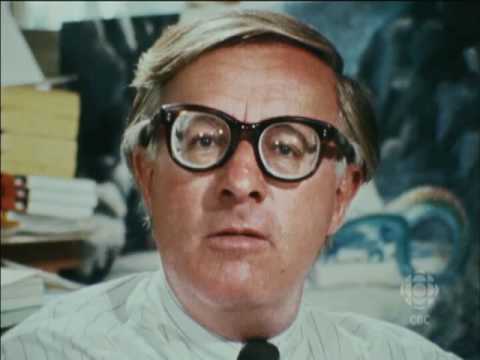
Ray Bradbury left a monumental impact on the world of science fiction, and is considered by many to be one of the greatest sci-fi authors of all time, but he always maintained he was a writer of fantasy. Ray Bradbury was born in 1920 to a large family in Waukegan, Illinois. His supportive family and hometown became a symbol of security in many works, such as Dandelion Wine and Something Wicked This Way Comes. Unable to afford college, Bradbury spent his time at the local library absorbed in the science fiction works of H.G. Wells and Jules Verne.
By Futurism Staff10 years ago in Futurism
Vincent Di Fate Interview
Science fiction artist and illustrator Vincent Di Fate is a master of unseen worlds. With each illustration depicting a voyage of the imagination, Di Fate skillfully crafts the worlds of tomorrow with the ideas of the future. From space adventures to futuristic creatures, artificial intelligence, and extraterrestrial invasions, Hugo Award-winner Vincent Di Fate has advanced the realms of science fiction, fantasy, and art through his many achievements.
By Natasha Sydor10 years ago in Futurism
Origin of Star Trek
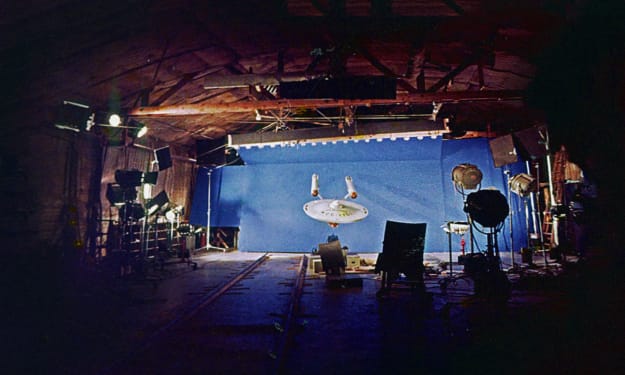
Author Marc Cushman’s first installment of his These Are the Voyages, an exhaustive three-volume set devoted to the making of the original Star Trek television series, was published by the boutique imprint Jacobs Brown Press. From the nondescript cover you'd never know this book is any different from the hundreds of other books about Star Trek that have lined bookstore shelves and digital libraries for decades. However, after reading only a few pages, it will become abundantly clear that this is a book like none ever published about the making of Star Trek or any television series, for that matter.
By Futurism Staff10 years ago in Futurism
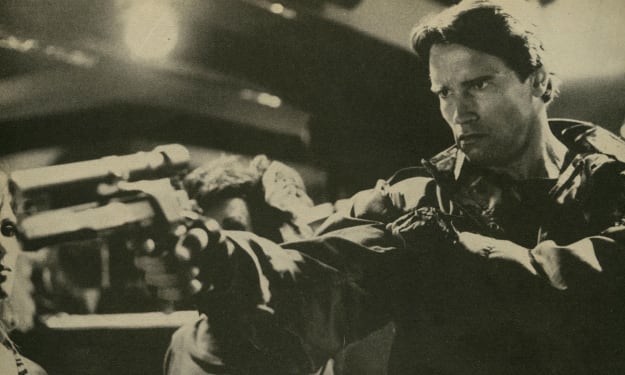
Making The Terminator
Time travel as a device has been used quite extensively in science-fiction since H.G. Wells wrote The Time Machine late in the 19th Century. Also the time travel device has been used in Time After Time, Somewhere in Time, The Final Countdown, and The Time Traveler's Wife. Time travel was used to good effect on television science fiction also; On The Twilight Zone, in particular "A Stop at Willoughby." On Star Trek, in "City at the Edge of Forever" (written by Harlan Ellison) and "Assignment: Earth" and in three of the best Outer Limits episodes, "The Man Who Was Never Born," "Soldier," and "Demon with a Glass Hand," the latter two written by Harlan Ellison.
By Futurism Staff10 years ago in Futurism
50 Greatest Movies Never Made
Remember that great scene in Starfleet Academy—you know, the sixth Star Trek movie—in which the young Cadet Spock, the school's first alien, endured racist taunts from his classmates, only to be defended by fellow student James Kirk? And remember that deeply affecting scene where the two meet again on the maiden voyage of the Enterprise? You don't? Well, maybe that's because Starfleet Academy was never actually filmed.
By Futurism Staff10 years ago in Futurism
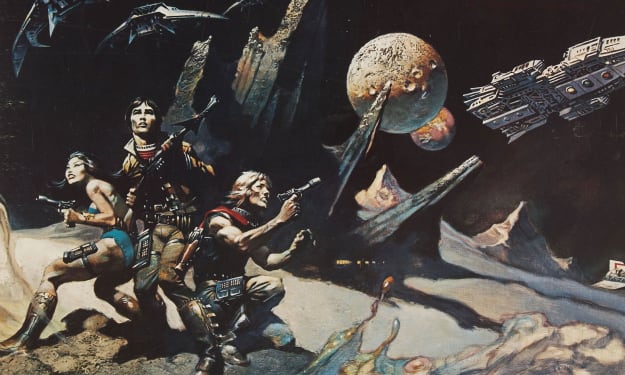
Making Battlestar Galactica
Battlestar Galactica was one of the most expensive series ever created for television in its time. Its price tag averaged nearly a million dollars per hour for the episodes seen in fall of 78. The usual fees for a big budget series were compounded by an inspired move from creator/writer/executive producer Glen Larson. In signing John Dykstra, multiple Academy Award-winning special effects supervisor for Star Wars, Larson hired a formidable talent. Dykstra created the dazzling array of effects that highlight this otherwise pedestrian program, making Battlestar Galactica the hottest new series of its time.
By Futurism Staff10 years ago in Futurism
299,000 Kilometers a Second
Bill had 24 hours before his flight. He had spent the last month jettisoning his possessions to his friends and family in a process that felt a lot like a living funeral. All his books, most of his clothes, and many of the objects he had collected for years began to feel heavy on him.
By Brett Ryan Bonowicz10 years ago in Futurism
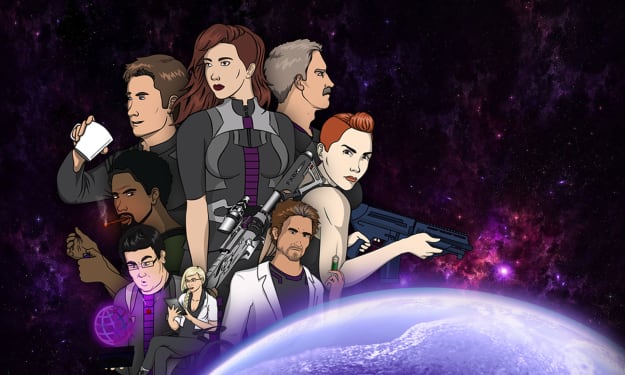
Lost Hope Creator Jeff Saamanen
Lost Hope is a comedic sci-fi epic with mature themes and dramatic overtones; or, as we like to call it, Archer meets Star Wars. Lost Hope, created by real life sci-fi couple Jeff Saamanen and Natalie Harvey, follows the exploits of Clara Hope and her team after the unexpected destruction of planet Earth. Together with her inexperienced crew of the USS Hopeful, Clara is forced to protect what remains of our species from the vast unknown of the universe.
By Natasha Sydor10 years ago in Futurism
How to Analyze a Science Fiction Film
I like to time travel, so I love science fiction. Unlike other genres of film, science fiction warrants its own criteria to be effectively evaluated. First, like any film, we measure a movie for its entertainment value: cinematography, acting, and plot (the basics). Science fiction cinema has an extra step. Audiences have to ask, is this good science fiction? The most important thing to realize when learning how to analyze a science fiction film is that qualifying as sci-fi takes more than putting actors on a stage set in space. Plenty of films purport to be science fiction but fall flat under analysis, because they fall back on fantasy or rely on absurd logic.
By Futurism Staff10 years ago in Futurism