science fiction
The bridge between imagination and technological advancement, where the dreamer’s vision predicts change, and foreshadows a futuristic reality. Science fiction has the ability to become “science reality”.
Sci-Fi Artist Chris Moore's Illustrative Universe
Chris Moore is a British painter, designer, and illustrator recognized as a master of depicting high-tech science fiction. Moore has elegantly devised parallel universes that have graced the works of prestigious authors such as Philip K. Dick and Isaac Asimov. Moore’s work boasts a fascinating level of technical skill and ascendancy over the canvas, using technology as merely an aid to his own distinctive technique.
By Natasha Sydor9 years ago in Futurism
Chris Foss Sci-Fi Starship Artist
Obsessed by speed, color, and hybrid technology, Chris Foss paints enormous spaceships and intergalactic arks that are too big for the horizon to hold. The curiously antiquated qualities of his vehicles evoke memories of Edwardian ocean liners and World War I tanks. With structures that are postmodern and completely unlike the streamlined shapes of his predecessors, Foss gives form to machines that will one day populate all of interstellar space.
By Natasha Sydor9 years ago in Futurism
Greatest Sci-Fi Antagonists
Why are nice readers attracted to evil literary characters? Yes, I’m talking to you! But I’m also guilty, and I have finally reached a point where I can speak about this openly. There’s no denying it—we all crave villains. A good author better know about this phenomenon, for the merits of their protagonists are measured against the strengths of their opponents. It’s no fun reading about a hero fighting a 90-pound pushover! So have no fear, faithful reader, for we’ve assembled a list of sci-fi’s most fiendish fiends. You will never find a more wretched hive of scum and villa—oh, okay, sorry! I don’t want to get busted for plagiarizing Obi-Wan Kenobi. These guys are the worst of the worst.
By Matt Cates9 years ago in Futurism
Predictions from Sci-Fi Authors
Science fiction authors are modern-day prophets. Many of the predictions from the great writers like Isaac Asimov and Philip K. Dick came to fruition at the turn of the 21st century. Writer Michael Banks closely followed the growth of online web services and the evolution of the internet from the early 1980s onward. His perception on the predictive nature of science fiction can be proven through a study of the the great sci-fi author's ability to blur the lines between speculation and fact are often the catalyst for authentic advance in tech. His books, including Crosley: Two Brothers and a Business Empire That Transformed the NationandOn the Way to the Web: The Secret History of the Internet and Its Foundersdelve into the results of this chain of predictions. His perceptions will continue to drive further authors to continue to essentially create the future. Many of his theories were captured in a 1978 article from vintage sci-fi magazine Starlog.
By Futurism Staff9 years ago in Futurism
Evolution of Sci-Fi Women
In September 1992, Mae Jemison became the first African-American woman to launch into orbit upon the Space Shuttle Endeavour. When asked of the role models that helped her achieve this amazing feat, none other than Starfleet’s main lady, Lieutenant Uhura was at the top of the list.
By Futurism Staff10 years ago in Futurism
Best Hard Sci-Fi Books
Fans of the sci-fi genre have been known to be… picky. Sure, we want our trail mix of starships, androids, cleverly disguised social commentary, “big thought-provoking ideas,” and snappy banter from severely conflicted cyborg characters. We also want, somewhere in the middle, an enormous, spacey McGuffin to keep the plot moving at warp speed. But all that’s a given; That’s the minimum essential goods. What most discerning fans demand is a level of authenticity; We want to know exactly “how” that tractor beam works, “how” that near-light speed engine runs, “how” that police telephone booth is really bigger on the inside. In other words, we want an author who knows what they’re talking about when it comes to the techy stuff—even if that stuff is totally imaginary! And not just Wookiepedia-level knowledge, either. Basically we want a genuine physicist like Michio Kaku whispering into the writer’s ear, telling them how all this stuff could, theoretically, work. Hard sci-fi answers these questions with its emphasis on technical accuracy and scientific detail.
By Matt Cates10 years ago in Futurism
Coolest Sci-Fi Spaceships
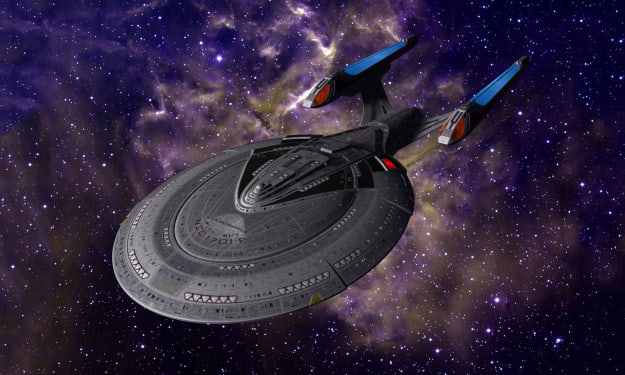
From novels to feature films, from TV series to video games, the presence of spaceships have been prevalent across all forms of the science fiction genre. With imaginative minds creating these fictional machines, some realistic and some far­fetched, there are bound to be several that enthrall us unlike any others. What makes a great spaceship can be hard to define, though. Intriguing technological enhancements and mind bending paradoxes are sure to attract attention, but for some, their sheer massiveness will suffice. The coolest sci-fi spaceships encompass a wide variety of types like the ones mentioned above. Some you will be sure to recognize. Others are more obscure. All are among the greatest spaceships in all of sci-­fi.
By Futurism Staff10 years ago in Futurism
Most Terrifying Sci-Fi Books
Peanut butter and jelly. Hot rods and bikinis. Sci-fi and horror. Some things are meant to go together! Yet, while most of us are all too familiar with our two favorite genres mixing it up in motion pictures, it’s often under appreciated how well these types blend in book form. Together, we can correct that fault, by cherry-picking a few classics, blowing off the binary dust which has shamefully accumulated upon these wizened tomes, and gearing up to get our wits scared out of us!
By Matt Cates10 years ago in Futurism
Time's Role in Science Fiction
What is time? In our world, it represents a concept, unit, choice, and even a dimension. In the science fictional universe, it represents all of these concepts elevated into an all encompassing one. Time finds itself as a necessity in that nothing could exist without it––a statement that we cannot fathom because we have never experienced it. Writer Charles Yu claims in his novel, How To Live Safely in a Science Fictional Universe, that “time is an ocean of inertia.”
By Natasha Sydor10 years ago in Futurism
Most Underrated Sci-Fi Movies. Top Story - June 2016.
Everyone’s been to the classic Hollywood summer blockbusters; We’ve munched popcorn through the whole Terminator series, slurped over-iced $10 sodas throughout the Men In Black movies, cringed and laughed during Aliens, E.T., and Back to the Future. We’ve stood (for longer than we should have) in those opening day lines for all the Star Wars and Star Trek films. We’ve checked out the new Planet of the Apes franchise, nodded approvingly (for the most part) at additions like Oblivion, Edge of Tomorrow, and Interstellar to our beloved genre. But many of the most creative sci-fi motion pictures flame out fast on very limited runs on a small number of screens. Must these glittering gems of imagination go unrecognized forever? Nope; Not in this day and age of online streaming!
By Matt Cates10 years ago in Futurism
Stargate's Pauline Gedge
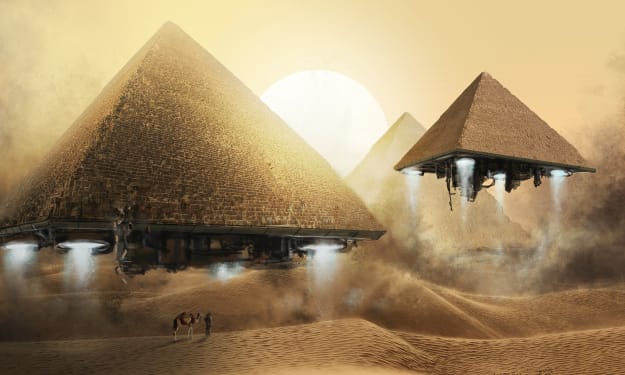
"Ixelion stepped under the archway of his Gate, the box clutched tightly in his hand, and the guards with their silver wands and stiff capes of scales greeted him with soft, deferential voices." So begins Pauline Gedge's unparalleled exploration of the creators of the universe in 1982's Stargate. At the dawn of time, the universe is overseen by the Worldmaker, who rules over each sun lord in the solar systems of his creation. Until, ruled by unexpected malice, he becomes the Unmaker.
By Natasha Sydor10 years ago in Futurism
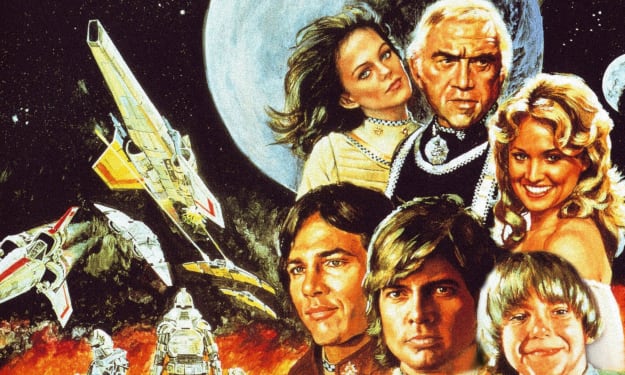
Ultimate 'Battlestar Galactica' Guide
Glen Larson—musician, screenwriter, producer—had wanted to do something like Galactica, he told us, long before he saw Star Wars. That Lucas blockbuster, though, gave Larson’s idea “legs”—as they say in showbiz—made Galactica seem a profitable notion that could stand on its own and walk away with a bundle.
By Futurism Staff10 years ago in Futurism