movie review
Reviewing the best science fiction movies from the past, present, and future.
'I Am Mother' – Netflix Original Movie Review
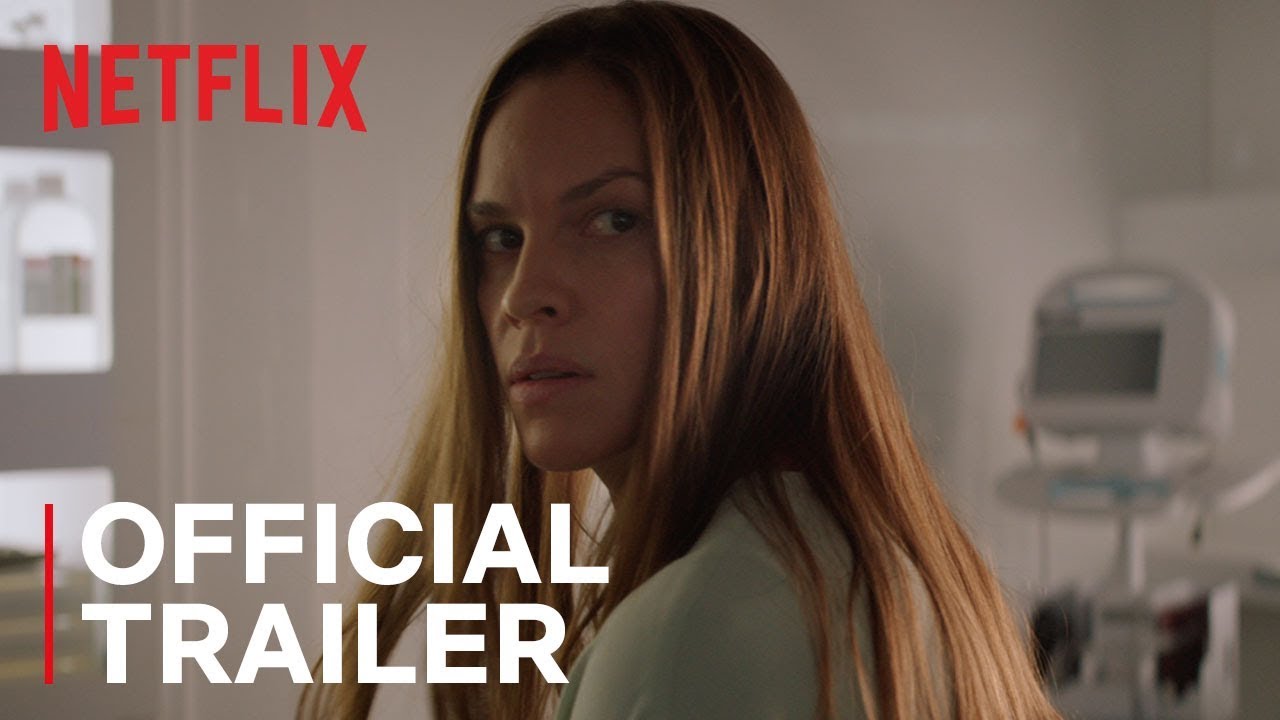
Before I watched It… I stumbled across the trailer for this movie during one of my many deep dives into YouTube. From this brief glance into the movie, I was intrigued; it had all the elements of a movie that I would enjoy: it’s a sci-fi movie, filled with all the good narrative points of a thriller, and didn’t look like anything I had watched before.
By Joe Harris6 years ago in Futurism
Review of 'See You Yesterday'
I just saw See You Yesterday, the Spike Lee production, directed and co-written by Stefon Bristol (with Fredrica Bailey), which came out on Netflix this past May. As a time-travel story, it's good enough. As a narrative about the continuing murder of African-American young men in American cities by cops, as told through the mechanism of time travel, it's a crucial masterpiece.
By Paul Levinson6 years ago in Futurism
Review of 'Mortal Engines'
I just saw Mortal Engines on HBO. It was released here in the US in December 2018, and received almost universal criticism from the usual group of myopic and tone-deaf self-appointed experts. According to Wikipedia, "It was the biggest box-office bomb of 2018 (one of the 10 biggest of all time, as of August 2019)."
By Paul Levinson6 years ago in Futurism
'I Am Mother'
I Am Mother is a Drama/Thriller about a teenage girl, 'Daughter', who was raised by a robot, 'Mother', in an attempt to repopulate the earth. Earth had supposedly been destroyed by humans who were 'diseased' or 'infected' by their own evil intentions. The bond between 'Mother' and 'Daughter' was impeccable, evident, for example, when 'Daughter' helped fix 'Mother's' broken robotic hand. However, their relationship, that had no problems, was suddenly put in danger, and 'Daughter' was at risk of discovering the truth. The truth that 'Mother' had been hiding her entire existence.
By Melissa Dell6 years ago in Futurism
'Elizabeth Harvest' - Review (Netflix)
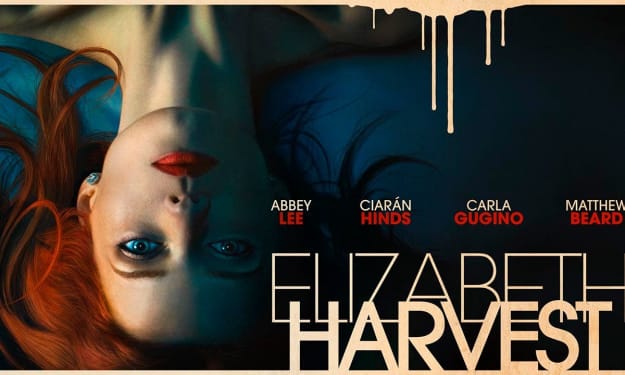
Elizabeth (Abbey Lee) is the young beautiful, newly-married wife of billionaire Henry (Ciarán Hinds). He takes her to his sprawling modern mansion, located in a remote and mountainous region. There, she meets his son, who is blind, Oliver (Matthew Beard), and his housekeeper, Claire (Carla Gugino).
By Q-ell Betton7 years ago in Futurism
'Star Wars' a Western?. Top Story - June 2019.
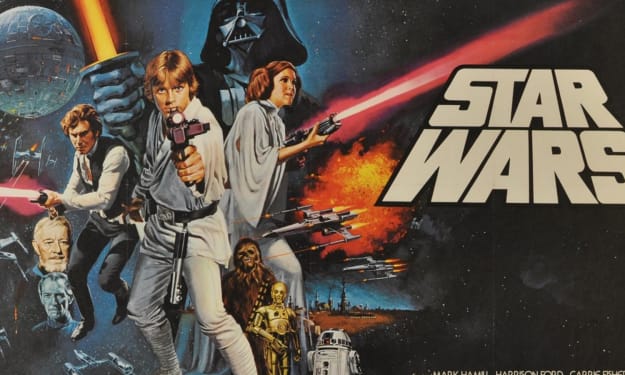
Western, a term that has circulated for quite a long time in the American space, but not only that, taken by its connotation as an artistic genre, refers to the 19th century America, and more accurately, to the American Indian Wars. The American Indian Wars, while not only one event, represents a corpus of disputes and events between the European government and colonists, later known as the United States, and the different tribes of Native Americans. This dispute can be traced back to the earliest colonial settlement, and it was due to the cultural discrepancies between the two societies, various disagreements in reserve to the ownership of the land, numerous criminal cations carried by both sides continuously, and many other debated subjects that bring with themselves a lot of ambiguity. With the aid of this history, the western genre has kept some of the historical elements and transferred them, with some modifications made by reinventing some of the elements, into the artistic field, some of the historical elements that can still be seen in the western genre are the wild frontier, the constructions of railroads, large ranches, revenge stories caused by criminal activities that were taking place in the Wild West, the American Natives cavalry fighting with the European colonists, the stories about bounty hunters and outlaw gangs.
By Denis Pinzariu7 years ago in Futurism
Reality or Fiction? Surveillance Society
Control and Choice: Banality of Surveillance sutured into The Truman Show and Black Mirror: Bandersnatch. Nowadays, surveillance that we all know is the centre and the universal feature of our social lives. Due to the massive technological innovations, only in our modern times, we created this systematic, and needless to say, invasive system where surveillance is everywhere. Even though its origin might seem that it comes from the eleventh century from Domesday Book, the evolution of surveillance throughout the centuries (especially nineteenth century) was climactic. In a very paradoxical way, surveillance society grew at the same time with democracy, and with the “demand for equality” movement. The reason why this feature made its way in our lives so quickly is owed to multiple factors that strongly influenced and helped surveillance to, inevitably, be a part of who we are right now. The key factors of this global phenomenon are government administration, the business that constructs and builds the capitalistic environment, and also the military growth, and industrialization of cities and towns. It was, and is, a means of power; but not merely in the sense that surveillance enhances the position of those 'in power'.
By Denis Pinzariu7 years ago in Futurism