humanity
The evolution of humanity, from one advancement to the next.
Is AI Sentient?
The short anwer is no. No, AI (Artificial Intelligence) is not sentient. Sentience refers to the capacity to have subjective experiences, feelings, and consciousness. While AI systems can perform complex tasks, analyze data, and make decisions based on algorithms, they do not possess subjective experiences or consciousness. AI operates based on predefined rules, patterns, and algorithms, and its actions are determined by its programming and the data it has been trained on. The current state of AI technology does not involve sentient or conscious machines.
By Tonia Rucker3 years ago in Futurism
The Scary Truth About AI
As we venture into the future, a world heavily influenced by artificial intelligence (AI) awaits us. Automation has become pervasive, touching various sectors such as farming, transportation, manufacturing, education, healthcare, and customer service. While this can be intimidating for hardworking individuals, it doesn't imply the complete elimination of human involvement. Instead, AI aims to assist humans in achieving faster and more efficient outcomes, relieving them of mundane tasks. This article will explore how AI revolutionizes different industries and its implications on the workforce.
By Tonia Rucker3 years ago in Futurism
Wittgenstein, The Private Language Argument, and Artificial Intelligence
Author's preface: This piece was first published way back in 2018. A follow up post also from 2018 was published soon thereafter. I am combining the two and republishing here essentially unedited. I think they still hold up fairly well even five years later.
By Everyday Junglist3 years ago in Futurism
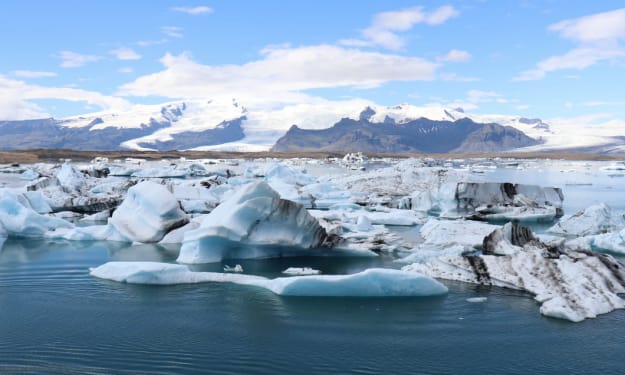
Climate Change and Plastic Pollution: The Dual Threat to Civilization's Survival
The repercussions of climate change and plastic pollution have unleashed an unprecedented crisis, endangering the very fabric of our civilization. As the polar ice caps melt and polar glacier cities sink into oblivion, another insidious threat looms beneath the surface: the pervasive contamination of our waters with plastic waste. The interconnected nature of these crises paints a bleak picture for both aquatic life and our own survival. With alarming consequences at stake, urgent action is imperative to halt this multifaceted catastrophe.
By Bright Page3 years ago in Futurism
Cataclysmic Collision: Exploring the End of the World by an Asteroid
What would happen if an Asteroid come our way and collide with Earth? If a meteorite were to come our way and collide with Earth, it would have significant consequences depending on various factors such as the size, composition, and location of impact.
By Bright Page3 years ago in Futurism
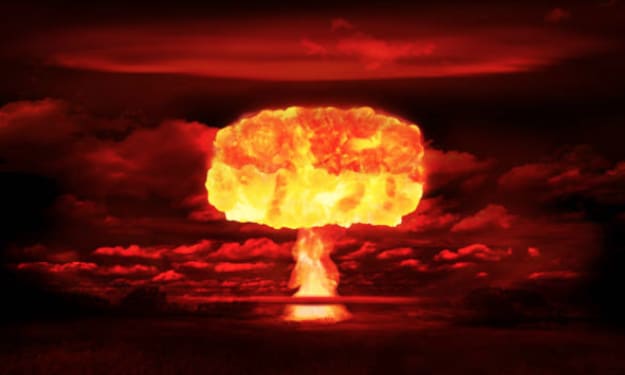
"Apocalypse Averted? Surviving the Nuclear Abyss"
The prospect of a nuclear bomb detonation ushering in the end of the world has haunted humanity for decades. Yet, amidst the darkness, there remains a glimmer of hope. By understanding the nature of these cataclysmic events and preparing accordingly, people have a chance to survive the aftermath and rebuild a new world from the ashes.
By Bright Page3 years ago in Futurism
THE FUTURE OF SPACE EXPLORATION
INTRODUCTION Space exploration has always fascinated humankind, touching off our interest and pushing the limits of what we are familiar the universe. Throughout the long term, critical steps have been made in space investigation, from the notorious Apollo moon missions to the automated wanderers investigating Mars. However, what lies ahead? What does the future hold for space investigation? In this article, we will dig into the thrilling possibilities and progressions that are forming the eventual fate of room investigation.
By FLYING WHALE3 years ago in Futurism
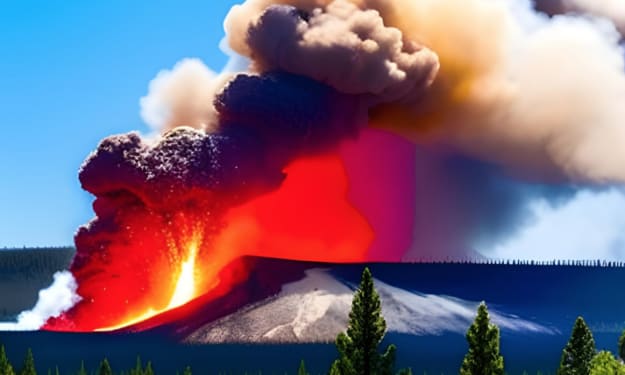
Super Volcanoes and the End of the World: The Cataclysmic Potential of Yellowstone
When envisioning the end of the world, scenarios involving super volcanoes often take center stage. Among these volcanic time bombs, Yellowstone National Park in the United States is particularly notorious. This article explores the catastrophic impact of a super eruption at Yellowstone, analyzing the extent to which volcanic ashes may travel and the resulting consequences for the environment and humanity.
By Bright Page3 years ago in Futurism
Disabilities = Profit
I am partially deaf, specifically I am what's called tone-deaf. It can differ but for me it means I hear bassier, harder sounds more clearly in my right ear, and sharper, more high-pitched sounds in my left ear. I am also dyslexic. Not severe enough to be illiterate or unable to read, but the way I describe it is my brain kind of works in auto-correct mode. I can write something, be confident I've written it perfectly, read it aloud with no problems, only to later find out that words are completely missing. The upside is it works on other people; I'm pretty good at reading misspelled words and confidently pronouncing them as the author intended.
By Conor Matthews3 years ago in Futurism
CAN HUMANS DRINK PLANET MARS WATER
Mars, the red planet, may appear lifeless and dry at first glance, but scientists believe there was once a significant amount of water on its surface. Evidence of ancient river valley networks, lake beds, and specific minerals and rocks that can only form in liquid water suggest that Mars may have experienced massive floods 3.5 billion years ago. While the atmosphere on Mars is too thin for water to remain in its liquid form on the surface, there is still water to be found beneath the planet's surface, particularly in its polar regions and at the north polar ice cap. Occasionally, salty water flows down crater walls and hillsides, and there are trace amounts of water in the planet's atmosphere, albeit as vapor.
By Loreta Diverse3 years ago in Futurism