
Super Volcanoes and the End of the World: The Cataclysmic Potential of Yellowstone
Unveiling the Terrifying Potential of Yellowstone's Super Volcano and Its Devastating Aftermath

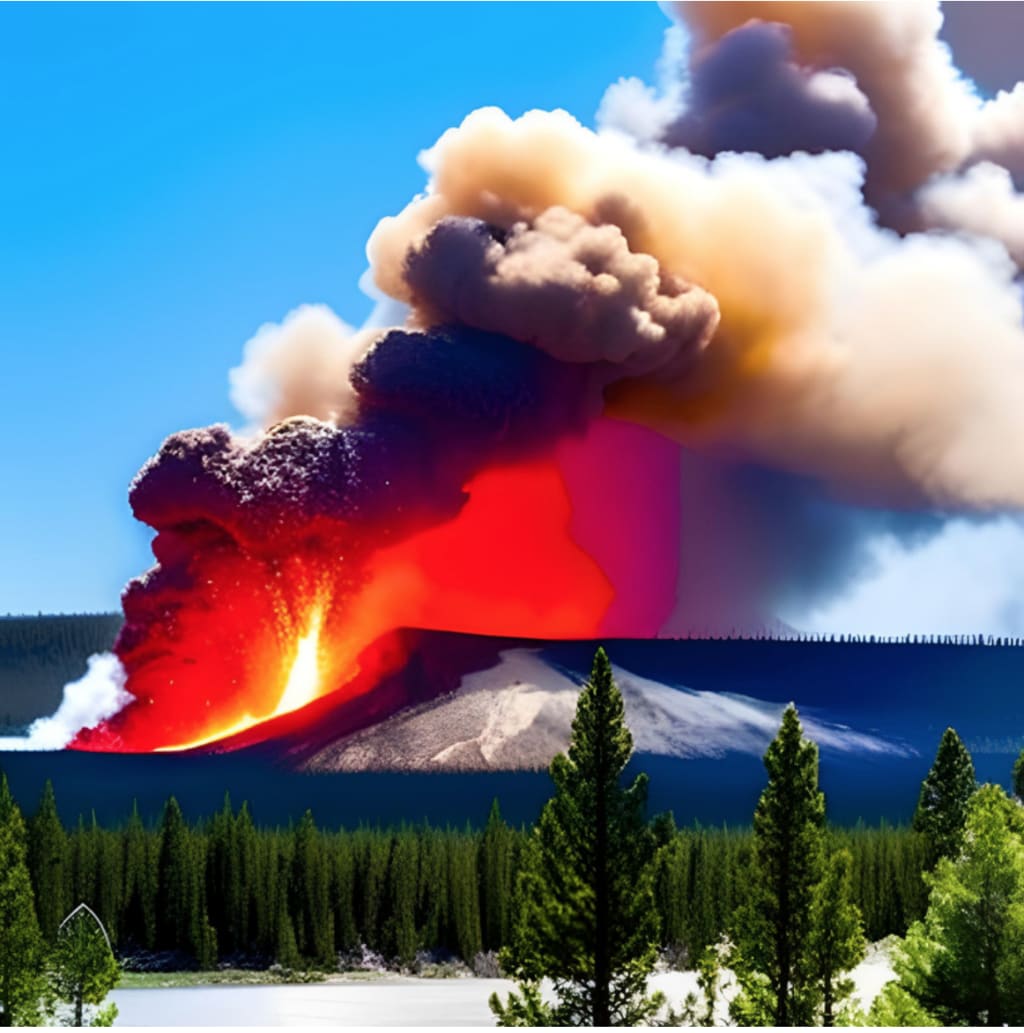
When envisioning the end of the world, scenarios involving super volcanoes often take center stage. Among these volcanic time bombs, Yellowstone National Park in the United States is particularly notorious. This article explores the catastrophic impact of a super eruption at Yellowstone, analyzing the extent to which volcanic ashes may travel and the resulting consequences for the environment and humanity.
The Explosive Power of Super Volcanoes
Super volcanoes are characterized by massive eruptions that dwarf ordinary volcanic events. These eruptions eject colossal amounts of ash, gases, and lava, causing devastating consequences on a global scale. Yellowstone National Park is home to one such super volcano, known as the Yellowstone Caldera, which last erupted over 640,000 years ago.
The Aerial Journey of Volcanic Ashes
In the event of a super eruption at Yellowstone, the volcanic ash and debris would be projected high into the atmosphere. Prevailing winds would carry these particles across vast distances, potentially covering entire continents. While the precise range of ash dispersal would depend on various factors such as eruption size, wind patterns, and atmospheric conditions, it is estimated that the ashes could reach areas several thousand kilometers away from the eruption site.
Environmental Impact
The dispersion of volcanic ashes from a super eruption would have far-reaching consequences for the environment. The immediate effect would be the formation of a thick layer of ash that blankets the land, suffocating vegetation and disrupting ecosystems. Sunlight would be partially blocked, leading to a significant decrease in temperature worldwide, potentially triggering a volcanic winter.
The ash-fall would also contaminate water sources, making them unfit for consumption and posing a threat to aquatic life. The influx of ash into the atmosphere would cause acid rain, further harming vegetation, damaging infrastructure, and acidifying bodies of water.
Human Suffering and Societal Disruption
The eruption of a super volcano at Yellowstone would have severe repercussions for humanity. The initial direct impact on nearby regions would be catastrophic, as they would experience the full force of the eruption. The combination of pyroclastic flows, ash-fall, and volcanic gases would cause widespread destruction, making the affected areas uninhabitable.
Beyond the immediate vicinity, the ash cloud would disrupt air travel, rendering airports inoperable due to reduced visibility and potential engine damage. The ash-fall would pose a significant risk to respiratory health, leading to respiratory illnesses and even deaths, particularly for vulnerable populations such as the elderly and those with pre-existing respiratory conditions.
The long-term consequences of the eruption would include food shortages due to failed crops, economic collapse, and mass migration as people flee affected areas in search of safety and resources. The global impact on the economy, infrastructure, and social fabric would be immense, leading to widespread suffering and a struggle to rebuild and recover.
Conclusion
While the possibility of a catastrophic eruption from super volcanoes like Yellowstone remains a concern, it is essential to note that the likelihood of such an event occurring in the near future is relatively low. However, the potential consequences are profound and should not be underestimated. As we continue to study and monitor volcanic activity, it is crucial to develop robust disaster preparedness plans and invest in scientific research to mitigate the impact of any future volcanic events. By doing so, we can enhance our ability to protect lives, minimize suffering, and build a more resilient world.
About the Creator
Keep reading
More stories from Bright Page and writers in Futurism and other communities.
Climate Change and Plastic Pollution: The Dual Threat to Civilization's Survival
The repercussions of climate change and plastic pollution have unleashed an unprecedented crisis, endangering the very fabric of our civilization. As the polar ice caps melt and polar glacier cities sink into oblivion, another insidious threat looms beneath the surface: the pervasive contamination of our waters with plastic waste. The interconnected nature of these crises paints a bleak picture for both aquatic life and our own survival. With alarming consequences at stake, urgent action is imperative to halt this multifaceted catastrophe.
By Bright Page3 years ago in Futurism
About Binding Prometheus
I want to start actively advocating on behalf of my own work, and the most valuable part of my canon is, without a doubt, Binding Prometheus, the play I have been working on since 2019 and only finished in 2023 as part of my MA. The play itself is an amalgamation of a million different inspirations. On one end, it evokes the Ancient Greek myth-play, deriving its own title from the earliest extant work of Western drama we have, Aeschylus’s Prometheus Bound. On the other end, it borrows significantly from the sci-fi bulwarks from over the years, namely Mary Shelley’s Frankenstein and Karel Capek’s Rossum’s Universal Robots. The play could be an episode of Black Mirror, I fear. I don’t know. I’ve only ever seen one episode of Black Mirror.
By Steven Christopher McKnight24 days ago in Futurism



Comments
There are no comments for this story
Be the first to respond and start the conversation.