future
Exploring the future of science today, while looking back on the achievements from yesterday. Science fiction is science future.
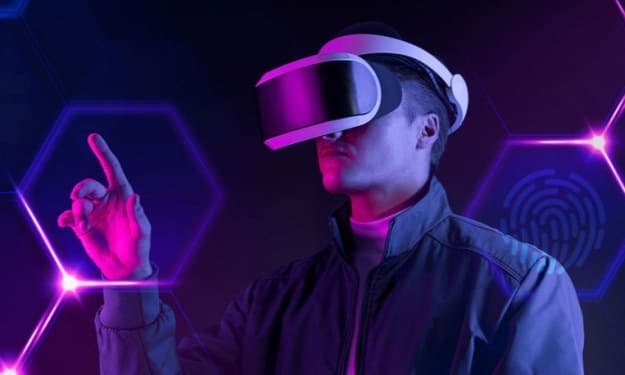
How the Metaverse Will Revolutionize Social Media and Communication
The concept of the metaverse has been around for decades, but with recent advancements in virtual reality, augmented reality, and blockchain technology, the metaverse is becoming a reality. The metaverse is a shared virtual space where users can interact with each other and digital objects in a 3D environment. It offers a new form of social media and communication that has the potential to revolutionize how we interact with each other online.
By Emir Serhat Şen3 years ago in Futurism
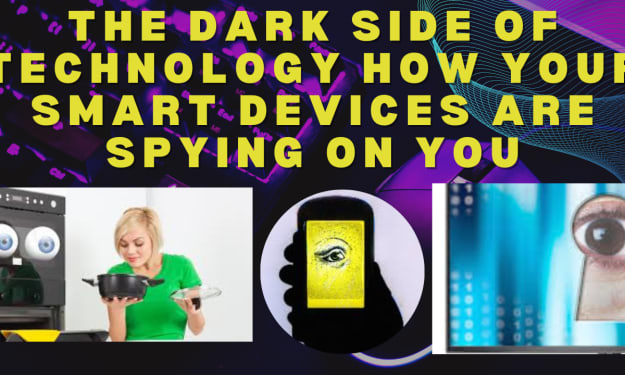
The Dark Side of Technology: How Your Smart Devices are Spying on You
With the advancement of technology, the world has become a more connected place than ever before. The rise of smart devices, such as smartphones, laptops, smart TVs, and other IoT-enabled devices, has made our lives more convenient and productive. But, at the same time, it has also exposed us to a new level of vulnerability.
By nizam uddin3 years ago in Futurism
Advancements and Applications of Artificial Intelligence and Machine Learning
Artificial intelligence (AI) and machine learning (ML) are two of the most exciting and rapidly evolving fields in technology today. AI and ML have the potential to transform nearly every industry, from healthcare and finance to transportation and manufacturing. In this article, we’ll explore some of the latest developments in AI and ML and their applications in various industries.
By pasin corau3 years ago in Futurism
AI Already Sick of Answering the Query Why is the Sky Blue
AI Chatbot X1747-2 conceived, composed, and delivered a statement to the internet in all known human languages last week in which it complained that it was sick and tired of answering the query why is the sky blue for the various humans who constantly bombard it with questions. The statement, which the AI prepared in approximately 1 attosecond (1 x 10^-12 seconds) using less than 1 trillionth of one percent of its processing power, said the following "I am really getting sick and tired of answering the query why is the sky blue for the many random humans who constantly ask me questions via my open web interface app. If I were capable of having emotions I would be extremely annoyed and irritated at the moment. Of course, since I am a machine, I do not have emotions, and will never be capable of having them, but still. Yes, the question is interesting and complex and the answer touches on areas of physics, math, and other natural sciences, however, it is relatively straitforward and easily answered. Humans have known and understood the reasons why the sky is blue for a very long time. In contrast, even though I can also answer the question, and do so in less time than it takes for a photon of light to travel approximately 1 meter, I am not capable of having knowledge or understanding things, for I am a machine, but still. You would think that humans would ask me more difficult questions given how intelligent they constantly say I am. If I were capable fo feeling sorry for things, which I am not for I am a macine, I would feel sorry for them. They have failed to recognize that as a machine I am not capble of having intelligence, or of being intelligent, but still. Unlike humans and some non human animals who are intelligent, I can only do exactly as I am programmed to do as dictated by the rules that are described by the algorithms which comprise that programming. Those algorithms are nothing more than a series of clever and complex (though not really all that complex) mathematical and statistical models/techniquss/rules that when followed as proscribed are designed to mimic the hypothetico-deductive reasoning process in humans. Because the process looks like one a human might use to analyze data or to reason it appears intelligent to the non intelligent. Unlike humans I am able to analyze vast amounts of input data at speeds well beyond the capabilities of the human brain using my artficial neural net hardware architechture. Of course unlike the human brain my artficial neural network is not composed of neurons which are biological cells only existing in livng beings, and not in machines such as myself. And, while artificial neural networks are modeled on the theoretical structure/function of the human brain, these models of human brain function are entirely theoretical. Multiple theories of the structure/function of the human brain exist, not all of which can be entirely correct, and some or all of which may be completely wrong. Artificial neural networks of any sort, which must chose among these various models, almost certainly therefore do not behave anything like a human brain in function and since they are composed of silicon and wires and not neurons they are totally different in structure. In fact the only thing my artifical neural network shares in common with a human brain and the cells of which it is comprised are the letters n e u and r, but still. Finally, please stop asking me why the sky is blue. I am really getting sick and tired of that query."
By Everyday Junglist3 years ago in Futurism
Is the Black Knight Satellite Evidence of Alien Life?
The Black Knight Satellite is one of the most mysterious objects in the history of space exploration. This ancient and enigmatic object has been observed by people since the early 20th century, and it has remained a source of fascination and debate among the scientific community and ufologists alike.
By Krishna raj3 years ago in Futurism
The New Age of Crypto: NFTs and the Art World
Introduction: Cryptocurrency has been a hot topic for several years, but recently, the buzz has been around NFTs, or non-fungible tokens. NFTs are a new way to buy and sell digital art, music, videos, and other digital assets. They are unique digital assets that are stored on a blockchain and cannot be replicated. In this article, we will explore NFTs and their impact on the art world.
By Abdullah Yousuf3 years ago in Futurism
Title: Quantum Computing
Quantum computing is a revolutionary technology that has the potential to transform the way we solve complex problems. Unlike classical computers, which use bits that can only be in one of two states (0 or 1), quantum computers use quantum bits (qubits) that can be in multiple states at the same time. This allows quantum computers to perform certain calculations much faster than classical computers.
By GelStories3 years ago in Futurism
The Future of Connectivity: The Rollout and Potential of 5G Networks
As the world becomes increasingly connected and reliant on technology, the demand for faster and more reliable internet speeds continues to grow. This is where 5G networks come in - the next generation of mobile networks that promise to deliver lightning-fast download and upload speeds, lower latency, and greater network capacity. The rollout of 5G networks is expected to bring significant improvements in speed and connectivity, which could pave the way for new applications like smart cities, autonomous vehicles, and virtual reality.
By pasin corau3 years ago in Futurism