fantasy
Celebrating the fantastical. Let your imagination run wild.
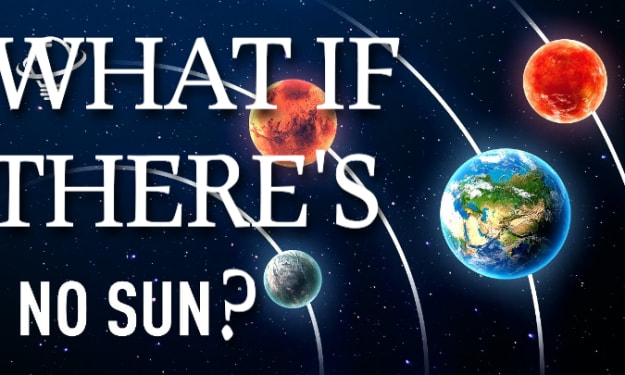
If the Sun Suddenly Disappeared What Would Happen? Would We Survive?
ntroduction The scenario of the sun suddenly disappearing from our solar system is a fascinating and terrifying thought. In this blog post, we will explore what would happen to Earth, the moon, and other planets if such an event occurred.
By Chinaza Okorie2 years ago in Futurism
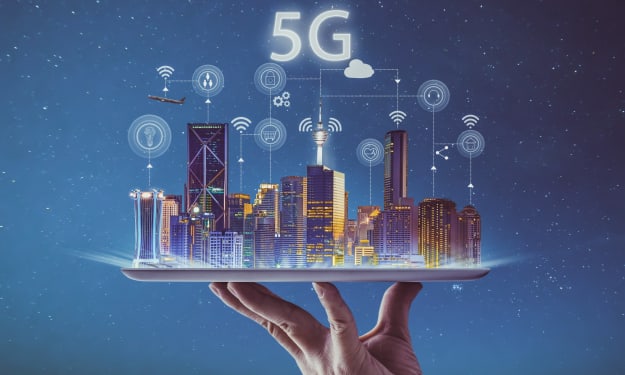
The Impact of 5G Technology on Communication and Connectivity
The advent of 5G technology has revolutionized the world of communication and connectivity, ushering in a new era of connectivity, speed, and possibilities. With its promise of unprecedented data transfer rates, low latency, and vast network capacity, 5G has the potential to reshape industries, improve user experiences, and drive technological advancements. In this article, we will explore the profound impact of 5G technology on communication and connectivity, and how it is poised to transform various aspects of our lives.
By Aditya Bali2 years ago in Futurism
Next-Gen Crypto Trading: Decentralized Exchange Software by Plurance
Decentralized Exchange Software Development Company Decentralized exchange software development revolves around building a platform that enables cryptocurrency trading without relying on a central authority. Instead, users conduct transactions directly through blockchain technology. DEX development entails designing a user-friendly interface, incorporating security measures like smart contract auditing, and ensuring scalability to handle large trading volumes. It offers users more control over their assets and improved privacy, though challenges like liquidity and market fragmentation exist. The Plurance team is here to help you explore enhancement strategies to achieve significant profits.
By Logan patrick2 years ago in Futurism
AURORAS
Auroras, also known as the Northern Lights (Aurora Borealis in the Northern Hemisphere) and the Southern Lights (Aurora Australis in the Southern Hemisphere), are stunning natural light displays that occur in the polar regions of the Earth. They are caused by interactions between charged particles from the solar wind and the Earth's magnetosphere and atmosphere.
By Alishba Humair3 years ago in Futurism
Imagine a time capsule that could predict the future.
In 1937, the phrase "Time Capsule" was first formally used. Although the concept has been used for much longer, whether on purpose or accidentally, a magazine publisher planted the first organised Time Capsule in the USA in 1879. This Century safe was an iron box filled with significant artefacts of the time that they hoped would be opened 100 years later; however, as the decades passed and the location wasn't properly recorded, it was almost lost but was eventually located in time for the USA Bicentennial celebrations. a picture of the previous president Ulysses S. Grant and an array of autographs from several famous persons were also present. Workers were fixing a historic church's Spire in Zambia, Poland, in 2020 when they unexpectedly discovered a sealed copper canister. This discovery marked the discovery of the oldest period capsule in Europe. The pristine papers inside the time capsule, filled with books and other documents from the 18th century, proved that it had been placed there on the day the church opened in 1797. Interestingly, other papers dated from 1902, along with photographs and coins. These were likely stated when the Spire was last renovated, the builders were probably also surprised by the capsule but later also desired to depart their memos before finishing the report. The documents listed all the people involved that constructed and funded the building. They also revealed that the village was known as Munsterburg and was part of the Kingdom of Prussia at the time. While finding a message in a bottle on Canada's northern coast may seem strange, geologist Paul Walker did just that in 1959. A Cairn is a group of artificial rocks that serves as a landmark, and Walker placed a speck of paper inside it. The documents have all been copied, replacing the originals in the Spire, and to keep with the tradition, the townspeople placed comparable items from the present. The scientists were thrilled to discover the message and learned that Paul was studying the movement of glaciers. In 1959, his Karen measured the distance to the glacier, about three feet. The message asked them to record their measurements, and they were happy to comply when they discovered that the distance had increased to 330 feet. Although it was impossible because it had been too long, the scientists restored the message to Paul's memory and even included their own letter for anyone else who finds it in the future. Paul also requested that any information be forwarded to him, and his contact information was also provided. An important group of citizens assembled the Detroit Century Box in 1900. When it was opened in 2000, it was discovered that they had stuffed letters and photographs into the box with a lot of attention to the technological state of their city. They wanted to provide a comparison of their time as well as their predictions for 100 years into the future. When it was opened, it was found that they had anticipated that the population of Detroit would significantly increase, with residents up to 4 million; this was a pretty close guess because the population of De Harold Davison purchased a massive 45-ton vault in 1975 and assembled a collection of about 5,000 items to place inside it in the hopes that his grandchildren would open it and be able to see what life was like for him at the time. When he finished it, he claimed it was the greatest time capsule in the world, but another one in Georgia had already claimed this title, so Davison built a sizable pyramid on top to protect it and make it more secure. It was then placed in front of A time capsule buried by George Lucas in 1981 and contained many artefacts from the Star Wars films, including merchandise, toys, and books that feature stories and footage from the series. Although there is no set date for it to be opened, the goal is for it to be done in about a thousand years. This will be an interesting experience for those present because the world will have changed considerably, and the Star Wars universe will probably be forgotten unless something extraordinary happens. This tall granite obelisk was built in 15 BCE, but it was later donated to the United States in 1881, and for generations, it has stood as the oldest artificial structure in Central Park. However, few people know that beneath the obelisk is a time capsule; there is no set date for opening it, and it's possible that the intention is to maintain the time capsule there for a very long time. Records indicate that the time capsule contains a U.S. census from 1870. The purpose of a time capsule is to store artefacts that will last so that they might be later unearthed and provide clues to their cultural and historical value. Using technology, archaeological evidence can also aid in understanding these topics. Several houses with pottery, as well as coins, helped us realise that Poulton has been an active Town dating as far back as the 8th Century BCE. A closer look at the pottery reveals they were used to cook food. An entire village was discovered in a field near the village of Poulton in the northwest of England. It dates back to the Iron Age, when its contents provided a glimpse of life with some of the best findings from pre-recorded history. Even though items like this weren't meant to be time capsules, they demonstrate how even the smallest details can reveal what life might have been like. What would you put in a time capsule that best represents the present? Colton was a wealthy as well as populist area thanks to actively trading along a river system.
By Ian Sankan3 years ago in Futurism
What About the Likeliest Way for Our Universe to End?
What will the Universe look like when it ends? Although it may be 100 billion years away, should we already be in a panic? Somewhere in the vastness of the Universe, there will come a time when memories of Legends like Einstein and Elvis will fade away. Just imagine what that last thought would be—a brilliant pearl of wisdom. A cosmologist who recently appeared at a screening of the captivating Netflix film A Trip to Infinity mentioned that there would be moments when the last sentient being is present, and the last flicker of thought fades away. Now that we know that the choices are as boundless as the stars in the night sky let's take a cosmic diversion and investigate how we ended up in this odd situation. Approximately 13.8 billion years ago, the Universe began with a bang. Since then, it has been expanding at an ever-increasing rate. For many years, scientists questioned whether this expansion would ever end. Or, if a catastrophic event involving the complete disintegration of the Universe lay in wait for us in the distant future, everything shifted in 1998 when astronomers made the startling discovery that the cosmic expansion was accelerating and that this turbocharged expansion was being driven by a mysterious force known as Dark Energy that was woven into the very fabric of space-time. It is eerily similar to the cosmological constant, a theory by Einstein to explain why the Universe didn't collapse but later abandoned as a mistake, but guess what? The cosmological constant turned out to be a stubborn concept that refused to fade away and now threatens physics and the Universe. If Dark Energy triumphs in the end, distant galaxies will ultimately collide. It will be like living within an inverted black hole where matter, energy, and knowledge are consumed as stars disappear and never reappear. The days of our Universe's star formation are over beyond The Event Horizon. Since star formation peaked almost 10 billion years ago, it has steadily declined. Our expanding Universe causes this waning of Stellar light because as the cosmos grows bigger with each passing day, the matter within it remains constant but gets spread out across more and more volume. As the universe ages, fewer opportunities arise to experience this compression, so we can expect to see more stars in the far future. Although we may still witness faraway galaxies due to the light they emitted in the past, their present light will never reach us as the Universe expands faster. The boundary will eventually obscure our vision of the larger cosmos. As the region beyond our field of vision gets closer and closer, one by one, galaxies will be pulled from our view by the relentless cosmic expansion, which is growing so quickly that we will never be able to see their light. Only the Milky Way and Andromeda Triangulum galaxies and a few satellite dwarf galaxies will remain in our vicinity after this onslaught, and anything not gravitationally bound to us will be unwilling to withstand it. However, this prolonged existence will be far from idyllic because our three galaxies will eventually merge into one Mega Galaxy, which will become completely isolated from everything else in the Universe and enter a solitary State. The Mega Galaxy will then slowly dissolve. To make matters worse, because thinking requires energy, there will eventually come a time when the Universe lacks the energy to sustain a single thought, and ultimately all that will remain are subatomic particles dancing in the vast expanse of intergalactic space engulfed by Eta. While others will escape into the void, never to be seen again after an unimaginable span, no complex systems will endure. As Brian Greene wrote in his book Until the End of Time, "it's a tale full of sound and fury signifying nothing." This will happen trillions upon trillions of years after the last glimmers of light and life have vanished. Then countless aeons will stretch onward to the point where even measuring the passage of space and time becomes impossible. We might feel a weight of insignificance in the face of this cosmic destiny. If this is the fate of the Universe, it is both humbling and demoralising. Our Universe may be 14 billion years old, but that pales compared to the unfathomable darkness ahead. This means that everything remarkable in our Universe happened in a single blink at its beginning, followed by an eternity of emptiness, finality, and futility on an unimaginable scale. But hold on a second before we give up and give in to despair, let's remember that we're still here. Michael Turner the brilliant cosmologist who coined the term Dark Energy highlighted that the cosmological constant might be the least interesting respond to to the dark energy puzzle so who knows what surprises the subsequent years holds but for now we cannot help but peer into the abyss as well as wonder we are but brief inhabitants of this Cosmic spectacle here for the grand party when the Universe brims with life and Light we may not have a declare in the Final Act but we may cherish the here and now reveling in the magic of the visible as astrophysicist and philosopher John Archibald wheeler once stated the past and the future are mere fictions existing only in the artifacts as well as imaginations of the present from that viewpoint the Universe ends with every one of us granting us a unique viewpoint and a chance to make our identify so let's embrace the fleeting nature of existence nevertheless the future may be finite it liberates us to fully cherish the wonders of this moment after all as the saying goes nothing lasts permanently whether it's the stock market the stars or even our own lives a consciousness of eternity's whiff can illuminate the Brilliance of a lifetime nonetheless if it's just mine or yours there is more than one theory about how the Universe is heading to be gone forever in the world of quantum field theory for example we come across a concept called a vacuum decay picture it as a vacuum that's kind of stable but not completely Rock Solid stable this false vacuum can hang within for quite a while chilling in its semi-stable state might eventually say nah I'm done and transform into a more stable vacuum we call this Wild event false vacuum Decay is like a cosmic game of Jenga where the unsteady blocks eventually fall and the Universe finds its true equilibrium. Therefore, cosmic explorers, let's cherish the Milky Way and its splendour while it still exists. Who knows, maybe there's still something unexpected waiting for us in the vastness of this ever-expanding Universe. What do you believe the final chapter of the Universe will look like for us humans? Will we even be here to see it? The story isn't ended yet, and the cosmos is full of secrets waiting to be revealed.
By Ian Sankan3 years ago in Futurism
THE MILKY WAY
The Milky Way is a fascinating and awe-inspiring sight in the night sky. It is a barred spiral galaxy, which means it has a central bar-like structure with spiral arms extending outward. Our solar system is located within the Milky Way, about two-thirds of the way from the center to the outer edge.
By Alishba Humair3 years ago in Futurism
"The Marvels" Are You Excited? I have my Doubts.
"The Marvels": A Critical Look at the MCU's Latest Addition "The Marvels" is the much-anticipated sequel to 2019's "Captain Marvel," a film that sparked controversy due to its perceived gender politics and the public image of its lead actress, Brie Larson. The latest installment in the Marvel Cinematic Universe (MCU) or as it has been newly titled by fans as the "M-She-U", due to Disney's Slew of gender politic pushing flops destroying Fan favorite characters from Luke Skywalker to most recently Indiana Jones, has been met with mixed feelings from fans, with some eagerly awaiting its release, while others remain skeptical. In this review, we'll explore the trailer for "The Marvels" and address some of the concerns surrounding the film that seems doomed already.
By Dennis Thomas IV3 years ago in Futurism
The Age of Ultron . Content Warning.
The Age of Ultron: From Hollywood to Reality In the vast landscape of science fiction and cinematic brilliance, filmmakers have long been fascinated by the concept of artificial intelligence (AI) and its potential impact on humanity. Countless films and television shows have delved into the dangers and wonders of AI, warning us of the possibilities that lie ahead. However, what was once relegated to the realms of fantasy is now increasingly becoming a tangible reality.
By Dennis Thomas IV3 years ago in Futurism