
What About the Likeliest Way for Our Universe to End?
The End

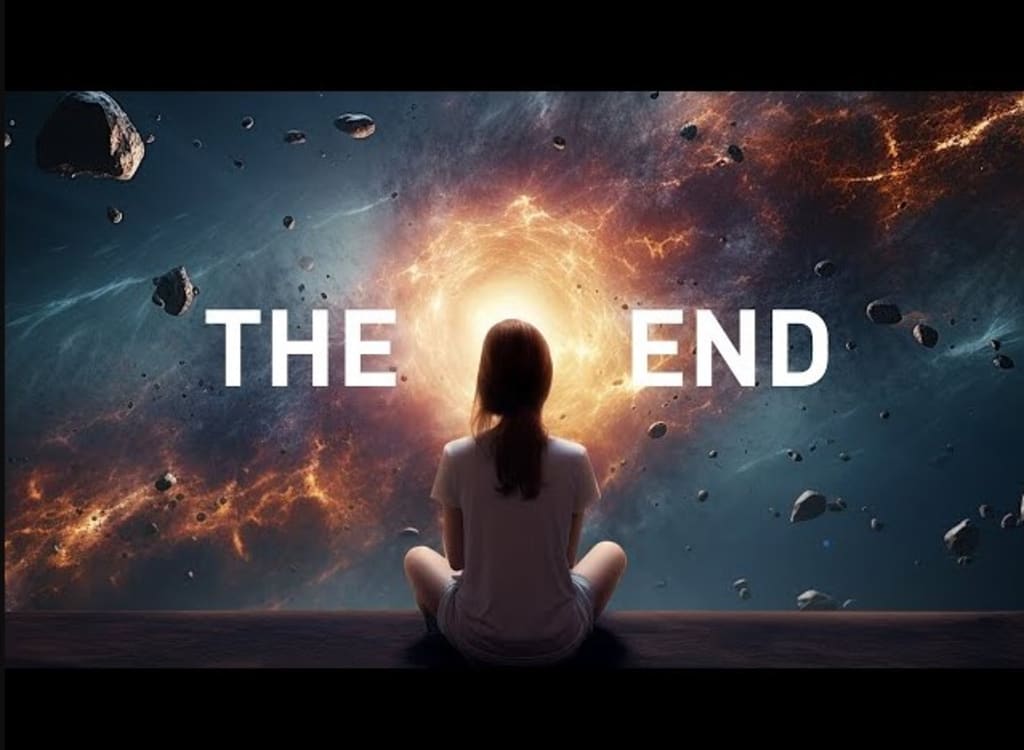
What will the Universe look like when it ends? Although it may be 100 billion years away, should we already be in a panic? Somewhere in the vastness of the Universe, there will come a time when memories of Legends like Einstein and Elvis will fade away. Just imagine what that last thought would be—a brilliant pearl of wisdom. A cosmologist who recently appeared at a screening of the captivating Netflix film A Trip to Infinity mentioned that there would be moments when the last sentient being is present, and the last flicker of thought fades away. Now that we know that the choices are as boundless as the stars in the night sky let's take a cosmic diversion and investigate how we ended up in this odd situation. Approximately 13.8 billion years ago, the Universe began with a bang. Since then, it has been expanding at an ever-increasing rate. For many years, scientists questioned whether this expansion would ever end. Or, if a catastrophic event involving the complete disintegration of the Universe lay in wait for us in the distant future, everything shifted in 1998 when astronomers made the startling discovery that the cosmic expansion was accelerating and that this turbocharged expansion was being driven by a mysterious force known as Dark Energy that was woven into the very fabric of space-time. It is eerily similar to the cosmological constant, a theory by Einstein to explain why the Universe didn't collapse but later abandoned as a mistake, but guess what? The cosmological constant turned out to be a stubborn concept that refused to fade away and now threatens physics and the Universe. If Dark Energy triumphs in the end, distant galaxies will ultimately collide. It will be like living within an inverted black hole where matter, energy, and knowledge are consumed as stars disappear and never reappear. The days of our Universe's star formation are over beyond The Event Horizon. Since star formation peaked almost 10 billion years ago, it has steadily declined. Our expanding Universe causes this waning of Stellar light because as the cosmos grows bigger with each passing day, the matter within it remains constant but gets spread out across more and more volume. As the universe ages, fewer opportunities arise to experience this compression, so we can expect to see more stars in the far future. Although we may still witness faraway galaxies due to the light they emitted in the past, their present light will never reach us as the Universe expands faster. The boundary will eventually obscure our vision of the larger cosmos. As the region beyond our field of vision gets closer and closer, one by one, galaxies will be pulled from our view by the relentless cosmic expansion, which is growing so quickly that we will never be able to see their light. Only the Milky Way and Andromeda Triangulum galaxies and a few satellite dwarf galaxies will remain in our vicinity after this onslaught, and anything not gravitationally bound to us will be unwilling to withstand it. However, this prolonged existence will be far from idyllic because our three galaxies will eventually merge into one Mega Galaxy, which will become completely isolated from everything else in the Universe and enter a solitary State. The Mega Galaxy will then slowly dissolve. To make matters worse, because thinking requires energy, there will eventually come a time when the Universe lacks the energy to sustain a single thought, and ultimately all that will remain are subatomic particles dancing in the vast expanse of intergalactic space engulfed by Eta. While others will escape into the void, never to be seen again after an unimaginable span, no complex systems will endure. As Brian Greene wrote in his book Until the End of Time, "it's a tale full of sound and fury signifying nothing." This will happen trillions upon trillions of years after the last glimmers of light and life have vanished. Then countless aeons will stretch onward to the point where even measuring the passage of space and time becomes impossible. We might feel a weight of insignificance in the face of this cosmic destiny. If this is the fate of the Universe, it is both humbling and demoralising. Our Universe may be 14 billion years old, but that pales compared to the unfathomable darkness ahead. This means that everything remarkable in our Universe happened in a single blink at its beginning, followed by an eternity of emptiness, finality, and futility on an unimaginable scale. But hold on a second before we give up and give in to despair, let's remember that we're still here. Michael Turner the brilliant cosmologist who coined the term Dark Energy highlighted that the cosmological constant might be the least interesting respond to to the dark energy puzzle so who knows what surprises the subsequent years holds but for now we cannot help but peer into the abyss as well as wonder we are but brief inhabitants of this Cosmic spectacle here for the grand party when the Universe brims with life and Light we may not have a declare in the Final Act but we may cherish the here and now reveling in the magic of the visible as astrophysicist and philosopher John Archibald wheeler once stated the past and the future are mere fictions existing only in the artifacts as well as imaginations of the present from that viewpoint the Universe ends with every one of us granting us a unique viewpoint and a chance to make our identify so let's embrace the fleeting nature of existence nevertheless the future may be finite it liberates us to fully cherish the wonders of this moment after all as the saying goes nothing lasts permanently whether it's the stock market the stars or even our own lives a consciousness of eternity's whiff can illuminate the Brilliance of a lifetime nonetheless if it's just mine or yours there is more than one theory about how the Universe is heading to be gone forever in the world of quantum field theory for example we come across a concept called a vacuum decay picture it as a vacuum that's kind of stable but not completely Rock Solid stable this false vacuum can hang within for quite a while chilling in its semi-stable state might eventually say nah I'm done and transform into a more stable vacuum we call this Wild event false vacuum Decay is like a cosmic game of Jenga where the unsteady blocks eventually fall and the Universe finds its true equilibrium. Therefore, cosmic explorers, let's cherish the Milky Way and its splendour while it still exists. Who knows, maybe there's still something unexpected waiting for us in the vastness of this ever-expanding Universe. What do you believe the final chapter of the Universe will look like for us humans? Will we even be here to see it? The story isn't ended yet, and the cosmos is full of secrets waiting to be revealed.
About the Creator
Ian Sankan
Writer and storyteller passionate about health and wellness, personal development, and pop culture. Exploring topics that inspire and educate. Let’s connect and share ideas!
Keep reading
More stories from Ian Sankan and writers in Futurism and other communities.
The 13 Hours When AI Took Over the Radio
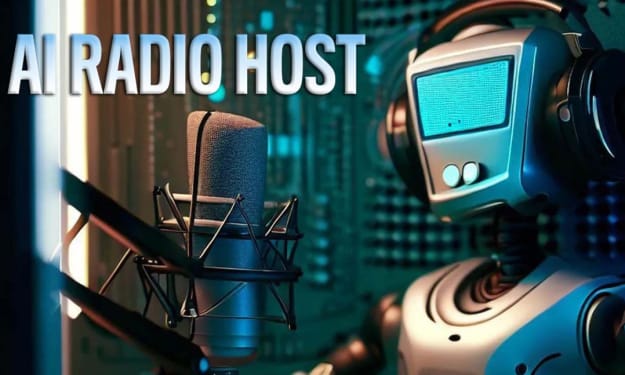
Prepare for artificial intelligence radio hosts to lead the radio GPT. This ground-breaking AI technology can easily host radio shows with voices that sound like humans, but should we be worried that this technological advance could spell the end of actual human radio hosts? Let's examine what it means for the future of broadcasting. Recently, a radio station identified as Cooler 3 in Switzerland conducted a risky experiment allowing artificial intelligence to run their shows for 13 hours. The AI used sophisticated technology to generate scripts and even cloned the voices of five hosts using its magic. Listeners tuned in to hear these shows, where algorithms chose the music and the voices sounded uncannily similar to the original hosts, but don't worry. People quickly realised they missed the human touch and sent messages stating things like "It definitely doesn't replace humans" and "Give us back our humans" after AI took control of everything except for the headlines updates for the reminder. A voice said, "Our voice clones as well as AI are here to unsettle disbelief and Shake you." This text was composed as well by a robot. Some people were astounded by what artificial intelligence (AI) could accomplish, but they soon realised that creativity, surprise, and humour are things that only humans can contribute. This radio station wasn't the sole organisation to use AI rather than real people. Imagine a tool that could provide you with an AI-driven radio presenter. That tool exists as radio GPT, the creation of Futuri, a trailblazing media company. Radio GPT has capabilities that have the potential to transform the radio industry completely. Here are just a few of those capabilities. identifying trends by perusing social media and different news sources. Using GPT technology, radio GPT can easily produce captivating scripts that captivate listeners. Second, it can recognise the newest trends and keep you informed. up to three AI characters as the third on-air personality, radio GPT can be trained to flawlessly imitate a radio station's host, ensuring a smooth transition to the AI era. But radio GPT goes beyond the airwaves; it can also create and distribute content across multiple platforms, such as your radio station's blog, Instagram reels, and YouTube shorts. Although they are not completely indistinguishable, these AI voices seem remarkably human-like, which may have you wondering whether AI radio hosts won't sound robotic. What actually sets them apart is their seamless flow. Since there are no awkward stops or hesitations like the typical ums and arms, it's great for public speaking, but on the other hand, ums and arms render human speech imperfect and therefore unjust anyway, our perception might be skewed since we know that they are AI voices so maybe try a small experiment. Whenever you put on your headphones, let's examine the current problems radio GPT is facing. The first issue is very evident radio GPT may be lacking the spirit of what makes radio great. Launch an AI radio to a buddy who is unaware of it. Would they suspect something? We listen to radio and podcasts to hear actual individuals on the other side participating, according to a recent survey that found that more than half of radio listeners do so to connect with those around them or for companionship. We can't undervalue the influence of this because many of us have favourite hosts who we hold dear. This includes podcasters, YouTubers, and other broadcasters who we adore and treasure as people. Through their shows, we learn about their lives, backgrounds, thoughts, and tastes, which helps us form deeply personal bonds. Loyal listeners even follow their favourite presenters to new stations, as Sean Keviny's fans did when he left BBC Radio 6 music as well as started his own radio station. It appears that radio gpt's AI hosts will be able to debate internet content as well, but unlike human hosts, they won't be able to give their own perspectives on life in general. The second issue is false information. The same technology that powers chat GPT and Bing's AI chatbot also powers radio GPT. While chat GPT may provide responses that sound human, verifying information is still not its strongest suit. If radio GPT is implemented, it could jeopardise numerous radio stations' credibility while raising questions about broadcasting laws and regulations during elections. Chat GPT generates answers based on internet scanning; regrettably, those answers are frequently incorrect. How will an AI host comprehend and adhere to all of the political issues? The beta testers for Bing's AI chatbot have voiced some harsh remarks. Users have shared examples of this chatbot's angry, obnoxious, or passive-aggressive responses, showing that AI radio hosts may be unpredictable. While these traits may seem human-like, many radio stations may not appreciate them, and the final issue is who decides what's important. it looks like a radio. GPT aims to prioritise the viral content trends, which presents several crucial problems, such as whether radio broadcasters should only discuss hot or trending themes. Radio has advanced significantly over the last 50 years, and at this point, it reflects a variety of cultures and other aspects of our society. However, if algorithms favour only popular content, radio could become repetitive and lose its uniqueness. While the future has given us a glimpse of its potential, we can't be sure if AI hosts will become the new standard. However, watch out, humans, this new technology won't just be limited to radio hosts; we'll have some tough competition from other AI-generated content. Radio GPT is a powerful tool that can help automate some tasks in radio stations, but it still has a way to go. It's only in its experimental phase, whereas the future has given us a glimpse of its potential. There was also a bizarre Twitch channel identified as Nothing Forever streaming AI-generated episodes of a show similar to Seinfeld non-stop; it's like a never-ending show about Nothing. The channel used to run 24 hours a day, and every minute you got fresh material created by AI using fancy algorithms. Spotify is already in the game with its AI DJ, so things are heating up. The best part of the show was the humour; the AI attempted to do Jerry's stand-up bits, but they weren't exactly a hit, and things got even funnier when the laugh monitor came in at the wrong time. I now let me tell you that this show was something else; it looked like a weird video game from the 1990s with characters proceeding in slow motion and walking like they're in a funny race; it's unintentionally hilarious. Unfortunately, Twitch banned the channel after the AI unintentionally created a controversial joke, but this is just more evidence that AI still requires human oversight. As AI-generated content takes over, radio stations must learn how to deal with the challenges of accessibility, integration, and cost if they are going to stay relevant and competitive in this rapidly changing media landscape. People desire high-quality information that is derived from authentic experiences and emotions, so there's no reason to be concerned too much about this. What do you think about this? Would you listen to AI-run radio? One of the explanations for its success is the human ties it fosters. The experiment was successful because it gave the radio station a better understanding of the great things AI can achieve as well as its limitations. Let us know what you think in the comments. The charm that humans contribute with their creativity and emotions cannot yet be replaced by AI, which is fantastic for studying and making things more efficient.
By Ian Sankan3 years ago in Futurism
Australia Accounting Services Market: Regulatory Compliance Demand, Advisory Services & Automation
According to IMARC Group, the Australia accounting services market reached a value of USD 12.2 Billion in 2025 and is projected to reach USD 21.3 Billion by 2034, growing at a compound annual growth rate (CAGR) of 6.24% during 2026–2034. The market is expanding as businesses increasingly seek professional accounting expertise to manage regulatory compliance, financial reporting and strategic financial planning. Australia’s evolving regulatory landscape, combined with rising transparency requirements and tax compliance obligations, is encouraging organizations to rely on specialized accounting firms. At the same time, startups, multinational corporations and small businesses are demanding advisory services that go beyond traditional bookkeeping and auditing. Technological advancements in automated accounting software, cloud-based financial platforms and advanced data security solutions are further transforming the industry. As financial management becomes more complex and technology-driven, accounting services are evolving into strategic partners supporting long-term business growth and financial decision-making.
By Kevin Cooper5 days ago in Futurism
GCC Generic Injectables Market Outlook: Growth Drivers, Competitive Landscape & Emerging Trends
According to IMARC Group's latest research publication, "GCC Generic Injectables Market: Industry Trends, Share, Size, Growth, Opportunity and Forecast 2025-2033", The GCC generic injectables market size reached USD 761.0 Million in 2024. Looking forward, IMARC Group estimates the market to reach USD 1,893.0 Million by 2033, exhibiting a growth rate of 10.7% during 2025-2033.
By Abhay Rajput3 days ago in Futurism
My First Time Skiing and I Got Lost, Alone, in the French Alps
Looking back, I can trace some of my life’s biggest adventures to a simple action from my sister. She’d introduced me to Tommy (a very long time ago), a colleague of hers, who had overshared his penchant for Italian-looking women, and I ticked that box.
By Chantal Christie Weiss2 days ago in Humans


Comments
There are no comments for this story
Be the first to respond and start the conversation.