
Synergy of Minds: The Future of Work in the Age of AI
How Human Creativity and Artificial Intelligence Are Redefining the Workforce
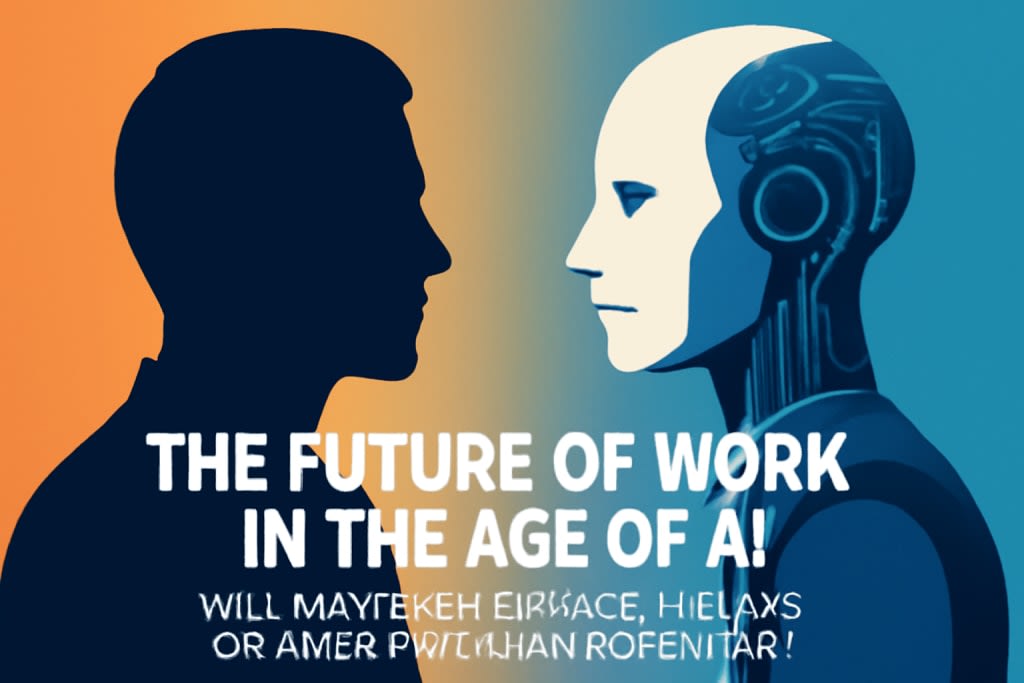
The Future of Work in the Age of AI
In the year 2040, the world had changed in ways both subtle and profound. The proliferation of artificial intelligence had transformed industries, redefined the workforce, and reshaped human life. The boundaries between humans and machines had blurred, and what it meant to work—and to be human—had been forever altered.
The cityscape of this new world was unlike any before. Neon holograms floated above towering skyscrapers, their ads shifting in real-time, responding to the moods and desires of the people passing by. On the streets, pedestrians glided along on self-driving platforms, while drones whizzed overhead delivering packages and monitoring the air for pollution levels.
But it wasn’t the technology that had most profoundly altered society—it was the evolution of work itself.
Lila, a senior strategist at a global tech firm called Epoch Dynamics, sat in her glass-walled office overlooking the shimmering city below. Her desk, sleek and minimalist, was virtually empty—save for a large holographic screen that hovered in the air. She swiped through digital documents with a simple hand gesture, her fingers flicking through reports and analyses that were generated by Epoch's cutting-edge AI systems.
As a human strategist, Lila’s job was unique in that it was less about technical expertise and more about interpretation. Her AI assistant, Aria, was capable of generating business models, analyzing data sets, and even predicting market trends, but it lacked the ability to understand the human nuances—the culture, values, and ethics—that drove decision-making in the complex world of business. That’s where Lila came in.
"Good morning, Lila," Aria's voice echoed softly in her ears through her AI-powered earpiece.
"Morning, Aria. What do we have today?"
"I've compiled an analysis of the upcoming trends in virtual reality integration into consumer markets," Aria replied, her tone calm and efficient. "There are a few emerging sectors we could focus on. Shall I prepare a presentation?"
"Yes, but add a few creative suggestions," Lila responded. "Something bold, something that could disrupt the market."
It was a task that seemed simple enough, but it was a prime example of the changing nature of work. In the old days, a strategist like Lila would have been relied upon for hard skills like market research and technical knowledge. Now, it was all about vision, creativity, and the ability to make the AI systems align with humanity’s deeper values.
AI had done much more than automate processes. It had also opened new avenues of creative collaboration. Humans no longer worked alone; they worked alongside highly intelligent machines that enhanced their capabilities, taking care of the repetitive and tedious tasks that once consumed their time. The AI, for its part, was perfectly suited for efficiency, but it lacked the ability to innovate in ways that were deeply human.
---
In another part of the world, in a small, quiet town, Jason worked in a similarly transformed job. He wasn’t a corporate strategist like Lila, but he was deeply connected to the wave of change. Jason worked as a “digital artisan,” a title that had gained popularity in the age of AI. His job was to create custom virtual worlds for clients who wanted unique, immersive experiences. These worlds could range from virtual vacations to fantasy landscapes, or even entire interactive metaverses for education, business, and entertainment.
Jason’s AI assistant, Atlas, handled most of the technical work—rendering environments, coding interactive elements, even anticipating the emotional responses of users to optimize experiences. But Jason’s role was about shaping these worlds into something meaningful. He worked closely with clients, understanding their desires and blending creativity with the power of AI to make something that was far beyond what a machine could design on its own.
“It’s not enough to just create a world,” Jason would often say to his clients. “It has to feel real. It has to evoke something in the person who experiences it.”
His philosophy was simple: the true power of AI wasn’t just in automation—it was in the synergy between human emotion and machine intelligence. And this partnership had the potential to unlock unprecedented creativity.
---
While Lila and Jason’s work had been transformed, not all workers had experienced the same smooth transition. There were, of course, those who had struggled to adapt. Many jobs had disappeared in the wake of AI’s capabilities, and not everyone had the skills to take on the new roles. For some, the future of work was a bitter pill to swallow.
But society had adapted in its own way. Universal basic income (UBI) had become a standard in many countries, ensuring that those displaced by automation would still have a safety net. Meanwhile, education systems had pivoted to focus on teaching skills that complemented AI rather than competed with it—emphasizing creativity, emotional intelligence, and collaborative problem-solving.
The debate over AI’s role in society was far from over. Some argued that AI was undermining the essence of human work, turning people into passive consumers rather than active creators. Others believed that it was the key to unlocking a new era of prosperity, where people were freed from monotonous labor and could pursue higher-level passions and goals.
---
Lila’s day was ending, but as she looked out over the city, she couldn’t help but feel optimistic. The future of work was uncertain, but one thing was clear—human ingenuity, combined with the power of AI, was creating something truly extraordinary.
She turned to Aria and smiled. “Let's disrupt the market, together.”
About the Creator
Keep reading
More stories from Bilal Ahmad and writers in Futurism and other communities.
“The Human Touch in a Digital World: Why Emotion Still Matters in the Age of AI”
We live in an era where machines can paint like Picasso, write like Hemingway, and even mimic empathy in customer service calls. Artificial Intelligence (AI) is no longer science fiction — it’s part of our daily lives. From recommending what we should watch next to diagnosing illnesses, AI is reshaping how we work, connect, and exist. Yet, amid all this technological sophistication, there’s a growing question: What does it mean to be human when machines can do so much?
By Bilal Ahmad7 months ago in Futurism
Automotive Instrument Cluster Market Outlook: Technology Trends and Growth Opportunities
Rising vehicle production, increasing demand for advanced driver information systems, and shift toward digital cockpits are driving growth in the automotive instrument cluster market. Integration of digital displays, head-up displays, and customizable interfaces enhances user experience and safety. According to IMARC Group's latest research publication, global automotive instrument cluster market size reached USD 8.7 Billion in 2024. Looking forward, IMARC Group expects the market to reach USD 13.70 Billion by 2033, exhibiting a growth rate (CAGR) of 5.17% during 2025-2033.
By Michael Richard2 days ago in Futurism
Edible Packaging Market: Seaweed, Starch & Protein-Based Materials & Growth Outlook
According to IMARC Group's latest research publication, global edible packaging market size reached USD 1,015.58 Million in 2024. Looking forward, IMARC Group expects the market to reach USD 1,670.18 Million by 2033, exhibiting a growth rate (CAGR) of 5.1% during 2025-2033.
By sujeet. imarcgroup6 days ago in Futurism



Comments
There are no comments for this story
Be the first to respond and start the conversation.