
Automotive Instrument Cluster Market Outlook: Technology Trends and Growth Opportunities
The automotive instrument cluster market is evolving rapidly, driven by advancements in digital display technologies, vehicle connectivity, and the growing adoption of electric and autonomous vehicles.

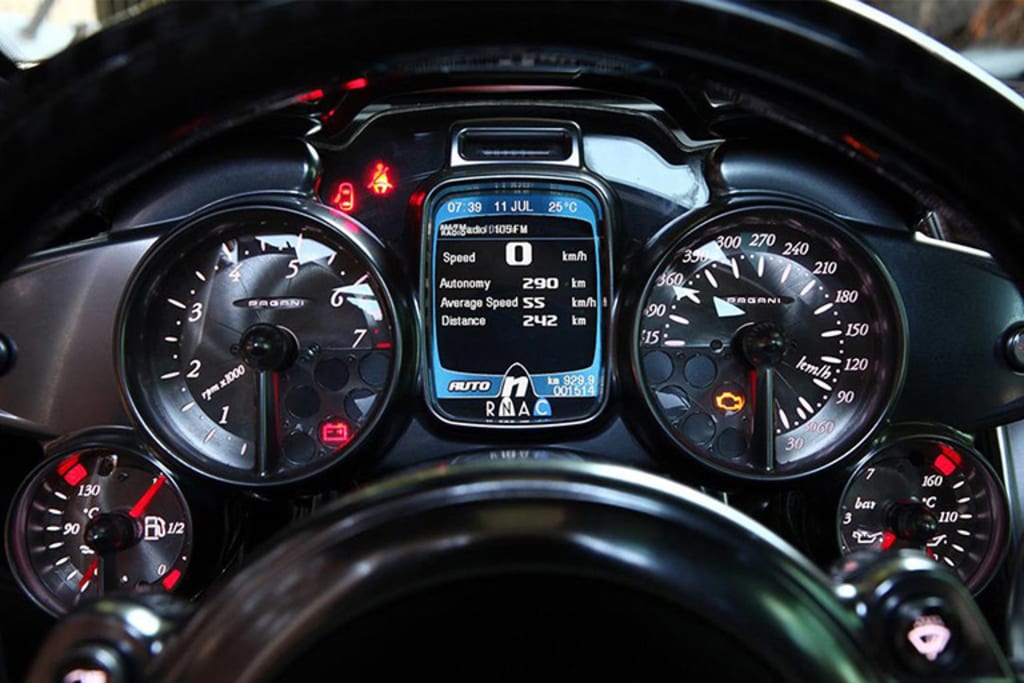
Rising vehicle production, increasing demand for advanced driver information systems, and shift toward digital cockpits are driving growth in the automotive instrument cluster market. Integration of digital displays, head-up displays, and customizable interfaces enhances user experience and safety. According to IMARC Group's latest research publication, global automotive instrument cluster market size reached USD 8.7 Billion in 2024. Looking forward, IMARC Group expects the market to reach USD 13.70 Billion by 2033, exhibiting a growth rate (CAGR) of 5.17% during 2025-2033.
How AI is Reshaping the Future of Automotive Instrument Cluster Marke
- Predictive Driver Behavior Analysis: AI algorithms analyze driving patterns and habits to deliver personalized dashboard layouts, warning alerts, and performance metrics. Systems adapt interface brightness, information density, and navigation prominence based on driver stress levels and environmental conditions, enhancing both safety and comfort during vehicle operation.
- Real-Time Diagnostics and Maintenance Forecasting: Machine learning models process sensor data continuously to predict component failures before they occur, displaying maintenance alerts directly on instrument clusters. Continental showcased biometric-adaptive interfaces at CES 2025 that adjust to driver stress, demonstrating AI's capability in preventive diagnostics and personalized health monitoring systems.
- Adaptive Interface Optimization: AI-powered clusters dynamically reconfigure layouts based on driving scenarios—highway cruising, city navigation, or parking maneuvers. Tesla and BMW implement voice-controlled features that learn user preferences, automatically prioritizing speed data during highway driving while emphasizing proximity sensors and cameras during low-speed maneuvering in tight spaces.
Automotive Instrument Cluster Industry Overview:
The automotive instrument cluster market is experiencing rapid digital transformation driven by electrification, connected vehicle proliferation, and consumer demand for personalized driving experiences. BMW revealed its Panoramic iDrive in January 2025 with a 3D heads-up display covering the entire windshield, replacing traditional gauge clusters in its forthcoming Neue Klasse X-class SUV.
Automotive Instrument Cluster Market Trends & Drivers
The explosive adoption of electric and hybrid vehicles is the primary catalyst reshaping instrument cluster requirements worldwide. Global electric vehicle sales exceeded 10 million units in 2022 according to the International Energy Agency, creating unprecedented demand for specialized displays showing battery health, charge levels, energy consumption patterns, and regenerative braking effectiveness. EV manufacturers prioritize sleek digital interfaces providing instant vehicle diagnostics, range estimations, and energy flow animations that traditional analog clusters cannot deliver. Suzuki launched the 2025 Access Ride Connect TFT Edition in India featuring a 4.2-inch TFT instrument cluster with Bluetooth connectivity, marking the brand's first mass-market two-wheeler with advanced digital display technology.
Integration of advanced driver-assistance systems and autonomous driving capabilities is fundamentally changing how instrument clusters function and what information they must convey. Modern clusters serve as command centers displaying real-time data from multiple sensors, cameras, and radar systems while providing visual feedback for adaptive cruise control, lane-keeping assistance, automatic emergency braking, and parking automation. The Europe ADAS market is projected to grow from USD 35.5 billion in 2025 to USD 53.63 billion by 2030, representing substantial growth in safety system integration requiring compatible display interfaces. Visteon announced partnerships in January 2024 to develop next-generation digital instrument clusters featuring augmented reality capabilities for enhanced driver assistance features.
Software-defined vehicle architecture and over-the-air update capabilities are creating recurring revenue opportunities while extending product lifecycles significantly. Automakers now reconfigure gauge layouts remotely, push new features post-sale, and add premium functionalities through subscription services without requiring physical hardware modifications. Continental's demonstrations illustrated interfaces adjusting to driver biometric data, while falling microcontroller prices and ISO 26262-certified display controllers reach cost parity with traditional analog movements, enabling even mid-range vehicle programs to adopt full-screen digital layouts. Maruti Suzuki launched the 2025 Grand Vitara in India with a 7-inch digital instrument cluster exclusively in the strong-hybrid variant, showcasing manufacturers' commitment to upgrading cockpit digitalization across affordable vehicle segments.
Leading Companies Operating in the Global Automotive Instrument Cluster Industry:
- Alps Alpine Co Ltd.
- Continental AG
- JPM Group
- Nippon Seiki Co. Ltd.
- Pricol Limited
- Robert Bosch GmbH (Robert Bosch Stiftung GmbH)
- Simco Auto Limited
- Valid Manufacturing Ltd.
- Visteon Corporation
Automotive Instrument Cluster Market Report Segmentation:
By Cluster Type:
- Analog
- Digital
- Hybrid
Hybrid instrument clusters accounted for around 75.7% market share of the global automotive instrument cluster market in 2024.
By Vehicle Type:
Passenger Cars
- Light Commercial Vehicles
- Heavy Commercial Vehicles
- Electric Vehicle
Passenger cars represent the largest vehicle type segment, driven by growing vehicle sales.
By Sales Channel:
- OEM
- Aftermarket
The OEM segment commands the leading market share due to close partnerships with automakers, inclusion of advanced digital displays in new vehicle models.
By Application:
- Speedometer
- Odometer
- Tachometer
- Others
Speedometer functionality remains essential but is now integrated within larger digital and hybrid display systems that present speed information alongside navigation.
Regional Insights:
- North America (United States, Canada)
- Asia Pacific (China, Japan, India, South Korea, Australia, Indonesia, Others)
- Europe (Germany, France, United Kingdom, Italy, Spain, Russia, Others)
- Latin America (Brazil, Mexico, Others)
- Middle East and Africa
Asia Pacific exhibits clear dominance in the automotive instrument cluster market, accounting for approximately 47.8% market share in 2024.
Recent News and Developments in Automotive Instrument Cluster Market
- May 2025: Suzuki launched the 2025 Access Ride Connect TFT Edition in India, featuring a 4.2-inch TFT instrument cluster—the first in its mass-market two-wheelers. Priced at ₹1.02 lakh, the upgraded cluster offered enhanced visuals, Bluetooth connectivity, and modern design, along with a new Pearl Mat Aqua Silver color variant.
- April 2025: Bajaj introduced the 2025 Dominar 400 at dealerships across India, featuring its first major update in years. A key upgrade included a fully digital Bluetooth-enabled instrument cluster adapted from the Pulsar NS400Z, enhancing connectivity and user interface signaling Bajaj's push toward modern cockpit designs in premium motorcycles.
- April 2025: Maruti Suzuki launched the 2025 Grand Vitara in India with a 7-inch digital instrument cluster offered exclusively in the strong-hybrid variant. This upgrade, alongside a 9-inch infotainment system and other tech features, reflected the brand's continued focus on enhancing cockpit digitalization.
- February 2025: Waze rolled out version 5.4 on Android and iOS, enabling navigation data display on vehicle instrument clusters via CarPlay and Android Auto. Compatible with select vehicles like BMW, Ford, and Polestar, the update enhanced driver convenience by shifting map visibility closer to eye level.
- January 2025: Honda launched the 2025 Livo with a fully digital instrument cluster displaying real-time mileage, distance to empty, gear position, and service reminders. This upgrade aligned with rising demand for smart displays in two-wheelers, marking Honda's push to enhance rider information accessibility.
Note: If you require specific details, data, or insights that are not currently included in the scope of this report, we are happy to accommodate your request. As part of our customization service, we will gather and provide the additional information you need, tailored to your specific requirements. Please let us know your exact needs, and we will ensure the report is updated accordingly to meet your expectations.
About the Creator
Michael Richard
Michael Richard is a Market Research Expert specializing in market intelligence, competitive analysis, and data-driven insights. He helps organizations understand trends and emerging opportunities through in-depth research.
Keep reading
More stories from Michael Richard and writers in Futurism and other communities.
Skilled Nursing Facility Market Outlook: Healthcare Demand and Growth Opportunities
Rising aging populations, increasing prevalence of chronic diseases, and higher demand for post-acute and long-term care are driving growth in the skilled nursing facility market. According to IMARC Group's latest research publication, The global skilled nursing facility market size reached USD 377.5 Billion in 2024. Looking forward, IMARC Group expects the market to reach USD 655.2 Billion by 2033, exhibiting a growth rate (CAGR) of 6.32% during 2025-2033.
By Michael Richardabout 5 hours ago in Futurism
About Binding Prometheus
I want to start actively advocating on behalf of my own work, and the most valuable part of my canon is, without a doubt, Binding Prometheus, the play I have been working on since 2019 and only finished in 2023 as part of my MA. The play itself is an amalgamation of a million different inspirations. On one end, it evokes the Ancient Greek myth-play, deriving its own title from the earliest extant work of Western drama we have, Aeschylus’s Prometheus Bound. On the other end, it borrows significantly from the sci-fi bulwarks from over the years, namely Mary Shelley’s Frankenstein and Karel Capek’s Rossum’s Universal Robots. The play could be an episode of Black Mirror, I fear. I don’t know. I’ve only ever seen one episode of Black Mirror.
By Steven Christopher McKnightabout a month ago in Futurism
Saudi Arabia Asphalt Pavers Market: Infrastructure Boom, Smart Paving & Growth Outlook
Market Overview According to the latest report by IMARC Group, the Saudi Arabia asphalt pavers market was valued at USD 22.7 Million in 2025. The market is expected to reach USD 32.8 Million by 2034, expanding at 4.18% annually from 2026 to 2034. This growth momentum is being driven by massive infrastructure investments, the emergence of mega projects like NEOM and Qiddiya, and increasing adoption of technologically advanced paving machinery equipped with GPS controls, automated systems, and digital monitoring capabilities that help contractors meet strict quality standards and tight project timelines.
By Jeffrey Wilson3 days ago in Futurism



Comments
There are no comments for this story
Be the first to respond and start the conversation.