
Study Shows Who Will Survive When The World Ends
Insights from Research on Humanity’s Resilience in Apocalyptic Scenarios
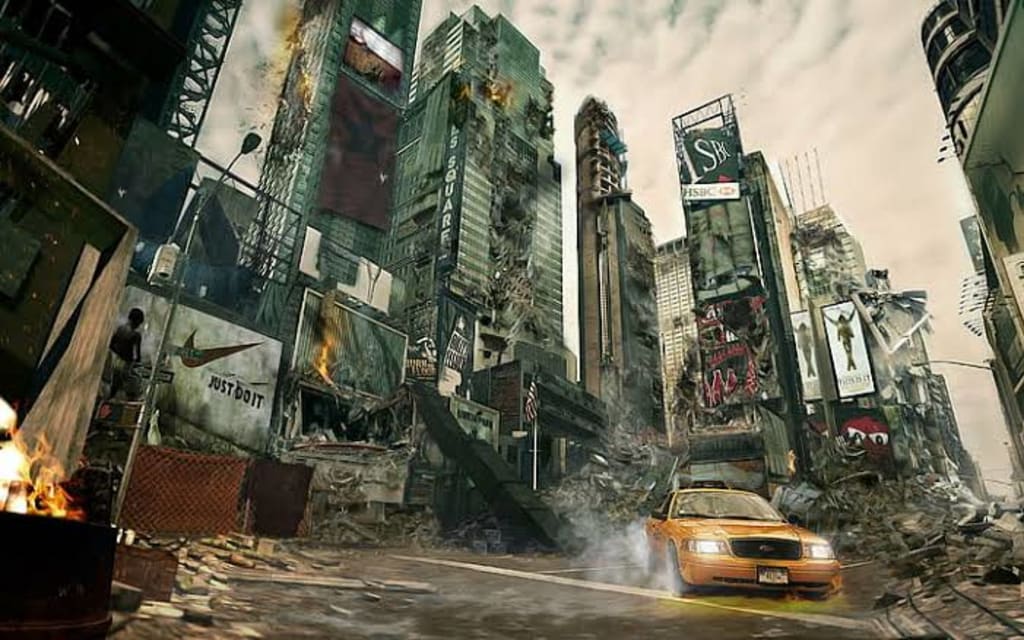
Apocalyptic scenarios are a common topic of conversation as humanity continues to delve into the complexity of existence. If the world as we know it ended, what would happen? Would some people be more prepared to withstand such an incident? It may surprise you to learn that research provides some fascinating insights into who would survive a worldwide catastrophe.
Imagine a world in which a phenomenon driven by human behaviour causes the end of the planet, rather than the usual story of catastrophic meteor hits or zombie invasions. Imagine for a moment that the populace has chosen to travel across space because they are tired of life on Earth. Most of the people abandon the planet, leaving behind those who are not present when the last spaceship departs. The only thing left to do for the people who stay in this world without internet, energy, infrastructure, or the economy is to survive.
Surprisingly, there are lessons to be learned from the video game industry, whose creators have studied player behaviour in virtual worlds that eventually vanish. Players behave cooperatively and with respect towards one another in a simulation where quests and achievements become meaningless. This could be a reflection of how real people might value harmony and assistance from one another during emergencies.
Once we get outside of the virtual world, people who are good at quickly adjusting to new surroundings will probably have an advantage. The saying "survival of the fittest" isn't always true; in fact, the people who can adjust, evaluate, and react to changing circumstances better than others. It becomes critical to be able to grow and secure food in a world without necessities. Those who are able to pick up necessary skills, such animal husbandry and gardening, will have important survival tools.
Leaving urban areas and setting out in search of rich land and resources is the first step in creating a sustainable life. Physical preparations lead to the development of endurance and adaptability. Even though physical strength is not the main necessity, running every day to increase lung capacity and stamina becomes essential. Significantly, having company makes it easier to survive most of the time. Creating a reliable organisation improves the chances of resurrecting the old civilization from the ashes.
When clean water is scarce, inventive solutions like boiling water over an open flame or using pills for purification become necessary. In order to efficiently forage in the wild, survivors must also learn to recognise food plants, berries, and mushrooms. Wildlife can be dangerous, so it's important to exercise caution, understand animal behaviour, and know how to scare off any hazards.
The enactment of laws and regulations that promote collaboration, empathy, and kindness serves as a roadmap for the transition from solitary survivors to a burgeoning civilisation. Rebuilding society will not be easy, but survivors can work towards restoring some semblance of normalcy through trade, group projects, and even the invention of new money.
A worldwide catastrophe could, however, take on more dire shapes. Envision massive tsunamis and volcano eruptions spreading havoc across continents, leaving humanity to adjust to a drastically changed planet. In a situation like this, good fortune and ingenuity become crucial. It may be necessary for survivors to take cover atop big buildings and depend on gas masks to breathe in the ash from the volcano. The loss of conventional food sources makes the battle for survival even more difficult.
However, there are historical accounts of our species rising above adversity. In addition to creating agricultural methods and establishing settlements that would later turn into the societies we are familiar with today, our ancestors overcame difficulties like ice ages and volcanic winters. These historical insights highlight the significance of genetic variety and broad collaboration.
According to scientific research, a few hundred people dispersed around safe havens may be able to support humanity for hundreds of years. Successful population increase depends on the growth of communities, and genetic diversity is still a crucial feature. This calls for close cooperation, information exchange, and the development of connected towns.
In summary, research on surviving in post-apocalyptic environments illuminates the spirit of humanity's inherent resiliency. Video games can provide important insights into human behaviour in extreme situations, but in real life, survival depends on one's capacity to adapt, be resourceful, and form strong social relationships. Humanity's ability to persevere and innovate in the face of calamitous occurrences or to reconstruct communities from the ground up is a remarkable monument to the creative potential of the human race.
About the Creator
Keep reading
More stories from writers in Futurism and other communities.
About Binding Prometheus
I want to start actively advocating on behalf of my own work, and the most valuable part of my canon is, without a doubt, Binding Prometheus, the play I have been working on since 2019 and only finished in 2023 as part of my MA. The play itself is an amalgamation of a million different inspirations. On one end, it evokes the Ancient Greek myth-play, deriving its own title from the earliest extant work of Western drama we have, Aeschylus’s Prometheus Bound. On the other end, it borrows significantly from the sci-fi bulwarks from over the years, namely Mary Shelley’s Frankenstein and Karel Capek’s Rossum’s Universal Robots. The play could be an episode of Black Mirror, I fear. I don’t know. I’ve only ever seen one episode of Black Mirror.
By Steven Christopher McKnight19 days ago in Futurism
Saudi Arabia Bedsheet Market: Comfort Preferences, Design Evolution & Industry Growth
According to IMARC Group's latest research publication, the Saudi Arabia bedsheet market size reached USD 1,037.78 Million in 2024. Looking forward, IMARC Group expects the market to reach USD 1,415.62 Million by 2033, exhibiting a growth rate (CAGR) of 3.51% during 2025-2033.
By Abhay Rajput4 days ago in Futurism
How, Too
Many people wonder how, too. You are not alone, and I am an expert. I will teach you how, too! First, you need to remit a small application fee and fill out an application describing the nature of your financial situation and how often payments will be made, as this will have great bearing on how well I teach you how, too.
By Harper Lewis3 days ago in Fiction




Comments (1)
I'm pretty sure I won't survive this - haha. Thanks for bringing this to light!