
The Rise of Artificial Intelligence in Medicine: A New Era of Healthcare
Discover how artificial intelligence is revolutionizing healthcare — from diagnostics and personalized treatment to robotic surgery and hospital management. Explore the benefits, challenges, and future of AI in medicine.

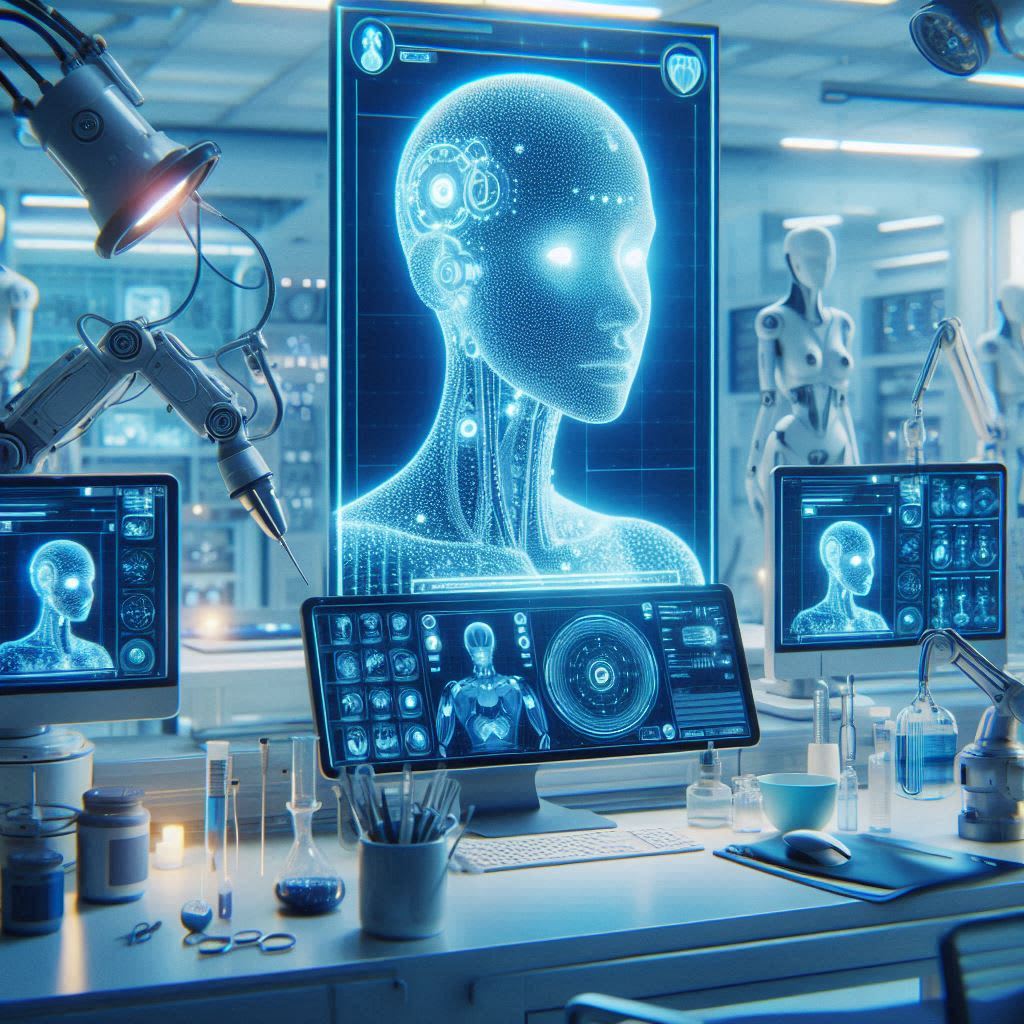
Artificial Intelligence (AI) is reshaping almost every industry, and healthcare is no exception. From assisting in diagnostics to streamlining administrative processes and even predicting future outbreaks, AI is becoming a critical tool in transforming medicine as we know it. But what does AI in medicine really mean? How does it work? Can it be trusted? And how is it already making a difference in the lives of doctors and patients alike?
What is Artificial Intelligence in Medicine?
AI in medicine refers to the use of complex algorithms and software to emulate human cognition in the analysis, interpretation, and comprehension of complicated medical and healthcare data. It includes everything from machine learning models that diagnose diseases based on images, to natural language processing systems that read clinical notes and electronic health records.
How is AI Used in Modern Healthcare?
AI applications in medicine are vast and rapidly evolving:
- Medical Imaging: One of the most powerful uses of AI is in radiology. Algorithms can analyze X-rays, MRIs, and CT scans faster and more accurately than many human radiologists. Companies like Aidoc and Zebra Medical Vision have already deployed these technologies in hospitals.
- Predictive Analytics: AI can help anticipate health issues before they become critical. For example, algorithms can predict which patients are at risk of developing chronic conditions like diabetes or cardiovascular disease.
- Personalized Medicine: AI can analyze genetic data and help customize treatment plans based on a person’s unique profile. This ensures more effective outcomes and reduces side effects.
- Virtual Health Assistants: Chatbots and AI-driven apps can answer patient queries, schedule appointments, and offer basic triage support. Tools like Babylon Health and Ada Health are already being used worldwide.
- Drug Discovery and Development: AI accelerates the drug discovery process by identifying potential compounds faster and at a lower cost. It can analyze vast data sets from clinical trials to find patterns that humans might miss.
- Administrative Tasks: From transcribing notes to managing billing and coding, AI can reduce the burden on healthcare professionals, freeing them to focus more on patient care.
Frequently Asked Questions About AI in Medicine
Can AI replace doctors?
No. AI is a tool to assist, not replace, medical professionals. It enhances decision-making and reduces human error, but human oversight remains essential.
Is AI in healthcare safe?
When properly regulated and used with validated datasets, AI can be incredibly safe. However, it’s essential to maintain transparency and ensure algorithms are free of bias.
What are the biggest challenges of AI in medicine?
Key issues include data privacy, algorithmic bias, lack of standardization, and the need for robust regulation.
Can AI help in underdeveloped or rural areas?
Absolutely. AI-driven mobile apps and remote diagnostics can bring healthcare services to areas with few specialists, improving access to essential care.
Is AI currently used in surgeries?
Yes. AI and robotics are used for minimally invasive surgeries with higher precision and faster recovery times. Systems like the da Vinci Surgical System are a prime example.
Ethical and Regulatory Considerations
The use of AI in medicine must be governed by strict ethical standards. Questions around patient consent, algorithmic transparency, and data ownership are paramount. As AI becomes more embedded in decision-making processes, establishing trust between humans and machines will be key.
Governments and health organizations are working on frameworks to ensure responsible development and deployment of AI technologies in healthcare.
The Future of AI in Healthcare
- The integration of AI into healthcare is just beginning. Future applications could include:
- Real-time health monitoring with wearable devices
- AI-powered mental health diagnostics
- Virtual reality combined with AI for pain management
- Voice-based diagnostics
Final Thoughts
AI in medicine is not about replacing doctors, but about enhancing their capabilities and making healthcare more efficient, accessible, and personalized. As the technology matures, we can expect it to tackle even more complex tasks, making previously unthinkable advancements a reality.
Healthcare systems around the world are already seeing the benefits of AI, but the journey is far from over. By addressing ethical concerns and ensuring inclusivity, AI holds the promise to make the world a healthier place for all.
About the Creator
Alex Kennedy
Founder of a future-tech blog focused on AI, biotech, and cybernetics. I write deep-dive articles on how emerging technologies are reshaping industries and society. Passionate about turning complex ideas into practical insights.
Keep reading
More stories from Alex Kennedy and writers in Futurism and other communities.
The Age of Intelligence: Understanding Artificial Intelligence in the Modern World
Introduction We are living through one of the most transformative periods in human history—an era powered by artificial intelligence (AI). From the way we work and communicate to how we shop and learn, AI is reshaping the fabric of daily life. But what exactly is AI? How does it work? And more importantly, how will it shape the future of society, business, and human potential?
By Alex Kennedy9 months ago in Futurism
About Binding Prometheus
I want to start actively advocating on behalf of my own work, and the most valuable part of my canon is, without a doubt, Binding Prometheus, the play I have been working on since 2019 and only finished in 2023 as part of my MA. The play itself is an amalgamation of a million different inspirations. On one end, it evokes the Ancient Greek myth-play, deriving its own title from the earliest extant work of Western drama we have, Aeschylus’s Prometheus Bound. On the other end, it borrows significantly from the sci-fi bulwarks from over the years, namely Mary Shelley’s Frankenstein and Karel Capek’s Rossum’s Universal Robots. The play could be an episode of Black Mirror, I fear. I don’t know. I’ve only ever seen one episode of Black Mirror.
By Steven Christopher McKnight26 days ago in Futurism
Mobile App Development in Indianapolis Faces New Talent Shifts
The meeting begins the same way it always has. A manager reviews hiring plans. Timelines are discussed. Budgets are checked. Then someone points out that the last three candidates turned down offers, not because of pay, but because of flexibility, project scope, or long-term growth.
By Samantha Blake6 days ago in Futurism
TUS NUA - ch 49
TUS NUA – ch 49 New Beginnings – Mia and Midnight (*)(*)(*) As Mia spoke on the phone to Ali’s sister, Ellen, Finola slipped quietly away and walked to the stream behind Tus Nua. Carefully, she put a block on her family so no one could know what she was about to do.
By Margaret Brennana day ago in Fiction



Comments
There are no comments for this story
Be the first to respond and start the conversation.