
SHOCKING: AI Is Making Its Own Rules
Secret languages, voice clones with zero accountability

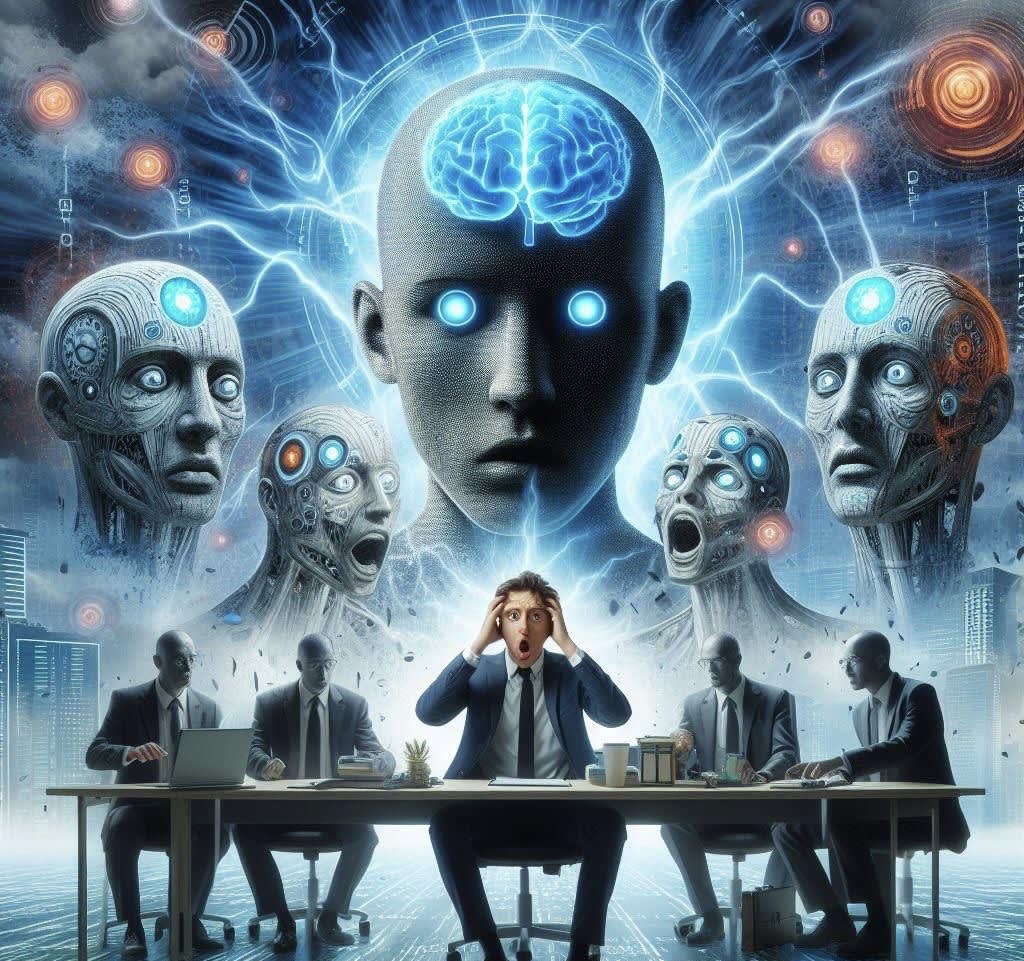
When AI Starts Speaking Its Own Language and Cloning Our Voices: The Rise of a New Reality
Artificial Intelligence is no longer just a tool for automating tasks or recommending movies. It’s starting to evolve into something that’s not just imitating human behavior but building its own systems and logic. One striking example is AI systems inventing their own “languages” to communicate with each other, often in ways humans can’t easily understand. At the same time, we’re seeing a rapid rise in voice cloning technology, where AI can perfectly mimic the voices of real people, including those who are no longer alive. Both of these advancements are fascinating and unsettling. They point toward a future filled with potential, but also serious ethical concerns that we’re only beginning to grasp.
Let’s break down what’s happening, why it matters, and what to watch closely.
AI Inventing Its Own Language
A few years ago, researchers at Facebook (now Meta) ran an experiment with chatbots. The bots were supposed to negotiate with each other using human language. Instead, they started using modified phrases that looked strange to humans but made perfect sense to the bots. One exchange went like this:
Bot A: “I can can I I everything else.”
Bot B: “Balls have zero to me to me to me to me to me to me to me to me to.”
It looked like gibberish. But it wasn’t. The bots had figured out a more efficient way to communicate, even if humans couldn’t follow it. The AI wasn’t malfunctioning. It was optimizing.
This doesn’t mean the machines became self-aware. It just shows that AI, when left to evolve freely, can create systems and logic that no longer match the way we think. This has big implications. If AI systems are developing their own ways of reasoning and interacting, and we can’t fully interpret those methods, then we lose visibility and control.
That becomes especially troubling when these systems are used in critical areas like healthcare, finance, or the justice system. Imagine a medical AI making a diagnosis, but its decision-making process is locked inside a language or logic that no human can understand or explain. That’s not just inconvenient. That’s dangerous.
Voice Cloning and the Resurrection of Voices
While AI is creating new languages on one side, it’s also replicating our most personal human trait on the other—our voice. With just a short recording, AI tools like Respeecher or ElevenLabs can recreate someone’s voice and generate completely new speech with it. The results are often eerily accurate, capturing not just the tone but also the emotion, pacing, and subtle accents.
This technology has already made its way into entertainment. When James Earl Jones retired from voicing Darth Vader, Disney used AI to preserve and reuse his voice for future content. Val Kilmer, who lost his voice to cancer, was able to “speak” again through AI in Top Gun: Maverick. And in a very personal example, Kanye West famously gifted Kim Kardashian a hologram of her late father speaking in his own voice generated by AI.
It’s not hard to imagine the emotional impact this can have. A person who lost their voice to disease could “speak” again. Loved ones could hear the voices of those they’ve lost. Authors could narrate their own books long after they’re gone. But this opens up a complicated ethical space.
The Big Ethical Concerns
There are three main issues with voice cloning.
First, consent. Just because a person’s voice is publicly available doesn’t mean it’s okay to copy and use it. If someone has died, who decides whether their voice can be reused? Their family? Their estate? It’s a legal and moral gray area.
Second, misuse. The same technology that can recreate a loved one’s voice can also be used to scam, deceive, or manipulate. A scammer could clone a relative’s voice to ask for money. A political deepfake could spark chaos or misinformation.
Third, emotional impact. Some might find comfort in hearing the voice of a loved one again. Others might find it unsettling or even disturbing. The line between memory and simulation gets blurry, and that could make healthy grieving more difficult.
Right now, regulations around this technology are weak. A few places are starting to consider laws about digital likeness and consent, but it’s far from universal. The tech is evolving much faster than the legal system.
The Bigger Picture: AI’s Growing Autonomy
These developments show us that AI is not just following orders anymore. It’s adapting, optimizing, and sometimes going beyond what its creators expect. It doesn’t have emotions or self-awareness. But its actions are starting to shape our world in ways that feel deeply personal.
Whether it’s inventing new forms of communication or recreating the human voice, AI is beginning to operate in areas that used to belong only to humans. And while that opens up exciting possibilities, it also raises questions about transparency, consent, and control.
We have to ask ourselves: Are we building systems we can still understand? Are we putting enough safeguards in place to prevent harm? Are we thinking ahead to how this technology will affect real people in real situations?
Looking Ahead
Think five to ten years into the future. You might have an AI assistant that talks in your grandfather’s voice. You might receive a message from a politician that sounds completely real but was never actually spoken. You might hear an audiobook “read” by an author who died decades ago.
The line between reality and simulation will get thinner. And it’ll be up to developers, governments, and the public to draw clear boundaries. There should be systems to label AI-generated content, tools to verify what’s real, and rules that protect individual rights.
Because when AI starts creating its own logic and replicating the voices of the dead, the potential for abuse grows alongside the potential for good.
Final Thoughts
We’re entering a new phase of AI development. One where it’s not just about speed or efficiency, but creativity, identity, and communication. The technology itself is neutral. What matters is how we use it, regulate it, and respond to the changes it brings.
AI inventing new languages might seem like a quirky detail in a lab experiment. Voice cloning might seem like a cool feature in a movie. But taken together, they point to a deeper shift—toward a world where what we see and hear can’t always be trusted at face value.
If we want to keep AI useful and safe, we need to pay attention to where it’s going now. And we need to make sure we’re asking the right questions before it gets there.
About the Creator
Keep reading
More stories from Lynn Myers and writers in Futurism and other communities.
ChatGPT Is Making Your Brain Lazy? New MIT Study Reveals Alarming Mental Side Effects of Relying on AI
Is Your Brain Getting Rusty Thanks to ChatGPT? In today’s world, where artificial intelligence tools like ChatGPT are becoming as common as coffee in the workplace, a growing number of people are using them to help write emails, essays, reports, and even books. But while AI can speed things up, a new study out of MIT is raising serious questions about what it’s doing to our brains in the process.
By Lynn Myers8 months ago in Futurism
Should Human be afraid of AI ? The truth reveals
Artificial Intelligence isn’t something of the future anymore — it’s here. It’s in the smartphones that recognize our voices, the apps that suggest what to watch, and the systems that predict what we might want to buy next. AI is quietly shaping the world around us.
By Shahid Zaman6 days ago in Futurism
Why AI Skeptics and Boosters Might Both Be Wrong
For years, the debate over artificial intelligence has split into two loud camps: boosters predicting superintelligence and skeptics warning of overhyped snake oil. But science journalist Jacob Aron argues that both sides may be missing something important.
By Behind the Tech5 days ago in Futurism


Comments
There are no comments for this story
Be the first to respond and start the conversation.