
Scientists May Have Found an Exoplanet Colder Than Mars — Here’s What That Means
Possible New Exoplanet May Be Colder Than Mars

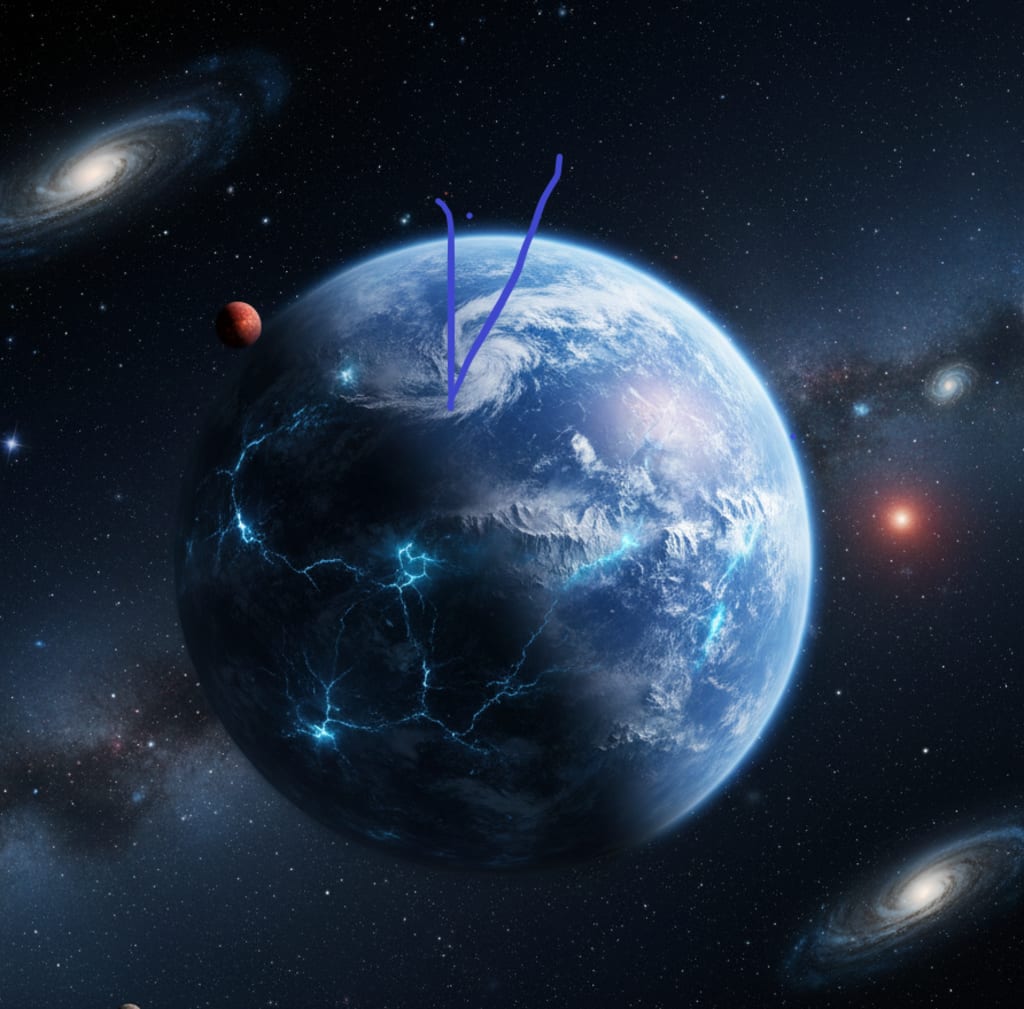
Astronomers may have identified one of the coldest planets ever detected beyond our solar system. Early observations suggest a possible new exoplanet with surface temperatures even lower than those on Mars, the famously frozen Red Planet. While the discovery is still awaiting confirmation, scientists believe this distant world could expand our understanding of how planets form, evolve, and survive in extreme environments.
Unlike many exoplanet discoveries that focus on potentially habitable worlds, this planet represents the opposite end of the planetary spectrum—a world shaped by deep cold and minimal stellar energy. Its existence highlights just how diverse planetary systems in the universe can be.
A Discovery That Pushes the Limits of Known Planets
The candidate exoplanet was detected through indirect observations of a distant star. Subtle changes in the star’s movement and brightness suggest the gravitational influence of an orbiting planet located far from its host star.
Because of this extreme distance, the planet receives very little heat, making it a strong candidate for one of the coldest known exoplanets. If confirmed, it would demonstrate that planets can exist and remain stable under conditions far colder than previously observed.
Scientists emphasize that discoveries like this are essential—not because they support life, but because they expand the known range of planetary environments in the galaxy.
Why This Exoplanet Could Be Colder Than Mars
Mars is already one of the coldest rocky planets in our solar system, with average surface temperatures around −80°F (−62°C). Its thin atmosphere and distance from the Sun prevent it from retaining heat.
The newly identified exoplanet appears to orbit its star at an even greater distance than Mars does from the Sun. As a result, the amount of stellar energy reaching its surface may be extremely limited.
Computer models suggest that, depending on its atmosphere and surface composition, this planet could experience even lower average temperatures than Mars, placing it among the coldest solid worlds known.
How Astronomers Detect Such Distant and Cold Worlds
Detecting cold exoplanets is particularly challenging. Unlike hot planets, which emit strong infrared radiation or reflect significant starlight, cold planets are faint and difficult to observe directly.
Instead, astronomers rely on indirect methods such as:
- Radial velocity measurements, which detect tiny wobbles in a star caused by an orbiting planet’s gravity
- Brightness variations, which may indicate gravitational interactions within the star system
Because the planet has not yet been directly imaged, it remains classified as a candidate exoplanet. Additional observations are required to confirm its presence and refine estimates of its mass, size, and temperature.
Why Scientists Compare It to Mars
Mars serves as a familiar benchmark for extreme cold. As a rocky planet with a known surface, it provides a useful comparison for scientists and the public alike.
If this exoplanet is indeed colder than Mars, it would almost certainly lack liquid water on its surface under current conditions. Any water present would exist as ice, possibly beneath thick frozen layers.
By using Mars as a reference point, researchers can better communicate the severity of the conditions without relying solely on abstract temperature values.
What We Know About the Planet’s Possible Composition
Based on preliminary data, scientists believe the planet may be rocky, ice-rich, or a combination of both. Its estimated mass suggests it could be Earth-sized or larger, though uncertainties remain high.
Cold planets often contain:
- Thick ice layers
- Frozen gases
- Rocky cores covered by permafrost-like surfaces
Without direct measurements, it is impossible to determine whether the planet has a solid surface, subsurface ice oceans, or a layered structure similar to icy moons in our solar system.
The Critical Role of an Atmosphere
A planet’s atmosphere plays a major role in regulating temperature. Thick atmospheres can trap heat through greenhouse effects, while thin or absent atmospheres allow heat to escape rapidly.
At present, scientists do not know whether this candidate exoplanet has an atmosphere. If it does, even a modest greenhouse effect could raise surface temperatures slightly. Without one, the planet would likely be extremely cold and geologically stable, changing very little over time.
Future telescopes may be able to detect atmospheric signatures, providing crucial insight into the planet’s true nature.
Why Cold Exoplanets Matter to Science
Although cold exoplanets are unlikely to support life, they are scientifically valuable. They help researchers understand:
- How planets form far from their stars
- How planetary systems evolve over billions of years
- How gravity and orbital dynamics shape distant worlds
Cold planets also provide insight into the outer regions of planetary systems—areas that are often overlooked in favor of warmer, inner planets.
Learning From Our Own Solar System
Astronomers often study cold exoplanets by comparing them to familiar objects such as:
- Mars
- Pluto
- Icy moons like Europa and Enceladus
These comparisons allow scientists to test theories about planetary climate, composition, and long-term stability. Observations of distant worlds are interpreted using decades of data from our own cosmic neighborhood.
Technology Behind the Discovery
The candidate planet was identified using advanced telescopes and long-term observation techniques. Precise monitoring of starlight variations allowed astronomers to isolate a potential planetary signal.
Future space missions and next-generation observatories are expected to dramatically improve detection capabilities. These tools may help confirm the planet and provide more accurate measurements of its temperature and structure.
What Happens Next?
Researchers will continue monitoring the star system to confirm the planet’s existence. Repeated observations are essential to rule out alternative explanations, such as stellar activity or measurement noise.
If confirmed, the planet could become a key target for future studies aimed at understanding cold planetary environments across the galaxy.
What This Discovery Means for Planet Formation Models
The possible existence of a planet colder than Mars supports the idea that planets can form and remain stable at extreme distances from their stars. This challenges earlier models that focused primarily on planets forming closer to stellar heat sources.
As more cold exoplanets are discovered, scientists can refine models to better reflect the true diversity of planetary systems.
Conclusion: A Universe Full of Extremes
The potential discovery of an exoplanet colder than Mars highlights the extraordinary range of worlds that exist beyond our solar system. While confirmation is still pending, early evidence suggests a planet shaped by deep cold, minimal energy, and long-term stability.
These findings remind us that the universe is not defined by Earth-like worlds alone. Instead, it is filled with planets of every kind—hot, cold, massive, and small—each offering valuable clues about how cosmic systems form and evolve.
As technology improves, discoveries like this will continue to reshape our understanding of the universe and our place within it.
About the Creator
Adil Ali Khan
I’m a passionate writer who loves exploring trending news topics, sharing insights, and keeping readers updated on what’s happening around the world.
Keep reading
More stories from Adil Ali Khan and writers in Futurism and other communities.
Buried for 33 Years: The Dream to Revive One of the Country’s Largest Gold Mines Is Back on the Map
For more than three decades, silence ruled the site where one of the country’s largest gold mines once thrived. Rusted machinery stood frozen in time. Flooded tunnels lay hidden beneath layers of earth. Warning signs faded under wind and rain, quietly marking what many believed was the end of an era.
By Adil Ali Khana day ago in Trader
Australia Metal Coatings Market: Industrial Protection, Material Performance & Manufacturing Demand
According to IMARC Group, the Australia metal coatings market reached a value of USD 315.00 Million in 2024 and is projected to expand to USD 495.83 Million by 2033, exhibiting a compound annual growth rate (CAGR) of 5.17% during 2025–2033. This steady growth reflects the critical role metal coatings play in extending the lifespan, safety and performance of infrastructure and industrial assets. As sectors such as construction, mining, manufacturing and transportation continue to invest in durable materials, metal coatings are increasingly viewed as a strategic necessity rather than a secondary finishing process. Rising exposure to harsh environmental conditions, combined with stricter regulatory standards and sustainability expectations, is accelerating demand for advanced coating solutions across Australia. The market is now transitioning from traditional protective coatings toward high-performance, environmentally responsible and technologically enhanced formulations.
By Shrestha Roy4 days ago in Futurism
Stories Before a Wedding, or The Happily Ever After of Cinderella
Cinderella had always dreamt of marrying a prince. She had dreamt of nothing else since she was a small girl. Now, however, as the Prince’s wife of three days, she had to admit that the reality was not as she had dreamt it to be.
By Dionearia Red2 days ago in Fiction




Comments
There are no comments for this story
Be the first to respond and start the conversation.