
Saudi Arabia Higher Education Market: Enrollment Growth, Digital Transformation & Future Outlook
How digital learning platforms, international collaborations, and skills-focused curricula are enhancing academic quality, student engagement, and workforce readiness across the Saudi Arabia higher education market.

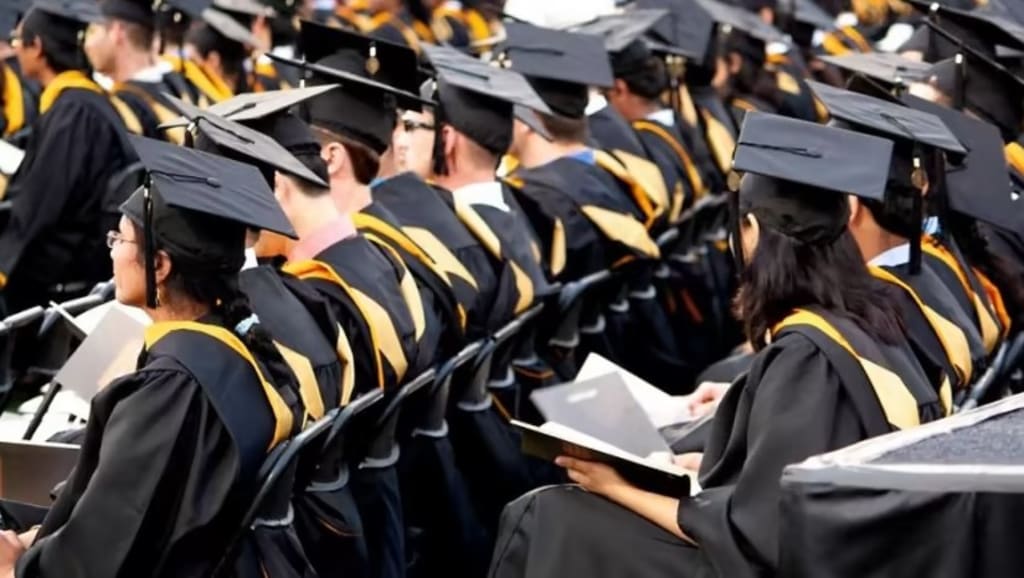
The educational transformation sweeping across Saudi Arabia has picked up serious momentum. Between Vision 2030's strategic push and substantial government backing, higher education institutions are evolving at a pace that would have seemed unthinkable just a few years ago. According to IMARC Group's latest findings, the Saudi Arabia higher education market reached USD 316.53 Million in 2025. Looking ahead, the market is projected to hit USD 1,567.05 Million by 2034, growing at 19.45% annually from 2026-2034. Solutions currently dominate the market with 58% share in 2025, covering everything from student information systems to campus management platforms that help institutions run more efficiently.
What's driving this isn't just technology adoption—it's a complete reimagining of how education serves national goals. Digital transformation initiatives incorporating AI and cloud-based platforms are changing how institutions deliver content and connect with students. The Kingdom's strategic move toward becoming a global innovation hub means universities need to produce graduates ready for knowledge-based industries, not just traditional sectors.
Saudi Arabia Higher Education Market Growth Drivers:
- Unprecedented Government Investment and Vision 2030 Alignment
The Saudi government has put education front and center in its budget priorities, allocating SAR 201 billion ($53.50 billion) to the education sector in 2025—that's 16% of total government spending. Within this, higher education and vocational training receive 42% of education funds, translating to massive infrastructure modernization. This isn't just about building new campuses. Universities are getting advanced laboratory equipment, digital learning technologies, and expanded residential capacity. Over 6 million students are expected to benefit from the nationwide AI curriculum rolling out in the 2025-2026 academic year. Vision 2030's emphasis on cultivating globally competitive graduates directly shapes what gets taught, how research priorities are set, and which international partnerships universities pursue.
- Female Workforce Participation and Educational Inclusivity
Female participation in higher education and subsequent workforce entry represents one of the most dramatic social shifts in Saudi society. The numbers tell the story: female workforce participation jumped from 19% in 2016 to 36% currently, already exceeding Vision 2030's original target of 30%. The Kingdom has now set its sights on 40% by 2030. More than 50% of Saudi university graduates are women today, and institutions like Princess Nourah bint Abdulrahman University—the world's largest women's university—demonstrate how educational frameworks can accommodate cultural sensitivities while preparing graduates for leadership roles across sectors. Technical and vocational education has opened up dramatically for women, with enrollment expanding from 17,959 women across 29 colleges in 2019 to widespread access across strategic industries including aircraft maintenance, cybersecurity, and renewable energy.
- Skills Gap and Workforce Development Imperatives
The persistent gap between graduate competencies and employer requirements continues driving curriculum innovation and industry partnerships. Youth unemployment dropped by 7.6% in Q1 2024, reflecting improvements in graduate employability. Universities are responding with program reforms emphasizing practical skills and experiential learning alongside theoretical knowledge. The percentage of higher education graduates entering the workforce within six months jumped from 32% in 2023 to 43%, demonstrating tangible progress. Executive education enrollments are surging as working professionals recognize that rapidly evolving technologies and business models require continuous skill updating. Universities are establishing strong partnerships with leading corporations and government agencies, providing students with internship opportunities, collaborative research projects, and clear employment pathways that facilitate smoother transitions from academic to professional environments.
Request Your Free Sample Report with Verified Data and Projections
Saudi Arabia Higher Education Market Trends:
- Nationwide Artificial Intelligence Curriculum Integration
Educational institutions across Saudi Arabia are systematically embedding AI literacy into their academic frameworks, fundamentally changing how knowledge gets delivered. More than 6 million students will be reached by the nationwide AI curriculum beginning in the 2025-2026 academic year, supported by intensive teacher training programs. Universities are establishing specialized AI research centers and offering degree programs focused on machine learning, neural networks, and computational intelligence. The Saudi Data and Artificial Intelligence Authority's collaboration with the Ministry of Education to develop comprehensive AI modules demonstrates the Kingdom's commitment to preparing students for technology-driven careers. AI tools are being integrated beyond computer science into diverse disciplines including healthcare, engineering, business administration, and humanities to enhance analytical capabilities across the academic spectrum.
- Expansion of International University Branch Campuses
Saudi Arabia's regulatory reforms permitting foreign universities to establish local operations have triggered a wave of international academic partnerships. The University of New Haven became the first institution to receive approval to open an international branch campus in Riyadh, set to launch in Fall 2026 with plans to eventually serve 13,000 students. Five additional universities—Arizona State University, University of Wollongong, University of Strathclyde, Royal College of Surgeons in Ireland, and IE University—have received foreign investment licenses to establish branches. These partnerships facilitate cross-cultural knowledge exchange, enable Saudi students to access world-class education without relocating abroad, and attract international faculty bringing diverse perspectives and research expertise. Institutions are focusing on key sectors like healthcare, engineering, and business aligned with national workforce development priorities.
- Cloud-Based Learning Management System Proliferation
Higher education institutions are rapidly transitioning to cloud computing infrastructure enabling flexible content delivery, remote collaboration, and scalable digital resources. Government-backed platforms like Madrasati now reach 98% of students, supporting millions through integrated ecosystems combining learning materials, assessment tools, communication channels, and administrative functions. Cloud adoption facilitates real-time data analytics informing instructional improvements, personalized learning pathways accommodating individual student needs, and cost efficiencies through reduced hardware investments. This technological shift aligns with Digital Government Authority initiatives promoting interoperability across educational institutions while ensuring data security, privacy compliance, and business continuity. IMARC Group predicts the Saudi Arabia cloud services market will reach USD 13.1 Billion by 2033, underscoring the broader digital transformation momentum.
Recent News and Developments in Saudi Arabia Higher Education Market
- October 2025: DataVolt partnered with the Energy & Water Academy (EWA) and Innovatics to launch a nationally recognized Diploma in Data Science and AI fully integrated with industry. This program merges academic excellence with practical AI problem-solving, preparing Saudi Arabia's workforce for the digital era through extensive training in cloud technologies, machine learning, and application modernization.
- September 2025: Saudi Arabia announced the establishment of Riyadh University of Arts (RUA), a major cultural education institution aimed at promoting artistic talent, generating employment, and aligning with Vision 2030 objectives. Through detailed academic structure and international partnerships, the university seeks to shape Saudi Arabia's evolving cultural environment.
- May 2025: The Education and Training Evaluation Commission (ETEC) administered its fourth round of the National Assessments of Learning Outcomes Program (NAFS), reaching nearly 1.5 million students across almost 26,000 schools nationwide. The assessment monitors student performance annually in mathematics, science, and reading at Grades 3, 6, and 9.
- April 2025: The University of New Haven signed a memorandum of understanding with Saudi Arabia's Ministry of Education, Ministry of Investment, and Royal Commission for Riyadh City, creating a pathway for the University to open a campus in Riyadh. The planned campus will deliver transformative student outcomes and support Vision 2030 goals.
Note: If you require specific details, data, or insights that are not currently included in the scope of this report, we are happy to accommodate your request. As part of our customization service, we will gather and provide the additional information you need, tailored to your specific requirements. Please let us know your exact needs, and we will ensure the report is updated accordingly to meet your expectations.
About the Creator
Faisal Al-Harbi
Market research professional based in Saudi Arabia (KSA), focused on industry trends, market growth, and economic insights.
Writing data-driven articles on Saudi markets, business outlook, and Vision 2030–driven sectors.
Keep reading
More stories from Faisal Al-Harbi and writers in Futurism and other communities.
Saudi Arabia Dust Control Solutions Market: Industrial Demand, Environmental Compliance & Growth Outlook
Rising construction activity driven by Vision 2030 mega-projects, expanding mining operations, and growing awareness about worker health and safety are fueling demand for dust suppression systems in Saudi Arabia. According to IMARC Group’s latest research, the The Saudi Arabia dust control solutions market size reached USD 167.1 Million in 2025. Looking forward, IMARC Group expects the market to reach USD 238.7 Million by 2034, exhibiting a growth rate (CAGR) of 4.04% during 2026-2034.
By Faisal Al-Harbia day ago in Futurism
Worlds Where the Night Is Hotter Than the Day
On Earth, the rhythm of temperature feels intuitive. When the Sun rises, the ground warms. When darkness falls, heat slowly leaks back into space. Day means warmth; night means cooling. This pattern is so deeply ingrained in our everyday experience that it feels almost universal. Yet beyond the Solar System, astronomers have discovered worlds where this logic completely breaks down. On some distant planets, night is not a time of cooling at all. Instead, the darkness can be hotter than the blazing day.
By Holianyk Ihora day ago in Futurism



Comments
There are no comments for this story
Be the first to respond and start the conversation.