
Saudi Arabia E-Health Market: E-Health Solutions, Smart Healthcare Platforms, Analytics & System Transformation
How integrated e-health solutions, real-time clinical data, and advanced digital technologies are transforming healthcare delivery, patient engagement, and system efficiency across the Saudi Arabia e-health market.


According to IMARC Group's latest research publication, Saudi Arabia e-health market size reached USD 1.5 Billion in 2025. The market is projected to reach USD 5.5 Billion by 2034, exhibiting a growth rate (CAGR) of 15.32% during 2026-2034.
How AI is Reshaping the Future of Saudi Arabia E-Health Market
- Predictive Diagnostics and Early Detection: AI algorithms analyze medical imaging and patient data to detect diseases like cancer and cardiovascular conditions earlier, with tools like "Dr Hua" now autonomously diagnosing patients at Saudi Arabia's first AI medical clinic launched in May.
- Personalized Treatment Planning: Machine learning tailors interventions based on individual patient profiles, lifestyle data, and genomic information, shifting healthcare from reactive treatment to precision medicine that improves outcomes and reduces unnecessary procedures.
- Virtual Hospital Automation: Seha Virtual Hospital uses AI and augmented reality to serve over 255,000 patients, automating triage, specialty consultations, and remote diagnostics across 224 connected hospitals, making world-class care accessible nationwide.
- Chronic Disease Management: AI-powered platforms continuously monitor diabetes, hypertension, and obesity through wearable sensors and mobile apps, providing real-time alerts and personalized coaching that help the Kingdom's 5.3 million diabetic adults manage their conditions effectively.
Explore the Market Outlook with a Complimentary Sample Report
How Vision 2030 is Revolutionizing Saudi Arabia E-Health Industry
Vision 2030 has transformed e-health from a convenience into national infrastructure, positioning digital healthcare as essential to achieving the Kingdom's life expectancy target of 80 years—already rising from 74 in 2016 to 79.7 currently. The Health Sector Transformation Program invested over $1.5 billion specifically in healthcare IT, funding landmark initiatives like Seha Virtual Hospital, which holds a Guinness World Record as the world's largest virtual facility serving up to 400,000 patients annually. The Sehhaty platform has facilitated over 1.6 million virtual consultations and 9.2 million appointments since launch, while the Wasfaty app has processed over 40 million prescriptions benefiting 14 million people—37% of the entire population. Government commitment goes beyond infrastructure: the August 2024 Regulatory Healthcare Sandbox provides startups a safe environment to test AI, 3D printing, IoT, and biotech solutions with approval decisions within 10 days, accelerating innovation. Over 90% of government services are now digitized, creating seamless integration between health platforms and citizen data, while the 2024 Global Health Exhibition in Riyadh generated over SAR 50 billion in healthcare deals, cementing Saudi Arabia's role as the region's digital health hub.
Saudi Arabia E-Health Market Trends & Drivers:
The Kingdom faces a mounting chronic disease burden that's fundamentally reshaping healthcare delivery toward digital solutions. Diabetes prevalence among adults hit 23.1% according to the International Diabetes Federation—translating to 5.3 million cases out of 25 million adults, making it one of the world's highest rates. This diabetes crisis emerged from lifestyle shifts including sedentary behavior, calorie-rich diets, and obesity that now affects a significant portion of the population, with the Global Burden of Disease Study highlighting accelerating trends. Beyond diabetes, cardiovascular diseases, hypertension, and obesity create sustained demand for long-term management tools that hospitals alone can't handle. The burden is compounded by higher prevalence of genetic disorders from consanguineous marriages, requiring specialized monitoring and early intervention. Healthcare systems are responding by deploying remote monitoring platforms, AI-driven diagnostics, and mobile health apps that enable continuous care outside hospital walls. Digital diabetes management alone is projected to grow dramatically, with platforms integrating continuous glucose monitors, smart insulin pens, wearable sensors, and digital therapeutics providing real-time coaching. This isn't optional innovation—it's essential infrastructure for managing population health at scale.
Vision 2030's healthcare digitalization mandate is materializing through massive infrastructure investments and platform adoption across the Kingdom. The government committed USD 57.04 billion (SAR 214 billion) to health and social development, prioritizing new hospitals, expanded health services, and connectivity automation. Over 78% of the population has 5G access with average speeds of 243.7 Mbps, while mobile internet penetration reached 93.18% and there are 135 mobile broadband connections per 100 inhabitants—creating the technological backbone for seamless telemedicine delivery, real-time health data transmission, and cloud-based solutions nationwide. Electronic health records adoption is accelerating, with new implementations choosing cloud solutions for scalability and integrated health information exchange platforms enabling interoperability between providers. The Seha Virtual Hospital exemplifies this transformation: outpatient visits soared from 1,717 initially to 27,896, oncology cases from 24 to 714, and stroke cases from 41 to 4,393, while telecardiology reduced hospital stays by 40% and readmissions by 25%, and tele-stroke cut door-to-needle time to 33 minutes. Patient satisfaction remains high at 86%, proving virtual care delivers quality outcomes. Smartphone penetration exceeding 90% among the young, tech-savvy population accelerates consumer adoption of fitness apps, online consultations, and wearable devices, with citizens increasingly taking control of their health through digital tools.
The regulatory environment and economic factors are creating a comprehensive ecosystem supporting e-health expansion. Programs like Sehhaty, Mawid, and Tawakkalna are constantly upgraded to provide broader health services, with national apps becoming the primary interface for millions of citizens accessing care. The August 2024 Regulatory Healthcare Sandbox initiative fast-tracks innovation by letting startups test solutions with approvals in 10 days, supporting AI, 3D printing, IoT, and biotechnology development within national healthcare standards. Private sector participation is accelerating through partnerships between the Ministry of Health, SDAIA, universities like King Abdullah University of Science and Technology, and global tech leaders including IBM, NVIDIA, Microsoft, and GE Healthcare co-developing AI diagnostic tools and medical platforms. Startups like Alphaiota, Cura, Nala.ai, and Clinicy are revolutionizing mobile health, digital therapeutics, and online healthcare services, with specialized initiatives targeting Saudi Arabia's specific challenges. For example, the Ministry of Health partnered with Alphaiota and PMcardio to introduce the first AI-powered heart attack diagnostic platform, identifying acute cardiac events up to three hours sooner. Insurance providers like Tawuniya are launching AI-powered chronic disease management platforms for diabetes and hypertension, while Aster DM Healthcare introduced myAster allowing users to monitor vitals, view medical histories, and manage chronic conditions digitally, expanding the reach and affordability of care.
Saudi Arabia E-Health Market Industry Segmentation:
The report has segmented the market into the following categories:
Type Insights:
- Electronic Health Records
- e-Prescribing
- Telehealth & Telemedicine
- Mobile Health
- Others
Services Insights:
- Monitoring
- Diagnostic
- Healthcare Strengthening
- Others
End-User Insights:
- Healthcare Professionals
- Healthcare Consumers
- Public & Private Insurers
- Pharmacies
- Others
Regional Insights:
- Northern and Central Region
- Western Region
- Eastern Region
- Southern Region
Competitive Landscape:
The competitive landscape of the industry has also been examined along with the profiles of the key players.
Recent News and Developments in Saudi Arabia E-Health Market
- January 2026: Seha Virtual Hospital expanded to 130 hospitals nationwide, delivering remote specialist care via telemedicine platforms and AI diagnostics, reducing patient travel by 70% for chronic disease management.
- November 2025: Tawakkalna app integrated Sehhaty services, enabling 3.7 million tele-consultations through the 937 hotline, boosting access to vaccinations and sick leave approvals by 50%.
- October 2025: MHCS launched tele-monitoring for chronic conditions, using IoT wearables to track vitals in real-time, cutting hospital readmissions by 40% in remote regions.
- June 2025: Alphaiota and PMcardio expanded their partnership to launch the first AI-powered heart attack diagnostic platform in Saudi Arabia, developed by Powerful Medical to enhance early diagnosis and identify acute heart attacks up to three hours sooner, aligning with Vision 2030 digital healthcare goals.
Note: If you require specific details, data, or insights that are not currently included in the scope of this report, we are happy to accommodate your request. As part of our customization service, we will gather and provide the additional information you need, tailored to your specific requirements. Please let us know your exact needs, and we will ensure the report is updated accordingly to meet your expectations.
About the Creator
Jeffrey Wilson
Hello, I’m Jeffrey Wilson, a market research specialist with over 9 years of experience in uncovering consumer insights and driving data-backed strategies.
Keep reading
More stories from Jeffrey Wilson and writers in Futurism and other communities.
Saudi Arabia Cybersecurity Market: Real-Time Threat Intelligence, Risk Mitigation & Digital Resilience
According to IMARC Group's latest research publication, Saudi Arabia cybersecurity market size reached USD 2.9 Billion in 2025. The market is projected to reach USD 7.5 Billion by 2034, exhibiting a growth rate (CAGR) of 11.32% during 2026-2034.
By Jeffrey Wilsonabout 7 hours ago in Futurism
About Binding Prometheus
I want to start actively advocating on behalf of my own work, and the most valuable part of my canon is, without a doubt, Binding Prometheus, the play I have been working on since 2019 and only finished in 2023 as part of my MA. The play itself is an amalgamation of a million different inspirations. On one end, it evokes the Ancient Greek myth-play, deriving its own title from the earliest extant work of Western drama we have, Aeschylus’s Prometheus Bound. On the other end, it borrows significantly from the sci-fi bulwarks from over the years, namely Mary Shelley’s Frankenstein and Karel Capek’s Rossum’s Universal Robots. The play could be an episode of Black Mirror, I fear. I don’t know. I’ve only ever seen one episode of Black Mirror.
By Steven Christopher McKnight19 days ago in Futurism
Wood and Timber Products Market Size and Forecast 2025–2033: Sustainable Growth Shapes a Trillion-Dollar Industry
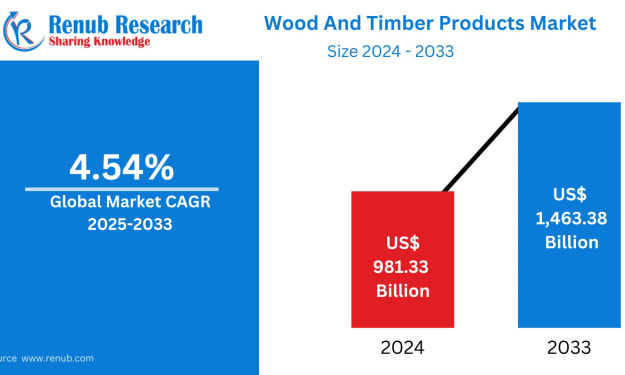
Global Wood and Timber Products Market Outlook The global Wood and Timber Products Market is undergoing a steady transformation as sustainability, urbanization, and infrastructure development reshape material choices worldwide. According to Renub Research, the market is expected to grow from US$ 981.33 billion in 2024 to US$ 1,463.38 billion by 2033, expanding at a CAGR of 4.54% from 2025 to 2033.
By Janine Root about 23 hours ago in Futurism



Comments
There are no comments for this story
Be the first to respond and start the conversation.